
This post in 30 seconds.
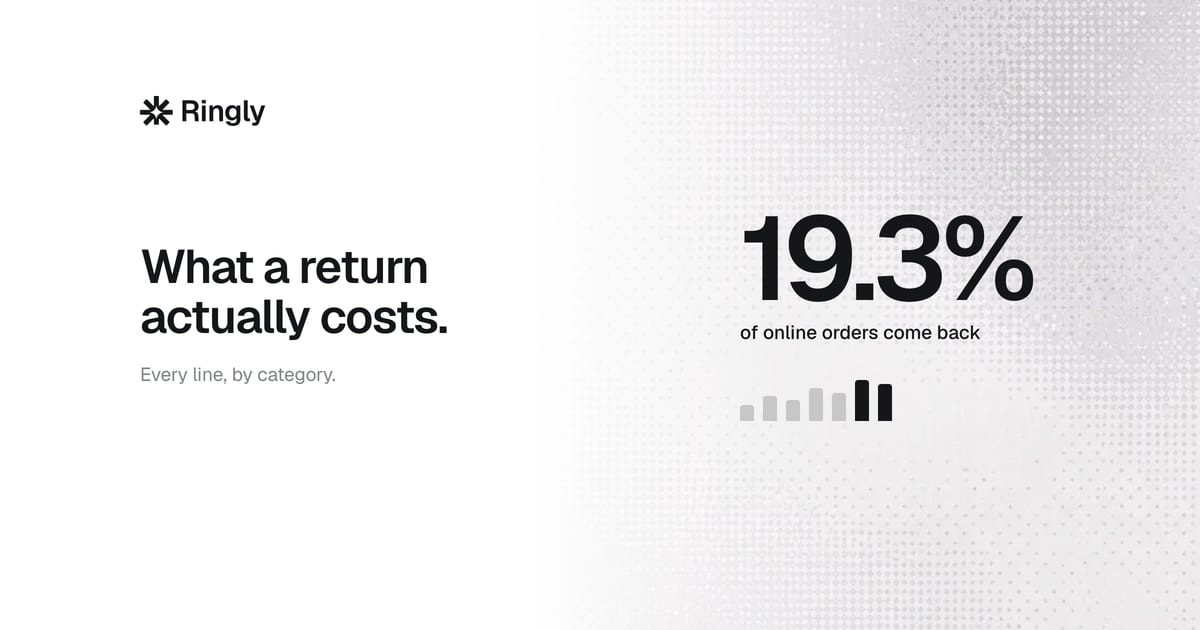
- US shoppers returned $849.9 billion of merchandise in 2025, and 19.3% of everything bought online came back (NRF).
- One processed return costs $20 to $45 once you stack shipping, inspection, restocking, the refund fee, the markdown, and the support call, which is why published estimates run $10 to $65.
- This is the cost post, not the fix post. It quantifies what a return drags off your P&L, by line and by category, including the one line most brands never put on the spreadsheet.
A refund and a return are not the same number. The refund is the price you hand back. The return is that refund plus everything it takes to get the unit off a porch, back through your warehouse, inspected, restocked or written down, and the customer's question answered along the way.
Most Shopify brands track the refund. Almost nobody tracks the rest of the bill. I added up the real per-return cost for a $50M brand last quarter, line by line, and the number that surprised the founder was not the shipping or the restocking. It was the support line, the return-status and refund-status calls, the line nobody had on the spreadsheet. It sits next to the rest of your ecommerce customer service cost and almost never gets tagged as a returns cost.
If you run a $10M to $100M Shopify brand and returns are quietly eating your margin, this is the breakdown your finance team keeps meaning to build. We answer phone calls for Shopify brands, and a big share of those calls are about returns and refunds, so we see this bill from a side most people don't. If you want to see what your own return-call volume is costing after hours, book a 30-min call and we'll do the math live.
What one return actually costs
Handling a single ecommerce return costs an average of $20 to $30, with a published range of $10 to $65 depending on category, shipping distance, and how complex the return is, according to reverse-logistics cost analysis. The spread is that wide because a return is a stack of small costs, not one cost.
Here's the stack for a typical mid-AOV order, built from the reverse-logistics breakdown published by Productiv plus the markdown tail:
| Cost line | Typical cost | What it covers |
|---|---|---|
| Return shipping | $8 to $12 | The label home. Transportation can be up to 60% of total reverse-logistics cost. |
| Receiving and inspection | $4 to $6 | A human opens it, checks condition, decides where it goes. |
| Restocking and putaway | $2 to $3 | Back on the shelf, or not. |
| Refund payment fee | $2 to $3 | The processing fee on the original sale that you don't get back. |
| Support contact | $3 to $7 | The "where's my refund" or "can I still return this" call. |
| Markdown on resale | $5 to $15+ | Only part of returns sell again at full price. The rest get discounted. |
Reverse logistics costs 2 to 3 times what forward fulfillment costs per unit, so every return is a unit you paid to ship out and now pay more to bring back (Bizowie). Stack the lines above and the all-in cost lands around $20 to $45 for a normal order, before the markdown tail gets ugly.
Some categories blow past that. Electronics reverse logistics alone runs $30 to $65 per item. For furniture and oversized goods, the return cost can exceed the product's own margin, which means you are paying for the privilege of getting your own inventory back. If you want the longer data picture, our ecommerce return statistics roundup tracks the trend lines behind these numbers.
How often it happens: return rates by category
The cost per return only matters next to the rate. Roughly one in five online orders comes back, and the overall ecommerce return rate has climbed from about 11% in 2020 to around 19% today (Eightx). That's two to three times the 5% to 9% return rate physical stores see.
But the average hides everything. What you sell decides what you pay. Here are the 2026 benchmarks by category, drawn from industry return-rate data:
| Category | Return rate | Why it's high or low |
|---|---|---|
| Apparel | 24% to 40% | Fit and "looked different online." The worst category. |
| Footwear | 20% to 35% | Sizing is inconsistent across brands, so customers bracket. |
| Home and furniture | 10% to 20% | High AOV, oversized return cost, "didn't fit the room." |
| Electronics | 15% to 20% | Buyer's remorse and DOA units. Expensive to reverse. |
| Outdoor and sporting | 10% to 18% | Sizing, gifting, and seasonal buys. |
| Beauty and personal care | 5% to 8% | Lower, partly because much of it can't be resold. |
| Food and beverage | 1% to 3% | Lowest. Perishable and consumable. |
An apparel brand running a 30% return rate is processing a return on nearly one out of every three orders it ships. That's not an exception, that's the operating model. If your AOV is healthy and your category is on the high end of this table, the per-return cost in the prior section is firing far more often than your refund report alone makes it look. There are ways to reduce product returns at the rate level, but first you have to know what each one costs.
The line nobody puts on the spreadsheet: the support cost of returns
Go back to the cost stack. Most reverse-logistics breakdowns list "$3 to $5 of customer-service time" and then move on. That line is bigger than it looks, and for any brand with a visible phone number, it's the one leaking after hours.
Returns generate a specific kind of contact. "Where's my refund." "Can I still return this." "I sent it back, did you get it." "What's my return label." It's the WISMO call's sibling, the return-status and refund-status version, and it stacks on top of the order-status calls you already field. Across DTC, 30% to 50% of all support contacts are status questions like these, and that share spikes to 70% to 80% during peak (Salesforce).
Each of those contacts has a loaded cost. A retail or ecommerce support ticket runs about $2.70 to $5.60, and a phone call specifically costs $3 to $7 each (LiveChatAI). Phone is the most expensive channel you run, 3 to 5 times the cost of email or chat for the same question, because handle time is longer and a rep can only take one call at a time (Lorikeet).
The return-status call is the only line in the cost stack that hits your payroll instead of your logistics bill, which is exactly why it's the easiest one to lose track of. Your CS team is answering the same questions over and over, your phone backlog grows during the seasonal spike, and the voicemails after 6 p.m. never get returned. None of that shows up next to the refund number in Shopify.
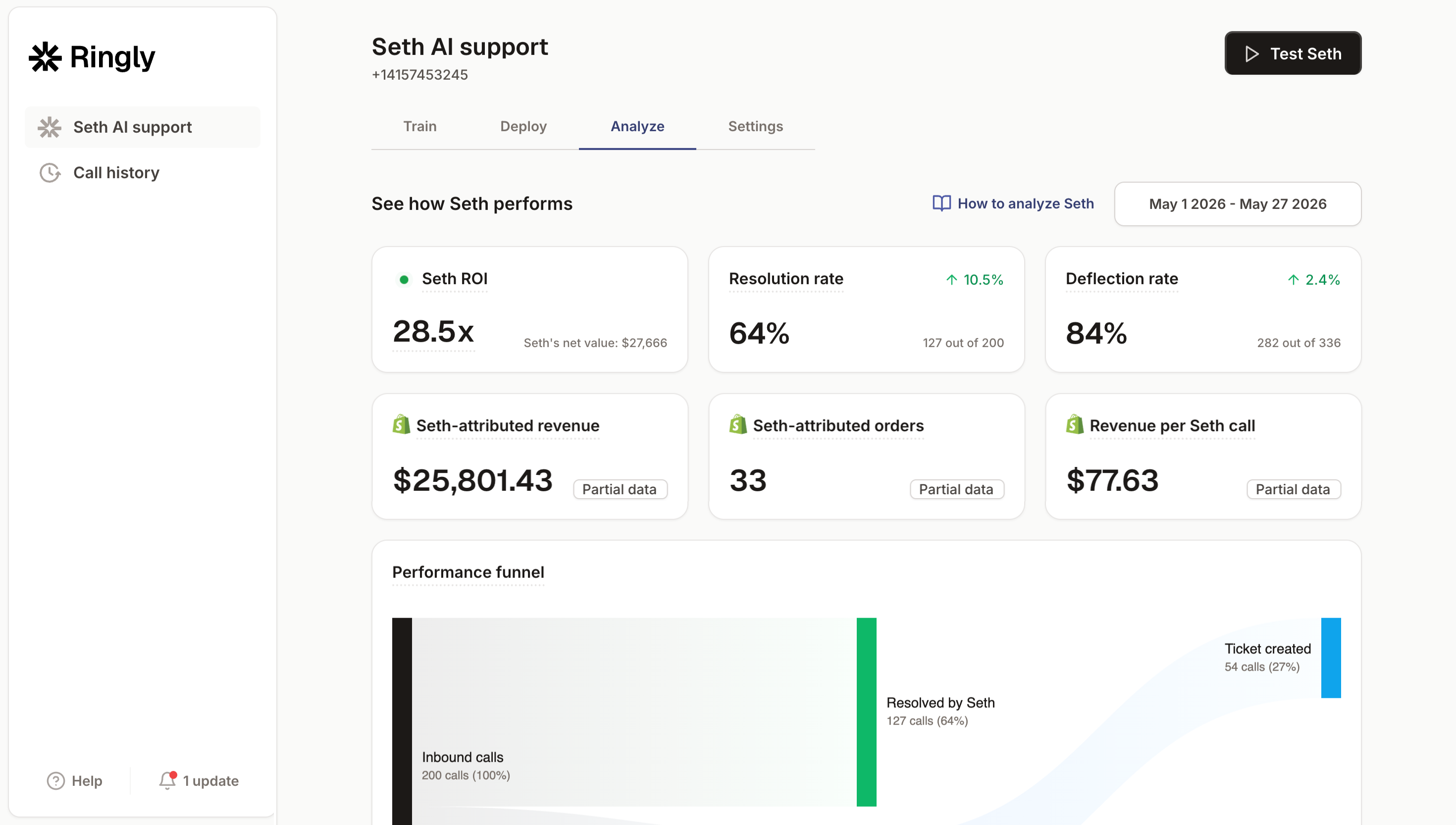
This is the line we work on. Ringly.io is AI phone support for Shopify brands, and a large share of the calls it answers are exactly these: order status, return status, "where's my refund." WashCo, a Shopify brand we launched, handles those calls at $0.91 per call versus the $2.70 a human-handled call costs them. The AI resolves up to 90% of inbound calls on its own, so the routine return-status calls stop hitting a rep and the hard calls still go to your team.
If you want to see what your return and refund calls are costing, book a 30-min call and we'll pull the math on your own volume.
Why the damage is bigger than the refund
Even after you've paid to get the unit back, you usually can't sell it for what you sold it for the first time. Only about 48% of returned items are resold at full price; the rest get discounted, liquidated, or written off (Eightx). When a brand sends returns to liquidation, it typically recovers only 20% to 30% of the original value (ReturnPro).
That write-down is why the margin hit is non-linear. A 25% return rate doesn't shave 25% off your contribution margin. It can cut contribution margin by roughly 70%, because each return is a refund plus a return cost plus a markdown, all stacked (Cahoot).
Run the apparel example. A $100 item with $30 landed cost looks like 70% gross margin at the moment of sale. Add a 30% return rate, the return processing cost, the payment fees you don't get back, and roughly 10% of returned inventory coming back damaged, and the realized margin lands closer to 45%. For apparel specifically, returns can consume 8 to 15 percentage points of margin before any other variable cost enters the math (Luca).
The gap between your gross margin and your real margin is mostly returns, and most Shopify dashboards never attribute a cent of it to the product that caused it. If you've ever wondered why a "70% margin" SKU isn't funding the growth you expected, the returns line is usually where the money went. It's the same reason returns quietly drag on ecommerce customer retention: a customer who has a bad return rarely comes back.
Fraud and bracketing: the cost you didn't authorize
Some of your return cost is not a real return. About 9% of all returns are fraudulent (NRF). Retailers that track it report overstated return quantities (71%), empty-box or "box of rocks" returns (65%), and decoy returns of counterfeit items (64%).
Then there's bracketing, which isn't fraud but costs you the same way. Roughly 53% of online shoppers admit to ordering multiple sizes or colors intending to send most of them back. Footwear gets hit hardest, which is why shoe return rates sit above 30%. You shipped three, you'll restock two, and you paid the full forward-and-reverse cost on all three. The returns best practices that curb bracketing without scaring off buyers are their own playbook.
Here's the trap. You can't just kill free returns to stop the bleeding. 82% of shoppers say free returns are a major factor in whether they buy, and 71% won't shop with a brand again after a bad return experience (NRF). The cost of returns and the cost of a worse return policy are both real, which is why the answer is making returns cheaper to handle, not harder to request.
Add it up: annual returns drag for a $50M brand
Put the rates and the costs together for a single brand. Take a $50M Shopify brand at roughly $100 AOV. That's about 500,000 orders a year.
| Metric | Value |
|---|---|
| Annual orders | ~500,000 |
| Return rate (online avg) | ~20% |
| Returns per year | ~100,000 |
| All-in cost per return (conservative) | $25 |
| Annual returns cost | ~$2.5M |
| Return-status contacts (~30% of returns) | ~30,000 |
| Support cost of returns (at $5/contact) | ~$150K |
Two and a half million dollars a year, before markdowns and fraud push it higher. And a $150K slice of that is just the support line, the return-status and refund-status calls, sitting inside your CS payroll where finance rarely tags it as a returns cost at all.
That support slice is the part you can move fastest without touching your return policy. The logistics cost needs warehouse and carrier work. The markdown needs better returns management and resale, and a tighter return policy can cut the rate over time. But the return-status calls can be answered by an AI phone agent today, at under a dollar a call, which is the cheapest line on the whole stack to fix. If you want that number for your store, book a 30-min call and we'll run it on your real volume.
Frequently asked questions
What is the average cost to process an ecommerce return? About $20 to $30 per return on average, with a published range of $10 to $65 depending on category, distance, and complexity. The number stacks return shipping, inspection labor, restocking, the non-refundable payment fee, the support contact, and the markdown when the item can't be resold at full price.
What is the average ecommerce return rate? Around 19% to 20% of online orders come back, roughly two to three times the brick-and-mortar rate. It varies sharply by category: apparel runs 24% to 40%, footwear 20% to 35%, electronics 15% to 20%, and beauty 5% to 8%.
Why do returns cost more than the refund amount? Because a return is a refund plus a cost stack: reverse shipping, receiving and inspection, restocking, the payment fee you don't get back, the support call, and the markdown. Reverse logistics alone runs 2 to 3 times the cost of forward fulfillment per unit.
How much of returns cost is customer support? More than most brands realize. A support contact about a return costs $3 to $7 on the phone, and 30% to 50% of all DTC support contacts are status questions like "where's my order" and "where's my refund." For a $50M brand, the return-status calls alone can run six figures a year.
Can I reduce returns cost by ending free returns? Carefully, if at all. 82% of shoppers weigh free returns when deciding to buy and 71% won't return after a bad return experience, so tightening the policy can cost you more revenue than it saves. The lower-risk levers are cutting the per-return handling cost and automating the return-status calls.
What return rate should I expect for my category? Use the category table above as a benchmark. If you sell apparel or footwear, plan for a high-teens to 30%-plus return rate; if you sell supplements or electronics, you'll sit lower. The point is to model your real cost per return against your real rate, not the blended industry average.
Talk to us

If you run a $10M to $100M Shopify brand, the fastest line on the returns bill to fix is the support line. A 30-min call is the quickest way to see what your return-status and refund-status calls are costing you, especially after hours.
Our 3 promises.
- Live in under 1 hour. Setup and test calls are free.
- 30-day money back on the $99 plan fee.
- 65% resolution guarantee: if Seth resolves under 65% of your support calls in a month, that month comes back as credit (after 90 days on Pay per call).
Ruben (Ringly co-founder) takes these calls personally.