

This post in 30 seconds.
- Chargeback tools do three jobs: prevent the dispute, intercept it with an alert, or fight it after it files. Most brands buy a tool that fights and skip the part that prevents.
- Roughly 45% of chargebacks are now friendly fraud (Mastercard, 2025), and a big slice of those start as a customer who couldn't reach you and called their bank instead.
- Built for $10M-$100M Shopify brands on Shopify Payments or Stripe, running a paid helpdesk and a visible phone line.
A chargeback feels like a parking ticket you didn't earn. The customer got the product, kept the product, then disputed the charge anyway, and now you owe the order value plus a fee plus your team's afternoon. The fee is the small part. Mastercard puts the all-in cost of a single chargeback at around $110 once you add merchandise loss, fulfillment, and the labor to fight it. Lose a disputed $100 order and Stripe pegs the real damage closer to $181.
If you run a $10M-$100M Shopify brand, you already know disputes are a tax you can't seem to control. You also probably suspect the tool you're shopping for isn't the whole answer. It isn't. Most $30M Shopify brands run a phone line that rolls to voicemail after 6 p.m., and a real share of their disputes are customers who tried to reach that line, gave up, and called their card company instead. We've launched AI phone support for Shopify brands trying to close that exact gap. Book a 30-min call and we'll show you how many of last week's disputes traced back to a call nobody picked up.
In this post:
How I tested these chargeback management tools
I'm Ruben, co-founder of Ringly. Over the last few weeks I set up a real Shopify store on Shopify Payments, pushed test orders through, and ran each tool below against the workflow of a mid-size DTC brand, not a fraud team with a dedicated analyst.
Here's what I scored against:
- Prevention vs recovery scope. I checked whether the tool stops disputes from happening, fights them after they file, or only does one and quietly leaves the other to you.
- Shopify integration depth. I connected each tool to the store and watched whether it could actually see the order, the customer, and the fulfillment timeline that evidence packages live or die on.
- Pricing-model transparency. I dug for the real number. Contingency cut, percentage of GMV, per-alert fee, or "contact sales." The ones that hide it usually hide it for a reason.
- Win-rate evidence quality. For the representment tools, I looked at how the evidence package gets built and whether it's tailored or a copy-paste template that loses winnable cases.
- The reachability test. This is the one nobody else runs. I went back through real call logs across the Shopify brands we run phone support for and counted how often a dispute started as a customer who simply couldn't get through. It's more than the chargeback vendors will admit.
I don't take affiliate commissions on anything in this list. I sell Ringly, which appears below for the same reason everyone else does, and against the same criteria. Where a tool is genuinely better than us at a job we don't do, I say so.
The tools at a glance
Here's the short version before the deep dives. The "job" column matters more than the brand name, because buying a tool that fights disputes when your problem is unanswered calls is how you end up paying two bills for one leak.
| Tool | Main job | Pricing model | Guarantee? | Best for |
|---|---|---|---|---|
| Ringly.io | Prevent (reachability) | Pay per call, from $99 a month (50 conversations included) | 65% resolution or credit | Stopping the dispute before it's filed |
| Chargeflow | Fight (representment) | 25% of recovered revenue | No | Hands-off Shopify dispute automation |
| Signifyd | Prevent (fraud) + guarantee | % of approved-order GMV | Yes (covered orders) | Liability transfer on fraud |
| Riskified | Prevent (fraud) + guarantee | % of GMV, custom | Yes (approved orders) | Enterprise fraud + approvals |
| Disputifier | Alert + fight + fraud | ~20% recovered + per-alert + $0.05/order | No | Shopify brands wanting one stacked tool |
| Chargebacks911 | Fight (managed) | Custom | No | Enterprise managed representment |
| Kount | Prevent (fraud) + dispute | Custom / enterprise | No | Enterprise fraud + identity signals |
| Justt | Fight (representment) | % of recovered | No | Fully managed AI representment |
A quick note on links: none of these tools are competitors of ours in the way a Gorgias is, so I'm not sending you to comparison pages. They each do a job Ringly doesn't. The honest framing is that you'll likely run one of them alongside a reachability layer, not instead of it.
The 8 best chargeback management tools
1. Ringly.io: the prevention layer that answers the phone
Best for: stopping the dispute before it ever gets filed, by being reachable when the customer is frustrated. Ringly.io is AI phone support for Shopify brands, and it belongs at the top of a chargeback list for one reason the other tools won't tell you.
Most chargeback tools work after the damage is in motion. They fight a dispute or they score a transaction for fraud. Ringly works upstream of both. When a customer can't find their tracking, thinks an order is late, or wants to cancel and can't reach anyone, they don't always email. A lot of them pick up the phone, and when that phone rolls to voicemail, the next call is to their bank. That second call is your chargeback.
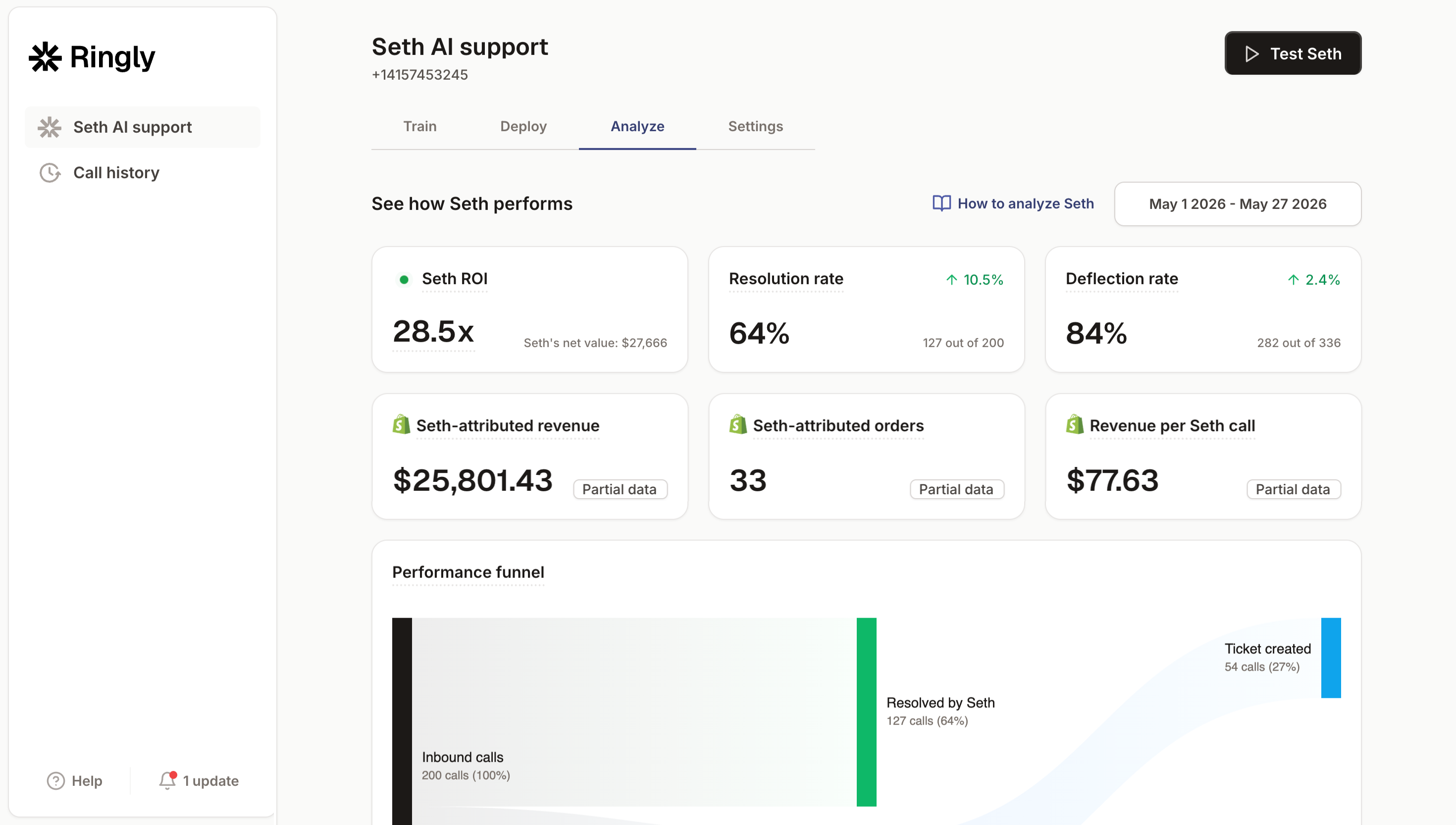
The AI answers inbound calls 24/7. It finds orders in your Shopify store, gives real tracking, processes returns and exchanges, answers product questions from your knowledge base, and escalates the genuinely hard calls to your team in Gorgias, Richpanel, or Reamaze. It resolves up to 90% of calls on its own. The whole point is to catch the frustrated customer on the call, not on the dispute. WashCo, a Shopify brand we launched, recovered $22,664 in its first 7 days on the phone.
Pricing
| Plan | Price | Included |
|---|---|---|
| Pay per call | $99 a month | 50 conversations, then $1.99 each |
Live in under an hour. 65% resolution guarantee: if the AI resolves under 65% of your calls in 90 days, you get the last 3 months back.
What works
- Prevents the dispute instead of fighting it. Reachability is the cheapest chargeback tool you'll ever run, because a refund or a real answer at 9 p.m. never becomes a $110 dispute.
- Native Shopify order lookup. Pulls tracking and order status live, which kills the "where's my order" call that turns into a "I never got it" dispute.
- 24/7 and after-hours coverage. The window where voicemail loses you customers is exactly the window the AI covers.
- Escalation, not replacement. It sits in front of your helpdesk, so your CS team still gets the calls that actually need a human.
- You don't sound like AI. The most repeated thing customers say after a call. Angry callers calm down when they reach a real-sounding voice, and calm callers don't file disputes.
What doesn't
- It's not a representment tool. For disputes that do get filed, you still need something on this list to fight them. Ringly reduces the inflow; it doesn't submit evidence to Visa.
- Phone-channel focused. If your disputes are pure card-testing fraud at checkout, a fraud-scoring tool matters more than reachability.
- Built for Shopify brands. Not a general-business answering service.
Why it ranks 1st
Because the math on prevention beats the math on representment every time. You win about 45% of the disputes you fight (per Chargebacks911's published dispute stats), but you win 100% of the disputes that never file. Start by plugging the reachability leak, then add a representment tool for what's left.
2. Chargeflow: hands-off representment automation
Best for: Shopify brands that want disputes fought automatically with no internal effort. Chargeflow is an end-to-end chargeback automation platform that combines prevention signals, automated representment, and performance tracking, with a large Shopify install base.
It's the most popular self-serve option for ecommerce, and the automation is genuinely good at building and submitting evidence on time so you stop missing response windows.
Pricing
Success-based. Chargeflow takes 25% of recovered revenue and charges nothing on losses. Free to start.
What works
- Fully hands-off. The evidence package builds and submits itself, which solves the "we missed the deadline" problem.
- Only pay on recovery. No upfront cost, so the downside is capped.
- Shopify-native. Tight integration with order and fulfillment data.
What doesn't
- The 25% cut adds up. One Shopify App Store reviewer reported losing over $4,000 in fees. At volume, the contingency is real money.
- Billed even when you win it yourself. Several reviewers flagged being charged on cases they submitted and won without help.
- Template risk. One merchant said they won ~90% of disputes handling them solo, then lost basically 10 out of 10 once Chargeflow took over, citing generic copy-paste evidence (see Chargeflow reviews on G2).
Why it ranks 2nd
Best default if you want representment to run itself and you don't have anyone internal to fight disputes. Watch the fee math and spot-check the evidence quality on your higher-value cases.
3. Signifyd: chargeback guarantee on approved orders
Best for: brands with real fraud exposure that want to transfer liability. Signifyd checks orders at checkout, gives instant approve-or-decline decisions, and backs approved orders with a guarantee that covers fraud and some non-fraud chargebacks. It rates ~4.6/5 on G2 across 331+ reviews.
The pitch is simple. They decide which orders are safe, and if a guaranteed order charges back, they eat it.
Pricing
A percentage of approved-order GMV. Roughly 1% per approved order for smaller merchants, around $1,000/mo for mid-size, enterprise custom.
What works
- Liability shift. Covered fraud losses become their problem, not yours.
- Strong machine learning. High-quality decisioning that cuts manual review time.
- Instant checkout decisions. Approvals happen in real time without slowing the customer.
What doesn't
- Percentage of GMV gets expensive. If your fraud rate is low, you may pay more in fees than you'd have lost in fraud.
- Read the guarantee scope. Coverage has exclusions, and friendly fraud is often the gray area.
- Enterprise-leaning. More tool than a sub-$10M brand needs.
Why it ranks 3rd
The best liability-transfer option if true fraud is your problem. If your disputes are mostly "I never got it" from real customers, a guarantee on checkout fraud won't touch them.
4. Riskified: enterprise fraud prevention with guarantees
Best for: larger brands that want maximum approval rates plus a chargeback guarantee. Riskified is an AI fraud-prevention platform that integrates with your gateway to fetch disputes in real time and offers guaranteed approvals.
It plays in the same lane as Signifyd, tuned for scale. In head-to-head reviews, Signifyd often gets rated easier to onboard, while Riskified is praised for approval rates and support at enterprise volume.
Pricing
A percentage of GMV or approved orders, custom. Not published, so you'll talk to sales.
What works
- High approval rates. Designed to clear more good orders without raising fraud.
- Liability transfer. Guaranteed orders shift risk off your books.
- Enterprise scale. Built for high-volume gateways and global brands.
What doesn't
- Opaque enterprise pricing. Contracts and minimums, not a self-serve app.
- Overkill below enterprise. A $10M brand rarely needs this much fraud infrastructure.
- Fraud-focused. Like Signifyd, it's aimed at checkout fraud, not the reachability-driven friendly fraud that's now the bigger slice.
Why it ranks 4th
A strong enterprise fraud-and-guarantee platform. Right tool, wrong problem, if your real leak is unanswered calls rather than card-testing bots.
5. Disputifier: alerts, fraud screening, and representment in one
Best for: Shopify brands that want prevention, alerts, and dispute-fighting stacked into a single tool. Disputifier markets itself as a near-fully-automated chargeback company, combining fraud screening, chargeback alerts, and automated representment.
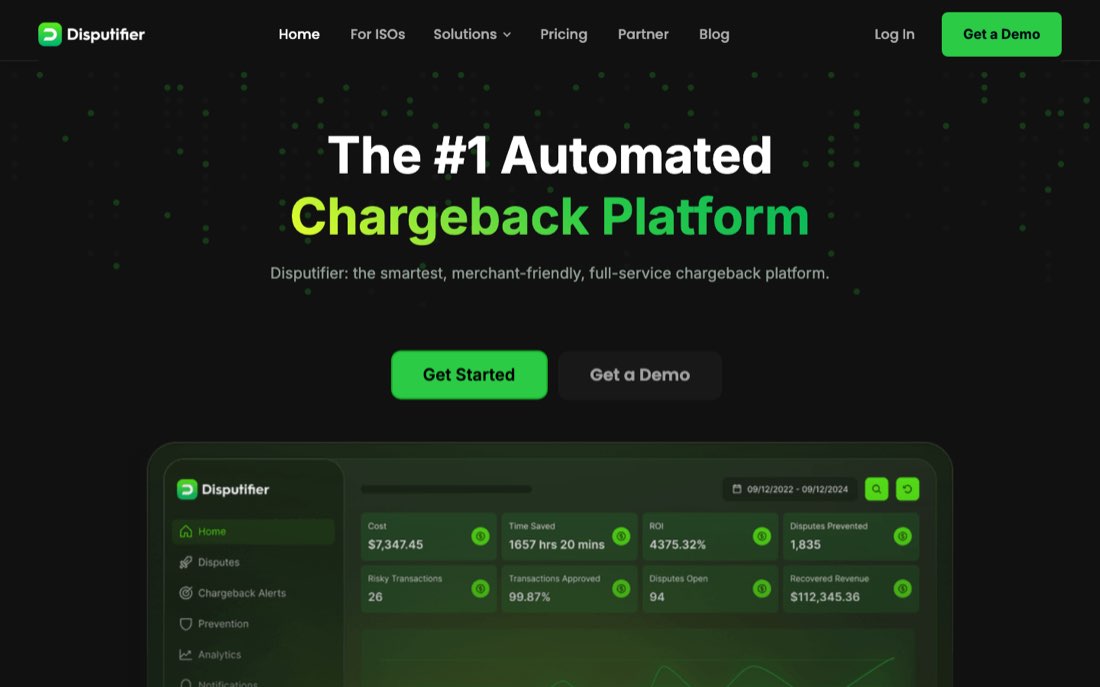
The appeal is consolidation. Instead of running an alert network plus a representment tool plus a fraud screen, you get all three in one Shopify-native dashboard.
Pricing
A stack: roughly 20% of recovered revenue on representment, per-alert fees on the alert layer, and about $0.05 per order for fraud screening. A pay-as-you-go option charges 20% of recovered revenue.
What works
- Three jobs in one tool. Alerts, fraud screening, and representment without juggling vendors.
- Shopify-native. Built for the platform our reader is on.
- Pay-as-you-go option. Lower commitment to start.
What doesn't
- Stacked fees. Per-alert plus percentage plus per-order means the bill has three moving parts to watch.
- Marketing runs ahead of proof. "Prevent up to 99%" is a big claim with thin independent evidence.
- Smaller track record. Newer and lighter footprint than Chargeflow or Chargebacks911.
Why it ranks 5th
A reasonable all-in-one if you'd rather have one vendor than three. Audit the combined fee math against what you'd pay for separate specialist tools.
6. Chargebacks911: managed representment at enterprise scale
Best for: larger merchants that want chargebacks handled as a managed service. Founded in 2011, Chargebacks911 is one of the oldest dedicated chargeback firms, trusted by 45,000+ merchants and managing 2B+ transactions a year. Much of the industry's stat data comes from their research.
This is less a self-serve app and more an expert team that runs your representment and reporting for you.
Pricing
Custom. Not publicly listed, so expect a sales conversation and a contract.
What works
- Deep representment expertise. Years of dispute data and tuned evidence playbooks.
- Enterprise-grade reporting. Strong analytics on win rates and dispute sources.
- Established and trusted. Long track record at scale.
What doesn't
- Opaque pricing and contracts. Harder to start than an app you install.
- Heavier than a self-serve tool. It's a managed service, with the overhead that implies.
- Enterprise-leaning. A lean $10M brand may find it more than they need.
Why it ranks 6th
The right call if you want experts to own representment end to end. For most mid-size Shopify brands, a self-serve tool plus a prevention layer is the leaner setup.
7. Kount: enterprise fraud and dispute management
Best for: enterprise brands that want fraud detection, identity signals, and dispute handling in one platform. Kount, now part of Equifax, runs an Identity Trust Global Network used by 9,000+ brands and absorbed Midigator's chargeback management capability.
It screens transactions, scores risk, layers in identity data, and handles disputes, which makes it a broad fraud platform rather than a Shopify-specific app.
Pricing
Custom, enterprise. Not public.
What works
- Fraud, identity, and disputes together. One platform across the risk stack.
- Global data network. Identity signals from a large cross-merchant network.
- Customizable rules. Tunable for complex risk needs.
What doesn't
- Enterprise pricing and implementation. Not a quick install.
- Not DTC-tailored. Built for broad fraud use cases, not specifically the Shopify operator.
- Overlaps with simpler tools. Much of what a mid-size brand needs is available cheaper elsewhere.
Why it ranks 7th
Powerful if you're an enterprise standardizing on one fraud-and-identity platform. Heavier than the average Shopify brand on this list needs.
8. Justt: fully managed AI representment
Best for: brands that want disputes fought by an AI service with zero internal lift. Justt bills itself as a smart chargeback solution that tailors each representment response and improves over time, handling the whole fight on your behalf.
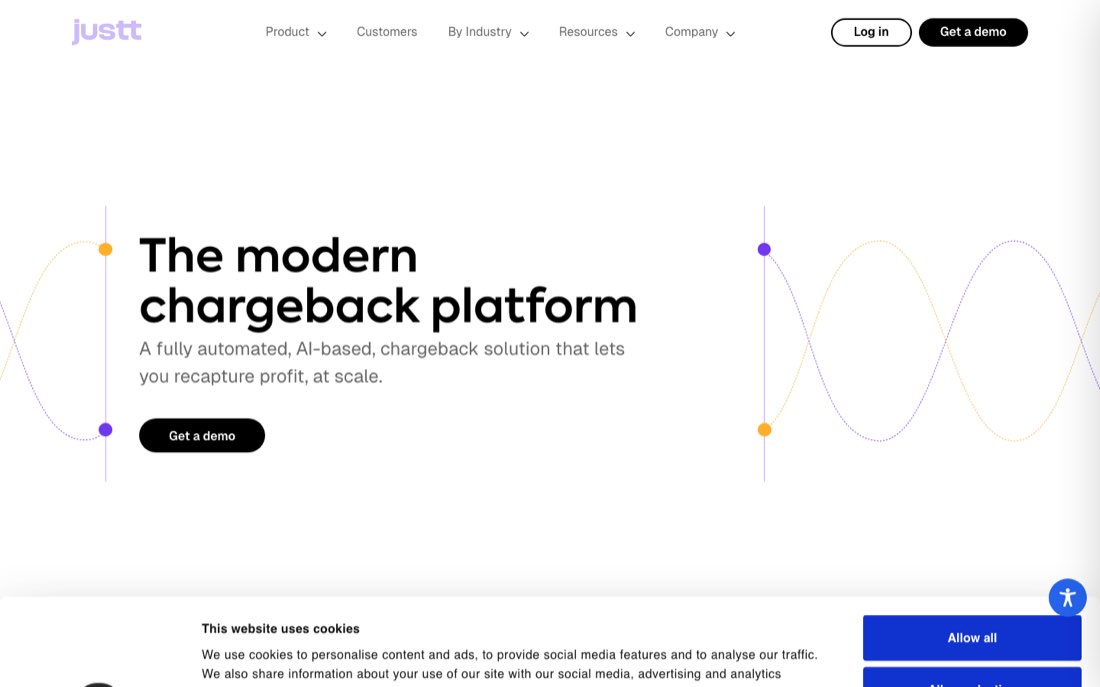
It's representment-only, aimed at brands that want to hand the entire dispute process to a managed AI layer.
Pricing
A percentage of recovered funds. Contingency, so no upfront cost.
What works
- Fully managed. You hand off disputes and Justt fights them.
- Tailored evidence. Responses adapt per case rather than running one template.
- No upfront cost. Contingency model caps the downside.
What doesn't
- Representment-only. No prevention layer, so it does nothing about inflow.
- Contingency cut on recovery. Same fee dynamic as the other recovery tools.
- Less Shopify-DTC-native. Broader merchant focus than a Shopify-first app.
Why it ranks 8th
A clean managed-representment option if you want the fight fully outsourced. Like the others in this category, it treats the symptom. Pair it with prevention or you'll be fighting the same disputes next quarter.
"My customers also feel like it's a normal person. They feel like they can communicate if they have questions."
Claudia Droge, TechCraft Studio
The 3 jobs a chargeback tool can do
Every tool on this list does one or more of three jobs. Knowing which job you're buying is the whole game, because most brands buy the wrong one first.
Prevent. Stop the dispute from existing. This splits in two. There's fraud scoring at checkout, which blocks bad orders before they ship (Signifyd, Riskified, Kount). And there's reachability, which keeps a real customer from rage-dialing their bank because they couldn't reach you. The listicles only count the first kind. The second kind is the one quietly driving your friendly-fraud rate.
Intercept. Catch a dispute in the short window after the customer calls their bank but before it formally files. Issuer alert networks like Ethoca, Verifi, and Visa's RDR ping you so you can refund inside the window and avoid the chargeback entirely. Pricing is per-alert, and coverage depends on which issuers participate. If you're new to the mechanics, our primer on ecommerce chargebacks covers how the dispute lifecycle works end to end.
Fight. Submit evidence to win a dispute that already filed. This is representment (Chargeflow, Disputifier, Chargebacks911, Justt). It's the job most people mean when they say "chargeback management," and it's also the least efficient, because you only win about 45% of represented disputes and recover revenue on roughly 18% of all chargebacks (Chargebacks911). Representment is the most-bought job and the one that moves your dispute rate least. You're paying to win back a minority of money you already lost.
The right stack usually runs all three, cheapest win first: be reachable, intercept with alerts, then fight what's left. Most brands do it backwards.
Why so many chargebacks start on the phone
Here's the part the chargeback vendors skip, because they don't sell phones.
Friendly fraud is now the biggest category of chargebacks, around 45% of them (Mastercard, 2025), and a real chunk of it isn't fraud in any criminal sense. It's a customer who couldn't figure something out, couldn't reach you, and decided calling their bank was easier than calling you again. ChargebackGurus is blunt about it: the number one cause of merchant-error chargebacks is unresponsive or unhelpful customer service.
The reachability numbers are ugly. 85% of callers who can't reach a person never call back, and 62% switch to a competitor (pcnanswers.com). 80% of voicemail-routed callers hang up without leaving a message (ringeden.com). So the customer who would have been a quick "your order ships tomorrow" call instead becomes a missed call, then a "where is my order" panic, then a dispute. A live order-status lookup on that first call ends the chain before it starts. Each step costs you more than the last.
When I ran the reachability test across our brands, the pattern was consistent: a meaningful share of disputes traced back to a missed call or an after-hours voicemail nobody returned. A dispute is just a customer service failure that found a more expensive exit. That's why the cheapest entry on this list is the one that answers the phone. It also explains why a WISMO call you handle in 90 seconds is worth far more than the $110 chargeback you'd have fought later.
What a dispute actually costs you
The fee is the part everyone sees and the smallest part of the bill. Let's add it up.
The processor charges $20 to $50 per dispute. Then add the merchandise you don't get back, the fulfillment you already paid for, and the labor to fight it. Mastercard's all-in average lands around $110 per chargeback. Lose a disputed $100 physical order and Stripe estimates the true cost near $181. Zoom out and US merchants absorb roughly $4.61 in total cost for every $1 lost to chargebacks. The category is growing fast: chargeback fraud is projected to hit $28.1 billion in losses in 2026, up 40% from 2023, on an estimated 337 million disputes. The wider ecommerce fraud picture shows the same curve.
Now put that next to your support spend. A typical mid-size brand running phone support looks like this:
| Line item | Today | With a prevention layer |
|---|---|---|
| 6 reps × $4,000 loaded per rep | $24,000/mo | n/a |
| AI phone support (Pay per call) | n/a | $99/mo + $1.99 a call after the first 50 |
| Disputes that never file (illustrative) | $110 × volume | sharply lower |
| What you're really paying for | reps + disputes | coverage + fewer disputes |
That's roughly 70% of repeatable calls (order status, returns, the same questions over and over) handled without a rep, while the genuinely hard calls still reach your team. The disputes you prevent don't show up as a line item, which is exactly why they're easy to ignore until you count them. The AI resolves up to 90% of support calls on its own, and one brand we run, TechCraft, handles 88% of its calls without a human.
If you want to see how many of last month's disputes started as an unanswered call, book a 30-min call and we'll do the math against your own numbers.
How to choose the right chargeback management tool
Pick by the job you actually need, cheapest win first:
- Start with reachability if your phone rolls to voicemail. If customers can't reach you after hours, plug that leak first with AI phone support for Shopify. It's the only layer that prevents the dispute instead of paying to recover from it.
- Add alerts if your issuers participate. Ethoca and Verifi-style networks let you refund inside the window. Per-alert pricing, coverage varies by issuer.
- Choose a representment tool if disputes are already filing in volume. Chargeflow for hands-off Shopify automation, Justt for fully managed, Chargebacks911 if you want an enterprise managed service. Watch the contingency fees.
- Choose a guarantee tool if true fraud is your problem. Signifyd or Riskified shift liability on checkout fraud. Only worth the GMV percentage if your fraud rate justifies it.
- Go enterprise-platform if you're standardizing the whole risk stack. Kount if you want fraud, identity, and disputes in one place at scale.
The mistake I see most: a brand buys a representment tool, keeps losing the same disputes, and never asks why those customers disputed in the first place. Half the time, they couldn't reach support. Fix that and the representment bill shrinks on its own.
Frequently asked questions
Do I need both a prevention tool and a representment tool? Usually yes. Prevention (reachability and fraud scoring) shrinks how many disputes file, and representment fights the ones that slip through. Buying only representment means you pay to recover a minority of money you keep losing.
How much do chargeback management tools cost? It depends on the model. Representment tools run on contingency (Chargeflow 25% of recovered revenue, Justt and Disputifier around 20%). Guarantee tools charge a percentage of approved-order GMV (Signifyd around 1% for small merchants). Prevention via phone support starts at $99 a month for the first 50 conversations, then $1.99 each.
Do chargeback guarantees cover friendly fraud? Often not fully. Guarantees from Signifyd and Riskified are strongest on third-party fraud at checkout. Friendly fraud, where a real customer disputes a legitimate order, usually sits in the exclusions, so read the coverage terms closely.
Can answering the phone actually reduce chargebacks? Yes, and it's underrated. Around 45% of chargebacks are friendly fraud (Mastercard, 2025), and a large share of that starts as a customer who couldn't reach you. A real answer or a fast refund on the call never becomes a $110 dispute.
What's the difference between chargeback prevention and chargeback management? Prevention stops disputes from happening (fraud scoring, alerts, being reachable). Management usually means fighting disputes after they file. Most "chargeback management" tools are really representment tools. See our chargeback prevention guide for the full prevention playbook.
What chargeback rate is too high? Card networks flag merchants above roughly 0.9% to 1% of transactions, and crossing it brings monitoring programs and higher fees. Check your Shopify chargeback percentage before it gets there.
Does Shopify have built-in chargeback management? Shopify surfaces disputes and lets you submit evidence through Shopify Payments, but it's basic. It won't automate representment, run alerts, or prevent the dispute, which is why brands layer a dedicated tool on top.
Is outsourced representment worth the fee? Sometimes. It's worth it if you're missing response windows or have no one internal to fight disputes. It's not worth it if you already win most cases yourself, since some merchants report worse win rates and fees on cases they'd have won solo. Tightening your returns and refunds process often does more than another representment vendor.
Talk to us

If you run a $10M-$100M Shopify brand and your phone rolls to voicemail after 6 p.m., that's where a chunk of your disputes are coming from. A 30-min call is the fastest way to see how many of last month's chargebacks started as a call nobody picked up.
Our 3 promises.
- Live in under 1 hour. Setup and test calls are free.
- 30-day money back on the $99 plan fee.
- 65% resolution guarantee: if Seth resolves under 65% of your support calls in a month, that month comes back as credit (after 90 days on Pay per call).
Ruben (Ringly co-founder) takes these calls personally.