


Athos Commerce has made a name for itself by combining Searchspring, Klevu, and Intelligent Reach into one product discovery platform.
But at $699 per month with a usage-based model, it is not the right fit for every e-commerce team.
Some businesses need more developer control. Others want a simpler setup or different AI capabilities.
This guide breaks down seven alternatives worth considering, with details on pricing, features, and who each platform suits best.
Editor’s note: Want to hear some sample AI support calls made for your Shopify store?
- Just paste your store URL
- Get sample calls in under 20 seconds (no email required)
- Listen to demo calls for my store
What is Athos Commerce?
Athos Commerce (formerly operating as Searchspring) formed when three e-commerce tools joined forces. The platform offers site search, personalization, merchandising, feed optimization, and a conversational AI tool called Asklo.
The company targets mid-market and enterprise retailers. Their pricing starts at $699 per month, which puts them in the premium tier of product discovery solutions.
Teams look elsewhere for a few common reasons. Some need more developer flexibility than Athos provides. Others want a different pricing structure or specific features like visual search that Athos does not emphasize.
How we evaluated these alternatives
We looked at several factors when comparing platforms:
- Pricing transparency - whether you can see costs upfront or need to contact sales
- Implementation speed - how long typical deployments take
- AI capabilities - the depth and sophistication of search and recommendation engines
- Merchandising controls - how much power business users have without developer help
- Integration ecosystem - which e-commerce platforms and tools connect natively
Athos Commerce alternatives at a glance
| Platform | Starting Price | Best For | Key Feature | Implementation |
|---|---|---|---|---|
| Algolia | Free tier (10k searches) | Developer-heavy teams | API-first flexibility | Weeks |
| Bloomreach | Contact sales | Enterprise CMS + commerce | Full content suite | Months |
| Constructor | Contact sales | AI-native discovery | Ecommerce KPI focus | Weeks |
| Syte | Contact sales | Visual/fashion retail | Camera search | Weeks |
| Nosto | Contact sales | Personalization focus | CXP platform | Days-Weeks |
| ViSenze | Contact sales | Marketplaces | Automated tagging | Weeks |
| Prefixbox | Contact sales | Enterprise Europe | Fully managed | Weeks |
1. Algolia
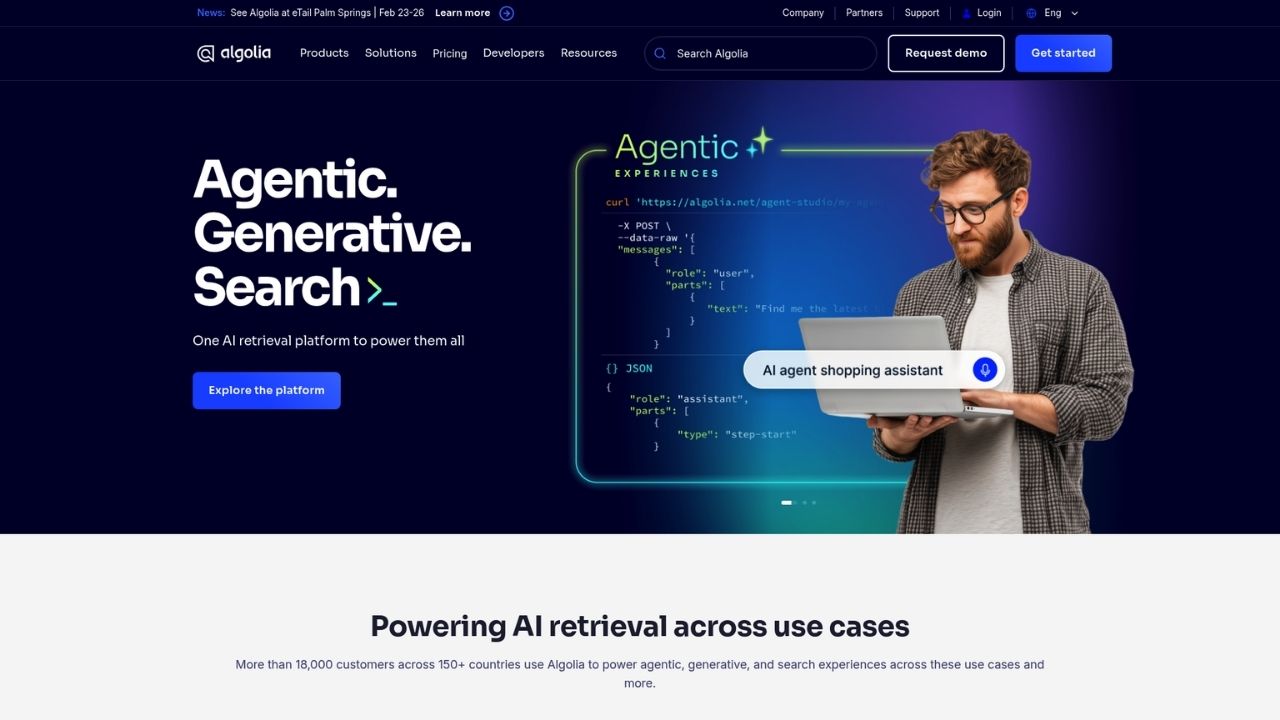
Algolia is the most developer-focused option on this list. Founded in 2012, the platform powers search for over 17,000 businesses and offers extensive API flexibility.
The platform separates itself with transparent, self-serve pricing. You can start free with 10,000 searches per month and scale up with usage-based billing. This makes it accessible for smaller teams who want to test before committing.
Key features include NeuralSearch (combining keyword and vector search), InstantSearch for real-time results, Dynamic Re-ranking that optimizes automatically, and a Merchandising Studio for business users. The platform integrates with Shopify, Magento, BigCommerce, Salesforce Commerce Cloud, and major CMS platforms.
Pros:
- Transparent pricing with a generous free tier
- Sub-100ms search response times
- Extensive documentation and developer resources
- Highly customizable through APIs
Cons:
- Requires engineering resources for full customization
- Limited no-code merchandising compared to business-user tools
- Can get expensive at high search volumes
Best for: Teams with developers who need full control over search behavior and want to build custom experiences.
2. Bloomreach
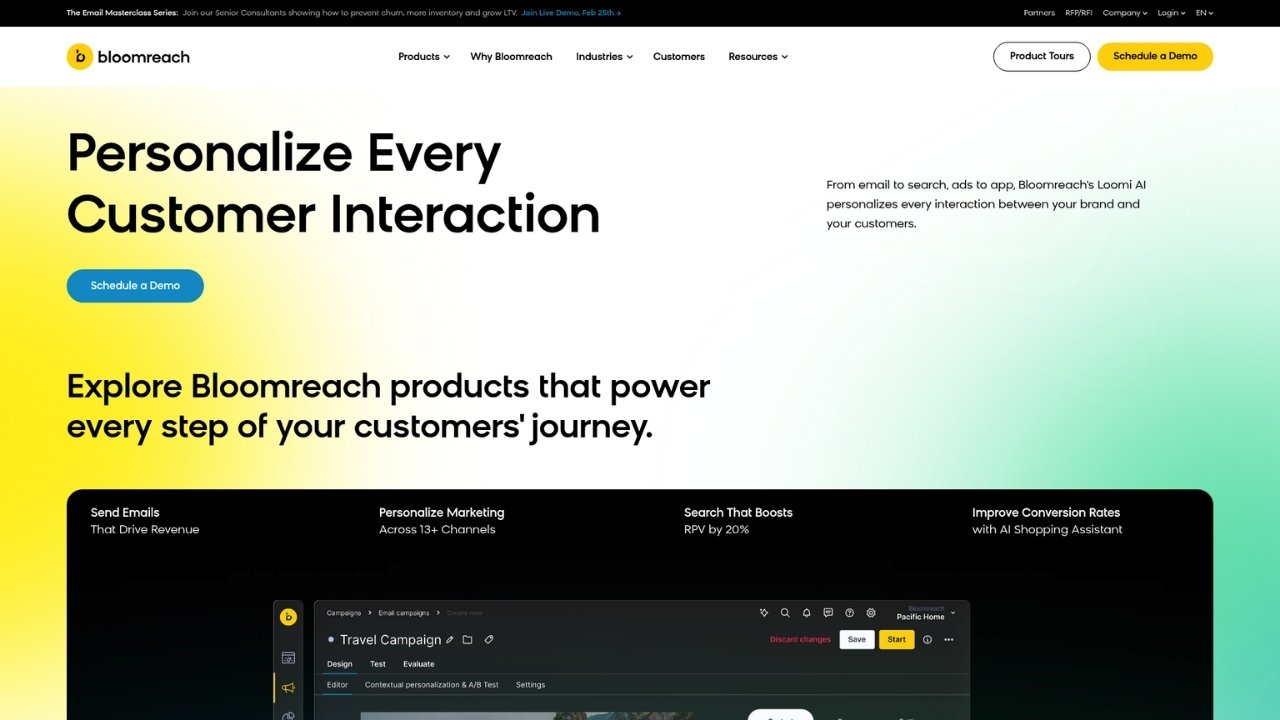
Bloomreach takes a different approach than pure search platforms. The company offers a full commerce experience suite combining CMS, search, merchandising, and marketing automation.
Founded in 2009 and based in Mountain View, California, Bloomreach serves enterprise clients like Albertsons, Puma, and Neiman Marcus. Their platform suits large organizations that want to unify content and commerce in one system.
The feature set includes Bloomreach Search with AI-powered results, Bloomreach Content (a headless CMS), Bloomreach Engagement for marketing automation, and AI-assisted merchandising tools. The platform integrates deeply with Salesforce Commerce Cloud, Shopify, BigCommerce, and Magento.
Pros:
- Full-featured suite covering CMS, search, and marketing
- Strong enterprise support and SLAs
- Deep integrations with major commerce platforms
Cons:
- Implementation typically takes months, not weeks
- May require developer input for merchandising tasks
- No published pricing (enterprise-focused)
Best for: Large enterprises needing a unified CMS and commerce platform with dedicated engineering resources.
3. Constructor
Constructor positions itself as the only search and discovery platform built specifically for ecommerce KPIs. Founded in 2015 in San Francisco, the company focuses on delivering high-converting experiences rather than just relevant search results.
The AI-native architecture means machine learning is core to the platform, not added as an afterthought. Notable customers include Sephora, Under Armour, Gap, REI, and Target Australia.
Features include AI-powered search with natural language understanding, ML-driven recommendations, product finder quizzes, AI-optimized category pages, and built-in A/B testing. The platform also offers voice search capabilities.
Pros:
- Built specifically for conversion optimization
- Merchandiser-friendly without heavy dev requirements
- Strong AI/ML capabilities out of the box
Cons:
- Less developer flexibility than Algolia
- No self-serve pricing
- Mid-market to enterprise focus
Best for: Mid-market to enterprise retailers who want AI-driven discovery without needing a dedicated engineering team.
4. Syte
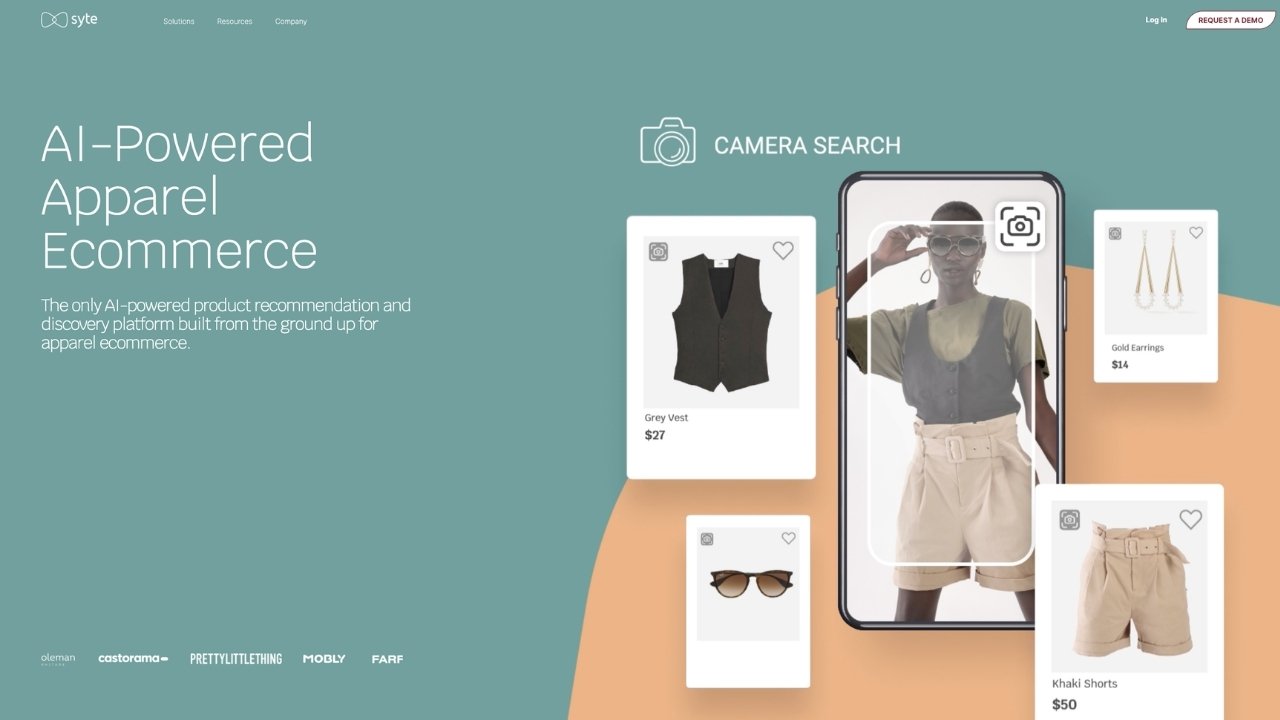
Syte specializes in visual AI for apparel and fashion e-commerce. Founded in 2015 in Tel Aviv, the platform enables shoppers to search using images rather than text.
The visual focus makes Syte unique among these alternatives. Customers include Farfetch, Prada, PrettyLittleThing, and Coleman. The platform claims a 7.1x higher conversion rate for visual search and a 40% uplift in average order value.
Key capabilities include camera search (snap a photo to find similar items), "shop similar" recommendations, personalized product suggestions, automated product tagging, and an in-image discovery button.
Pros:
- Best-in-class visual search technology
- Strong performance metrics for fashion retail
- Image-based discovery reduces friction for mobile shoppers
Cons:
- Narrower focus than full-suite alternatives
- Best suited for visually-driven product categories
- No published pricing
Best for: Fashion, apparel, home goods, and any retailer where visual discovery drives purchases.
5. Nosto
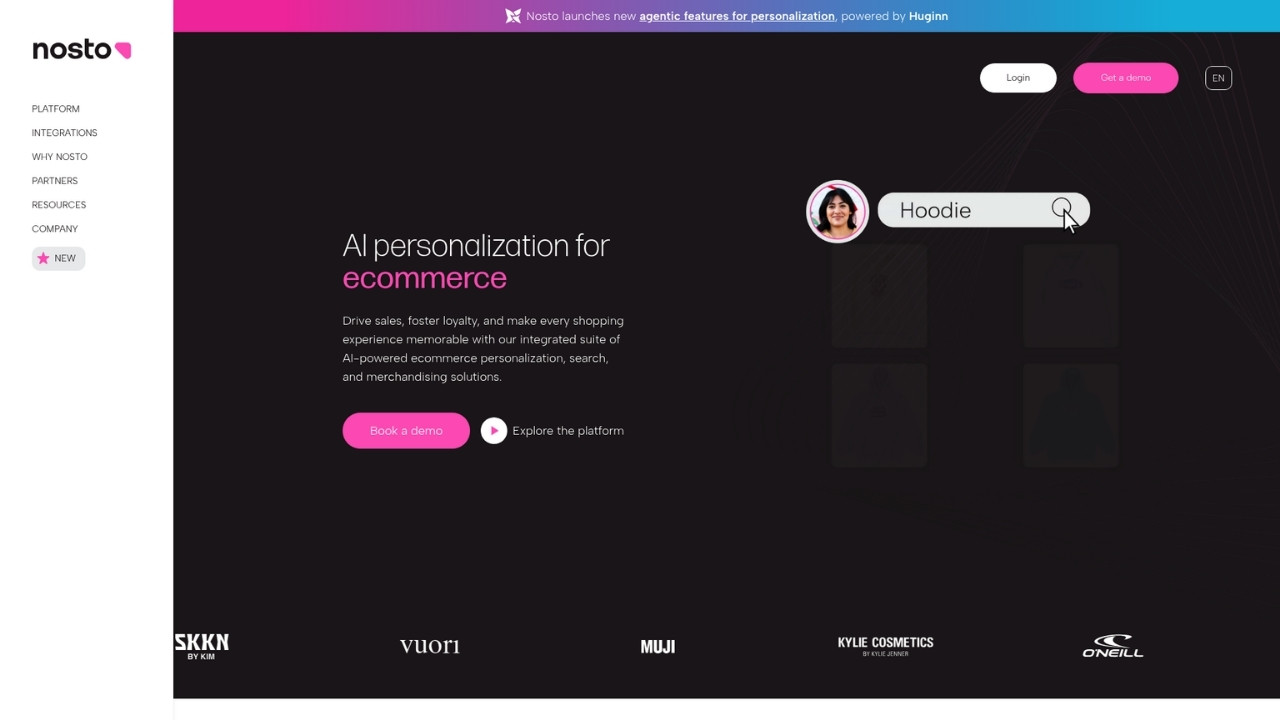
Nosto operates as a Commerce Experience Platform (CXP) with personalization at its core. The company serves brands like SKKN by Kim, Vuori, Muji, Kylie Cosmetics, and O'Neill.
Unlike pure search platforms, Nosto takes a broader approach to the customer experience. The platform recently launched agentic features powered by "Huginn" AI for enhanced personalization.
Features include 1:1 personalization across touchpoints, AI-powered search with merchandising, visual merchandising tools, user-generated content integration, customer segmentation, and A/B testing capabilities.
Pros:
- Strong personalization engine
- Easy integration with existing platforms
- Comprehensive CXP approach beyond just search
Cons:
- Less robust site search than dedicated search platforms
- No self-serve pricing
- Feature breadth may be overkill for simple needs
Best for: Brands prioritizing personalization and customer experience over pure search functionality.
6. ViSenze
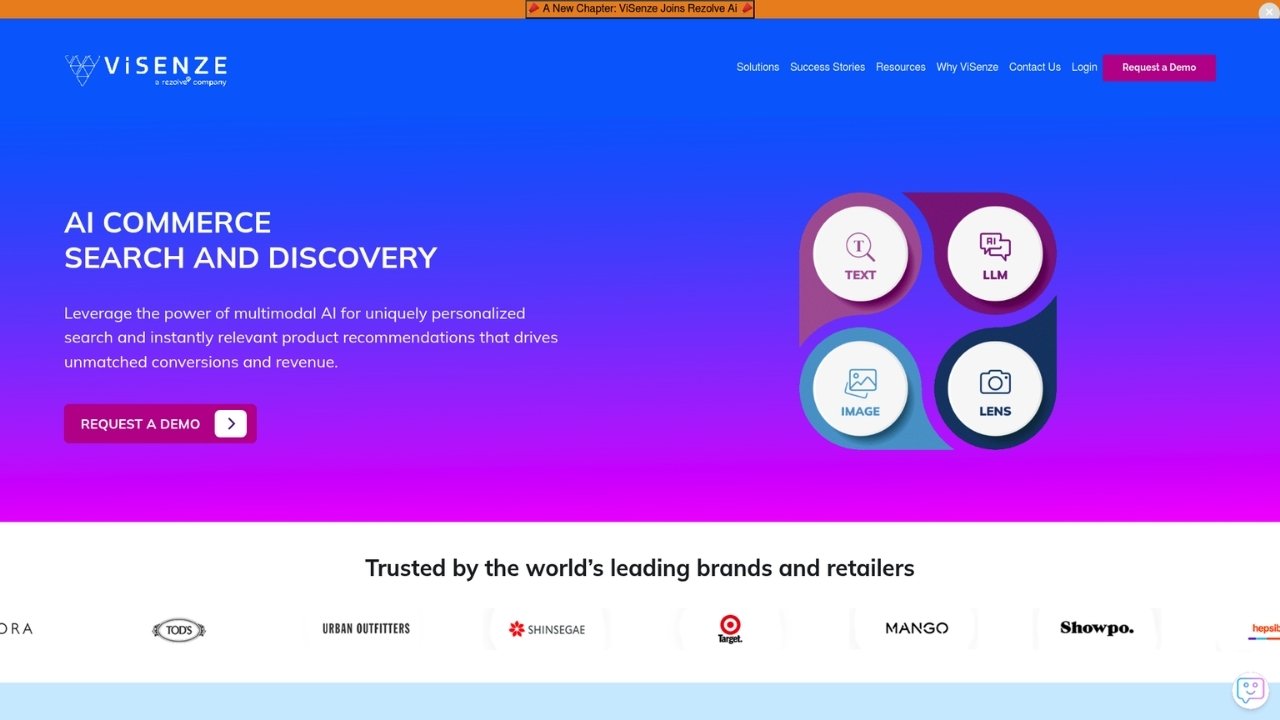
Note: ViSenze was acquired by Rezolve AI and now operates as "ViSenze (a Rezolve Ai Company)." The platform continues to offer visual AI solutions for retail.
ViSenze focuses on visual commerce for marketplaces and large retailers. The platform specializes in automated product tagging and visual search capabilities that reduce manual work for large catalogs.
Key features include Smart Search (visual and text), Smart Recommendations based on visual similarity, Smart Tagging for automated attribute extraction, and analytics for discovery performance.
Pros:
- Advanced visual AI for large catalogs
- Automated tagging reduces manual work
- Multi-marketplace support
Cons:
- Acquired company (potential roadmap uncertainty)
- Smaller ecosystem than major competitors
- Limited pricing transparency
Best for: Marketplaces and retailers with large catalogs needing visual discovery and automated product tagging.
7. Prefixbox
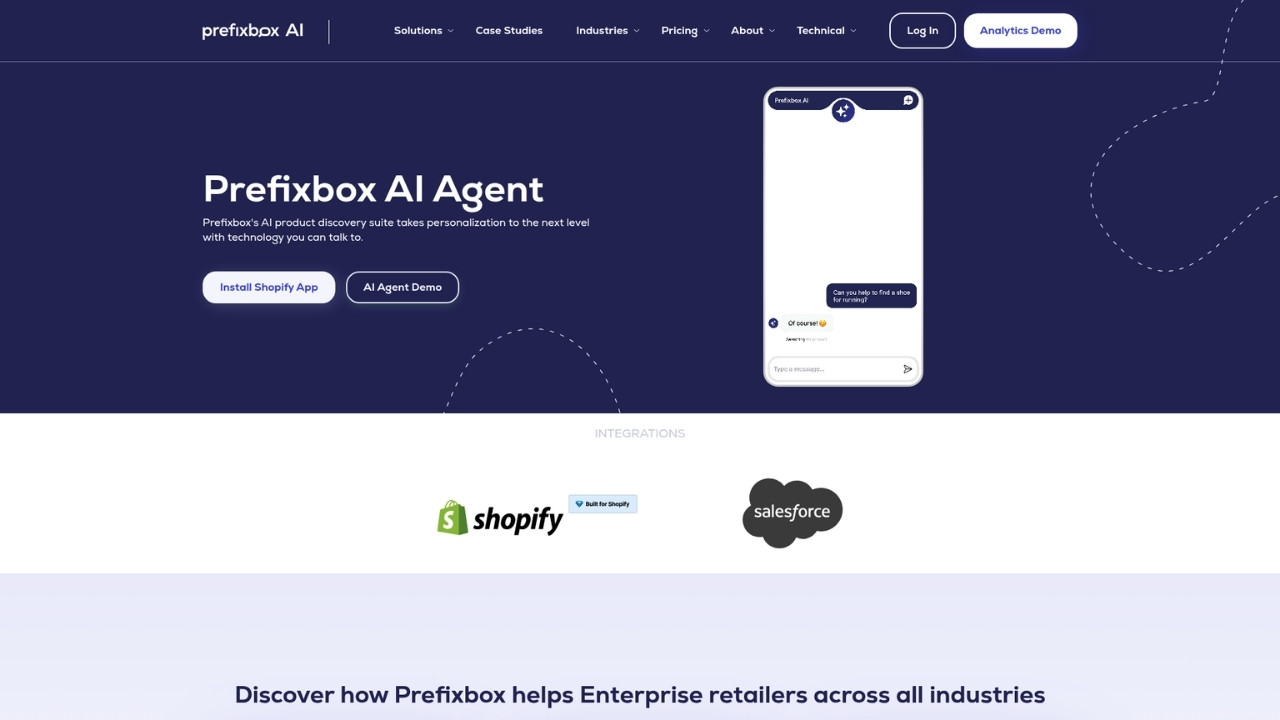
Prefixbox offers fully managed AI search solutions for enterprise retailers. Founded in 2014 in Budapest, Hungary, the company focuses on European and North American enterprise clients.
The "fully managed" aspect differentiates Prefixbox. Rather than self-serve tools, the company provides managed services including implementation and ongoing optimization. Notable results include Bauhaus Czechia boosting revenue by 45% and Rossmann Hungary tripling recommendation revenue.
Features include fully managed AI search, product recommendations, a conversational AI agent for product discovery, rich autocomplete, and search analytics. The platform offers a Shopify app and integrates with Salesforce Commerce Cloud and BigCommerce.
Pros:
- Fully managed service reduces internal resource needs
- Strong European market presence
- Proven results with major retailers
Cons:
- No self-serve option
- Less name recognition than competitors
- Enterprise focus with custom pricing
Best for: Enterprise retailers in Europe and North America who want a fully managed search solution without internal maintenance.
Which Athos Commerce alternative should you choose?
The right platform depends on your team structure, budget, and priorities.
Choose Algolia if you have developers who need full API control and you want transparent, usage-based pricing.
Choose Bloomreach if you're a large enterprise needing CMS and commerce unified, and you have months for implementation.
Choose Constructor if you want AI-native discovery built for conversions without heavy engineering requirements.
Choose Syte if you're in fashion or visual retail and camera search would drive significant value.
Choose Nosto if personalization and customer experience matter more than pure search capabilities.
Choose ViSenze if you run a marketplace with a large catalog needing automated visual tagging.
Choose Prefixbox if you want a fully managed European solution and prefer outsourcing search maintenance.
Tips for migrating from Athos Commerce
If you're considering a switch, plan carefully to avoid disruption.
First, audit your current usage. Which Athos features do you actually use daily? Which merchandising rules drive results? Understanding your actual needs prevents over-buying on a new platform.
Next, plan your data migration. Product feeds, merchandising rules, and search analytics all need to transfer. Some platforms offer migration assistance (ask during demos).
Test before fully switching. Run parallel systems during transition to catch issues before they affect customers.
Finally, factor in implementation time. Some platforms take weeks, others take months. Align your timeline with business cycles to avoid peak season disruptions.
Improve your e-commerce operations today
Product discovery is just one piece of the e-commerce puzzle. While you're evaluating search platforms, consider other areas where AI can reduce costs and improve customer experience.
For example, phone support remains expensive and hard to scale. If your store receives customer calls for order tracking, returns, or product questions, an AI phone agent can handle those conversations 24/7 without hiring additional staff.
Ringly.io offers an AI phone support agent called the AI that integrates with Shopify and handles inbound calls automatically. The platform resolves around 73% of calls without human intervention and supports 30 languages.
Whether you stick with Athos Commerce or switch to an alternative, make sure your product discovery strategy aligns with your team's technical capabilities and your customers' shopping behavior.
Frequently Asked Questions
Which Athos Commerce alternative offers the best value for small businesses?
Algolia stands out for smaller teams because of its free tier (10,000 searches per month) and transparent usage-based pricing. Most other alternatives require contacting sales and target mid-market or enterprise budgets.
Do any Athos Commerce alternatives work well for fashion retailers specifically?
Syte specializes in visual AI for apparel e-commerce, offering camera search and image-based discovery that works particularly well for fashion. Nosto also serves many fashion brands with its personalization focus.
How long does implementation typically take when switching from Athos Commerce to an alternative?
Timeline varies by platform. Algolia, Constructor, and Nosto typically deploy in weeks. Bloomreach usually requires months due to its broader scope. Prefixbox offers fully managed implementation. Plan for parallel running during transition to minimize risk.
Which Athos Commerce alternative requires the least technical resources?
Nosto and Prefixbox require minimal technical resources. Nosto offers easy integration with existing platforms, while Prefixbox provides fully managed service including implementation and ongoing optimization.
Are there any free alternatives to Athos Commerce worth trying?
Algolia offers a genuine free tier with 10,000 searches per month, making it the only option on this list with a free starting point. For paid alternatives, most require custom quotes starting in the mid-market range.