
Aircall positions itself as a premium cloud phone system for sales and support teams. But that premium positioning comes with a price tag that isn't always straightforward. The $30 per user per month you see on the pricing page is just the starting point. Add the features most teams actually need, and your monthly bill can easily double.
This guide breaks down exactly what Aircall costs, what you get at each tier, and where the hidden fees hide. We'll also look at how it compares to alternatives and when the investment actually makes sense.
Editor's note: Want to hear some sample AI support calls made for your Shopify store?
- Just paste your store URL
- Hear sample calls for your store (no email required)
- Listen to demo calls for my store

What is Aircall?
Aircall is a cloud-based VoIP phone system built for modern sales and support teams. Unlike traditional phone systems that require hardware and IT maintenance, Aircall runs entirely through desktop and mobile apps. Your team can make and receive calls from anywhere with an internet connection.
The platform has gained traction with over 22,000 companies worldwide, including brands like WeWork, Pipedrive, and L'Oréal. It sits in a crowded space alongside competitors like Nextiva, RingCentral, Dialpad, and CloudTalk, but positions itself as the more sophisticated option with deeper CRM integrations and advanced call center features.
Aircall's key selling points include 250+ one-click integrations with tools like Salesforce, HubSpot, and Zendesk, AI-powered call transcription and analysis, and global phone number coverage across 100+ countries. The platform is particularly popular with sales teams who need power dialers and support teams handling high call volumes.
But is it worth the premium price? Let's look at the actual numbers.
Aircall pricing plans explained
Aircall offers three main plans, each with a minimum user requirement that immediately rules out solopreneurs and very small teams.
| Plan | Annual Price | Monthly Price | Minimum Users | Best For | Essentials | $30/user/month |
|---|---|---|---|---|---|---|
| $40/user/month | 3 | Small teams getting started | Professional | $50/user/month | $70/user/month | 3 |
| Growing sales and support teams | Custom | Quote-based | Quote-based | 25 | Large enterprises with complex needs | Source: Aircall pricing |
The pricing gap between annual and monthly billing is significant. Paying annually saves you roughly 25-30%, which adds up quickly for larger teams. But committing to a full year upfront isn't always practical for growing businesses.
Essentials plan
The Essentials plan gives you the basics: unlimited inbound and internal calls, one local or toll-free number, IVR menus, call recording stored for up to one year, and basic analytics with six months of data retention. You also get access to over 100 integrations including HubSpot, Zendesk, and Pipedrive.
But the limitations become apparent quickly. You're capped at three teams, and advanced features like Salesforce integration, power dialers, and queue callbacks are locked behind the Professional tier. The one-year call recording storage limit can be problematic for compliance-heavy industries.
Professional plan
This is where Aircall starts to justify its reputation. The Professional plan adds Salesforce integration, a power dialer for outbound sales teams, queue callbacks so customers aren't stuck on hold, and call monitoring with whisper coaching for training. You also get unlimited teams and six months of advanced analytics.
For sales teams making high volumes of outbound calls, the power dialer alone can justify the upgrade. It automatically dials numbers from your contact lists and can save reps two minutes per call according to Aircall's own data. That's significant when your team is making dozens of calls daily.
Custom plan
The Custom plan is designed for enterprises with 25 or more users. It includes everything in Professional plus unlimited international calling, API developer support, single sign-on (SSO), service level agreements (SLAs), and a dedicated account manager. You also get unlimited analytics data retention.
Pricing is quote-based, which typically means "expensive." But for large organizations with complex routing requirements and compliance needs, the custom onboarding and dedicated support can be worth the premium.
Mandatory add-ons to consider
Here's where Aircall's pricing gets tricky. Several features that competitors include as standard are paid add-ons with Aircall.
| Add-On | Price |
|---|---|
| What It Includes | Aircall AI |
| $9/user/month | Call summaries, sentiment analysis, talk-to-listen ratios, key topic recognition |
| Analytics+ | $15/user/month |
| Unlimited history, advanced filtering, custom dashboards, heat mapping | Additional numbers |
| $6/number/month | Extra local or toll-free numbers beyond the one included |
Source: Aircall pricing
If you want AI-powered insights and deep analytics (which are increasingly table stakes for sales teams), you're looking at an extra $24 per user per month on top of your base plan. For a 10-person team on Professional, that's an additional $240 monthly or $2,880 annually.

The hidden costs of Aircall
Beyond the base subscription and add-ons, several costs can catch you off guard.
International calling. While domestic calls to the US and Canada are unlimited on all plans, international calling requires separate bundles unless you're on the Custom plan. Rates vary by destination, and high-volume international teams should budget accordingly.
SMS overages. Aircall includes up to 4,000 outbound SMS messages per user per month. After that, you pay per message. For teams using SMS heavily for appointment reminders or sales follow-ups, this can add up.
Number porting. Bringing your existing phone numbers to Aircall may incur one-time fees of $5-15 per number. Not huge, but worth factoring into migration costs.
Storage limits. The Essentials plan only stores call recordings for one year. If you need longer retention for compliance or training purposes, you must upgrade to Professional or higher.
Support limitations. Essentials and Professional plans only include 24/5 chat support. If you need phone support or 24/7 coverage, that's reserved for Custom plan customers.
The license vs user problem. Aircall charges per license, not per active user. This means if you have five team members but buy three licenses to share, you might run into concurrency issues. Most teams end up buying one license per person anyway, making the distinction academic but worth understanding.
Let's look at a real-world scenario. A 10-person sales team on Professional with AI and Analytics+ add-ons:
- Base: $50 × 10 = $500/month
- Aircall AI: $9 × 10 = $90/month
- Analytics+: $15 × 10 = $150/month
- Total: $740/month ($8,880/year)
That's nearly $9,000 annually before any international calling or SMS overages. For comparison, the same team on Nextiva Engage would pay $250 monthly ($3,000/year), a difference of almost $6,000.
Aircall vs competitors: pricing comparison
Aircall is consistently more expensive than its competitors. Whether the premium is justified depends on your specific needs.
Nextiva
| Feature | Aircall Professional | Nextiva Engage | Price |
|---|---|---|---|
| $50/user/month | $25/user/month | Video meetings | Not included |
| Included | 24/7 support | No (24/5 only) | Yes |
| AI features | $9 add-on | Included | Toll-free number |
Source: Nextiva pricing
Nextiva's Engage plan costs half what Aircall charges for Professional, and it includes video conferencing (which Aircall doesn't offer at all) and 24/7 support. The tradeoff is fewer CRM integrations and less sophisticated call center features. For teams that don't need power dialers and advanced routing, Nextiva is the clear value winner.
Dialpad
Dialpad starts at $15 per user per month for their Standard plan, which includes AI transcription and basic call analytics. That's half Aircall's entry price with AI features that Aircall charges extra for.
However, Dialpad has shifted to conversation-based pricing for their AI Agent features, which complicates direct comparisons. For traditional VoIP needs, Dialpad remains significantly cheaper. For AI-heavy use cases, pricing depends on conversation volume.
CloudTalk
| Plan | CloudTalk Price | Aircall Equivalent | Starter |
|---|---|---|---|
| $25/user/month | Essentials ($30) | Essential | $29/user/month |
| Essentials ($30) | Expert | $49/user/month | Professional ($50) |
Source: CloudTalk pricing
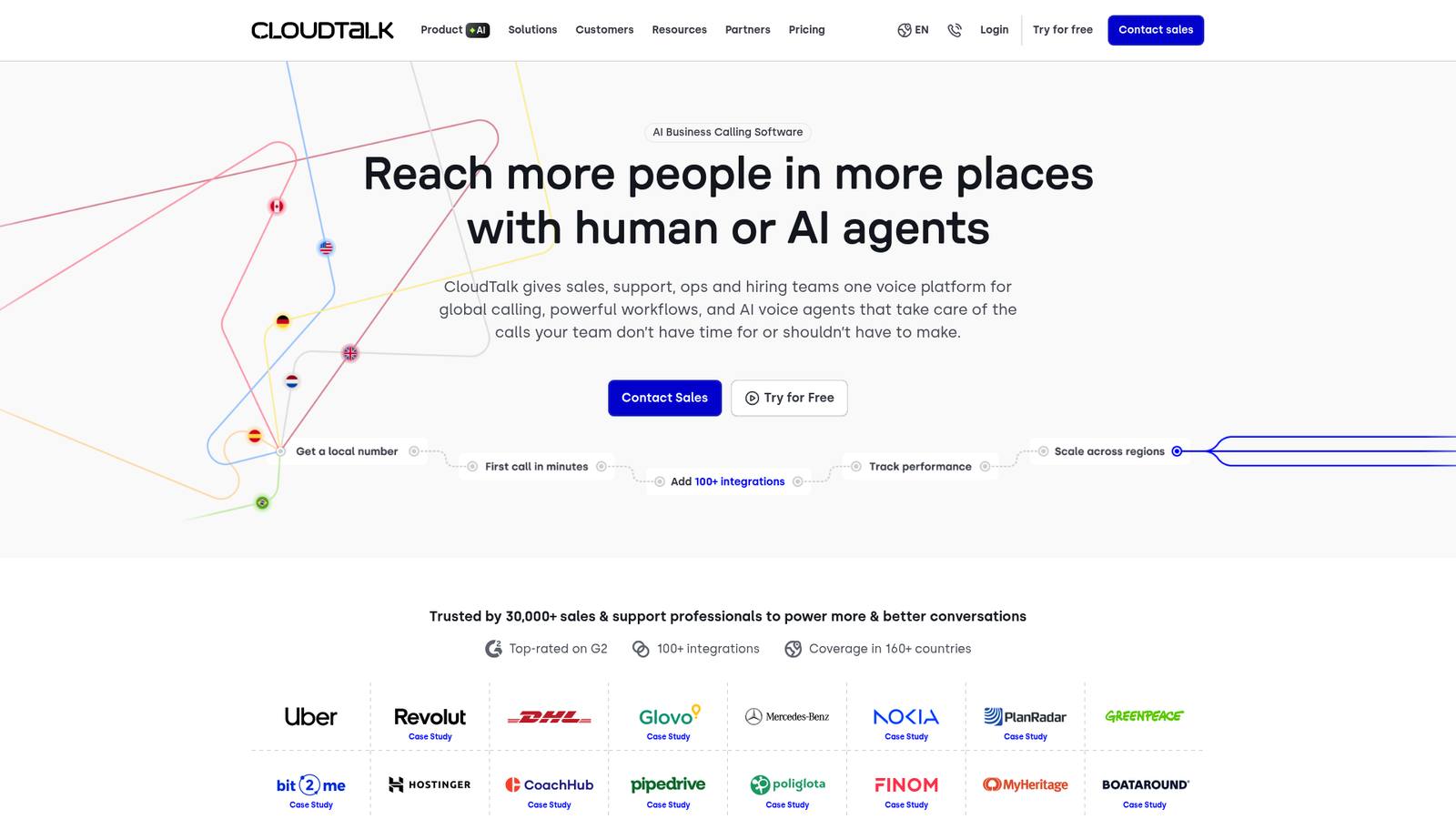
CloudTalk matches Aircall's feature set at slightly lower prices, with the added benefit of per-user pricing rather than per-license. They also offer 24/7 live support starting from their Essential plan, while Aircall limits you to 24/5 chat unless you upgrade to Custom. CloudTalk covers 160+ countries for international numbers versus Aircall's 100+.
RingCentral
RingCentral's Core plan starts at approximately $20 per user per month and includes video meetings, team messaging, and business SMS. Their platform is more of an all-in-one communications suite compared to Aircall's voice-first approach.
For teams that need video conferencing alongside phone service, RingCentral eliminates the need for separate Zoom or Teams subscriptions. Aircall users would need to pay for both Aircall and a video solution, widening the price gap further.

How to negotiate better Aircall pricing
Aircall's published pricing is not set in stone. According to Vendr's negotiation data, the median buyer pays $14,076 annually with an average savings of 22.61% off list price. Here's how to get a better deal.
Time your purchase. Aircall's fiscal year ends in December, with quarter-ends in March, June, and September. Sales teams are most motivated to discount near these milestones, especially year-end.
Commit to multiple years. Aircall prefers multi-year contracts. Buyers who commit to 2-3 year terms typically secure significantly lower per-user rates. Just ensure you negotiate locked-in pricing without annual escalators.
Demonstrate competitive pressure. Actively evaluate alternatives like Nextiva, Dialpad, or CloudTalk and make sure Aircall knows it. Vendr's data shows buyers who demonstrate active competitive evaluation consistently achieve better pricing.
Negotiate volume discounts upfront. If you're starting with 15 users but plan to grow to 30 within a year, negotiate tiered pricing that reflects the higher volume from the start. It's much harder to renegotiate mid-contract.
Bundle add-ons and numbers. Phone number fees and add-on pricing are often negotiable. Request bundled pricing for local and toll-free numbers, or ask for AI and Analytics+ to be included at a discounted rate.
Cap renewal increases. Aircall contracts often include annual price escalators of 3-7%. Negotiate a cap on renewal increases or locked pricing for your entire contract term.
Is Aircall worth the price?
Aircall makes sense for specific use cases, but it's overkill for many teams.
Choose Aircall if:
- Your sales team lives in Salesforce and needs deep CRM integration
- You make high volumes of outbound calls and need a power dialer
- You operate globally and need phone numbers in 100+ countries
- You require advanced call routing, IVR, and queue management
- You have the budget for AI-powered call analysis and coaching tools
Consider alternatives if:
- Your budget is under $30 per user per month
- You need video conferencing included (Aircall doesn't offer it)
- Your team has fewer than 3 users (Aircall's minimum)
- You want 24/7 support without paying enterprise prices
- You primarily need basic calling and SMS without advanced analytics
The honest assessment? Aircall is a premium product with a premium price. For teams that genuinely use its advanced features, particularly the power dialer and deep CRM integrations, the ROI can justify the cost. For teams that just need reliable business phone service, you're paying for capabilities you'll never use.
Getting started with Aircall
If Aircall fits your needs and budget, getting started is straightforward. The company offers a 7-day free trial with full feature access. Implementation for small teams can take just a few minutes if you're selecting new numbers. Porting existing numbers takes longer, typically a few days to a week depending on your current carrier.
Aircall provides group onboarding sessions that are worth attending if you're new to cloud phone systems. The platform is intuitive, but understanding best practices for call flows and routing can save you headaches later.
For teams evaluating alternatives alongside Aircall, consider starting a free trial with Nextiva to compare the user experience and feature sets directly. The lower price point and included video conferencing make it a compelling option for teams that don't need Aircall's most advanced sales features.
Frequently Asked Questions
Does Aircall offer a free trial?
Yes, Aircall offers a 7-day free trial with access to most features. No credit card is required to start. However, there is no free plan available beyond the trial period.
Can I pay monthly instead of annually for Aircall?
Yes, but monthly pricing is significantly higher. Essentials jumps from $30 to $40 per user per month, and Professional goes from $50 to $70. The annual discount saves roughly 25-30%.
Are there any hidden fees in Aircall pricing?
Several costs aren't obvious from the main pricing page. Additional phone numbers cost $6 per month each. International calling requires separate bundles on lower-tier plans. SMS overages apply after 4,000 messages per user per month. Number porting may incur one-time fees.
How does Aircall pricing compare to RingCentral?
Aircall is generally more expensive. RingCentral's Core plan starts around $20 per user per month and includes video meetings, which Aircall doesn't offer. However, Aircall provides more sophisticated call center features and deeper CRM integrations for sales teams.
Is Aircall pricing negotiable?
Yes. According to Vendr's data, buyers achieve an average of 22.61% savings off list price. Multi-year commitments, volume discounts, and competitive pressure are the strongest levers for negotiation.
What is the cheapest Aircall plan?
The Essentials plan is the cheapest at $30 per user per month when billed annually. However, it requires a minimum of 3 users and lacks many features sales teams need, such as the power dialer and Salesforce integration, which require Professional ($50/user/month).