

This post in 30 seconds.
- Every returns portal automates the return form. None of them answer the phone when the customer calls to chase the refund. This post ranks 6 providers honestly and tells you who handles the calls they create.
- Returns now run around 20.8% of ecommerce orders, and roughly a third of your support contacts are already order and refund status. The better your returns flow, the more of those calls you field.
- Built for founders, COOs, and Heads of CX at $10M-$100M Shopify brands running a paid helpdesk and a visible phone number.
Returns are not a small line item anymore. The average ecommerce return rate sits near 20.8% in 2026 (eMarketer), in apparel it runs 20% to 30%, and our own ecommerce return statistics roundup has the full category breakdown. Every returns portal on this list is built to make those returns smoother, recover the refund as an exchange, and keep the revenue. That part works. The part nobody on the first page of Google talks about is what happens next: the customer who can't find the portal link, or doesn't see the refund yet, or wants to swap a size over the phone, picks up the phone. We read the return calls coming into the Shopify brands we run to write this, and after "where's my order," the biggest category was "where's my refund." A portal creates that call. It doesn't answer it.
Most $20M-$80M Shopify brands run a returns portal plus a 4 to 8 person support team, and during the post-holiday return spike that team is drowning in calls about refunds the portal already started. We build the phone layer that sits next to your returns software, so below I've ranked the providers the way a buyer would, and then shown where the phone gap is and who closes it. If your returns season turns into a phone backlog, book a 30-min call and we'll show you what those return calls are costing you.
The 6 returns software providers at a glance
Here's the short version before the deep dives. The right pick depends on your platform, your return volume, and whether exchange conversion or drop-off logistics is the metric you actually care about.
| Provider | Best for | Starting price | Platform | Verdict |
|---|---|---|---|---|
| Loop Returns | High-volume Shopify, exchange-first | ~$155/mo | Shopify only | Market leader for Shopify exchanges |
| ReturnGO | Custom rules, any platform | ~$113/mo | Any platform | Most flexible Loop alternative |
| AfterShip Returns | Budget + international | Free, then ~$11/mo | Shopify + others | Cheapest entry, best for carriers |
| Narvar | Enterprise post-purchase | Custom | Enterprise | Omnichannel + boxless drop-off |
| Happy Returns | In-person box-free returns | Custom | Shopify + others | Physical drop-off network (UPS) |
| Return Prime | First returns app, tight budget | Free, then low paid | Shopify | Best cheap Shopify starter |
One thing the table can't show: not one of these answers the phone. Keep that in mind as you read, because the phone call is where most of the return cost actually hides.
How I evaluated these returns platforms
I'm Ruben, co-founder of Ringly. We run AI phone support for Shopify brands, which means I look at returns software constantly, not as a critic, as the person whose phone agent has to handle the calls these portals generate.
Over the last few weeks I set up and reviewed each provider against the workflow of a $25M-$80M Shopify brand, and I scored five things:
- Platform fit. I checked whether the tool runs on Shopify only or on any platform, since that decides half the shortlist before features matter.
- Exchange-first logic. I ran a return through each flow and watched whether it surfaced an exchange or store credit before offering a cash refund.
- Pricing transparency. I looked for a real published price versus a "contact sales" wall, and I flagged contract terms that push the real cost above the sticker.
- What happens to the call. I read return-call transcripts from real Shopify brands and noted which questions the portal solves on its own and which ones still ring the phone.
- Real-world test. I checked each tool's own support channel and timed how a customer would actually get help when the self-serve flow breaks.
I don't take affiliate commissions on anything below. Ringly is the only thing I sell, and it shows up in its own section for the same reason everything else does: because it answers a question the others leave open.
1. Loop Returns
Best for: high-volume Shopify brands that treat exchange rate as their top post-purchase metric.
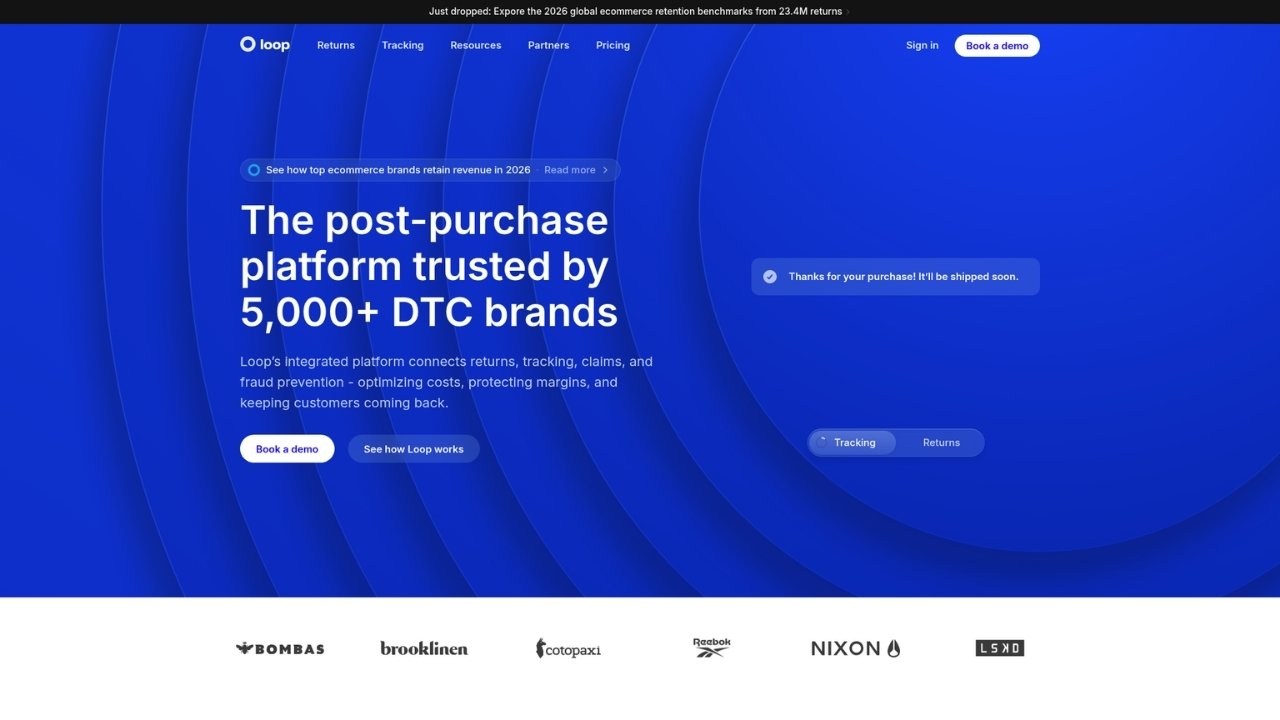
Loop is the most established returns platform in the Shopify world, and it shows. The company says it works with 5,000+ Shopify brands, has processed over 70.5 million returns, and helped merchants keep more than $2 billion in revenue by turning refunds into exchanges. If you've evaluated returns software before, you've already compared everything else to Loop. For more options in this lane, our Loop Returns alternatives breakdown goes deeper.
Pricing
| Plan | Price | Included |
|---|---|---|
| Essential | ~$155/mo | Core returns + exchanges |
| Advanced | ~$272/mo | Shop Now, instant exchange, more rules |
| Enterprise | Custom | High volume, dedicated support |
What works
- Best exchange engine in the category. Shop Now, Instant Exchange, and Bonus Credit are built to convert a refund into a new order, and at 1,000+ returns a month that conversion pays for the tool.
- Deepest Shopify integration. It reads your catalog, inventory, and order data cleanly, which is why high-volume Shopify brands default to it.
- Mature analytics. Loop reports on return reasons, exchange rates, and retained revenue in a way most of the field can't match.
What doesn't
- Shopify only. If any part of your stack lives off Shopify, Loop is out before you start.
- The contract math. Loop runs on annual contracts, and reviewers consistently note that support gates and add-ons push the real cost 25% to 40% above the sticker price.
- Overkill for low volume. Under a few hundred returns a month, you're paying for an engine you can't fill.
Why it ranks first
Loop earns the top spot for the brand it was built for: a high-volume Shopify store that wants every return to become an exchange. Just know the sticker price is not the real price.
2. ReturnGO
Best for: brands that want Loop-style exchange logic with more custom rules, or that aren't on Shopify.
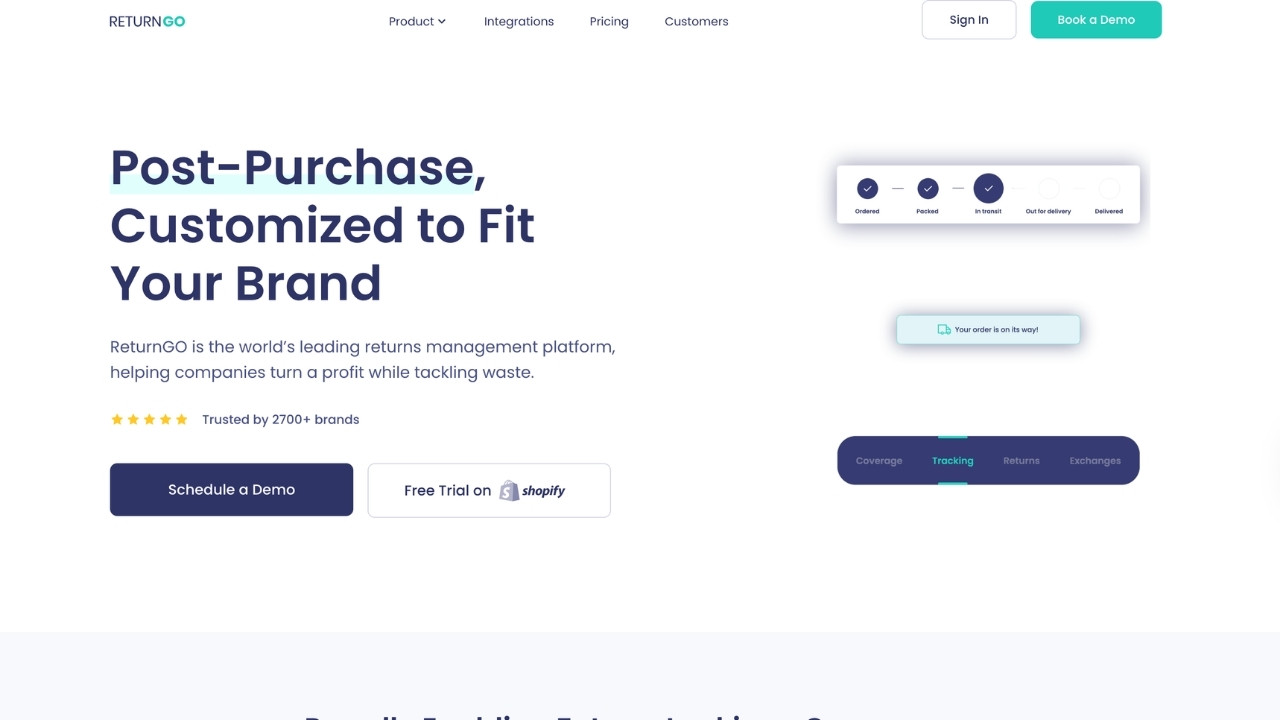
ReturnGO positions itself as the flexible alternative to Loop, and the pitch holds up. The big difference is platform: ReturnGO runs on Shopify, WooCommerce, BigCommerce, Magento, and custom builds, so it stays on your shortlist even if you're not all-in on Shopify. It carries 4.9 stars across 360+ Shopify reviews and 4.8 on G2, which is among the strongest review profiles in the category.
Pricing
| Plan | Price | Included |
|---|---|---|
| Growth | ~$113/mo | Core returns + exchanges |
| Standard | ~$247/mo | More volume + rules |
| AI / higher tiers | ~$147/mo+ | AI-driven return workflows |
What works
- Runs on any platform. This is the headline reason to pick it over Loop, and it matters the moment your stack isn't pure Shopify.
- Unlimited custom return flows. If you need to handle Buy-X-Get-Y promos or odd edge cases in your refund logic, ReturnGO gives you the rules to do it.
- Exchange-first with instant exchange. It surfaces exchange and store credit before a cash refund, with an instant-exchange option that keeps revenue in the building.
What doesn't
- A learning curve. All that flexibility means more to configure, and the advanced flows take time to set up right.
- Lighter brand recognition. It's well-reviewed but newer to the conversation than Loop, so peer-reference is thinner.
Why it ranks second
ReturnGO is the pick when you want tight control over refund logic, or when you're not on Shopify and Loop simply isn't an option. For most non-Shopify brands, it's the obvious choice.
3. AfterShip Returns
Best for: budget-conscious brands and anyone shipping internationally across many carriers.
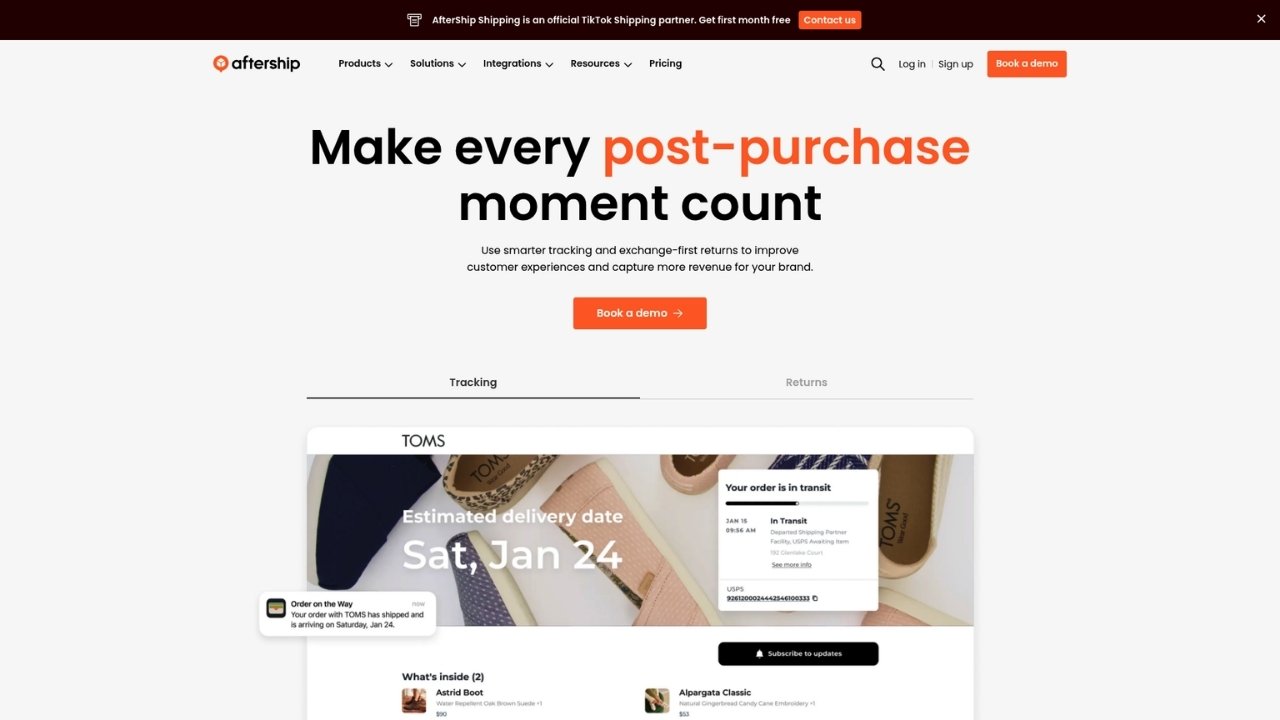
AfterShip is best known for order tracking, and its returns module rides on that same carrier network. With support for 1,282+ carriers, it's the strongest option on this list for international and multi-carrier returns. It's also the cheapest way in, which makes it a common first returns tool. AfterShip Returns carries a 4.7 rating across 2,400+ reviews.
Pricing
| Plan | Price | Included |
|---|---|---|
| Free | $0 | 3 returns/mo |
| Essentials | ~$11/mo | 20 returns/mo |
| Pro | ~$59/mo | Higher volume |
| Premium | ~$239/mo | Full returns + tracking |
What works
- Cheapest entry point. Below roughly 200 returns a month, AfterShip wins on price by a wide margin.
- Tracking and returns together. If you already run AfterShip for order tracking, adding returns is a small step.
- Carrier breadth. For cross-border returns, the carrier network is the real advantage.
What doesn't
- Less exchange conversion. The returns module is less focused on turning refunds into exchanges than Loop or ReturnGO.
- Value is tied to the suite. You get the most out of it when you use the wider AfterShip platform, not the returns module alone.
Why it ranks third
AfterShip is the smart budget and international pick. Above a few hundred returns a month, the exchange-conversion math starts to favor a dedicated returns engine.
4. Narvar
Best for: enterprise retailers that need omnichannel post-purchase, not just a returns form.
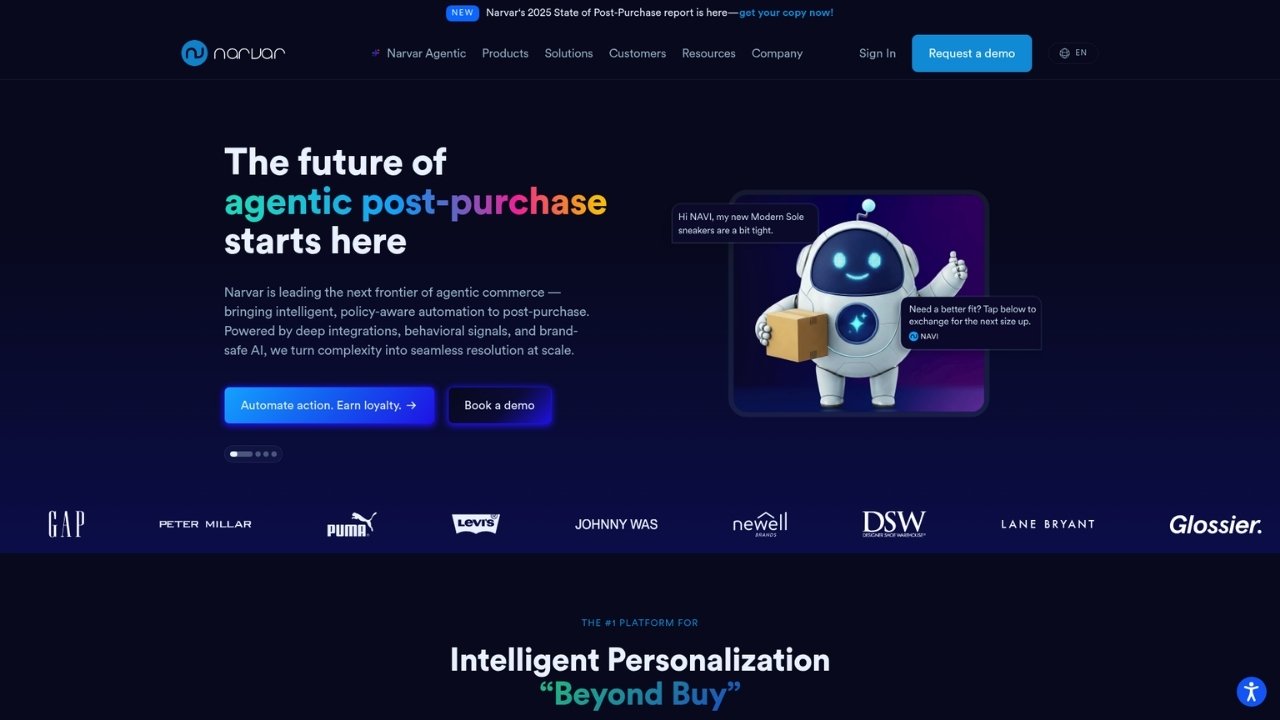
Narvar plays in the enterprise tier. It covers tracking, returns, and a boxless drop-off network under one omnichannel post-purchase platform, and it's built for retailers operating across online and physical channels. The standout feature is its drop-off network: customers can return items at thousands of locations without printing a label or finding a box.
Pricing
Pricing isn't public. Narvar is sold by enterprise contract, so you'll need to talk to their sales team for a quote.
What works
- Boxless drop-off network. Returns at thousands of physical locations, no label, no box, is a real differentiator for large brands.
- Omnichannel post-purchase. It ties online and in-store experiences together in a way SMB tools don't attempt.
- Brand-controlled tracking. The post-purchase pages stay on your brand, which large retailers care about.
What doesn't
- Enterprise pricing and implementation. This is a bigger commitment of budget and setup time than anything else on the list.
- Overkill below $20M. If you're a focused DTC brand, you'll pay for breadth you won't use.
Why it ranks fourth
Narvar is the right answer for $20M+ retailers that need an omnichannel post-purchase platform. For a focused Shopify DTC brand, it's more than the job requires.
5. Happy Returns
Best for: brands where in-person, box-free returns are the customer experience you want to win on.
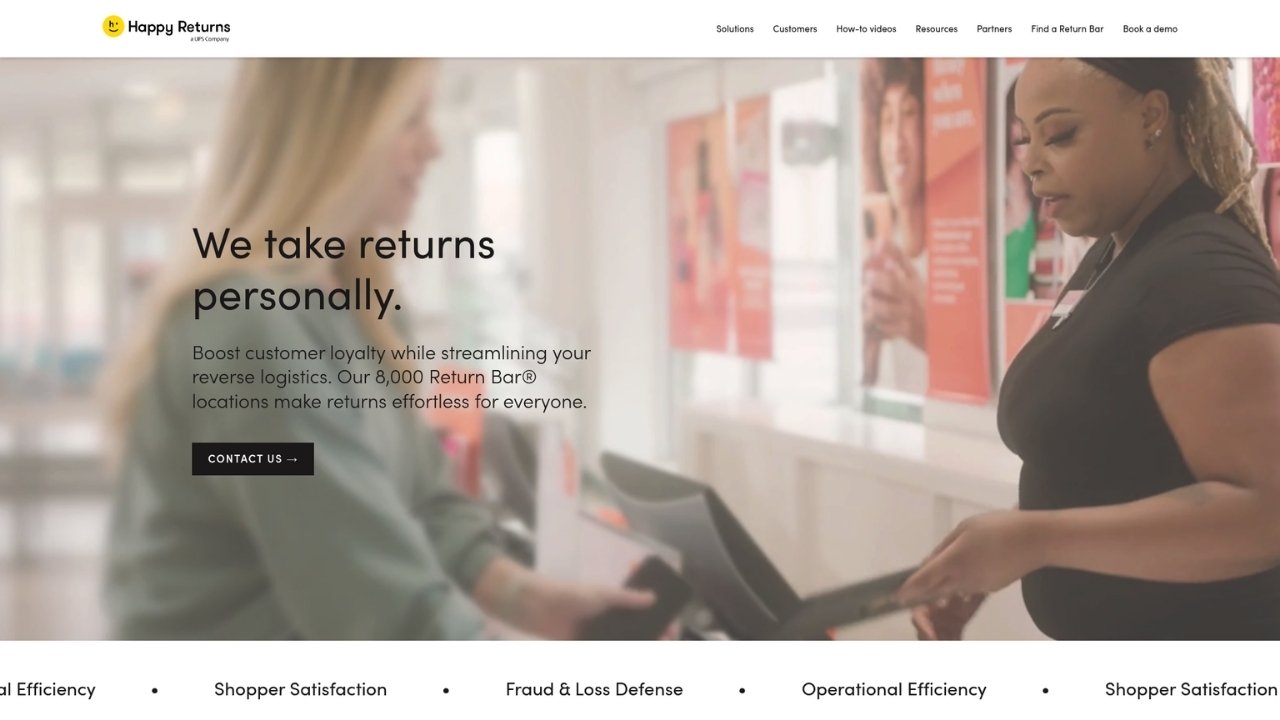
Happy Returns, now a UPS company, is built around a physical idea: let customers return items in person, with no box and no label, and refund them on the spot. The Return Bar network handles the reverse logistics, consolidating returns so you're not processing single parcels. It's a different shape of tool than the software-first portals above.
Pricing
Pricing is custom. Happy Returns quotes based on volume and your use of the drop-off network, so you'll contact sales.
What works
- Box-free, label-free drop-off. For customers near a Return Bar, this is the smoothest return experience available.
- Instant refunds at drop-off. The refund happens when the item is handed over, which kills a whole category of refund-status anxiety.
- Reverse-logistics consolidation. Backed by UPS, the physical side is handled for you.
What doesn't
- Geography-dependent value. The drop-off network only helps customers who live near one.
- Lighter software config. It's less about configurable return rules and more about the physical network, so software-heavy teams may want to pair it with a portal.
Why it ranks fifth
Happy Returns is the pick when the in-person, box-free experience is your differentiator. It solves the physical return, not the configuration depth that Loop and ReturnGO compete on.
6. Return Prime
Best for: smaller Shopify brands buying their first returns app on a tight budget.
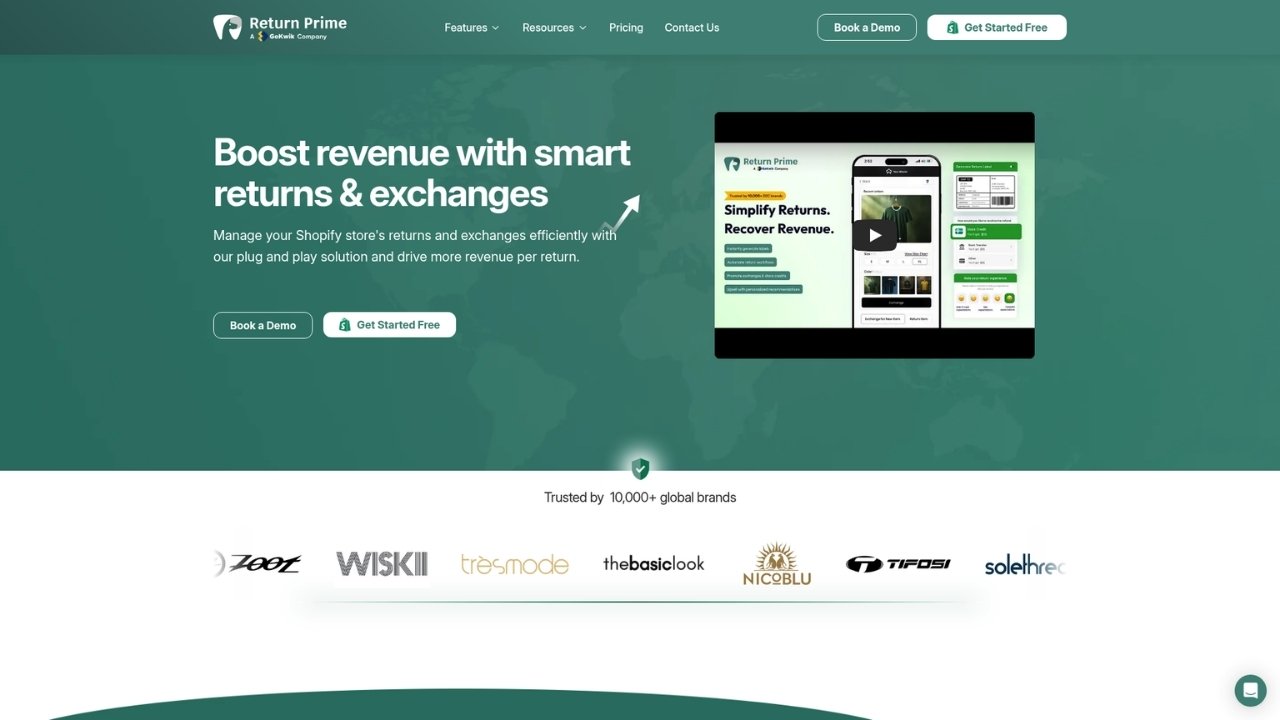
Return Prime is the value pick. It's a Shopify-focused returns and exchanges app with a genuinely useful free tier, and it covers the core job: self-serve returns, automated approvals, and flexible refunds through store credit, exchange, or cash. For a growing brand that's outgrowing manual email returns but isn't ready for Loop money, it's an easy starting point.
Pricing
| Plan | Price | Included |
|---|---|---|
| Free | $0 | Core self-serve returns |
| Paid tiers | Low monthly | More volume + automations |
What works
- A real free tier. You can run self-serve returns without paying, which is rare in this category.
- Cheap and fast to set up. It covers returns and exchanges without the implementation overhead of an enterprise tool.
- Flexible refund options. Store credit, exchange, and cash refund are all there out of the box.
What doesn't
- Fewer exchange-conversion levers. It won't push exchange rate the way Loop's engine does.
- Shopify-centric with lighter analytics. Reporting is thinner than the leaders, and it's built for Shopify.
Why it ranks sixth
Return Prime is the best cheap entry point for a Shopify brand's first real returns app. You can always graduate to a heavier engine when volume justifies it. For more in this lane, see our roundup of Shopify returns apps and the broader returns management software guide.
The gap every returns portal leaves: the phone
Pick any provider above and you'll automate the return form. What none of them do is answer the phone when the self-serve flow breaks, and that call is where most of the real return cost lives.
Support people have a name for it: WISMR, "where's my refund," the returns-side cousin of WISMO. It's driven by the gap between when a customer expects their refund and when it actually posts, made worse by silence during the return. WISMO already accounts for around 30% of ecommerce support contacts (Salesforce), our own WISMO calls breakdown covers the phone side, and WISMR sits right on top of it. Every contact costs roughly $6 to handle, and during the post-holiday return spike those calls don't politely wait for business hours.
Here's the trap. A better returns portal processes more returns, which means more refunds in flight, which means more "where's my refund" calls, not fewer. Email and SMS status updates help, and brands that automate return comms see WISMR tickets drop 60% to 80% (parcelLab) in a month or two. But the customer who still wants to talk to a person, who calls at 9pm because the portal won't accept their exchange, lands on your support team. Your returns software wasn't built to pick up.
"My customers also feel like it's a normal person. They feel like they can communicate if they have questions."
Claudia Droge, TechCraft Studio
Ringly.io: the phone layer for the return calls your portal creates
Ringly.io is AI phone support for Shopify brands. It does not replace your returns portal. It answers the calls the portal generates, so your CS team isn't fielding the same return questions over and over.
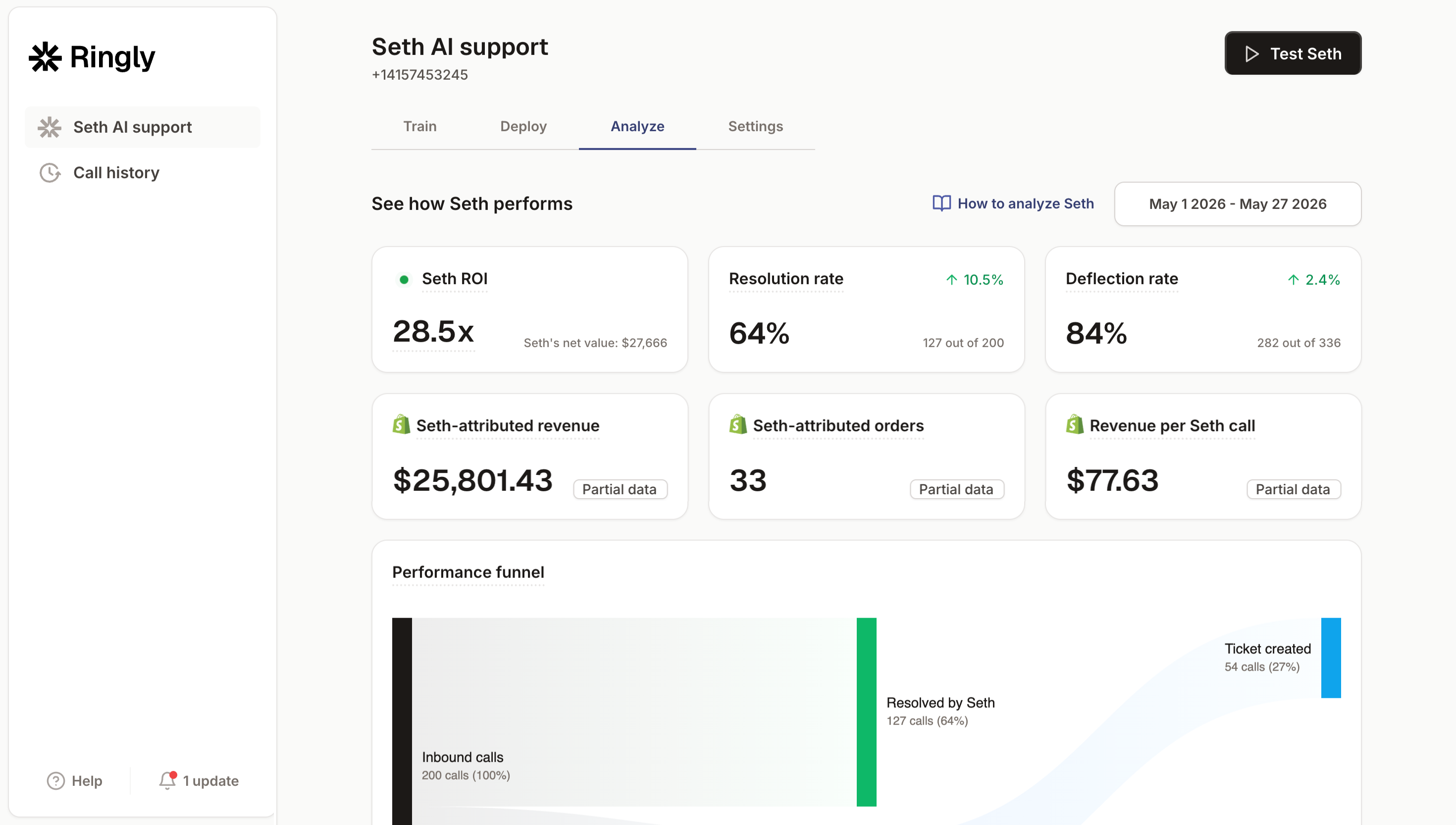
The AI answers inbound calls 24/7. It finds the order in your Shopify store, checks order and refund status, explains your return policy, and walks the customer through starting a return or an exchange. Calls that genuinely need a person escalate cleanly to whatever helpdesk you already run. Seth resolves up to 90% of calls on its own for $1.99 a call after the first 50, versus $7 to $16 per call for a human BPO. WashCo, a Shopify brand we launched, recovered $22,664 in attributed revenue in its first 7 days on the phone.
Pricing: $99 a month for the first 50 conversations, then $1.99 each. Live in under an hour, and there's a 65% resolution guarantee. The point isn't to swap out Loop or ReturnGO. It's to put a layer behind them that handles the human on the line, so the phone backlog during return season stops eating your team.
What this costs vs handling return calls in-house
The portals on this list cost a few hundred dollars a month. The return calls they generate cost a lot more, because that cost is payroll.
Take a typical $50M Shopify brand running a 6-rep CS team during return season:
| Line item | Today | With Ringly |
|---|---|---|
| 6 reps × $4K loaded per rep | $24,000/mo | n/a |
| Ringly Enterprise (~$5K/mo) | n/a | $5,000/mo |
| Net monthly CS spend | $24,000/mo | $5,000/mo |
| Monthly savings | n/a | $19,000/mo |
| Annual savings | n/a | $228,000/yr |
That's roughly 70% of repeatable calls (order status, refund status, return how-to, the same five questions all day) routed to the AI. The other 30%, the genuinely messy calls, still go to your team, who now have time to actually solve them. The returns software handles the form. This handles the load. If you want to see the math on your own call volume, book a 30-min call and we'll do it live.
How to choose the right returns setup
There's no single best returns provider, only the best fit for your platform and volume. Pick the portal for how you process returns, then decide who answers the calls it creates.
- Choose Loop Returns if you're a high-volume Shopify brand and exchange rate is the number you're judged on. Budget for the real cost, not the sticker.
- Choose ReturnGO if you want custom refund logic, or you're not on Shopify. It's the most flexible engine here.
- Choose AfterShip Returns if you're early, budget-tight, or shipping internationally across many carriers.
- Choose Narvar if you're a $20M+ retailer that needs omnichannel post-purchase and a physical drop-off network.
- Choose Happy Returns if in-person, box-free drop-off is the experience you want to compete on.
- Choose Return Prime if you're a smaller Shopify brand buying your first returns app and watching the budget.
- Add a phone layer if your return season turns into a phone backlog and your reps are burnt out answering refund-status calls. That's where an AI phone agent sits next to your portal, not instead of it.
Whatever you pick, treat the portal and the phone as two separate jobs. Most brands solve the first and ignore the second, then wonder why customer service costs keep climbing every return season.
Frequently asked questions
Is Ringly a returns app? No. Ringly is AI phone support for Shopify brands. It works alongside a returns portal like Loop or ReturnGO, answering the inbound calls those portals generate, like "where's my refund" and "the portal won't take my exchange." You keep your returns software and add the phone layer.
Do I still need a returns portal if I have a phone agent? Yes. The portal runs your self-serve return form, your refund logic, and your exchange engine. Ringly handles the customers who call instead of using the portal, or who call after starting a return. They're two different jobs, and most brands need both.
What's the cheapest returns software for ecommerce? AfterShip Returns and Return Prime are the cheapest entry points, both with free tiers for low volume. Below roughly 200 returns a month, AfterShip usually wins on price. Above that, a dedicated exchange engine like Loop or ReturnGO often pays for itself in retained revenue.
Which returns software works on non-Shopify platforms? ReturnGO is the most flexible here, running on Shopify, WooCommerce, BigCommerce, Magento, and custom builds. AfterShip and Narvar also support multiple platforms. Loop and Return Prime are Shopify-focused.
What handles "where is my refund" phone calls? Your returns portal sends email and SMS status updates, which cut a lot of tickets. But the customer who still calls to chase a refund needs a person or a phone agent. Ringly answers those calls, checks the refund status in Shopify, and explains where the refund is, 24/7.
Loop vs ReturnGO, which is better? Loop has the deepest Shopify integration and the strongest exchange-conversion engine at high volume. ReturnGO is more flexible, works on any platform, and allows unlimited custom return rules. High-volume Shopify exchange-first brands lean Loop, everyone else often leans ReturnGO.
How much does returns software cost? Most providers start around $11 to $155 a month and scale with return volume. Enterprise platforms like Narvar and Happy Returns are quoted by sales. The bigger cost is usually the support calls returns generate, which is payroll, not software.
Talk to us

If you run a $10M-$100M Shopify brand and your returns season turns into a phone backlog, a 30-min call is the fastest way to see what those return calls are actually costing you. We'll look at your real call volume and show you what an AI phone agent next to your returns portal would handle.
Our 3 promises.
- Live in under 1 hour. Setup and test calls are free.
- 30-day money back on the $99 plan fee.
- 65% resolution guarantee: if Seth resolves under 65% of your support calls in a month, that month comes back as credit (after 90 days on Pay per call).
Ruben (Ringly co-founder) takes these calls personally.