
A customer calls at 7pm about an order that should have arrived. She speaks Spanish. Your line rolls to a voicemail greeting in English, she hangs up, and she reorders the same product from a competitor before you ever hear the message. You never knew the call happened.
If you run customer experience at a $10M-$100M Shopify brand, you already know what your phone queue looks like in English. The Spanish version of it is usually invisible, because the callers who can't get served just leave. The instinct is to fix it by hiring a bilingual rep or signing a Spanish call center. Before you do that, it's worth seeing how much of that queue is the same routine work you already handle every day.
Most $10M-$100M Shopify brands we talk to don't have a Spanish support problem so much as a routing problem. The "where's my order" call is the same call whether the customer asks in English or Spanish, and a second shift of people to answer it is an expensive way to cover the same five questions. Book a 30-min call and we'll show you what your Spanish callers are hitting right now.
Why Spanish support stopped being optional
The numbers moved past optional a while ago. US Hispanic buying power is projected to reach close to $2.8 to $3 trillion by 2026, and Hispanic households already make up around 15% of total US consumer spending, growing about 32% from 2021 to 2026 versus 23% for the market overall. There are more than 40 million Spanish speakers in the US. If your store ships nationally, a real slice of your callers prefer Spanish.
Language isn't a preference at the margin, it's a buying decision. CSA Research surveyed 8,709 consumers across 29 countries and found 76% prefer to buy products with information in their own language, and 40% won't buy from sites in another language at all. The part that should matter most to a retention-minded operator: 75% say they're more likely to buy the same brand again when customer care happens in their language.
And it's not only the new shoppers. Even bilingual customers who do business in English all day tend to switch to Spanish for the calls that carry weight, like a payment problem, a return, or an order that didn't show up. Those are exactly the calls that come in by phone, not chat. When the issue is emotional or urgent, people fall back to the language they think in, and they remember which brands met them there.
There's a quieter cost too. The Spanish caller who can't get an answer rarely complains, so the problem never shows up in your ticket counts or your CSAT. It shows up later, as a customer who simply didn't reorder. That's the kind of retention leak that's almost impossible to attribute, because the call that caused it never made it into your helpdesk.
So the question isn't whether to serve Spanish callers. It's how to do it without doubling your support headcount to answer the same routine questions twice. For the broader picture, our guide to multilingual ecommerce support covers more than phone, but phone is where the trust-sensitive calls land.
The real cost of the "just hire a bilingual team" answer
Here's where most brands go first. Post a job for a bilingual rep, or call a Spanish BPO. Both work. Both also cost more than the work actually requires.
A US customer service rep runs roughly $4,000 a month loaded once you add benefits, payroll tax, training, and the cost of replacing them when they leave. To cover Spanish calls properly you usually need more than one, because a single rep can't hold your phone hours plus weekends. So the honest version of "hire a bilingual team" is a second shift, sized for peak, sitting idle most of the day.
The catch is what those reps spend their time on. Pull a week of your Spanish call transcripts and you'll see the same shape as your English queue: where's my order, can I return this, is this in stock, what are your hours. That repeatable work is usually 70% or more of the volume. You'd be paying premium bilingual headcount to answer the same five questions over and over, in a second language.
Leaving it unanswered isn't free either. When callers can't reach a person, 85% never call back and 62% switch to a competitor. Add a language barrier on top of that and a Spanish caller who hits an English voicemail is gone before you knew they called. The phone backlog you can't see is the most expensive one. For the English-side version of this math, see our breakdown of WISMO calls and how repeatable they really are.
Want to see what your Spanish queue actually looks like before you staff for it? Book a 30-min call and we'll review your missed calls live.
Three ways to add Spanish support, and where each one breaks
There are really three paths. Each is a fine answer for some brands and a bad fit for others.
| Approach | What it costs | Coverage | Where it breaks | Best for |
|---|---|---|---|---|
| Hire bilingual reps | ~$4K/mo loaded per rep | Your phone hours, hard to cover weekends | Linear cost, slow to hire, idle most of the shift | Brands with steady high Spanish volume |
| Outsource to a bilingual BPO | Per-minute + management overhead | 24/7 if you pay for it | Quality drift, another vendor, humans still answer the routine | High volume, want to offload the whole queue |
| AI phone support in Spanish | From $349/mo flat | 24/7 on your existing line | Genuinely subjective calls still escalate to a human | Brands who want the routine handled without a second team |
Hire bilingual reps
You get full control and real cultural nuance. You also get the slowest, most expensive path. Bilingual reps are hard to find, take months to ramp, and cost the same whether the queue is busy or dead. One rep can't cover evenings and weekends, which is when a lot of consumer calls land. This is the right move only if your Spanish volume is high and steady enough to keep a person genuinely busy.
Outsource to a bilingual BPO
A Spanish call center in Latin America or the Philippines gives you native fluency and round-the-clock coverage without managing the hiring. The trade-off is the one every brand running Gorgias or Zendesk plus a BPO already knows: per-minute billing that climbs with volume, quality that drifts, and another vendor relationship to manage. And the people you're paying are still answering the same routine five questions.
One thing nobody should do: machine-translate your store and call it support. Running your site through Google Translate skips the cultural context, and a Spanish caller can tell in the first sentence. Translation is not the same as being served in your language.
AI phone support in Spanish, on the line you already have
The cheapest version of "add Spanish support" is to stop treating Spanish as a separate queue. An AI phone agent answers the call in whatever language the caller speaks, pulls the order from your store, and handles the routine without routing it to a person at all. The hard calls, the ones that actually need cultural judgment or empathy, escalate to whichever bilingual rep you keep. You don't staff a second shift to cover the same questions twice. More on the general approach in our overview of AI voice agents for ecommerce.
How AI phone support handles Spanish on a Shopify store
Ringly.io is AI phone support for Shopify brands. The phone shouldn't be a tax on your support team, and it definitely shouldn't be a tax twice over because half your callers speak another language.
Here's how it works on a Shopify store. The AI answers inbound calls 24/7 in 40 languages, Spanish included, on the same number you already publish. There's no separate Spanish line, no menu, no "press 2 for Spanish." It detects the language the caller is using and responds in it natively, not as a translation layer bolted on after the fact. When a Spanish-speaking customer calls about an order, the AI finds it in your Shopify store, gives the status in Spanish, and can process a return or check order status the same way it would for an English caller.
Product questions come from your knowledge base, so the answers match what you've actually told it, in the caller's language. The calls that need a human, the sensitive return, the upset customer, the edge case, escalate cleanly to your team through smart call transfer and land in whatever helpdesk you already run. You keep your phone number, your helpdesk, and your bilingual rep for the calls that earn one.
The practical upshot for an operator is that Spanish stops being a project. There's nothing to staff, no separate queue to monitor, no second set of macros to maintain in another language. The same agent that answers your English line at 2pm answers a Spanish caller at 11pm, and both calls show up in the same dashboard with the same resolution data. If your store sees a launch spike or a holiday rush, the Spanish side scales with it automatically, because you're not adding seats to handle more calls.
This also fixes the after-hours gap that hits Spanish callers hardest. A lot of consumer calls land in the evening and on weekends, exactly when a one-person bilingual coverage plan falls apart. An agent that's awake at all hours means the 9pm "where's my order" call gets a real answer in Spanish instead of a voicemail nobody returns.
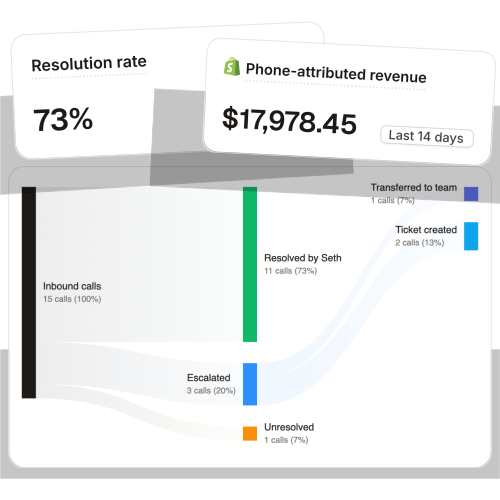
Across 50+ brands, the AI resolves 73% of calls on its own, at roughly $0.42 per resolved call compared to $7 to $16 per call for a human call center. The most repeated thing customers say after talking to it has nothing to do with language:
"My customers also feel like it's a normal person. They feel like they can communicate if they have questions."
Claudia Droge, TechCraft Studio
That "feels like a normal person" reaction is the whole game for Spanish callers. Sounding native, not translated, is what earns the trust that makes them call back. If you want the deeper version, our piece on AI voice agents for customer support and the page on 24/7 ecommerce phone support both go further.
What this costs versus a second Spanish shift
Run the math on the staffing answer first, then compare.
| Line item | Today | With Ringly |
|---|---|---|
| 6 reps x $4K loaded per rep | $24,000/mo | n/a |
| Ringly (illustrative) | n/a | $5,000/mo |
| Net monthly CS spend | $24,000/mo | $5,000/mo |
| Monthly savings | n/a | $19,000/mo |
| Annual savings | n/a | $228,000/yr |
That's the routine 70%, English and Spanish, handled by the AI, with your team free for the calls that actually need them. Adding a separate bilingual shift on top of that team would push the number the wrong way, for a queue that's mostly the same five questions in another language. WashCo, a Shopify brand we launched, recovered $22,664 in its first 7 days on the phone, English and otherwise, because the calls that used to roll to voicemail got answered.
Plans start at $349/mo, and there's a 65% resolution guarantee: if the AI resolves under 65% of your calls in 90 days, we refund the last 3 months. You can also sanity-check the staffing side against our Shopify support cost reduction breakdown or the full pricing page.
Want us to do this math against your real call volume? Book a 30-min call and we'll compare it to your current setup live.
Frequently asked questions
Does the AI actually speak Spanish, or just translate? It responds natively in Spanish, not as a translation pass over an English answer. It detects the language the caller is using and handles the whole call in it, so the conversation sounds like it was built for a Spanish speaker, not run through a machine.
What about regional Spanish, like Mexico versus Spain versus Argentina? The AI handles natural conversational Spanish across regions and follows the caller's lead. For brand-specific terms or product names, you set those in your knowledge base so they come out the way you want them.
Do I still need any bilingual humans? You need fewer, and for the right calls. The routine work like order status, returns, and product questions gets handled automatically, and the sensitive or complex calls escalate to your bilingual rep. You're keeping humans for judgment, not for repeating the same five answers.
Does it work with my Shopify store and my helpdesk? Yes. It connects to your Shopify store to find orders and process returns, and it escalates cleanly to Gorgias, Richpanel, Reamaze, or whatever helpdesk you already run. You keep your current phone number and workflows. See customer service for Shopify for the full integration picture.
How much does Spanish phone support cost this way? Plans are Grow $349/mo, Pro $799/mo, and Enterprise custom, all flat monthly. Spanish isn't a separate add-on or a per-language fee, the 40-language support is built into the same agent answering your English calls.
Will Spanish-speaking customers know it's AI? The most common reaction across our brands is "you don't sound like AI." Sounding like a real person, in the caller's own language, is exactly what keeps them on the line and brings them back.
How fast can I add Spanish support? You're live in under an hour. Add your website, docs, or knowledge base and the agent is ready to take calls in Spanish and English on the same line, with no new number to publish.
Talk to us

If you run a $10M-$100M Shopify brand and Spanish-speaking customers keep hitting an English voicemail, a 30-min call is the fastest way to see what that's costing you. We'll pull the picture of what your line is doing today and show you what the routine calls, in any language, would look like handled.
The 3-layer guarantee.
- Live in 14 days or it's free until launched.
- 65% resolution in 90 days or we refund the last 3 months of subscription fees.
- We keep working free until we hit 65%.
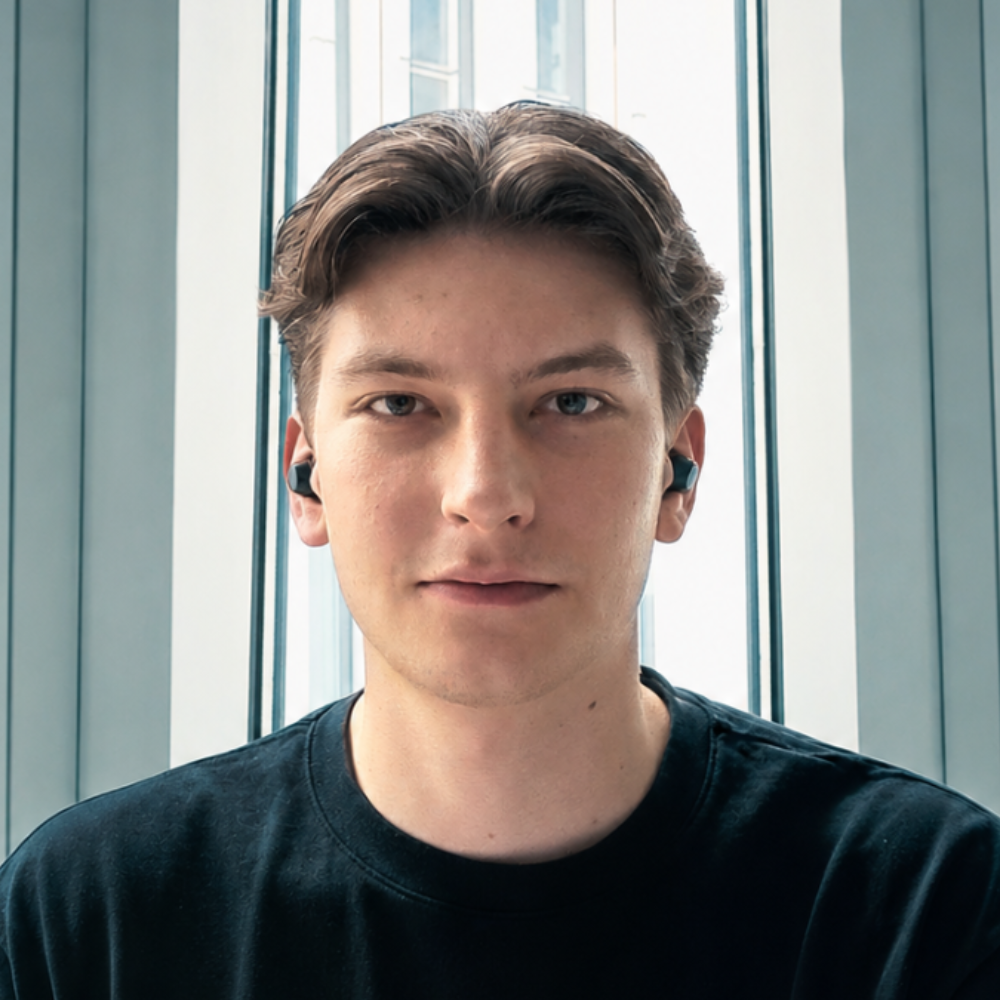
Ruben (Ringly co-founder) takes these calls personally.