
A return is never one cost. It's five, stacked.
- The five cost buckets inside a single return, and the one lever that moves each one without a site redesign.
- The bucket nobody puts on the spreadsheet: the phone calls returns generate ("where do I send it", "where's my refund", "can I just swap the size").
- Written for founders and Heads of CX at $10M-$100M Shopify brands running a CS team and a visible phone line.
A return looks like one line on your P&L. It isn't. By the time a refunded item is back on the shelf, you've paid for the reverse shipping label, the rep who graded it, the restock or the write-off, the margin you handed back, and the call the customer made to ask where to send it. Add it up and the average online return costs a retailer about $33 to process, with most brands landing somewhere between $15 and $30 each, according to returns-ops data from DigitalApplied.
Most cost-cutting advice fixes two of those five buckets and stops. You optimize shipping, you tighten the restock process, and the other three keep bleeding. If you run customer experience at a Shopify brand doing $10M-$100M and your January queue is half return questions, you already know the bucket that hurts most isn't on any of those lists.
This is the playbook for all five. One concrete lever per bucket, sequenced cheapest-first, with the real savings numbers next to each.
We run AI phone support for 50+ Shopify brands, which means we watch return-season call volume blow up support teams every January. If returns are eating your margin and your phone line, book a 30-min call and we'll do the math on your numbers live.
What a single return actually costs you
Before you can cut the cost, you have to see where it hides. Here's the anatomy of one returned order, broken into the five buckets you can actually pull levers on.
| Cost bucket | What it covers | Cost per return |
|---|---|---|
| Reverse shipping | The inbound label to get the item back | $5-$15 |
| Restocking + labor | Receiving, grading, restock or write-off | $6-$42 |
| Refund vs exchange | The margin you hand back instead of keeping the sale | $8-$40+ |
| The return call | "Where do I send it", "did you get it", "where's my refund" | $3-$8 |
| Prevention gap | The return that should never have shipped | varies |
Those ranges come from DigitalApplied's per-return cost breakdown, which pins the average all-in cost at $33. At a 16.5% average ecommerce return rate (apparel runs closer to 22%), and with US shoppers sending back around $744 billion in merchandise last year per Loop's returns analysis, the line item gets large fast. And it doesn't sit alone on the P&L. It compounds with your wider ecommerce customer service spend, because the same team handling returns is the team handling everything else.
Most playbooks fix the first two buckets, the shipping and the restock, and quietly ignore the three that carry more than half the cost. The refund-versus-exchange gap alone ($8-$40 of lost margin) is bigger than the shipping and refund fees combined. The return call is small per instance but it spikes exactly when you're least staffed for it.
The point of the table is sequencing. The cheapest, fastest wins live in buckets two, three, and four. Prevention (bucket five) saves the most over time but takes the longest to land, so it goes last, not first. Let's take them in the order that gets money back quickest.
How I built this playbook
I'm Ruben, co-founder of Ringly. This isn't a rewrite of the returns blogs already ranking. I run AI phone support for more than 50 Shopify brands, so I see two things most returns guides don't: the real money a return costs once you count the labor, and the calls a return generates.
Here's what shaped the levers below:
- I pulled real numbers, not list prices. Where I name a savings range, it's from published returns-ops data (DigitalApplied, Loop, Salesforce) and flagged inline so you can check it. Where it's a Ringly number, I say so.
- I read the call logs returns produce. Across 50+ brands, I went through return-season transcripts and counted what customers actually call about. The single most common return call isn't "where's my refund". It's "can I just swap the size".
- I watched what happens to that call on a portal versus a phone. On a self-service returns portal, the size-swap customer clicks "refund". On a phone, with the right prompt, the swap gets offered and the sale stays. That gap is the whole reason bucket four matters.
- I sequenced by speed-to-savings, not by what's trendy. Returnless refunds and an exchange-first flow move money this week. A sizing redesign moves money next quarter. The order matters.
Nobody else in the search results for this topic connects the customer-service cost line to the actual phone call, or treats exchange conversion as something that happens live on a call. That's the gap this playbook fills.
Lever 1: stop overpaying for reverse shipping
Reverse shipping is the most visible cost and the easiest to overpay on. Two moves cut it fast.
Route returns to the closest node, not back to your origin warehouse. Sending every return to one central dock is the default, and it's expensive. Zone-based routing (return goes to whichever facility is nearest the customer) cuts return shipping cost by 25-35% per DigitalApplied. If you run a 3PL, ask whether they support disposition routing. If you don't, even a two-warehouse setup with simple rules helps.
Consolidate instead of shipping every return solo. Batching returns through scheduled carrier pickups instead of one-off labels saves another 15-25% per unit. This matters more than it sounds, because return labels are getting more expensive on their own. USPS raised mailing rates by an average of 7.8% in July 2024, and 40% of brands now charge a return shipping fee to offset it, per Loop.
That fee is the third move, and it needs a scalpel, not a hammer. Charge for change-of-mind and multi-size bracketing. Keep returns free for defects, damage, and exchanges. The customer who ordered three sizes to keep one is a cost you can recover. The customer who got a broken item is one you protect at all costs. A blanket "returns now cost $7" punishes both and trains your best buyers to shop elsewhere. A segmented policy recovers spend without the churn. If you want the deeper version of this, our returns best practices guide breaks down where to draw the line.
One caveat on the fee, because it's where brands get it wrong. The point isn't the few dollars per label. It's the behavior change. When a return costs nothing, bracketing (ordering several sizes, keeping one) becomes free, and your return rate climbs structurally. A small, clearly communicated change-of-mind fee nudges customers to buy the right size once instead of ordering three. The fee pays for itself less in recovered shipping and more in fewer returns ever entering the chain. Your return policy is a behavior lever, not just a legal page, so write it like one.
Lever 2: kill restocking labor and write-offs
The restock bucket is two costs in a trench coat: the labor to receive and grade the item ($4-$12) and the restock-or-write-off decision ($2-$30). Three levers shrink both.
Use returnless refunds where the math is obvious. When the cost to ship an item back plus the labor to process it exceeds what the item is worth, paying for the return is lighting money on fire. Refund the customer, let them keep the item, and skip the entire reverse chain. This is standard for sub-$25 items now, and it's a customer-experience win on top of a cost win. The trick is setting a clean rule (item value under your reverse-logistics cost) so reps aren't deciding case by case. Our breakdown of solutions to reduce refunds in returns management covers where returnless makes sense and where it gets abused.
Automate grading. A consistent grading rubric (Grade A back to shelf, Grade B to a secondary channel, defective to chargeback) plus a self-service intake portal cuts per-return handling cost by 40-60% and saves $3-$8 per return on the grading step alone, per DigitalApplied. The savings come from reps not re-litigating every item.
Recover value on the items you can't restock. Supplier chargebacks recover 50-100% on defective merchandise, and a secondary resale channel for open-box or Grade B stock recovers 60-80% of the item's value instead of writing it to zero. Most brands eat these costs because nobody owns the recovery process. Assign it. A returns management service or a clear internal rulebook turns a write-off into a partial recovery.
Lever 3: turn refunds into exchanges
This is the biggest bucket and the one most cost guides treat as a footnote. The lost margin on a refunded sale runs $8-$40+, which is larger than the shipping and refund fees put together. Every refund you convert to an exchange or store credit keeps that margin in the business.
The data says the ceiling is high. Around half of all returns end up as exchanges or upsells when the flow nudges that way, according to Loop, and 40-60% of issued store credit gets reconverted into a new purchase that often exceeds the original credit. The customer was going to interact with you anyway. The only question is whether they leave with their money back or with a new item.
Three moves stack here:
- Make the exchange the path of least resistance. Instant exchanges (you ship the replacement before the return arrives) and an exchange-first portal flow beat a refund-first flow every time. If the first button says "exchange", more people exchange.
- Add a store-credit bonus. Offer 110% in store credit instead of 100% cash back. It costs you a little margin and keeps the whole sale in your ecosystem. Our guide to Shopify exchanges walks through the setup.
- Catch the swap before it ships. A size change made before fulfillment costs nothing. The same swap after delivery costs $25+ in reverse processing. Speed matters, which is the bridge to the bucket nobody costs.
Want to compare this to your current refund-to-exchange ratio? Book a 30-min call and we'll pull the math on your store.
Lever 4: the return cost nobody puts on the spreadsheet
Every returns guide lists "customer service touchpoint, $3-$8" as a per-return cost and then never mentions it again. That touchpoint is usually a phone call. And during return season it's a flood.
Here's the call mix a return generates. "Where do I send it back?" "Did you get my return yet?" "Where's my refund?" That last one is WISMR, the return-season twin of WISMO ("where's my order"), which already accounts for up to 50% of inbound support calls at roughly $5 each, per Salesforce. Then there's the one that matters most: "Can I just swap the size instead?"
I read return-season call logs across 50+ Shopify brands on Ringly to figure out what these calls actually are. The single most common return call isn't a refund chase. It's a customer trying to swap. On a self-service returns portal, that customer clicks refund. On a phone, with the right prompt, the swap gets offered and the sale stays. That is the difference between bucket three leaking and bucket three holding, and it only happens if someone (or something) picks up.
The problem is staffing. Returns concentrate in time: the post-holiday January wave, the post-launch surge. That's exactly when your CS team is most overwhelmed and when hiring temporary reps is most expensive. The call volume spikes precisely when answering it costs the most. So the calls roll to voicemail, the refunds get clicked, and the margin walks.
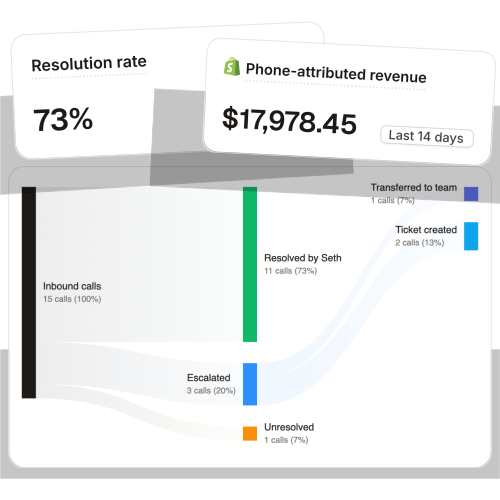
This is the bucket Ringly was built for. Ringly.io is AI phone support for Shopify brands. Instead of staffing up a phone team for every return wave, the AI answers inbound calls 24/7, finds the order in your Shopify store, processes the return or the exchange, and offers the swap before the refund happens. It pulls real-time status so "where's my refund" gets answered without a rep, and it escalates the genuinely complex calls to Gorgias, Richpanel, or whatever helpdesk you already run. Across 50+ brands the AI resolves 73% of calls autonomously at roughly $0.42 per resolved call, against $7-$16 per call for a human BPO. Ringly has handled 150,000 real calls to date.
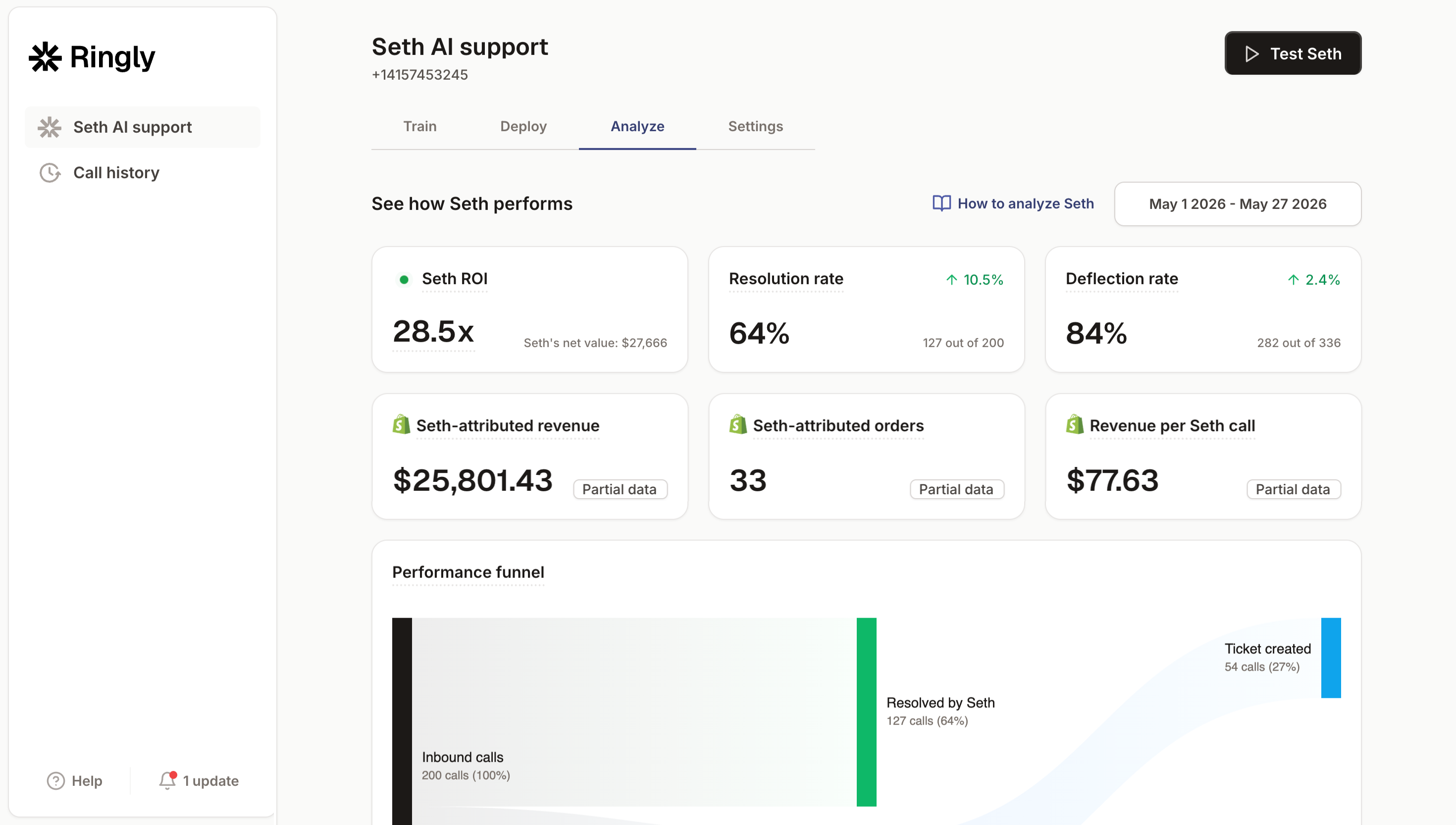
The revenue side is the part operators underrate. WashCo, a Shopify brand we launched, recovered $22,664 in its first 7 days on the phone. A chunk of that is calls that would have ended in a refund ending in a kept sale instead. When the agent on the line can say "I can swap that for the next size up and have it out today", the refund button never gets pressed.
"My customers also feel like it's a normal person. They feel like they can communicate if they have questions."
Claudia Droge, TechCraft Studio
If you've tried a returns portal and watched it convert swap-able returns into straight refunds anyway, the gap is the channel. A portal is a form. A return call is a conversation, and conversations convert. For more on the call side specifically, see how we think about WISMO calls and 24/7 ecommerce phone support.
Lever 5: prevent the return before it ships
Prevention is the highest-ceiling bucket and the slowest to land, which is why it goes last in the sequence, not first. The fast operational levers above get money back this week. Prevention pays out over a quarter. Both matter, the order matters more.
The biggest preventable cause is the expectation gap: the item didn't match what the customer pictured. Close it in three places.
- Fix sizing first. Size charts, real measurements, and fit feedback cut apparel returns by 20-35% with AI size recommendations and 8-15% from better product photography, per DigitalApplied. Sizing and fit drive nearly a fifth of all returns, so this is where the biggest preventable win sits.
- Send post-purchase care emails. A short email 24-48 hours after delivery (how to use it, how to care for it, what to expect) reduces "product not as expected" returns by 8-12%. It's cheap and most brands skip it.
- Use your return-reason data to find the root SKUs. A handful of products usually drive a disproportionate share of returns. Pull the reason codes, find them, and fix the listing, the sizing, or the product. Our guides on how to reduce product returns and DTC returns best practices go deep on the prevention side, and the numbers behind all of this live in our ecommerce return statistics roundup.
A word on where the reason data actually comes from. Most brands trust the dropdown the customer picks in the returns portal, and that dropdown lies. Customers pick "changed my mind" because it's the fastest path to a refund, even when the real reason was a sizing miss or a damaged box. The unfiltered version of why a product comes back shows up on the phone, where the customer explains it before they've been funneled into a tidy category. Reading those calls is how you find the SKU that's quietly generating a return rate twice your average. The portal codes tell you the volume. The calls tell you the why.
Prevention is also the only bucket that compounds. Every other lever saves you money on a return that already happened. Prevention shrinks next quarter's return volume, which shrinks every other bucket at once. That's why it's worth the slower payback, and why it belongs in the plan even when the operational levers feel more urgent. The mistake is starting here, before the fast wins are banked. Bank the fast wins first, then invest in prevention with the savings.
The thing prevention can't do is help with the returns you've already got coming. For those, you need the four operational levers, and you need the phone line covered.
What this saves you, and the order to do it in
Put real numbers on it. Returns concentrate in season, so the cost shows up as a call surge that forces you to either staff up or let the queue rot. Take a typical $50M Shopify brand running a 6-rep CS team that scales to 8-9 during the January return wave.
| Line item | Today | With the phone bucket covered |
|---|---|---|
| 6 reps x $4K loaded per rep | $24,000/mo | n/a |
| Seasonal surge reps (2-3 during return season) | $8,000-$12,000/mo peak | n/a |
| AI phone support (illustrative) | n/a | ~$5,000/mo |
| Net monthly CS spend (steady state) | $24,000/mo | $5,000/mo |
| Monthly savings | n/a | $19,000/mo |
| Annual savings | n/a | $228,000/yr |
That's roughly 70% of repeatable calls (return status, exchange requests, the same handful of questions over and over) routed to the AI. The 30% that genuinely need a human still go to your team, who now have the bandwidth to handle them well. And the surge-staffing line, the seasonal reps you hire just to survive January, largely goes away.
Stack that on the operational levers and the order to run them is:
- This week: turn on returnless refunds for low-value items and flip your portal to exchange-first. Fast, no engineering.
- This month: segment your return-shipping policy and set up zone routing or consolidated pickups with your 3PL.
- This month: cover the phone bucket so return calls get answered and swaps get offered instead of refunded.
- This quarter: fix the sizing, the content, and the root-cause SKUs driving preventable returns.
Want this scoped to your store? Book a 30-min call and we'll do the math on your return volume and your call mix live. For the wider context, our returns management overview ties the operational levers together, and the Shopify returns app and Shopify refunds guides cover the tooling.
Frequently asked questions
How much does it cost to process an ecommerce return? The average online return costs a retailer about $33 all in, with most brands landing between $15 and $30 each. That includes reverse shipping, receiving and grading labor, restock or write-off, the refund fee, the customer-service touchpoint, and the lost margin on the sale.
What's the fastest way to reduce return costs? Returnless refunds on low-value items and an exchange-first portal flow. Both can be turned on this week with no engineering, and they hit the two biggest non-shipping buckets: write-offs and lost margin. Slower levers like sizing fixes save more over time but take a quarter to land.
Do returnless refunds actually save money? Yes, when the item value is below your reverse-logistics cost. If shipping an item back plus the labor to process it costs more than the item is worth, refunding without the return is the cheaper path and it improves the customer experience. Set a clean value threshold so reps aren't deciding case by case.
Should I charge customers for returns? Charge for change-of-mind and multi-size bracketing, keep returns free for defects, damage, and exchanges. A blanket return fee recovers some cost but trains your best customers to shop elsewhere. 40% of brands now charge a return fee, but the segmented version protects loyalty while recovering spend.
How do I get more exchanges instead of refunds? Make the exchange the default path, offer instant exchanges, and add a store-credit bonus (110% in credit versus 100% cash). Around half of returns convert to exchanges or upsells when the flow nudges that way, and the highest-conversion moment is a live call where a swap can be offered before a refund is processed.
How do return calls drive up return costs? Each return generates a customer-service touchpoint costed at $3-$8, usually a call asking where to send the item, whether it arrived, or where the refund is (WISMR). These calls spike during the post-holiday return wave, exactly when your team is most overwhelmed and seasonal staffing is most expensive.
Does AI phone support handle returns and exchanges? Yes. Ringly answers inbound calls 24/7, finds the order in Shopify, processes returns and exchanges, answers refund-status questions, and offers a swap before a refund is processed. It resolves 73% of calls autonomously and escalates the complex ones to your existing helpdesk.
Talk to us

If returns season turns your phone line into a refund-status hotline, a 30-min call is the fastest way to see what that queue is actually costing you. We run AI phone support for 50+ Shopify brands and we'll map your return-call mix against the five cost buckets above, live.
The 3-layer guarantee.
- Live in 14 days or it's free until launched.
- 65% resolution in 90 days or we refund the last 3 months of subscription fees.
- We keep working free until we hit 65%.
Ruben (Ringly co-founder) takes these calls personally.