

This post in 30 seconds.
- Four calls, one number: pet food support is autoship management, ingredient and recall safety, perishable WISMO, and life-stage diet questions, all hitting the same line.
- It's a revenue line: autoship is 77%+ of net sales for the category leaders, and one saved cancel call protects 4-5x the lifetime value of a one-time buyer.
- Built for $10M-$100M pet food brands on Shopify running a paid helpdesk with a visible phone number.
It's 9 p.m. on a Sunday when the recall headline drops. A freeze-dried lot, a contamination warning, the kind of post that travels through pet-parent Facebook groups before your team has even read the FDA notice. By the time your support lead opens the laptop Monday morning, the phone line is already stacked: half the queue is scared owners asking "is MY food on the list," the other half is autoship customers trying to cancel before Tuesday's box ships so they're not charged for food they're now afraid to feed.
That mix is what makes a pet food brand's phone line different from almost any other DTC category. I called the published phone lines of nine DTC pet food brands during a week one of them had an active recall, and timed how long it took to reach a human. The fastest was 40 seconds. Four of them rolled to voicemail. If you run support at a $10M-$100M pet food brand on Shopify, you already know which of those nine you'd rather be.
Most pet food operators treat the phone like a cost to minimize. It's closer to a revenue line you're underfunding. Below is how the calls actually break down, why hiring against them rarely pencils out, and what the brands keeping their line live are doing instead. If your weekend calls are going to voicemail right now, book a 30-min call and we'll pull your missed-call log live and show you what's sitting in it.
What pet food brand phone support actually sounds like
Strip out the "thanks for the great service" calls and the pet food phone line is really four separate jobs wearing one phone number. Each one shows up differently, and each one breaks differently when nobody picks up.
The single biggest reason these calls can't all be treated the same is that two of them are time-bound to the minute and two of them are emotionally loaded.
- Autoship management. Pause, skip, swap a recipe, change the frequency, cancel before the next charge. These are the highest-volume calls and the most time-sensitive: the customer is calling because a box ships in 48 hours and the website portal confused them. WISMO and subscription calls together run 30-40% of tickets in a normal week and 50%+ at peak, according to Salesforce.
- Ingredient, formula, and recall safety. "Can my dog with a chicken allergy eat this?" "Is lot 4471 part of the recall?" These read like product questions but they're really safety questions, and 92% of pet owners rate fast response times "very important" when choosing where to buy pet food online, per our own pet food ecommerce customer experience breakdown.
- Perishable WISMO. With fresh and frozen food, "where's my order" isn't a calm question. The customer is watching a thaw window. A late box isn't an inconvenience, it's spoiled product and a refund conversation. (More on handling these in our guide to WISMO calls.)
- Life-stage diet transitions. Puppy to adult, adult to senior, the weight-management switch the vet just recommended. These are consultative, repeat across thousands of customers, and almost always end in a recipe change you'd love to get right.
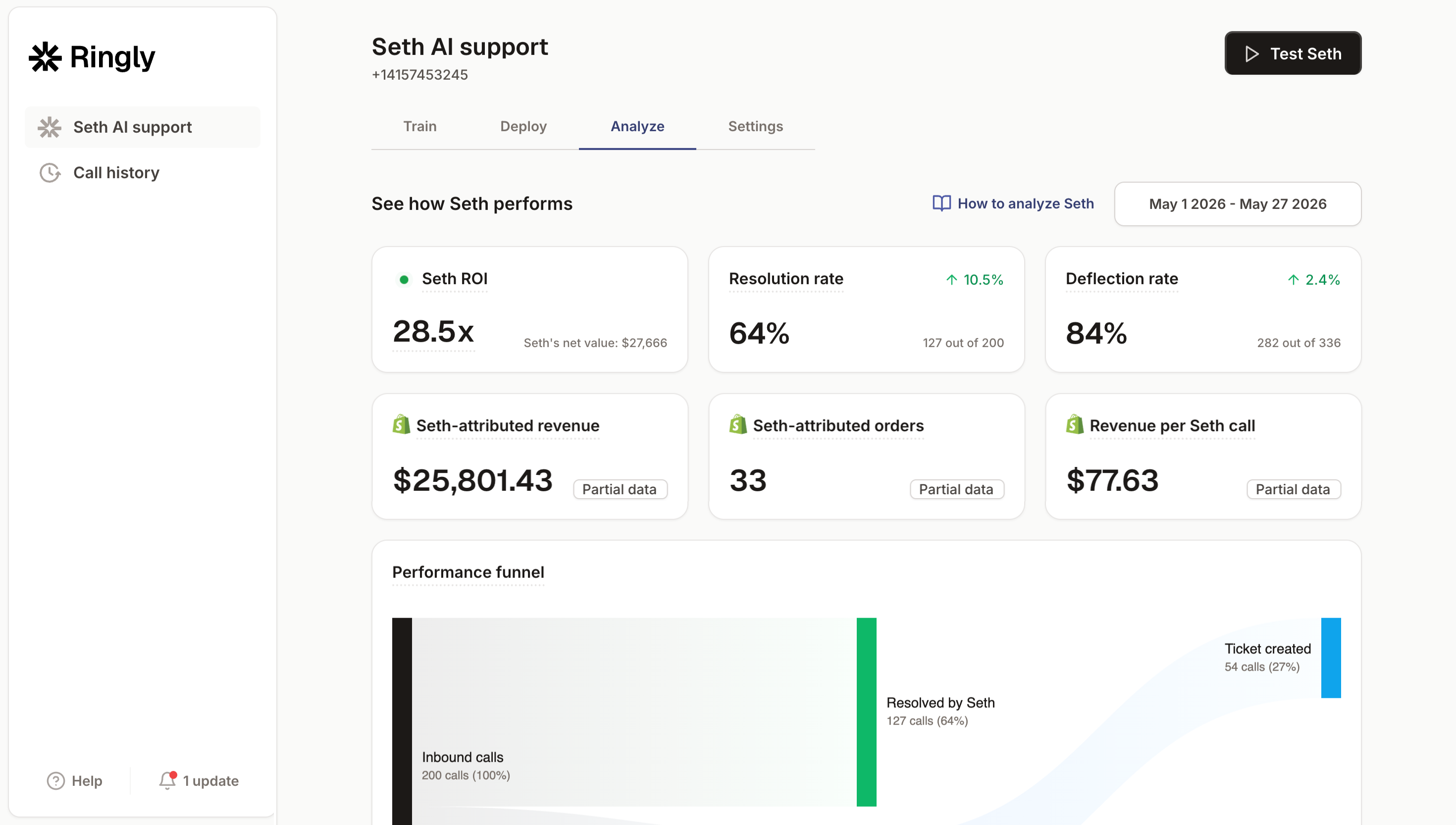
What those four buckets share is volume: roughly the same handful of questions, asked over and over, all day. TechCraft Studio, a brand on Ringly, handles 88% of its calls without a human precisely because most of the load is this repeatable.
What it can't be is one undifferentiated queue. The grief calls and the "my pet is sick" calls sit in the same line as the autoship swaps, and those two are not the same job at all. We'll come back to how to split them.
Why the pet food phone line is a revenue line, not a cost line
Pet food runs on subscription. Chewy has disclosed that Autoship is more than 77% of total net sales, and across DTC the math is consistent: a pet subscription customer is worth 4-5x a one-time buyer, averaging 8-18 orders before they churn versus 1-1.5 for a single purchase, according to Eightx's 2026 DTC benchmarks. Online pet food subscription sales passed $800 million in early 2025 on their own (PetfoodIndustry).
So look at what an autoship-cancel call actually is. A customer who wants to cancel is, at that exact moment, deciding whether to keep buying 8 to 18 more orders from you. Save the call and you keep the LTV. Send it to voicemail and you usually lose the whole relationship.
That last part is the brutal one. 80% of voicemail-routed callers hang up without leaving a message (Eden), and 85% of callers who can't reach a person never call back, with 62% switching to a competitor (PCN). A pet food brand's annual churn already runs around 18%, and 30% of that churn traces to poor post-purchase support, per our pet food CX research. Every cancel call that doesn't get answered is a retention loss you booked as "saved payroll."
"My customers also feel like it's a normal person. They feel like they can communicate if they have questions."
— Claudia Droge, TechCraft Studio
The point isn't that the phone is precious. It's that you're treating the most valuable conversation in your business, the keep-or-cancel moment, as overflow.
The recall surge nobody staffs for
Recalls are the event where the phone line is the brand. Pet food gets hit by them 3-8 times a year across the category, and they come in two flavors: voluntary recalls a company issues itself and recalls the FDA orders. Either way, the trade press is blunt about it: a recall is "among the most challenging events a pet food manufacturer can face, with impact spreading quickly across operations, supply chains and customer relationships," writes Pet Food Processing.
The operational problem is that a recall surge is unstaffable by definition. You can't predict the Sunday it lands, and you can't keep four extra reps on the bench all year waiting for it. So the calls hit a team sized for a normal Tuesday, the hold times blow out, and 60% of callers hang up within 60 seconds of being put on hold (Brightmetrics).
Back to those nine lines I called during the recall week. The brand actually in the middle of the recall? Straight to voicemail, both times I tried. The moment a scared pet parent most needs a human is the exact moment your queue is least able to give them one. That's not a staffing failure anyone could have prevented with hiring. It's a structural one.
Why hiring against this doesn't pencil out
The instinct is to add a rep. Maybe two for the weekend, when pet parents are home and opening boxes. The trouble is the shape of the volume. Pet food calls are weekend-heavy and spiky, not a steady stream you can staff to a clean average.
A US customer service rep runs about $4,000 a month fully loaded, and they're idle for most of an after-hours or weekend shift because the volume isn't steady enough to fill it. Replacing one when they burn out costs $14,113 on average (Gartner via Insignia), and customer service turnover sits at 31.2%. You're paying a fixed cost to cover a variable, unpredictable load.
Here's the math most pet food brands are actually living:
| Line item | Today | With Ringly |
|---|---|---|
| 3 weekday reps × $4K loaded | $12,000/mo | — |
| 1 weekend rep × $4K loaded | $4,000/mo | — |
| Ringly (~$5K/mo) | — | $5,000/mo |
| Net monthly CS spend | $16,000/mo | $5,000/mo |
| Monthly savings | — | $11,000/mo |
| Annual savings | — | $132,000/yr |
And the weekends are still understaffed in the left column. The AI doesn't get a steadier load, it just doesn't cost more when the load spikes.
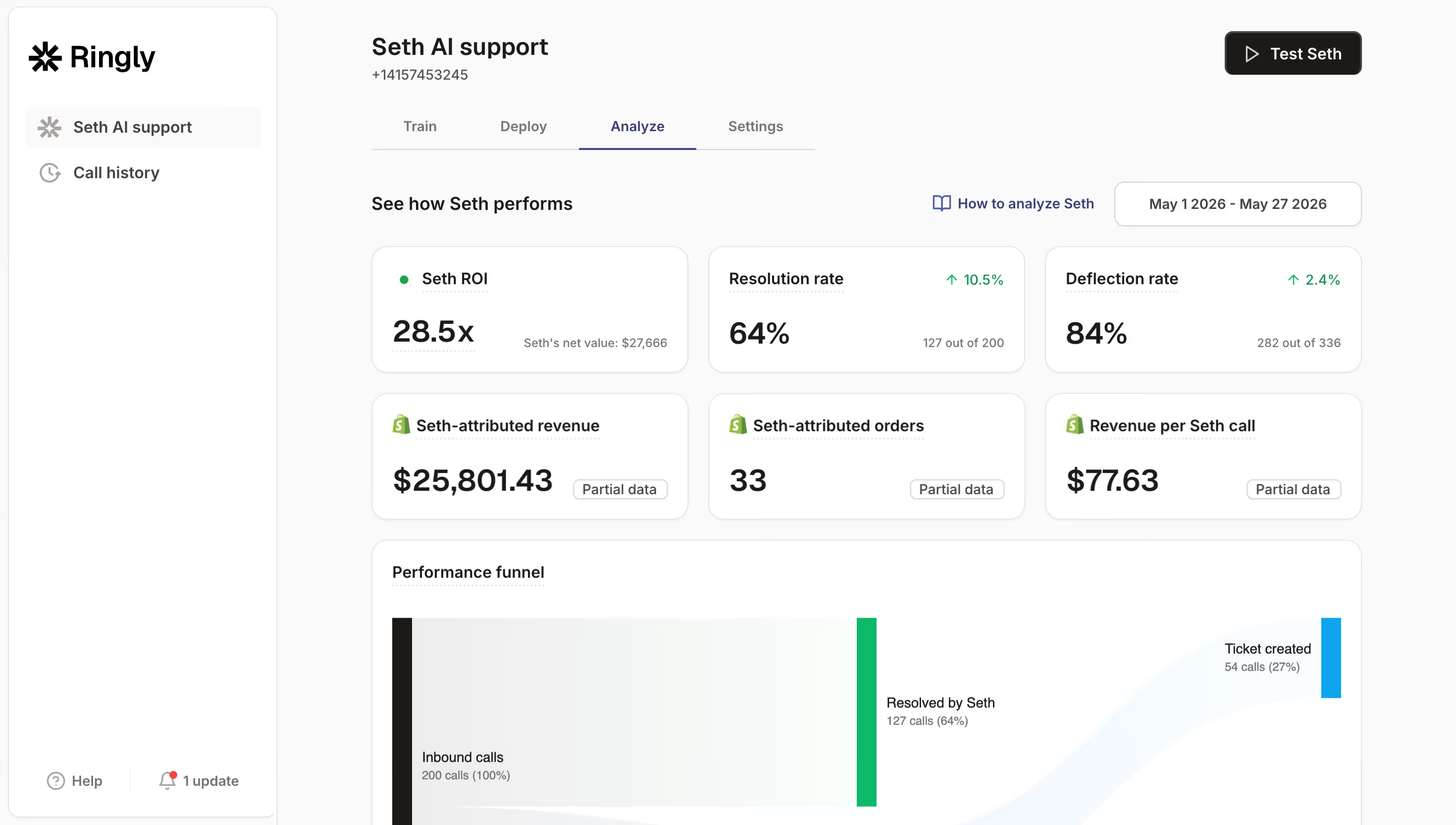
Real numbers from WashCo, a Shopify brand we launched recently:
- $22,664 in attributed revenue, first 7 days post-launch
- 271 calls handled
- 85% deflection rate
- 66% resolution rate
- $0.91 per call vs $2.70 per human-handled call
Source: Ringly dashboard, verified live data.
If you want to see the same shape run against your real call volume, book a 30-min call and we'll do the math on your numbers, not these.
How AI phone support handles each of the four buckets
Ringly.io is AI phone support for Shopify brands. Instead of growing your support headcount every time a recall or a launch spikes call volume, the AI takes the routine inbound calls so your team can focus on the ones that need a person. Across 50+ brands, the AI resolves 73% of calls autonomously at roughly $0.42 per resolved call. It answers 24/7, which is the whole point on a line where the calls come in after dinner and on weekends.
Map it back to the four buckets:
- Autoship management runs through custom actions. The AI can look up the subscription, pause it, change the frequency, or trigger the cancel-or-save flow you define, then send an SMS confirmation so the customer has it in writing.
- Ingredient, formula, and recall questions come straight from your knowledge base. You load the allergen data, the lot numbers, the recall status, and the AI answers from your data, not a guess. During a recall you update one source and every call reflects it instantly.
- Perishable WISMO uses the order status lookup against your Shopify store and carrier tracking, so the customer watching a thaw window gets a real answer instead of a hold. Our WISMO automation guide goes deeper on this.
- Life-stage diet transitions are knowledge-base answers too, the same puppy-to-adult guidance your team gives verbally, now consistent on every call.
The bucket that does NOT go to AI is the emotional one. A call about a sick pet, an end-of-life decision, or grief hits a hard handoff rule: trigger words route it straight to a human on your team, no AI in the middle. The AI handles the 90% that's repeatable so your people are actually free to be present for the 10% that isn't.
It sits in front of the helpdesk you already run. Calls that need escalation go to Gorgias, Richpanel, Reamaze, or whatever you use, with the context attached. You keep your number, your stack, and your team. Plans are Grow $349/mo (1,000 minutes) and Pro $799/mo (2,500 minutes) on the self-serve path, with Enterprise scoped by call for higher-volume brands. There's a 65% resolution guarantee: if the AI resolves under 65% of your calls in 90 days, we refund the last 3 months. You can see the full breakdown on the pricing page or read how the phone agent works for Shopify.
The call makes sense if:
- You're a Shopify (or Shopify Plus) pet food brand doing $10M-$100M
- You run a paid helpdesk (Gorgias, Zendesk, Gladly, Re:amaze, or Intercom)
- You have a visible phone number on your store
- Your CS team is 3-12 people
If that's you, the math usually works.
What happens on the call.
- We pull your last 7 days of missed calls live, on the call. No homework for you.
- We show you the recovered revenue at the resolution rates we see for pet food brands.
- You decide if it's worth a deeper conversation. No deck, no follow-up sequence.
If you're weighing this against your current setup, book a 30-min call and we'll compare it to what you're paying now. You can also see how this plays out across the broader category in our pet brand phone support cost guide and our pet supply store walkthrough, or browse the pets industry page. For the always-on side specifically, see 24/7 ecommerce phone support.
Frequently asked questions
How do pet food brands handle autoship cancellation and pause calls? Most route them to a CS rep, which is fine until the volume spikes or the call comes in after hours. The faster-growing approach is to let an AI phone agent look up the subscription and run your defined pause, skip, swap, or cancel-save flow on the spot, then text a confirmation. That keeps the keep-or-cancel moment from rolling to voicemail.
Can AI phone support answer pet food ingredient and allergy questions? Yes, when the answers live in a knowledge base it can read. You load your allergen data, formulas, and ingredient sourcing, and the AI answers from that, not from a guess. Anything that crosses into "is this safe for my sick pet" should hand off to a human, which you can configure.
What happens to the phone line during a pet food recall? A recall creates an unpredictable call surge that a normal-sized team can't absorb, which is when hold times blow out and callers hang up. An AI agent answers every call at once and reflects your current recall status the moment you update the knowledge base, so the answer is consistent across hundreds of simultaneous calls.
Will an AI agent handle a call about a sick or deceased pet? No, and it shouldn't. Calls with grief or illness trigger words should route straight to a human on your team with no AI in the path. The model is that the AI handles the routine 90% so your people have the time to handle the 10% that actually needs them.
How much does phone support cost a pet food brand compared with hiring reps? A US rep runs about $4,000/mo loaded and replacing one averages $14,113. A typical $20M pet food brand running three weekday reps plus a weekend rep spends around $16,000/mo and still leaves weekends thin. AI phone support at roughly $5,000/mo for that profile saves about $11,000/mo, or $132,000 a year.
Can the AI handle perishable or fresh food WISMO calls? Yes. It checks order and carrier status against your Shopify store in real time, so a customer worried about a thawing box gets a straight answer instead of a hold. For genuinely late or spoiled shipments, it can escalate to your team with the order context already attached.
Is phone support worth it for a lower-volume pet food brand? If your volume is low, a self-serve plan may fit better than a done-for-you build. But "low volume" pet food brands still run high-LTV autoship customers, so the value is less about call count and more about never missing a cancel-save or a recall-panicked caller. We'll tell you honestly on a call which side of that line you're on.
Talk to us

If you run a $10M-$100M pet food brand on Shopify and your autoship and weekend calls are going to voicemail, a 30-min call is the fastest way to see what that's costing you in lost subscriptions.
The 3-layer guarantee.
- Live in 14 days or it's free until launched.
- 65% resolution in 90 days or we refund the last 3 months of subscription fees.
- We keep working free until we hit 65%.
Ruben (Ringly co-founder) takes these calls personally.