
This post in 30 seconds.
- A product return is not one problem. It is five, and each one needs a different fix.
- You get 11 tactics ranked by impact, each with an expected reduction range and the return cause it actually attacks.
- The one layer most brands skip: answering the call that prevents the wrong order, or stops the avoidable refund. Built for founders and CX leads at $10M-$100M Shopify brands with a visible phone line.
Most "reduce returns" guides hand you a flat list of twenty things and let you guess which ones matter. That guessing is the problem. A jacket comes back because it didn't fit. A supplement comes back because the box arrived crushed. A blender comes back because the customer changed their mind. Those are three different failures, and the tactic that fixes one does nothing for the other two.
So the right question isn't "how do I reduce returns." It's "which of my returns can I actually prevent, and what's the cheapest move per cause."
If you run customer experience or operations at a $10M-$100M Shopify brand, you already know returns are a margin tax you pay quietly every month. The same questions come up over and over before a purchase, and a slice of your returns trace straight back to a question nobody answered in time. We've launched AI phone agents for Shopify brands trying to close that gap. Book a 30-min call and we'll show you which of your returns started as an unanswered call.
Why products actually get returned (and why one tactic can't fix all of it)
You can't lower a number you haven't broken apart. Returns cluster into five causes, and the mix is wildly different depending on what you sell.
Fit and sizing is the giant. It drives 45-53% of apparel returns, and on some apparel lines it runs as high as 70%, according to Boldmetrics and NRF/Capital One Shopping data. Shipping damage is the next biggest, somewhere around a third of returns. After that come "not as described" (the photos oversold it), wrong item shipped, and changed-mind returns, which include bracketing: 62% of shoppers admit to buying multiples with the intent to send some back.
The single most useful thing you can do before touching any tactic is read your own return reasons, because the right playbook for an apparel brand is the wrong playbook for a supplement brand. Here's the spread.
| Category | Typical return rate | Dominant cause |
|---|---|---|
| Apparel / footwear | 20-40% (avg ~25%) | Fit and sizing |
| Jewelry / home goods | 15-25% | Not-as-described, damage |
| Pet / electronics | 8-15% | Expectation, damage, complex setup |
| DTC overall | ~14% | Mixed |
| Ecommerce overall | ~19-20% (up from 11% in 2020) | Mixed |
| Supplements / consumables | 2-7% | Damage, WISMO-driven cancels |
Sources: Eightx, Richpanel. If you want the full benchmark picture, we broke it down in our ecommerce return statistics for 2026, and the operational side in our guide to ecommerce returns management.
Notice the gap between apparel and supplements. A 25% rate and a 5% rate are not the same business problem, and they don't get the same five tactics at the top of the list. Keep your own mix in mind as you read the next section.
The 11 tactics, ranked by impact
Ranked by how much return rate they move for the effort, with the cause each one attacks. Start at the top of the list that matches your return mix, not the top of this list.
1. Fix your sizing and fit data first (up to 40-50% fewer fit returns)
If you sell anything worn, this is the highest-impact move you have. Most size charts give raw numbers and let the customer translate a 2D measurement into a 3D guess. They guess wrong.
- Publish actual garment measurements per size, not just S/M/L. Add a fit note where it's true ("runs small, size up if you're between sizes").
- Add height, weight, and "size ordered" fields to your reviews so the next buyer self-matches against a real body.
- Combine the chart with a style or fit check. When customers can verify both size and style, fit returns drop up to 40-50%, per Boldmetrics and SizeAI fit-data research.
This one tactic can do more than the other ten combined for an apparel brand. For a supplement brand, skip it.
2. Add 360 views and product video (~35-37% fewer returns)
Static gallery shots create an expectation gap. Interactive views close it. A 2026 Retouching Zone study found 360-spin views cut returns by 37% on average, with apparel around 30%, furniture 39%, and jewelry 42%. Product video lands in the same range, roughly 35%, according to Kumba.
- Show scale and texture, the two things photos hide.
- Video the product in use, not just on a white background.
- Prioritize your highest-return SKUs, not your whole catalog at once.
3. Put fit and measurement fields in your reviews
Reviews aren't just social proof. Done right, they're a returns tool. A review that says "I'm 5'9", 160lbs, ordered M, fits perfect" does more to set expectations than any description you'll write. Pair this with tactic 1 and you're attacking the same fit problem from two sides.
4. Answer the pre-purchase question before the wrong order ships
This is the one the other guides bury. A customer who calls before buying, asking "is this the right one for my dog's weight" or "will this fit a 12-inch pan," is telling you exactly which return you're about to get. Answer it well and the order that ships is the right order.
Most brands route those calls to voicemail or a chat widget nobody mans after 6pm. So the customer either buys the wrong thing or buys from someone who picked up. Both cost you. We cover why those calls matter in our breakdown of WISMO calls, and the knowledge base is what lets an agent answer product specifics correctly.
5. Set accurate delivery and product expectations
A return is sometimes just disappointment with a tracking number attached. Display real delivery dates on the product page, then keep the customer updated proactively after they order. Clear expectations cut the "arrived too late, sending it back" returns. Our guide to ecommerce order tracking goes deeper on the post-purchase comms side.
6. Fix packaging so the product arrives intact (kills the ~31% damage share)
Damage is the cause you can engineer away with the least cleverness. Right-size the box so the product can't rattle around. Add real protection. Double-box anything fragile.
- Pick the box to the product, not the product to the box you have.
- Use proper fill (air pillows, crinkle paper), not a single sad sheet of bubble wrap.
- Audit your worst SKU for damage and fix its packaging specifically.
7. Put a human between the customer and the refund button
Plenty of returns are confusion, not rejection. The customer can't figure out how to use the product, or thinks it's broken when it isn't, or wants to cancel a subscription and hits "return" because that's the button they found. A 90-second conversation saves a lot of those orders.
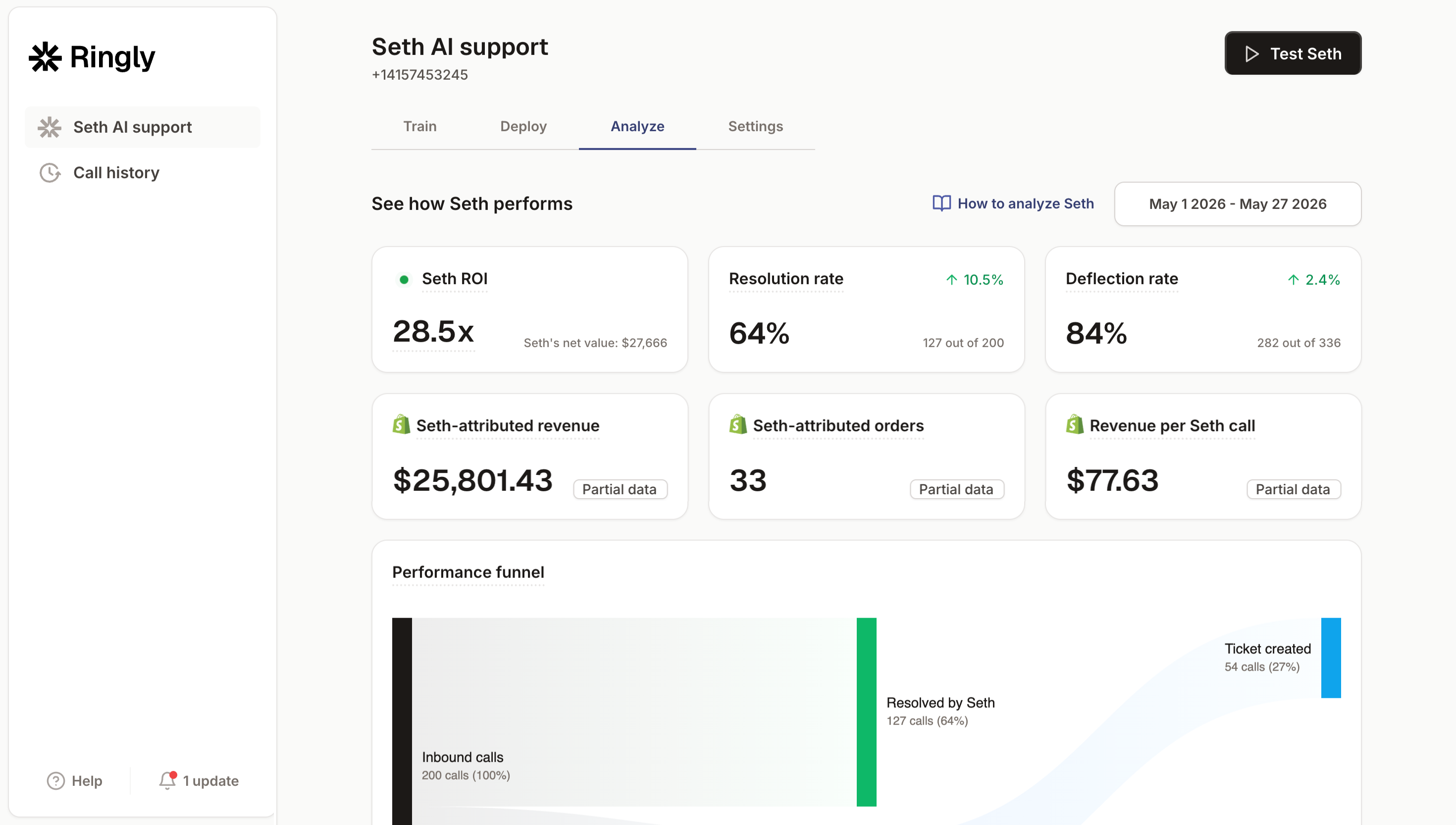
The trick is being reachable at the moment they reach for the refund. That means picking up the phone, fast, including after hours. This is where Ringly fits: it's AI phone support for Shopify brands that answers inbound calls 24/7, finds the order in your store, answers product questions from your knowledge base, and escalates the genuinely hard calls to your team via smart call transfer. It resolves up to 90% of calls on its own.
8. Default to exchange, store credit, or returnless refund
Not every unit can be saved from coming back. But you can keep the revenue. Make exchange the default option in your flow, offer store credit with a small bonus, and use returnless refunds on low-value items where shipping it back costs more than the product. Our roundup of the best Shopify returns app options covers the tools that automate this.
9. Read return reasons at the SKU level and fix or retire offenders
A small number of SKUs usually drive an outsized share of your returns. Pull the data by SKU. If one product returns at triple your average, it's either described wrong, sized wrong, or made wrong. Fix the listing, fix the product, or kill it. Compounding tactic, slow but permanent.
10. Flag and route serial returners from your order and call log
Serial returners are 5-10% of your customers but drive 30-40% of all returns, per Signifyd. They show patterns: returning right before the window closes, cycling buys and returns around sales. Flag the repeat offenders in your data and put them on a tighter handling tier (no free return shipping, exchange-first, manual review). Return fraud and abuse alone runs north of $100B a year industry-wide, so this isn't a rounding error.
11. Tighten the right policy levers (without nuking conversion)
Policy is a scalpel, not a hammer. A clearer set of conditions and a bracketing-aware window deters abuse and sets expectations. A policy that's too strict tanks conversion, which costs more than the returns you saved. Build it carefully with our return policy generator.
The return-prevention layer most brands skip: the phone call
I read through call logs across the brands we run phone support for, looking specifically for calls that touched a return. Two patterns showed up over and over.
First, the pre-purchase call. A customer rings to ask one thing before they buy: will this fit, is this the right model, can I use it for X. When that question gets answered well, the right order ships and never comes back. When it goes to voicemail, the customer guesses or leaves. Either way you eat the cost.
Second, the pre-refund call. A customer calls already half-decided to return, and a single piece of confusion is the whole reason. They couldn't find the setup step, or thought the product was defective, or meant to pause a subscription. A rep clears it up in under two minutes and the order stays.
The brands with the lowest avoidable-return rates aren't the ones with the best return policy. They're the ones a customer can actually reach in the 90 seconds before they give up. That's the part the product-page tactics can't touch.
"My customers also feel like it's a normal person. They feel like they can communicate if they have questions."
— Claudia Droge, TechCraft Studio
This is why the reachability piece matters more than it looks. A customer who feels they can ask a question buys with more confidence, which means fewer wrong orders walking back through the door. Phone support handles the calls your ecommerce customer service team shouldn't have to, and the routine ones get order status answered instantly.
To be clear about scope: Ringly answers the question and finds the order. It doesn't process the physical return for you, that still runs through your returns app or helpdesk. What it changes is whether the call gets answered at all.
What returns actually cost you, and what an answered call recovers
A return rarely costs you just the refund. Counting reverse logistics, restocking, markdown on the now-opened unit, and the sale you lost on bracketed inventory, the all-in cost of a return averages around 21% of the order value (Pitney Bowes data, via industry reporting).
Now run the other side. A call on Ringly costs $1.99 after the first 50. If an answered pre-purchase question prevents one returned $80 order, you saved roughly $17 in return cost plus kept an $80 sale, for the price of a call that rounds to nothing. WashCo's real number was $0.91 per call versus $2.70 for a human-handled one, and it still recovered $22,664 in attributed revenue in its first week.
You don't need every call to convert. You need to be reachable on the ones that would have turned into a refund. That math is why reachability beats almost every product-page tactic on pure ROI, and it ties directly into ecommerce customer retention. Book a 30-min call and we'll run your numbers live.
Match the tactics to your return mix (vertical-aware priority)
Same eleven tactics, different order depending on what you sell.
- Apparel, footwear, jewelry: attack 1, 2, and 3 first. Fit and expectation are 50-70% of your problem, so sizing data, 360 views, and review fields move the needle hardest. See our fashion and apparel page for the category specifics.
- Supplements, consumables, CBD, specialty food: your base rate is already low (2-7%), so don't waste effort on fit tools. Attack 6 (damage is most of your returns) and 4 plus 7 (the WISMO-driven "I want to cancel" calls). The supplement store playbook leans on subscription-confusion calls.
- Pet, home goods, electronics: damage plus expectation plus the complex, sometimes emotional call that genuinely needs a human. Attack 2, 5, 6, and route the hard calls to a person (tactic 7).
If a chunk of your returns trace back to a question that went to voicemail, that's the cheapest return rate you'll ever buy back. Book a 30-min call to compare it against your current setup.
Frequently asked questions
What's a good return rate to aim for? It depends entirely on your category. Apparel and footwear sit at 20-30% and a sub-20% rate is strong; supplements and consumables run 2-7%, so anything above 8% means something is wrong. Benchmark against your vertical, not the ecommerce average.
What's the single biggest cause of returns? For apparel it's fit and sizing, which drives 45-53% of returns and up to 70% on some lines. For consumables it's shipping damage and changed-mind cancels, not fit. Pull your own return reasons before you pick a tactic.
Can answering phone calls really reduce returns? Yes, in two ways. A pre-purchase call answered well prevents the wrong order from shipping, and a pre-refund call often saves an order that was only ever a moment of confusion. Ringly resolves up to 90% of inbound calls on its own.
How do I reduce returns without hurting conversion? Lead with the prevention tactics (sizing data, 360 views, reachable support) before you touch policy. A stricter return policy can cut returns but it also cuts purchases, which usually costs more than it saves. Fix the cause, then tune the policy.
How do I deal with serial returners? Flag the 5-10% of customers driving 30-40% of returns using your order and call history, then put them on a tighter tier: exchange-first, no free return shipping, manual review on high-value orders. Don't apply that friction to your whole base.
Does Ringly process the return itself? No. Ringly answers the call, finds the order in your Shopify store, and answers product questions, then escalates anything complex to your team. The physical return still runs through your returns app or helpdesk; Ringly changes whether the customer reaches anyone in the first place.
How fast can I see my return rate move? Reachability and packaging fixes show up within weeks. Sizing data, review fields, and 360 content take a content cycle to populate but compound. SKU-level fixes are the slowest and most permanent.
Talk to us

If you run a $10M-$100M Shopify brand and a chunk of your returns trace back to a question nobody answered, a 30-min call is the fastest way to see it. We'll pull your recent calls live and show you which ones turned into refunds you could have kept.
Our 3 promises.
- Live in under 1 hour. Setup and test calls are free.
- 30-day money back on the $99 plan fee.
- 65% resolution guarantee: if Seth resolves under 65% of your support calls in a month, that month comes back as credit (after 90 days on Pay per call).
Ruben (Ringly co-founder) takes these calls personally.