Missed calls cost small businesses an average of $126,000 annually.
That's the reality when 27% of calls to home services businesses go unanswered, and 85% of people whose calls aren't answered never call back.
AI phone answering services promise to solve this.
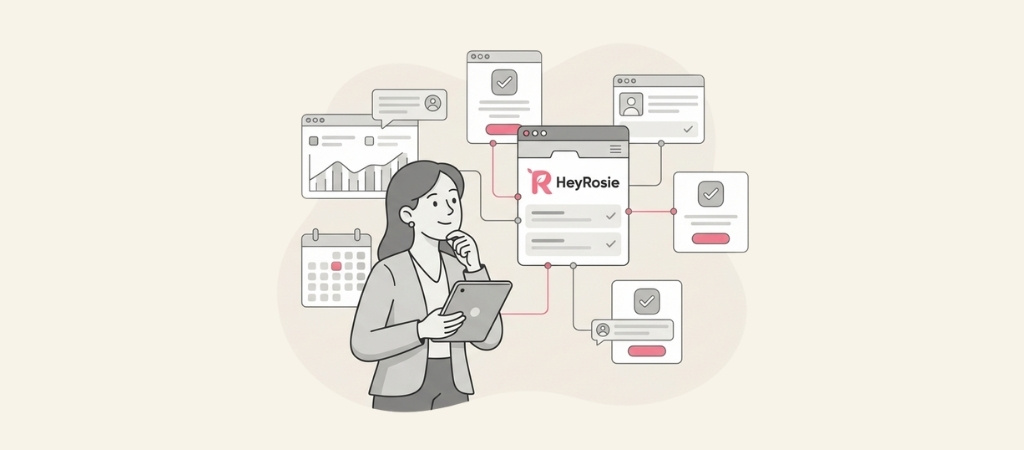
HeyRosie (also called Rosie AI) has become a popular entry point at $49 per month with unlimited minutes.
But many businesses quickly outgrow it or find the upgrade path frustrating.
Texting callers requires a $149 monthly plan. Call transfers need the same upgrade. Even sending appointment links is locked behind that paywall.
This guide compares seven HeyRosie alternatives that might fit your business better. Each offers something different: automatic follow-ups, human backup, outbound calling, or deep e-commerce integration.
Editor’s note: Want to hear some sample AI support calls made for your Shopify store?
- Just paste your store URL
- Get sample calls in under 20 seconds (no email required)
- Listen to demo calls for my store
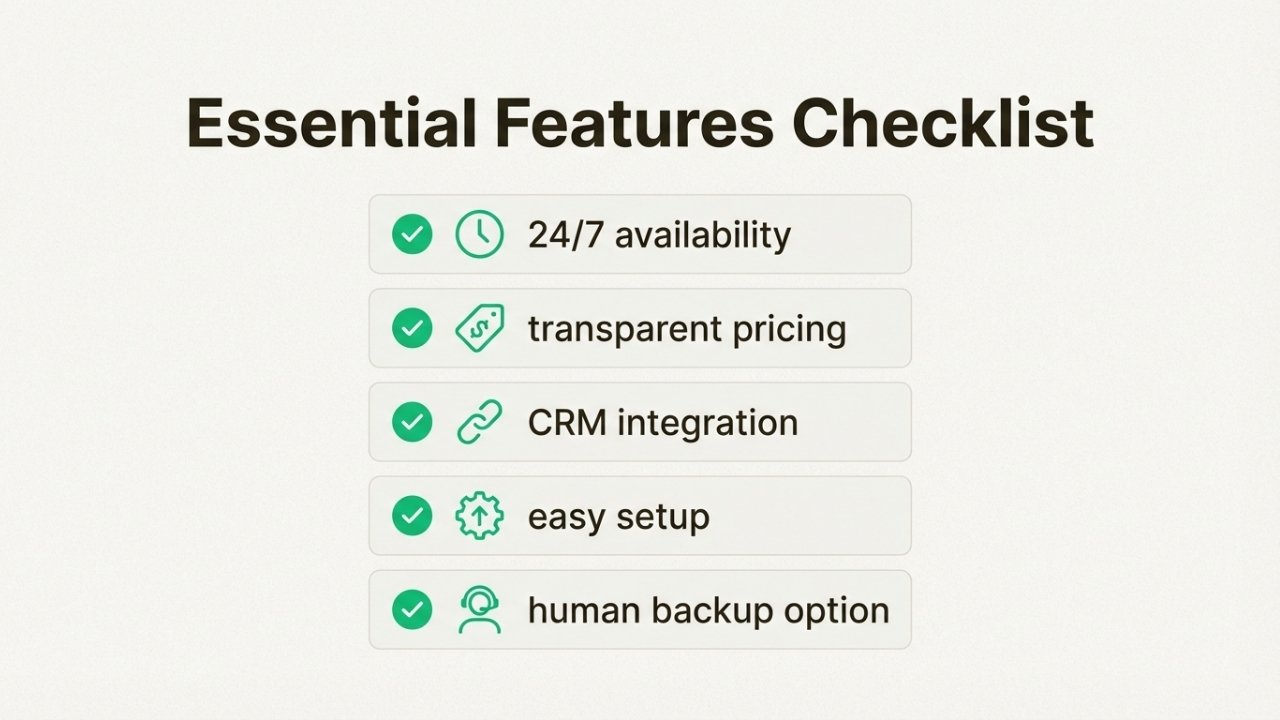
What to look for in HeyRosie alternatives
Before comparing options, let's clarify what matters most in an AI answering service.
Core functionality should include 24/7 call answering, appointment scheduling, and lead capture with custom fields.
Spam filtering is essential (the average American receives 31 spam calls monthly). Most businesses also need bilingual support, typically English and Spanish.
Pricing transparency matters more than the sticker price. Watch for upgrade requirements that hide essential features.
Some services advertise low base rates but charge $4+ per additional call. Others require expensive add-ons for CRM integration.
Integration capabilities determine how smoothly the service fits your workflow.
Native integrations with your CRM and calendar are preferable to Zapier workarounds.
Consider whether you need the AI to update customer records automatically or just send notifications.
Setup complexity varies dramatically. Some services launch in minutes.
Others require weeks of configuration and technical knowledge. Be realistic about your team's capacity.
Quick comparison: 7 HeyRosie alternatives
| Service | Starting Price | Best For | Free Trial | Key Differentiator |
|---|---|---|---|---|
| Trillet | $29/mo | Owner-operators | Yes | Automatic follow-ups |
| Smith.ai | $97.50/mo | Professional services | No | Human + AI hybrid |
| Synthflow | $29/mo | Sales teams | Yes | Outbound calling |
| Goodcall | $59/mo | Local businesses | 14 days | Unlimited minutes |
| Dialzara | $29/mo | Budget-conscious | 7 days | Transparent pricing |
| Abby Connect | Free | Bilingual support | 14-day free trial | Human backup option |
| Ringly.io | $349/month | E-commerce | 14 days | Deep Shopify integration |
1. Trillet

Best for: Owner-operators who need automatic follow-ups
Most AI answering services stop working when they hang up. Trillet is just getting started.
Here's the difference: when a caller says "let me think about it," HeyRosie sends you a transcript and you add them to your mental to-do list.
Trillet automatically sends a personalized text 2-3 days later with a booking link. The lead converts while you sleep.
This single feature explains why owner-operators switch.
But Trillet also filters spam before it reaches you (Americans get 21 robocalls monthly on average), completes intake checklists during calls, and handles the entire follow-up sequence without your involvement.
The pricing is straightforward: $29 per month for the starter plan, $49 for Pro with follow-ups included.
That's less than HeyRosie's base plan, and you get functionality that HeyRosie doesn't offer at any price point.
Pros:
- Only service with built-in automatic follow-ups
- Lower starting price than HeyRosie
- Advanced spam blocking
- Zero callback work required
Cons:
- Newer player with less brand recognition
- Fewer third-party integrations than established competitors
2. Smith.ai

Best for: Businesses wanting AI with human backup
Smith.ai blends AI reception with live agents who step in when conversations get complex.
This hybrid approach works well for law firms, accounting practices, and other professional services where caller issues can be complicated.
The AI handles routine calls: answering common questions, booking appointments, screening leads.
When the conversation exceeds the AI's capabilities, it escalates seamlessly to a human receptionist. The caller never knows they're being transferred between systems.
The trade-off is price. Smith.ai starts at $97.50 per month for just 30 calls. Additional calls cost $4.25 each.
Plans scale up to $825 monthly for 500 calls. You'll also need a separate business phone system since Smith.ai works through call forwarding.
For businesses where missing a complex inquiry is costly, the premium pricing may be justified.
The combination of AI efficiency and human judgment covers more scenarios than pure AI solutions.
Pros:
- Human safety net for complex calls
- Mature playbooks for legal and home services
- Seamless escalation without caller awareness
- Strong CRM integrations
Cons:
- Expensive compared to pure AI alternatives
- Low call allowance on base plan
- Requires separate phone system
3. Synthflow
Best for: Sales teams needing outbound calling
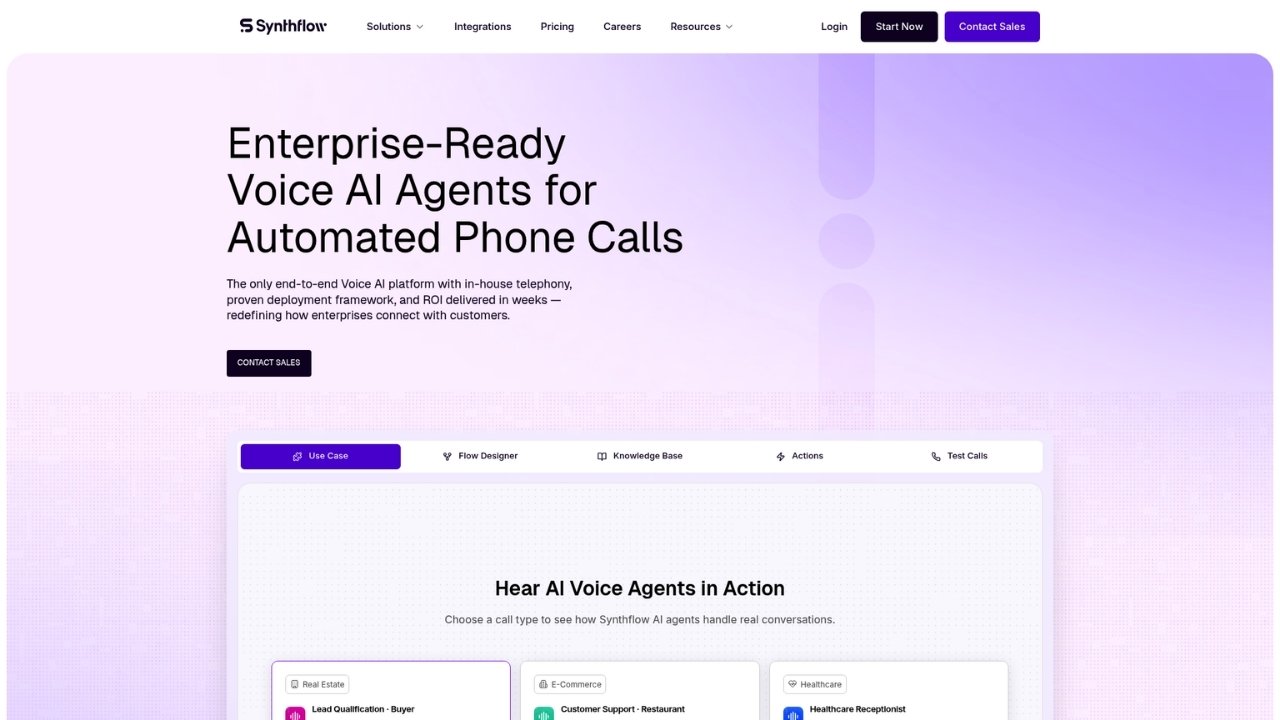
Synthflow is an enterprise-ready voice AI platform that handles both inbound and outbound calls.
Unlike most alternatives that only answer incoming calls, Synthflow can proactively contact leads, follow up on quotes, and conduct outreach campaigns.
The platform includes a visual flow designer for building conversation logic without coding. It supports 15+ languages and offers 200+ integrations.
The low-latency voice technology aims for natural conversation flow rather than robotic exchanges.
Pricing starts at $29 monthly for 50 minutes, but the jump to team features is steep: the Pro plan costs $375 per month.
You'll also need a Twilio account for phone numbers, adding complexity for small businesses.
Setup can take up to three weeks for complex configurations. This isn't a tool you launch in an afternoon.
But for sales teams that need outbound capability alongside inbound answering, Synthflow offers functionality that simpler alternatives lack.
Pros:
- Handles outbound prospecting calls
- Highly customizable conversation flows
- Enterprise scalability
- Multilingual support
Cons:
- Complex setup (up to 3 weeks)
- Requires Twilio for phone numbers
- 10x price jump for team features
- Limited concurrent calls on lower tiers
4. Goodcall
Best for: Local businesses wanting simple setup
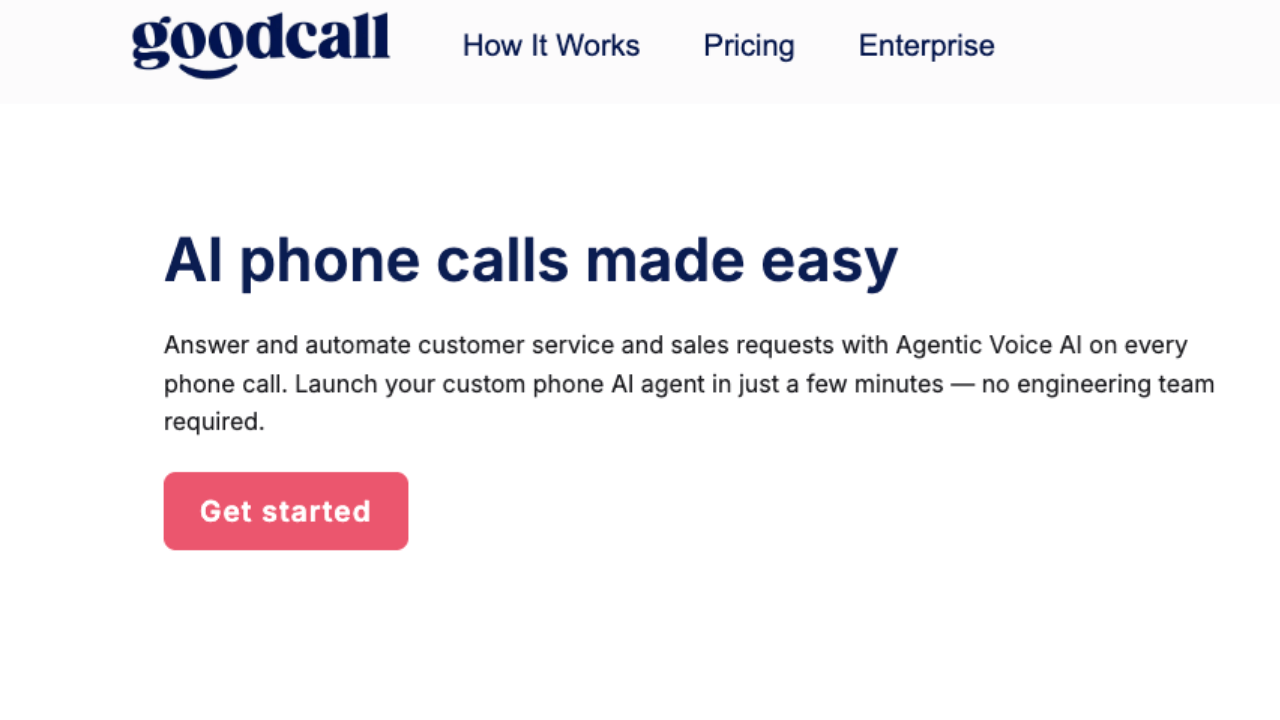
Goodcall focuses on being the easiest way for local businesses to stop missing calls.
Think contractors, salons, restaurants, and real estate teams that need instant greetings and basic FAQ handling without lengthy setup.
The service emphasizes quick onboarding. You configure hours, menus, and routing through a simple interface.
All plans include unlimited call handling minutes, which removes the anxiety of per-minute billing.
Pricing runs $59 to $199 monthly based on the number of unique callers you receive.
The entry plan stores only seven days of call history, which may be limiting for businesses that need longer record retention.
Goodcall hits a sweet spot for small teams that don't need enterprise features. The experience is intentionally lightweight: callers get fast answers, you get readable logs of who called and what they wanted.
For businesses that just need reliable coverage without complexity, it's a practical choice.
Pros:
- Simplest setup process
- Unlimited minutes on all plans
- No technical knowledge required
- Text-back links for callers
Cons:
- Limited to 100 unique callers on entry plan
- Only 7-day call history retention
- Fewer advanced features than competitors
5. Dialzara
Best for: Budget-conscious small businesses
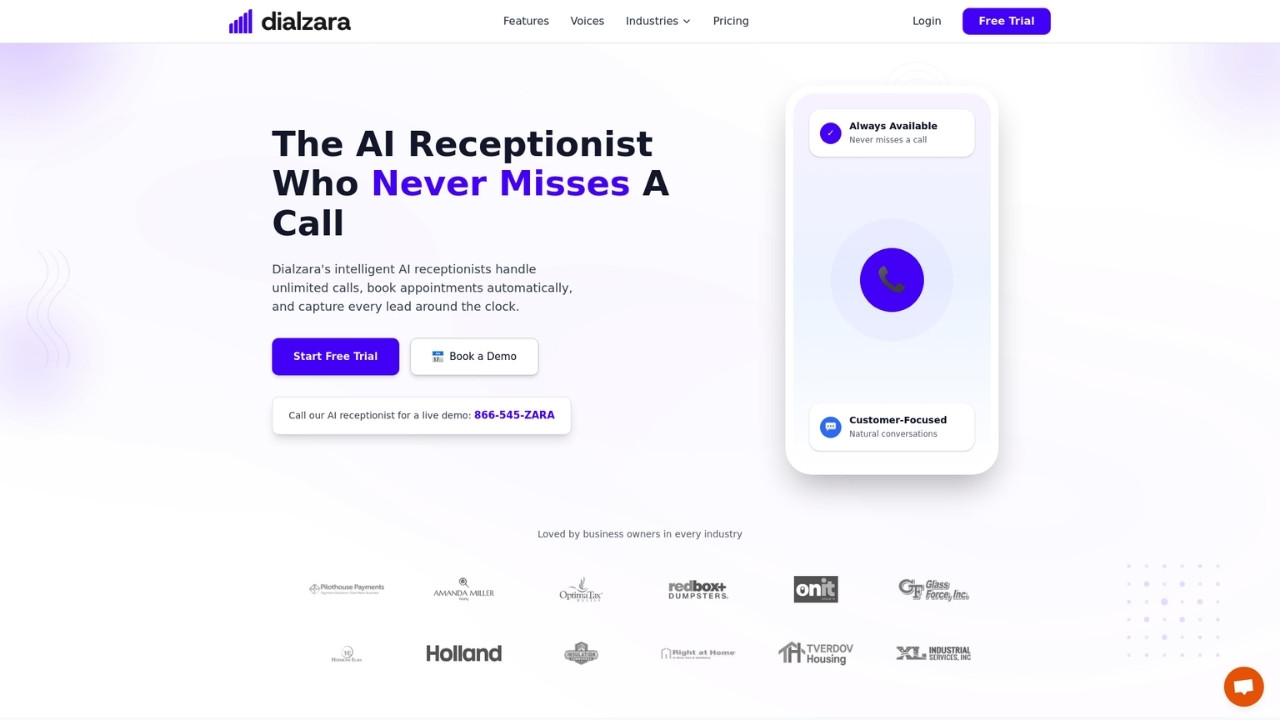
Dialzara offers transparent, flat-rate pricing that appeals to cost-sensitive busi
nesses. The base plan costs $29 monthly for 60 minutes of call handling. Higher tiers provide 300 minutes ($99) and 750 minutes ($199).
The service covers the essentials: greetings, FAQ responses, intake questions, warm transfers, and summary emails.
Google Calendar integration allows real-time appointment booking without human involvement.
What stands out is the straightforward approach. No hidden fees, clear overage rates, and a 7-day trial that lets you test before committing.
The reporting shows missed versus answered calls, common questions, and minutes used so you can adjust plans as volume changes.
The limitation is on the entry tier: no Zapier integration on the cheapest plan, and only 60 minutes may not suffice for busier operations.
But for small businesses watching every dollar, Dialzara provides core functionality without the premium pricing.
Pros:
- Most affordable entry point
- Transparent pricing structure
- Quick 7-day trial
- Clear usage reporting
Cons:
- Limited minutes on lower tiers
- No Zapier on cheapest plan
- Less brand recognition than competitors
6. Abby Connect

Best for: Bilingual support with human backup
Abby Connect offers something rare: a genuinely free tier. You get up to 20 minutes of AI call handling monthly at no cost.
This lets small operations test AI answering without any financial commitment.
The AI agents are bilingual in English and Spanish, which serves diverse customer bases without additional fees.
Higher plans add warm transfers to human receptionists, a dedicated mobile app, and integrations with Calendly, Google Calendar, HubSpot, and Salesforce.
Paid plans start at $99 monthly for 50 minutes and scale to $690 for 500 minutes.
That's more expensive per minute than many competitors. Some users report billing issues, including charges for spam calls and ringing time.
The service works best for businesses that occasionally need human intervention but want AI handling routine calls.
The free tier removes risk for businesses just starting to explore AI answering.
Pros:
- Only free tier available (20 minutes/month)
- Bilingual English/Spanish support
- Human escalation option on higher plans
- Good mobile app experience
Cons:
- Expensive per-minute rates
- Users report billing issues
- Limited minutes on all plans
- Human backup requires upgrade
7. Ringly.io

Best for: E-commerce stores on Shopify
Ringly.io takes a different approach from generic AI answering services.
It's built specifically for e-commerce businesses, with deep Shopify integration that lets the AI look up orders, process returns, and answer product questions automatically.
The AI agent, called the AI, resolves approximately 73% of calls without human intervention according to company data.
It supports 30 languages, making it suitable for stores with international customers. Setup takes about three minutes through the Shopify app.
Pricing starts at $349/monthly for 1,000 minutes, with Grow ($349 for 1,000 minutes) and Enterprise: custom pricing for 5,000+ minutes) tiers for higher volumes.
The company offers an unusual guarantee: you don't pay until The AI resolves at least 65% of your calls over your first 100 calls within 21 days.
For Shopify stores handling frequent "where's my order" calls and return requests, Ringly.io's specialized focus provides capabilities that generic alternatives can't match.
The 14-day free trial lets you test with your actual store data.
Pros:
- Purpose-built for e-commerce
- Deep Shopify integration
- High call resolution rate
- 40-language support
- Risk-free trial with performance guarantee
Cons:
- Higher starting price than generic alternatives
- Less suitable for non-e-commerce businesses
- E-commerce focus means fewer general business features
How to choose the right HeyRosie alternative for your business
The best choice depends on your specific situation. Here's a simple framework:
Owner-operators without front desk staff: Consider Trillet for automatic follow-ups or Dialzara for budget-friendly pricing. Both minimize the work you need to do after calls.
Professional services (legal, accounting, consulting): Smith.ai's human backup justifies the premium for complex client inquiries where missing details is costly.
Sales teams: Synthflow is the only option here with true outbound calling capability for lead follow-up and prospecting.
Local businesses (restaurants, salons, contractors): Goodcall offers the simplest setup and unlimited minutes, which works well for predictable local demand.
Bilingual businesses: Abby Connect's 14-day free trial lets you test AI answering, and the Spanish support is included rather than an add-on.
Shopify stores: Ringly.io's e-commerce specialization handles order lookups and returns that generic AI services simply can't do.

Moving beyond message-taking
Most AI answering services do exactly what the name suggests: they answer calls and take messages.
The caller gets a friendly voice, you get a transcript, and the ball is back in your court.
But the real value isn't in answering. It's in resolution.
Consider what happens after the call. With most services, 80% of sales require five or more follow-ups, yet 44% of salespeople give up after one attempt.
Services like Trillet that automate follow-ups capture opportunities that competitors lose.
The same applies to specialization. Generic AI can greet callers and schedule appointments.
But only specialized services like Ringly.io can pull order status, process returns, or handle industry-specific workflows.
When evaluating alternatives to HeyRosie, look beyond the base price and feature checklist.
Consider the total cost of ownership, including required upgrades, integration complexity, and the work you'll still need to do after each call.
Test multiple options during their trial periods. Run the same scenarios through each service.
Measure not just whether they answer, but whether they actually reduce your workload and capture more business.
For e-commerce businesses ready to automate phone support, start your free trial with Ringly.io and see how specialized AI handles your specific customer inquiries.
Frequently Asked Questions
What are the best HeyRosie alternatives for small businesses?
The best alternatives depend on your needs. Trillet offers automatic follow-ups at $29/mo. Dialzara provides transparent pricing starting at $29/mo. Goodcall gives unlimited minutes for $59/mo. For professional services, Smith.ai offers human backup despite higher pricing at $97.50/mo.
Which HeyRosie alternatives offer free trials?
Most alternatives offer free trials. Trillet, Synthflow, Dialzara, and Ringly.io offer 7-14 day trials. Abby Connect offers a 14-day free trial with 20 minutes monthly. Smith.ai is the main exception, requiring payment upfront without a trial period.
Are there any HeyRosie alternatives with human backup?
Yes, Smith.ai and Abby Connect both offer human backup options. Smith.ai seamlessly escalates complex calls to live agents. Abby Connect provides human receptionists on higher-tier plans. These hybrid services cost more but handle complex inquiries better than pure AI solutions.
What HeyRosie alternatives work best for e-commerce?
Ringly.io is specifically built for e-commerce with deep Shopify integration. It can look up orders, process returns, and answer product questions automatically. Generic alternatives like HeyRosie lack this specialized capability for online stores.
Which HeyRosie alternatives include automatic follow-ups?
Trillet is currently the only major alternative with built-in automatic follow-ups. When callers aren't ready to book, Trillet sends personalized text messages 2-3 days later. This feature recovers leads that other services lose after the initial call ends.
Do any HeyRosie alternatives offer outbound calling?
Synthflow and Simple Phones both support outbound calling. This capability lets you proactively contact leads, follow up on quotes, and conduct outreach campaigns rather than just answering inbound calls. Most other alternatives are inbound-only.
Also read: