

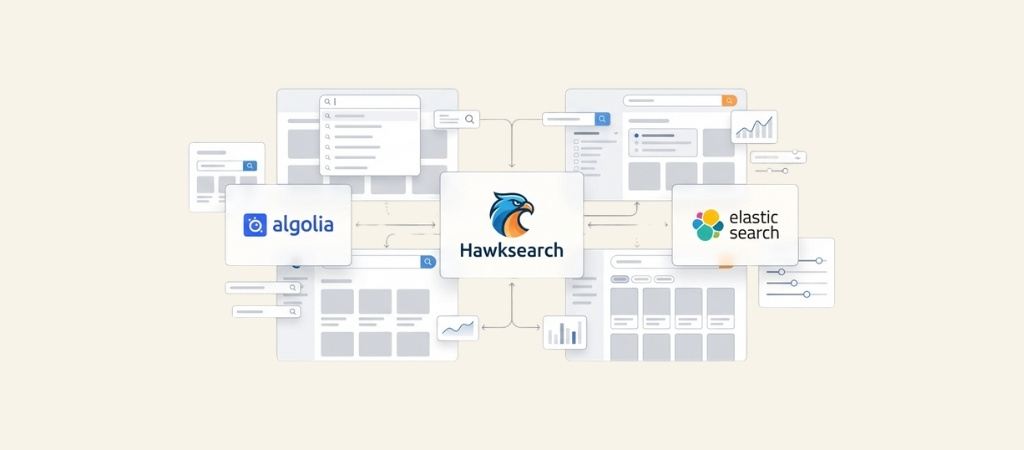
Site search can make or break your e-commerce experience. When customers can't find what they're looking for, they leave. And when they leave, your revenue takes a hit.
Hawksearch has been a popular choice for businesses wanting AI-powered search, but it's not the only option. Whether you're looking for better pricing, more transparent billing, or different features, there are solid alternatives worth considering.
I spent time researching and comparing the leading Hawksearch alternatives to help you find the right fit. This guide covers seven platforms that can handle everything from basic site search to complex enterprise deployments.
Editor’s note: Want to hear some sample AI support calls made for your Shopify store?
- Just paste your store URL
- Get sample calls in under 20 seconds (no email required)
- Listen to demo calls for my store
What is Hawksearch?
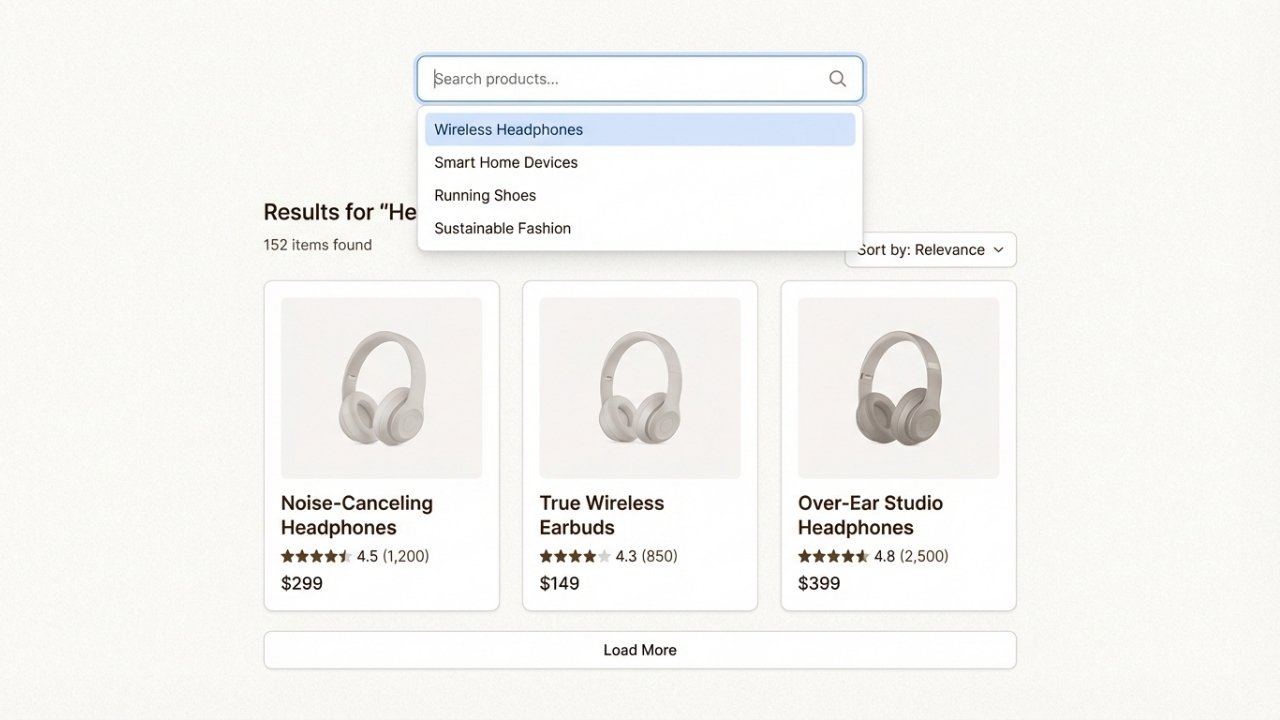
Hawksearch is an AI-powered site search and product discovery platform designed for e-commerce businesses. It focuses on helping marketers, merchandisers, and developers create search experiences that drive conversions.
The platform includes features like Smart Search (which uses AI to understand user intent), merchandising tools, personalization, and product recommendations. Hawksearch targets both B2B and B2C e-commerce businesses with feature-rich, results-based search capabilities.
One thing to note: Hawksearch uses a "contact sales" pricing model. You won't find published pricing on their website, which can make budgeting difficult if you're comparing options.
Why consider Hawksearch alternatives?
There are several reasons businesses start looking elsewhere:
Pricing transparency. When you can't see pricing upfront, it's hard to know if a tool fits your budget. Many alternatives publish clear pricing tiers.
Developer control. Some teams want more customization options or prefer open-source solutions they can self-host.
Broader enterprise needs. Hawksearch focuses heavily on e-commerce. If you need search across documents, knowledge bases, and other content types, other platforms might serve you better.
Integration requirements. Your tech stack might work better with a platform that has specific connectors or APIs.
Cost savings. Some alternatives claim significant savings. ExpertRec, for example, positions itself as saving customers 30-40% compared to competitors.
Comparison at a glance
Here's how the seven alternatives stack up across key dimensions:
| Platform | Starting Price | Best For | AI Capabilities | Deployment |
|---|---|---|---|---|
| Algolia | Free tier, then $0.50/unit | Mid-market to enterprise | NeuralSearch, AI Re-Ranking, Generative Guides | Cloud-hosted |
| Elasticsearch | Free (Self) or $99/mo (Cloud) | Technical teams, large scale | Vector search, AI Assistant, Agent Builder | Hybrid / Serverless |
| Luigi's Box | From €79/month | E-commerce focus | AI Shopping Assistant, Recommender | Cloud |
| ExpertRec | $65/month | SMB to mid-market | AI Synonyms, AI Merchandising | Cloud |
| Coveo | Contact sales | Large enterprises | GenAI Answering, Agentic apps | Cloud |
| SearchUnify | Usage-based ($0.025/search) | Enterprise cognitive search | ML-powered tuning, RAG-ready | Cloud |
| Meilisearch | Free (Self) or $30/mo (Cloud) | Startups, developers | Semantic search, AI-powered RAG | Self-hosted / Cloud |
Top 7 Hawksearch alternatives
1. Algolia
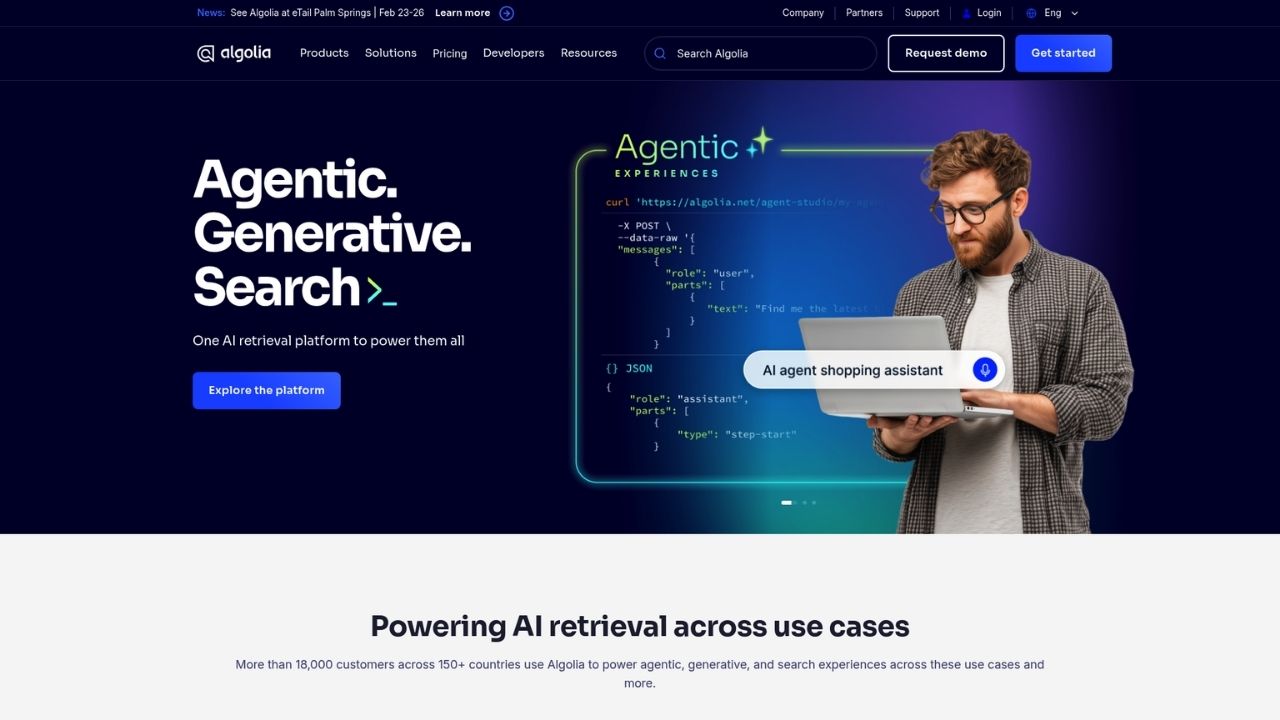
Algolia is one of the biggest names in site search, serving more than 18,000 organizations across 150+ countries. If you've used search on major e-commerce sites, there's a good chance Algolia was powering it.
The platform is built around AI search that understands intent, context, and nuance. Their NeuralSearch feature combines semantic search with traditional keyword matching, which means it can handle both precise product searches and broader conceptual queries.
Key features:
- NeuralSearch for hybrid semantic and keyword search
- Real-time personalization that adapts to user behavior
- A/B testing for search relevance tuning
- AI-powered synonym suggestions
- Visual merchandising tools
- Comprehensive analytics with 90-day retention on higher tiers
Pricing: Algolia offers a free "Build" plan with 10,000 search requests and 1 million records monthly. Paid plans start with usage-based pricing: the Grow plan charges $0.50 per 1,000 search requests after the free tier, while Grow Plus (which includes AI features) runs $1.75 per 1,000 requests. Enterprise Elevate plans require annual contracts.
Pros:
- Massive global infrastructure (70+ data centers across 17 regions)
- Extensive documentation and developer resources
- Strong e-commerce integrations (Shopify, Adobe Commerce, Salesforce, commercetools)
- 99.999% availability on enterprise plans
Cons:
- Pricing can escalate quickly with high search volumes
- Complex for non-technical users to configure
- AI features require higher-tier plans
Best for: Mid-market to enterprise companies with developer resources who need global scale and high availability.
2. Elasticsearch
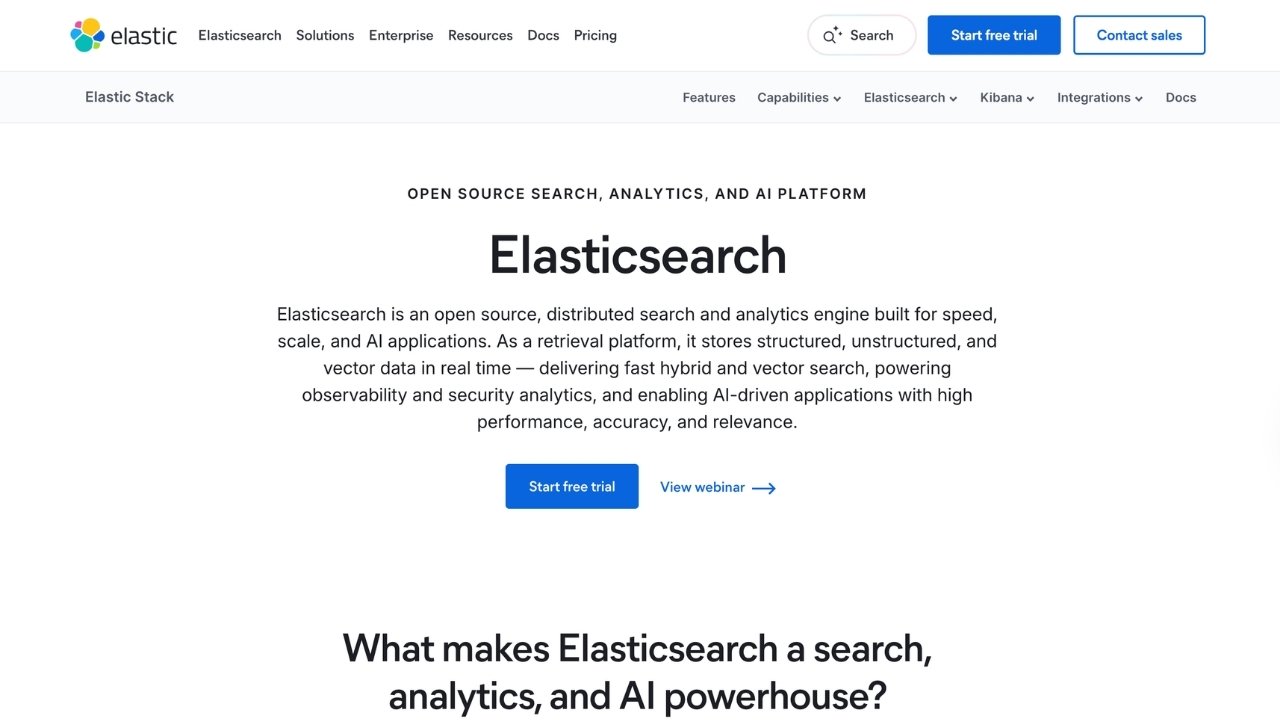
Elasticsearch is the open-source search engine that powers many of the other platforms on this list. Elastic, the company behind it, offers both managed cloud services and the ability to self-host.
What makes Elasticsearch unique is its flexibility. It's not just for site search: the same platform handles observability, security analytics, and enterprise search. This makes it attractive for organizations that want to consolidate tools.
Key features:
- Full-text search with advanced relevance tuning
- Vector database capabilities for semantic search
- Distributed architecture that scales horizontally
- Real-time analytics and ML anomaly detection
- Agent Builder for creating AI agents
Pricing: The open-source version is free to self-host. Elastic Cloud offers three deployment models: Hosted (resource-based pricing starting around $95/month), Serverless (usage-based with auto-scaling), and Self-managed (license-based on nodes and RAM). All cloud options have a free trial.
Pros:
- Complete control when self-hosted
- Massive community (10M+ downloads, 680+ contributors)
- Beyond search: unified platform for observability and security
- Trusted by 50% of Fortune 500 companies
Cons:
- Requires significant technical expertise
- Self-hosted deployments need ongoing maintenance
- Steeper learning curve than SaaS alternatives
Best for: Technical teams wanting full control, organizations needing large-scale deployments, and companies wanting unified search plus observability/security.
3. Luigi's Box

Luigi's Box is purpose-built for e-commerce search and discovery. With a 4.8-star rating on G2 and recognition as a Gartner leader, it's gained traction with over 4,000 online businesses including names like Under Armour, Skoda, and Nespresso.
The platform takes a suite approach, offering five integrated products: AI-Powered Search, Recommender, Product Listing, Shopping Assistant, and Analytics.
Key features:
- AI search with autocomplete, personalization, and typo correction
- Recommender engine for upsells and cross-sells
- Product Listing optimization for category pages
- AI Shopping Assistant (newest addition)
- Comprehensive analytics dashboard
Pricing: Luigi's Box doesn't publish pricing on their website. You'll need to contact sales for a quote. They do offer a 30-day free trial.
Pros:
- Purpose-built for e-commerce with proven ROI metrics (+35% cart conversion, +20% order value)
- Easy integration with any tech stack
- Multiple G2 awards including Leader and Best Estimated ROI
- Low maintenance: no development work required from your team
Cons:
- Narrower focus than general enterprise platforms
- No transparent pricing
- Less suitable for non-e-commerce use cases
Best for: Online retailers wanting plug-and-play e-commerce search with proven results and minimal technical overhead.
4. ExpertRec
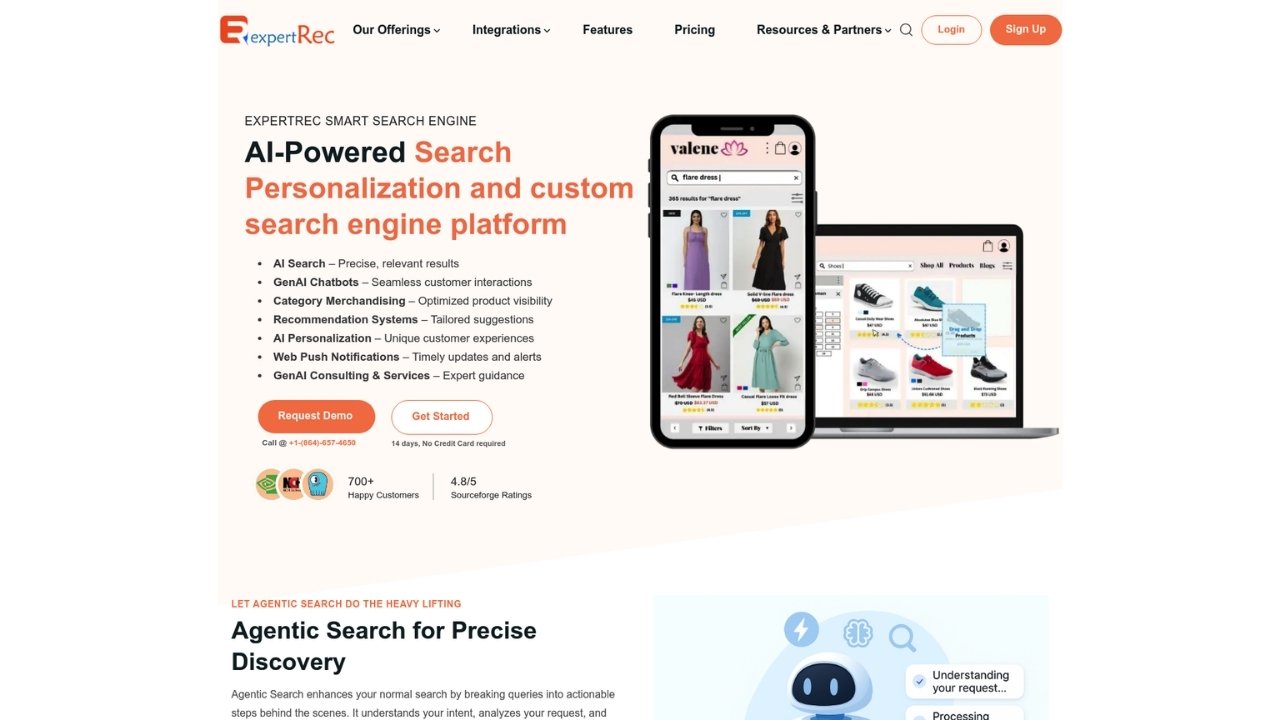
ExpertRec positions itself as a direct Hawksearch alternative with a key difference: transparent pricing. They claim customers save 30-40% compared to competitors while getting similar or better features.
The platform emphasizes quick setup (claiming 15-minute implementation) and offers a full suite of AI-powered search tools including their newer "Agentic Search" feature that breaks complex queries into actionable steps.
Key features:
- Agentic Search for complex query handling
- AI site search with voice search capabilities
- Visual merchandising and searchandising controls
- ChatGPT-powered chatbot integration
- Semantic search with intent understanding
- Advanced analytics and insights
Pricing: This is where ExpertRec stands out. They publish clear pricing:
| Plan | Monthly Price | Search Requests | Key Features |
|---|---|---|---|
| Standard | $299 | 50K | AI search, basic analytics, 20 campaigns |
| Expert | $499 | 100K | AI merchandising, advanced analytics, 40 campaigns |
| Premium | $699 | 300K | Personalized AI search, ChatGPT chatbot, 70 campaigns |
| Enterprise | Custom | Unlimited | Everything unlimited, priority support |
Yearly plans save 20%. All plans include a 14-day free trial with no credit card required.
Pros:
- Transparent, predictable pricing
- Quick setup with extensive platform integrations
- Claims 90% reduction in zero-result searches
- Strong customer testimonials (4.8/5 on Sourceforge)
Cons:
- Smaller ecosystem than established players like Algolia
- Fewer enterprise case studies
- Newer "Agentic Search" feature still proving itself
Best for: SMBs to mid-market businesses wanting predictable pricing, quick implementation, and a direct Hawksearch alternative with cost savings.
5. Coveo
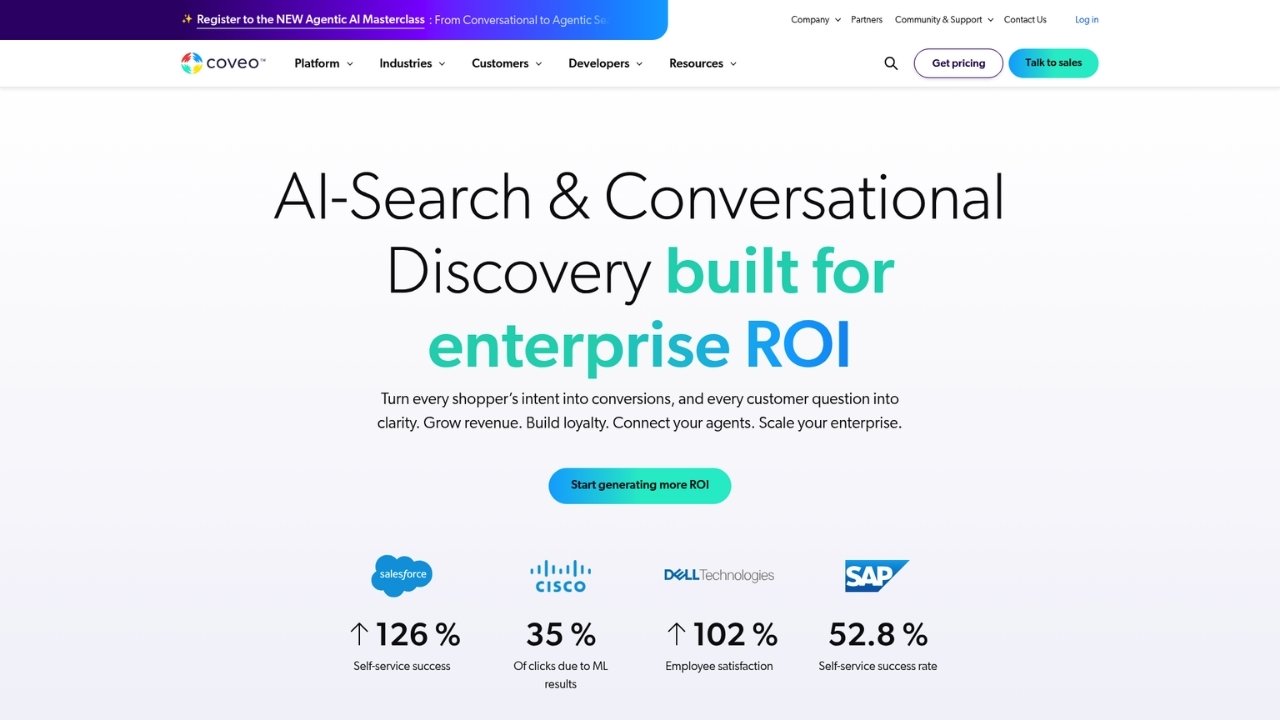
Coveo is the enterprise heavyweight on this list. Named a Leader in the 2025 Gartner Magic Quadrant for Search and Product Discovery, Coveo serves billion-dollar enterprises with complex, multi-domain search needs.
The platform goes beyond traditional search to offer what they call "AI Relevance" across commerce, service, website, and workplace experiences. Their recent focus includes connecting AI agents to enterprise data through their MCP Server.
Key features:
- AI Commerce for B2B and B2C product discovery
- AI Service for self-service and agent assistance
- AI Website for personalized experiences
- AI Workplace for unified enterprise search
- Generative answering with trusted AI responses
- 99.999% availability on enterprise plans
Pricing: Coveo uses enterprise pricing. You'll need to contact sales for a quote tailored to your organization.
Pros:
- Gartner Leader recognition
- Proven enterprise scale (SAP reports 83.5% self-service success rate)
- Comprehensive platform covering commerce, service, website, and workplace
- Strong integration ecosystem (Salesforce, SAP, Adobe, Shopify)
Cons:
- Complex implementation
- Higher price point than mid-market alternatives
- Overkill for smaller businesses
Best for: Large enterprises needing multi-domain search across commerce, customer service, and workplace with complex integration requirements.
6. SearchUnify
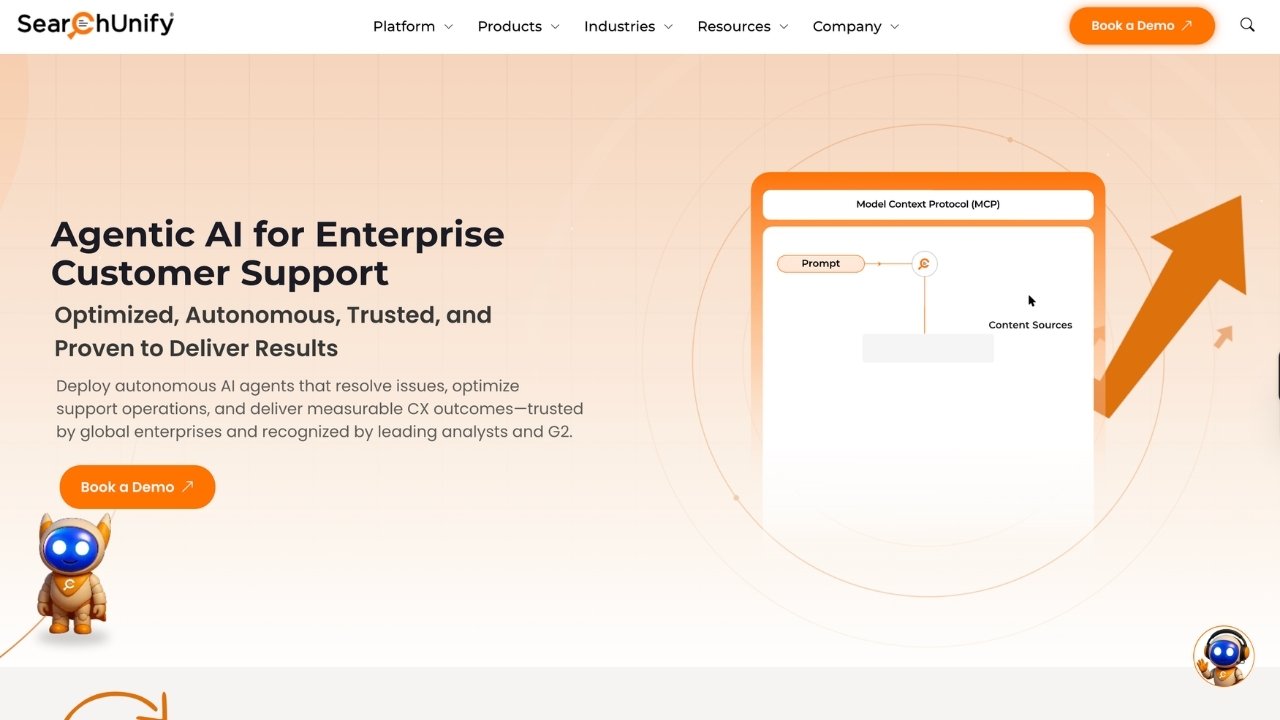
SearchUnify takes a different approach than pure search platforms. Built by Grazitti Interactive, it offers a suite of AI-powered products centered around cognitive search.
The platform includes not just search, but also a federated chatbot (SUVA), agent assistance tools, knowledge management (Knowbler), and escalation prediction. This makes it attractive for organizations wanting an integrated AI platform rather than just search.
Key features:
- Cognitive Search with ML-powered relevance
- SUVA: Federated, Information Retrieval Augmented Chatbot
- Agent Helper for support team assistance
- Knowbler for knowledge-centered service
- Escalation Predictor to prevent issues
- Community Helper for community management
Pricing: Enterprise pricing available by contacting sales.
Pros:
- Integrated product suite beyond just search
- Strong focus on support and service use cases
- Backed by established digital agency (Grazitti Interactive)
- Agentic platform architecture
Cons:
- Less brand recognition than competitors
- Smaller customer community
- May be complex if you only need search
Best for: Enterprises wanting a unified cognitive search platform with additional AI tools for support, knowledge management, and community.
7. Meilisearch
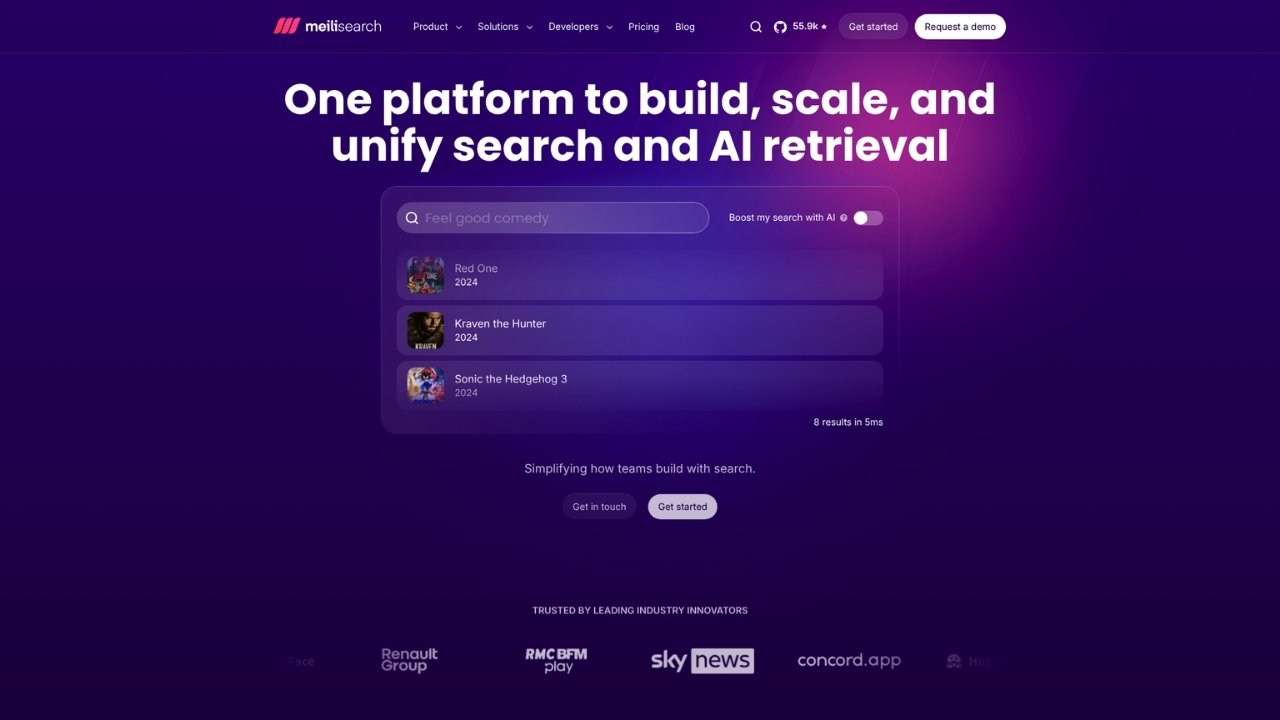
Meilisearch is the open-source newcomer that's gained serious traction.
With 10 million downloads and an active community of 47,000 developers, it's become a popular choice for teams wanting modern search without the complexity of Elasticsearch.
The platform focuses on developer experience: you can deploy in minutes with smart presets that require zero configuration.
Yet it still offers advanced features like semantic search, hybrid search, and vector storage.
Key features:
- Lightning-fast search (under 50 milliseconds)
- Full-text search with typo tolerance
- Semantic and hybrid search capabilities
- Vector storage for RAG applications
- Federated search across multiple sources
- Multi-modal search (images, video, audio)
Pricing: The open-source version is completely free. Meilisearch Cloud starts around $29/month for managed hosting. A 14-day cloud trial is available.
Pros:
- Open source with active community (680+ contributors)
- Extremely fast deployment
- Simple API with SDKs for 10+ languages
- Modern architecture built for current AI use cases
Cons:
- Newer platform with smaller ecosystem
- Fewer enterprise case studies
- Self-hosted requires technical management
Best for: Startups and developers wanting modern open-source search with minimal complexity and fast implementation.
How to choose the right Hawksearch alternative
With seven solid options, how do you pick? Here's a decision framework based on your specific situation:
For e-commerce focus: Consider Luigi's Box (easiest setup), ExpertRec (best pricing transparency), or Algolia (most scale).
For enterprise-wide search: Look at Coveo (most comprehensive), SearchUnify (best integrated suite), or Elasticsearch (most flexible).
For developer control: Elasticsearch offers maximum control, while Meilisearch provides the best developer experience with less complexity.
For budget-conscious teams: Meilisearch (free self-hosted), ExpertRec (transparent pricing from $299/month), or Algolia's free tier for small projects.
Key evaluation criteria:
- Implementation complexity: How much developer time do you have?
- Pricing predictability: Do you prefer usage-based or fixed pricing?
- Integration ecosystem: Does it connect to your existing tools?
- AI capabilities: Do you need semantic search, personalization, or generative AI?
Making the switch from Hawksearch
If you're currently using Hawksearch and considering a move, here are some practical considerations:
Data migration: Most platforms offer import tools, but plan time for data cleaning and re-indexing.
Integration updates: You'll need to update any custom integrations or workflows tied to Hawksearch.
Testing: Run parallel systems during transition to ensure search quality doesn't drop.
Timeline: Expect 2-6 weeks for a full migration depending on complexity and customization.
Find your perfect site search solution
The right search platform depends on your specific needs. For most e-commerce businesses, Algolia or Luigi's Box offer the best balance of features and ease of use.
If budget transparency matters most, ExpertRec delivers solid features at clear prices. For enterprises with complex needs, Coveo remains the gold standard.
And if you're optimizing your e-commerce operations, don't stop at site search.
While customers find products faster with better search, they also expect quick answers when they call.
That's where Ringly.io comes in. Our AI phone agent The AI handles customer calls 24/7, answering questions, looking up orders, and processing returns automatically.
Just like the search platforms here help customers find products, the AI helps them get support without waiting.
Frequently Asked Questions
Which Hawksearch alternative offers the best value for small businesses?
For small businesses, ExpertRec offers the best value with transparent pricing starting at $299/month and a 14-day free trial. Meilisearch is also excellent if you have technical resources, since the open-source version is completely free.
Do any Hawksearch alternatives offer better AI capabilities?
Most alternatives now offer comparable or superior AI features. Algolia's NeuralSearch combines semantic and keyword search. ExpertRec offers Agentic Search that breaks down complex queries. Coveo leads in enterprise generative AI for search.
Can I migrate from Hawksearch without losing search data?
Yes, all major alternatives offer import capabilities. The process typically involves exporting your search index from Hawksearch and importing it into the new platform. Plan for some reconfiguration of relevance rules and merchandising settings.
Which Hawksearch alternative is easiest to implement?
Luigi's Box and ExpertRec both emphasize quick implementation. ExpertRec claims 15-minute setup, while Luigi's Box offers guided integration with any tech stack. Meilisearch is also known for fast deployment with zero-configuration presets.
Are there free Hawksearch alternatives worth considering?
Meilisearch offers a fully-featured open-source version that's completely free to self-host. Elasticsearch also has a free open-source version, though it requires more technical expertise. Algolia provides a generous free tier for development and small projects.
How do I choose between cloud-hosted and self-hosted search?
Choose cloud-hosted if you want minimal maintenance, automatic scaling, and don't mind ongoing subscription costs. Choose self-hosted if you need complete data control, have strict compliance requirements, or want to avoid per-query pricing. Elasticsearch and Meilisearch offer both options.