
Gorgias rules in 30 seconds.
- A rule is automatic if-this-then-that logic: WHEN a ticket does something, IF it matches a condition, THEN Gorgias takes an action (tag, route, reply, escalate). No rep clicks anything.
- This post hands you the 7 rules a DTC support team should build this week, in order, each tied to what it actually saves you.
- Built for Founders, COOs, and Heads of CX at $10M-$100M Shopify brands running a paid Gorgias instance with 3-12 reps. Every rule lives in the ticket inbox, so we also cover the one channel rules can't touch: the live phone line.
Most support inboxes don't have a volume problem. They have a sorting problem. The same five questions land all day, get read by a human, get tagged by a human, get routed by a human, then get answered by a human reading a saved reply. Gorgias rules exist to take the first three of those steps off your reps' plates so they spend their hours on the tickets that actually need a person.
If you run customer experience at a $10M-$100M Shopify brand, you already know the shape of your Monday queue: a wall of "where's my order", a few refunds, the same product questions over and over. Rules are how you stop touching the repeatable stuff by hand. One thing worth saying up front, because nobody else does: every rule you build fires inside the ticket inbox. The channel a rule can never reach is a live inbound phone call, and that gap is where a lot of brands quietly leak revenue after 6 p.m. If your phone is the part of support that's still fully manual, book a 30-min call and we'll walk through what's rolling to voicemail.
What a Gorgias rule actually is (WHEN / IF / THEN)
A rule has three parts, and once you see them you can read any rule like a sentence.
- WHEN (the trigger). The event that fires the rule. A ticket is created, a message comes in, a ticket gets updated. This is the "something happened" part.
- IF (the condition). Optional filters that narrow when the rule applies. The ticket channel, the subject line, words in the message body, a tag, customer data like total spend, even whether it's inside business hours. You pick a field, an operator (is, contains, starts with), and a value.
- THEN (the action). What Gorgias does. Add a tag, assign to a rep or team, set priority, change status, send a macro as an auto-reply, or trigger a Shopify action.
If you skip the IF conditions, the THEN action runs every single time the trigger fires, which is how rules go wrong fast. So you almost always want at least one condition.
You build them in one place: the Settings icon (bottom-left), then Ticket management, then Rules, then Create rule. You can start from a template or from scratch. The mechanics are well documented in the Gorgias rule builder reference, and the official Gorgias docs on creating rules list every available trigger, condition, and action.
Here's a real one read as a sentence: WHEN a ticket is created, IF the message body contains "return", THEN add the tag return and assign it to the returns rep. That's it. That rule runs forever, for free, on every return ticket you'll ever get.
Rules vs macros (so you build the right one)
People mix these up constantly, and building the wrong one wastes an afternoon.
| Rule | Macro | |
|---|---|---|
| How it fires | Automatically, on a trigger | A rep clicks it |
| Best for | Tagging, routing, escalating, auto-replies | A polished reply a human sends in context |
| Control | Hands-off | Human-in-the-loop |
| Works with the other? | A rule's THEN can send a macro | A macro can be sent by a rule |
The short version: a rule decides what happens to a ticket without a human, a macro is the one-click reply a human reaches for. They're not competitors. The strongest setups use rules to tag and route, then have rules send macros for the truly templated answers. Macros deserve their own setup pass, so we won't go deep here. If you're refining both, our guide to the Gorgias ticketing system covers how the pieces fit, and our rundown of Gorgias features maps where each one lives.
The 7 Gorgias rules to build this week
You don't need 70 rules. According to a practical guide to Gorgias rules from eesel, teams start hitting real management pain around the 70-rule mark, where overlapping conditions get hard to reason about. Start with these seven, in this order. Each one removes a manual step your reps repeat dozens of times a day.
| # | Rule | Trigger → action | What it saves |
|---|---|---|---|
| 1 | Auto-tag by topic | ticket created → add topic tag | every view, route, and report downstream |
| 2 | WISMO auto-reply | "where is my order" → send tracking macro | your single highest-volume ticket type |
| 3 | Auto-assign by skill | tag/language → assign to owner | the "who takes this?" shuffle |
| 4 | VIP + priority | high spend → set priority | your SLA on the tickets that matter |
| 5 | After-hours reply | outside hours → acknowledge | the silent-overnight bad experience |
| 6 | Spam auto-close | spam phrase → close | a clean queue and honest metrics |
| 7 | Reopen on reply | reply on closed → reopen + assign | dropped follow-ups |
1. Auto-tag by topic (build this first)
Tags are the foundation everything else stands on. Your views, your routing rules, your reporting, all of it keys off tags. So the first rule tags tickets by topic the moment they land.
WHEN a ticket is created, IF the message body contains your keyword list (refund, return, exchange, tracking, damaged), THEN add the matching tag. Keep the tag taxonomy small and consistent, which is the core of Gorgias's own auto-tag best practices. A messy tag list is worse than none. Ten clean tags beat forty overlapping ones.
2. WISMO auto-reply
"Where's my order" is the biggest repeat ticket in DTC, full stop. WISMO runs 30-40% of all support tickets in normal periods and over 50% at peak, according to Salesforce. It shows up on every channel too, including WISMO phone calls. If you only automate one reply, automate this one.
WHEN a ticket is created, IF the body contains "where is my order", "track", or "tracking", THEN send a macro with the live Shopify tracking link and tag it order-status. Pair it with our breakdown of WISMO automation on Shopify so the macro pulls real order data, not a generic "check your email" line. One caution: rules match exact keywords, not intent. "Haven't gotten my package" won't fire unless that phrase is in your list, so build the keyword list from your actual ticket history, not your imagination.
3. Auto-assign by skill or language
Once tickets are tagged, route them to the rep who owns that work. Your wholesale specialist shouldn't be fishing wholesale tickets out of the general queue, and your Spanish-speaking customers shouldn't wait for the one rep who can answer them to notice.
WHEN a ticket is created, IF the tag is wholesale or technical, or the detected language is Spanish, THEN assign to the right rep or team. This is the rule that ends the "who's taking this?" shuffle in your standup. For the escalation side of routing, our customer service escalation process guide pairs well with it.
4. VIP and priority routing
Not every ticket is equal. A first-time $40 buyer and a customer who's spent $4,000 with you this year should not sit in the same undifferentiated queue.
WHEN a ticket is created, IF customer total spend is over your VIP threshold, or the tag is vip, THEN set priority and assign to your best rep. This is also where your SLA lives. An SLA is just a time goal for first response and resolution, and a priority rule is how you protect it on the tickets that move revenue. Gorgias SLA policies let you measure it; the priority rule is how you actually hit it.
5. After-hours acknowledgement
A customer who emails at 11 p.m. and hears nothing until 10 a.m. assumes you didn't get it. A one-line "we've got your message, we'll be back to you at open" turns a silent gap into a handled one.
WHEN a message is received, IF it's outside your business hours, THEN reply with an acknowledgement and tag it after-hours. Heads up: the dedicated scheduled-autoresponder version of this is being retired (more on that next), so build it as a standard rule.
6. Spam auto-close
Spam pollutes your views and quietly wrecks your metrics. If half your "open" tickets are junk, your SLA numbers lie to you.
WHEN a ticket is created, IF it's from a known spam domain or the body contains a spam phrase, THEN close it and tag spam. Five minutes to build, and your reporting gets honest immediately. It also feeds into reducing your overall ticket volume by keeping noise out of the count.
7. Reopen on customer reply
A customer replies to a closed ticket and it just sits there closed. That's a dropped follow-up, and dropped follow-ups become 1-star reviews.
WHEN a closed ticket gets a new customer message, THEN reopen it and assign it back to the original rep. Small rule, real save. It's the kind of thing nobody notices until it's missing.
The autoresponder rule you need to migrate before Jan 30, 2026
Here's the piece most "Gorgias rules" articles haven't caught up to, and it has a date on it.
Gorgias is retiring its dedicated Autoresponder Rules. Any account created after September 2024 already can't use them. Accounts created before September 2024 can keep using them only until January 30, 2026, after which the feature stops working, per the Gorgias autoresponder docs. Gorgias is steering Shopify brands toward its AI Agent for automated responses instead.
If you've been leaning on a scheduled autoresponder for business hours or holiday coverage, treat this as a Q1 to-do, not a someday. The migration itself is straightforward: rebuild the behavior as a standard WHEN/IF/THEN rule (like #5 above) or move it to the Gorgias AI Agent. The risk isn't the rebuild, it's forgetting until a customer emails on a holiday and hears nothing back. Put it on the calendar this week.
Where Gorgias rules stop: the live phone line
Every rule in this post fires inside the ticket inbox. Email, chat, social, contact form. That's the whole surface area. A rule has no way to fire on a live inbound phone call, because there's no ticket until after the call is already over.
That matters more than it sounds, because phone is where the repeatable work is most expensive. The same WISMO question that costs you a tagged-and-auto-replied ticket by email costs you a rep on hold by phone, or worse, a voicemail nobody returns. Gorgias's own voice add-on is basic, with no AI for calls and geographic dialing limits, as eesel's Gorgias-for-Shopify guide notes. So the channel with your highest-cost repeat questions is the one your rules never reach.
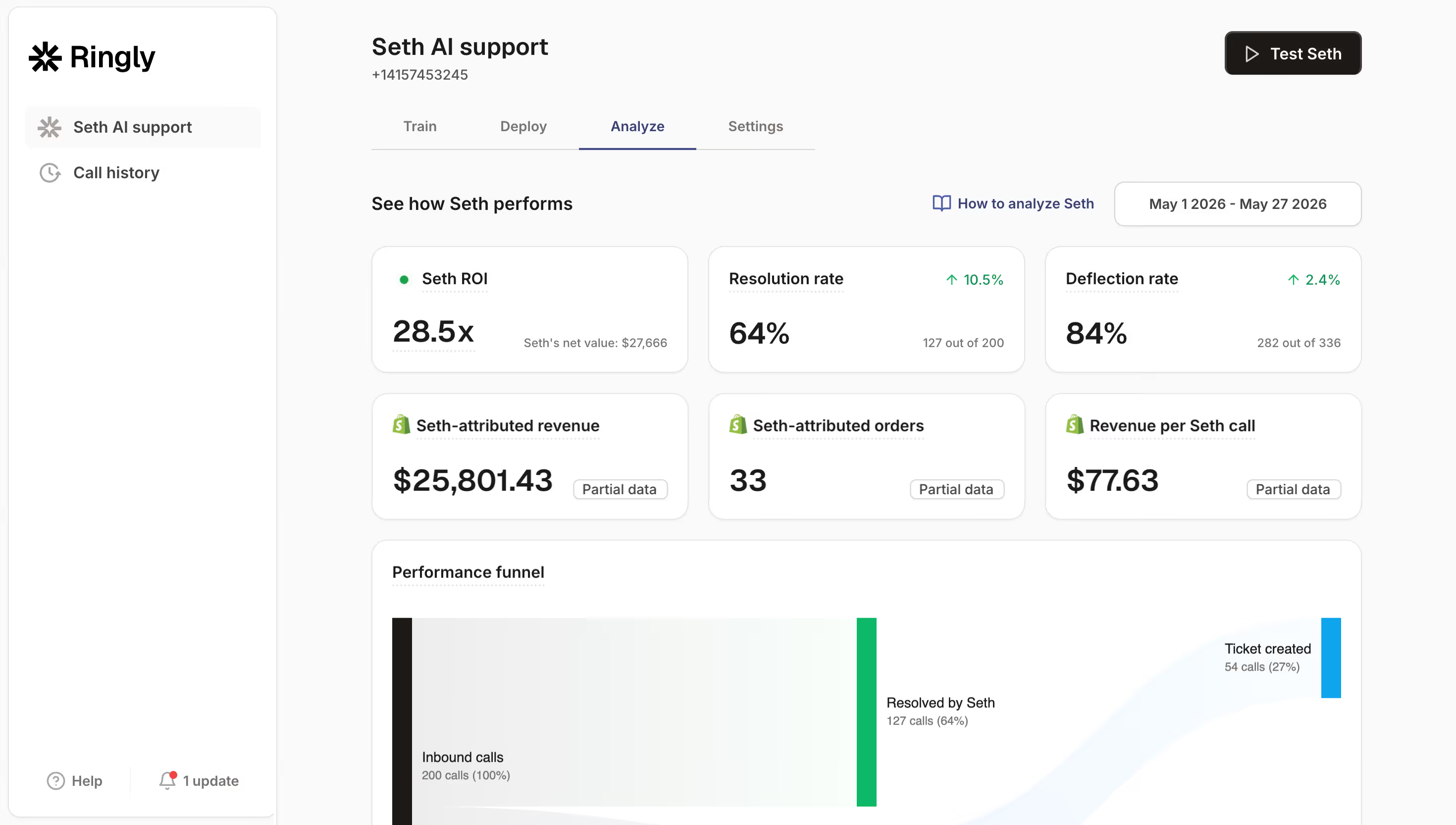
This is the gap Ringly fills. Ringly.io is AI phone support for Shopify brands. Instead of growing your phone team every time call volume climbs, the AI answers inbound calls 24/7: order status, returns, product questions, abandoned-cart rescue. Across 50+ brands, it resolves 73% of calls autonomously at roughly $0.42 per resolved call, and the calls that need a human escalate cleanly into Gorgias, so your reps keep one inbox. It's the phone equivalent of your WISMO auto-reply rule, except it talks.
"My customers also feel like it's a normal person. They feel like they can communicate if they have questions."
Claudia Droge, TechCraft Studio
If your phone line is the part of support that's still fully manual after-hours, book a 30-min call and we'll show you what's rolling to voicemail right now.
What the routine inbox work is costing you
Rules are free to build and they save real money, but the bigger number is the headcount you don't add. Here's the shape we see across 50+ Shopify brands.
Take a typical $50M Shopify brand running a 6-rep CS team:
| Line item | Today | With the routine routed away |
|---|---|---|
| 6 reps x $4K loaded per rep | $24,000/mo | n/a |
| AI phone support (~$5K/mo) | n/a | $5,000/mo |
| Net monthly CS spend | $24,000/mo | $5,000/mo |
| Monthly savings | n/a | $19,000/mo |
| Annual savings | n/a | $228,000/yr |
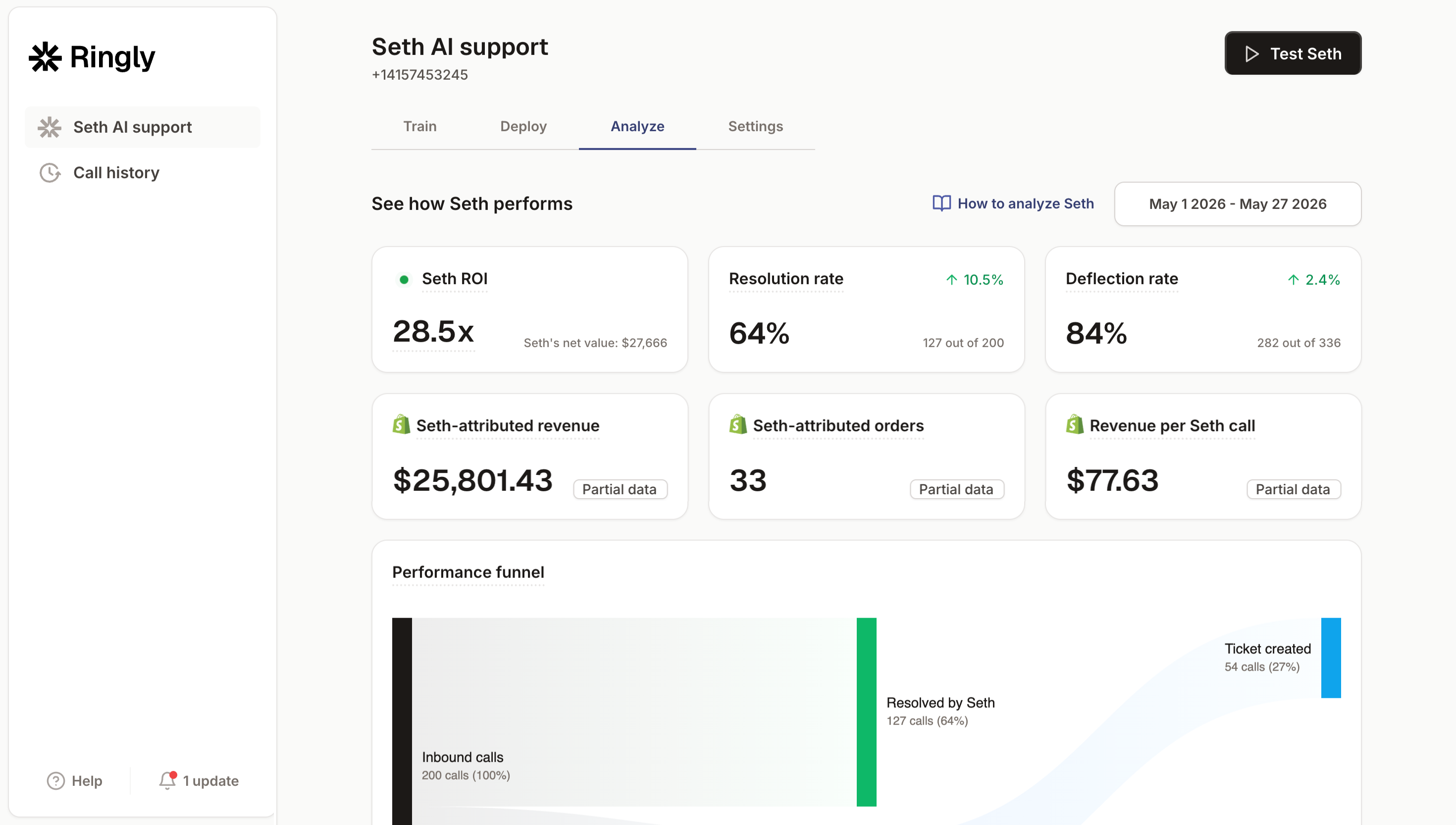
That's roughly 70% of repeatable contacts (order status, returns, product questions, the same five things over and over) routed away from people. Your rules handle the inbox side of that. The phone side is where the AI earns its keep. WashCo, a Shopify brand we launched, recovered $22,664 in its first 7 days on the phone. If you want to run your own numbers, book a 30-min call and we'll do the math live against your call volume.
Frequently asked questions
What's the difference between a Gorgias rule and a macro?
A rule fires automatically on a trigger to tag, route, or escalate a ticket without anyone clicking. A macro is a one-click reply a rep applies in context. A rule's action can send a macro, so they work together rather than compete.
How many Gorgias rules should I have?
Start with the seven in this post. Most teams run fine on a focused set, and management gets harder past roughly 70 rules where conditions start to overlap. Prune dead rules quarterly instead of stacking new ones.
Can a Gorgias rule answer phone calls?
No. Rules act on tickets in the inbox: email, chat, social, and contact-form messages. A live inbound phone call has no ticket until after it ends, so rules can't fire on it. That channel needs AI phone support instead.
Are Gorgias autoresponder rules going away?
The dedicated Autoresponder Rules are retired for accounts created after September 2024, and pre-September-2024 accounts lose them on January 30, 2026. Rebuild the behavior as a standard rule or move it to the AI Agent before the deadline.
Why isn't my Gorgias rule firing?
Rules match exact keywords, not intent. If your WISMO rule only lists "where is my order", a ticket saying "haven't gotten my package" won't trigger it. Build keyword lists from real ticket history, and check that your IF conditions aren't too narrow.
Do rules slow down Gorgias?
No meaningful slowdown for a focused rule set. The risk isn't speed, it's logic: overlapping rules that tag or route the same ticket two different ways. Keep conditions specific and review for conflicts when you add a rule.
Can rules trigger Shopify actions?
Yes. A rule's THEN can trigger Shopify actions and send macros that pull live order data, which is what makes the Gorgias Shopify integration useful for WISMO and returns.
Talk to us

Gorgias rules clean up your inbox. They don't pick up the phone. If your phone line is where the routine calls pile up after 6 p.m., a 30-min call is the fastest way to see what you're missing and what it's worth.
The 3-layer guarantee.
- Live in 14 days or it's free until launched.
- 65% resolution in 90 days or we refund the last 3 months of subscription fees.
- We keep working free until we hit it.
Ruben (Ringly co-founder) takes these calls personally.