
This post in 30 seconds.
- Optimize the returns process and you fix two problems at once: turnaround time, and the phone calls a slow returns desk keeps generating.
- Across the Shopify brands we run phone support for, return and refund-status questions sit in the top repeatable call categories. Most returns guides never count that line.
- Written for founders, COOs, and Heads of CX at $10M-$100M Shopify brands with a paid helpdesk and a visible phone number.
Most teams optimize returns by staring at two numbers: the return rate and the cost per return. Both matter. Both miss the line item that actually shows up on your phone bill.
Here's what I mean. A return isn't one event. It's a workflow that runs for days. Someone starts a return, ships a box, waits for it to land, waits for it to get inspected, waits for the refund to clear. The average online return takes 9.5 days to process, and 45% of shoppers expect their money back within three. That gap, the difference between what your process does and what the customer expects, doesn't disappear. It becomes a phone call. "I started a return last week, where's my refund?"
If you run a $30M Shopify brand and your CS team spends returns season reading order numbers off a screen and saying "it's still processing," you already know this. This post is about optimizing the returns process itself so it stops producing that call. It is not about lowering the return rate (that's a different lever, and we wrote about how to reduce product returns separately). Here, the rate is fixed. We're making the process faster, cheaper, and quieter. If your returns desk is run on email threads and a spreadsheet, book a 30-min call and we'll look at where the time and the calls are leaking.
What ecommerce returns optimization actually means
Returns optimization is the work of making the returns process faster, cheaper, and less manual without making the experience worse for the customer. It's an operations problem, not a policy problem.
The whole process breaks into four sub-systems, and you can optimize each one independently. Most brands have a strong one and three weak ones.
- Intake. How the return gets started. A self-service portal where the customer files the return themselves, picks a reason, and gets a label. The alternative is a rep doing it by hand off an email.
- Decisioning. How the return gets approved. A rules engine that auto-approves the obvious cases (in policy, low value, common reason) and flags the rest. The alternative is a human eyeballing every single one.
- Reverse logistics. How the box gets back, inspected, and restocked. Routing rules, consolidation, and restock speed. This is where the cost per return hides.
- Resolution. How it ends. Refund, exchange, or store credit, and how fast that happens. This is where the "where's my refund" call lives.
The cost is real on every one of these. The total cost to process a single return runs $15 to $30 or more depending on the category, and for apparel the modeled all-in cost lands around $25 to $35 per item. Processing a return eats roughly 21% of the order's value. When up to 30% of online sales can come back, that's not a rounding error.
Optimization means attacking those four sub-systems with automation, clear rules, and faster turnaround. Reducing returns means stopping the box from coming back at all. Different jobs. You want both, but don't confuse them. Our complete returns management guide covers the full picture; this post stays on the process.
The hidden cost nobody puts on the returns dashboard
Open any returns post and you'll see the same metrics: return rate, cost per return, exchange rate, time to refund. Good metrics. None of them count the phone call.
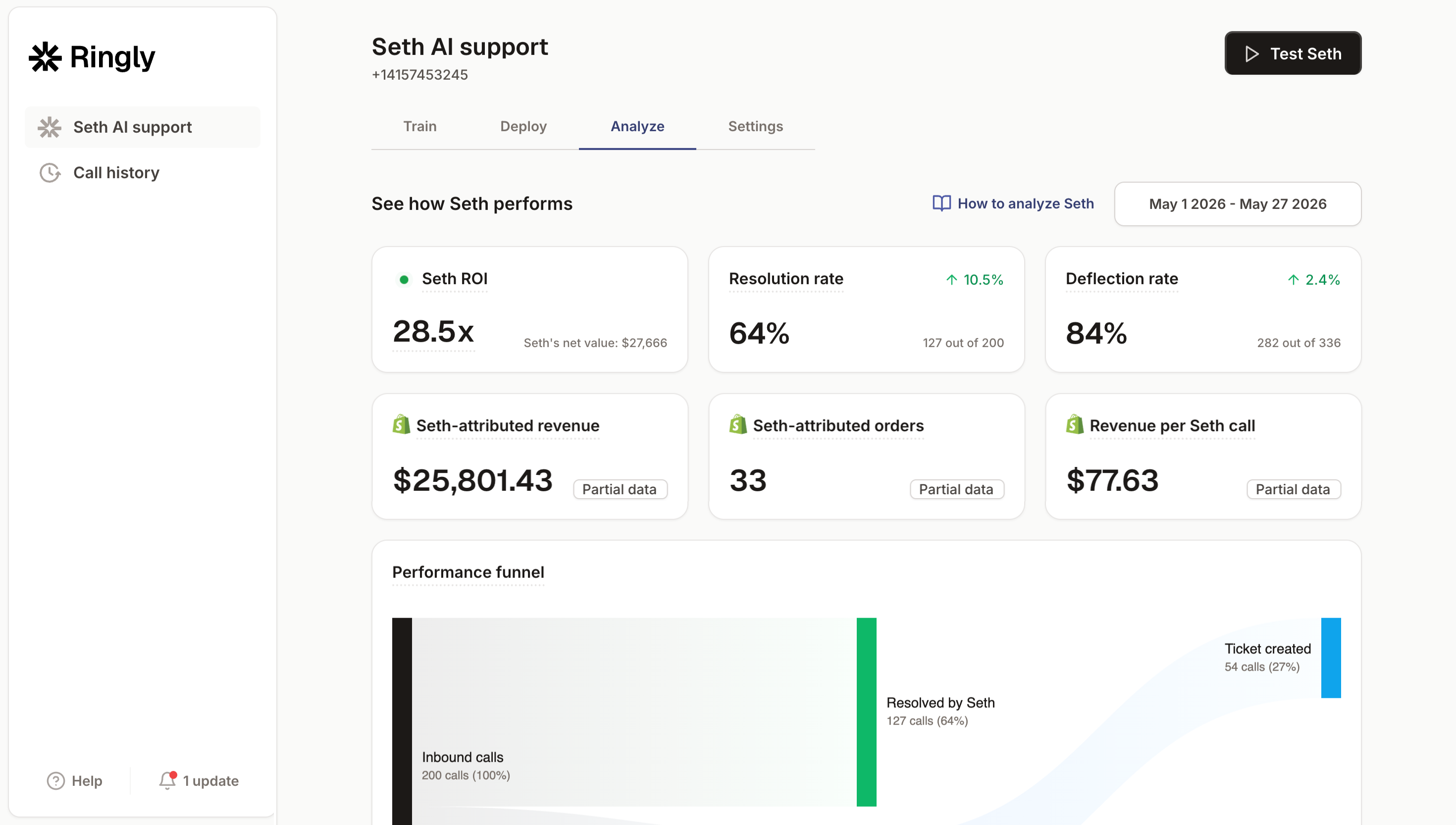
Across the Shopify brands we run phone support for, returns and refund-status questions sit in the top repeatable call categories, right next to "where's my order." I read the transcripts, and the line repeats almost word for word: "I started a return six days ago and I haven't seen the money." That's not a customer with a complicated problem. That's a customer your process taught to call.
Every day of turnaround you add is a refund-status call you'll eventually take. The math is simple. A self-service return portal can cut return-related tickets by 30 to 40%, and automated status updates at each processing stage cut refund-related ticket volume by 50 to 70%. Those aren't returns-app numbers. Those are CS-team numbers. The returns process is a support-ticket factory, and the phone is where the worst of it lands, because the impatient customer doesn't open a ticket, they dial.
This is the part that hits the P&L twice. You pay to process the return, and then you pay a rep $4,000 a month, loaded, to answer the call the slow process created. WashCo, a Shopify brand we launched, recovered $22,664 in its first 7 days on the phone, and a lot of that was catching exactly these calls before they turned into a lost sale or a one-star review about how nobody picked up.
So when we say optimize the returns process, we mean optimize it for two outputs: faster resolution AND fewer inbound calls. Most brands only measure the first.
How I mapped the returns workflow
I'm Ruben, co-founder of Ringly. We run AI phone support for Shopify brands, which means I see the back half of the returns process every day: the calls a slow or manual returns desk generates after the customer gives up on the portal.
To write this guide, I did the work rather than rehash the SERP. Here's how.
- I pulled return-related call data across our active Shopify brands and counted how often returns, refunds, and exchange questions showed up versus other repeatable call reasons.
- I read real return-related call transcripts and tagged the trigger for each one (slow refund, no status update, portal confusion, after-hours, "I'd rather just call").
- I mapped the manual returns desk against the automated stack for a typical $30M brand: who touches each step, how long it sits, and where the customer reaches for the phone.
- I timed the turnaround gap between what brands actually process (around 9.5 days) and what their customers expect (45% want it in three).
- I stress-tested the resolution step by asking what happens when a customer wants an exchange, not a refund, and the system can only do refunds.
The levers below are the ones that moved both numbers at once: turnaround time down, inbound calls down. I don't sell a returns app, so I have no reason to oversell one. I sell the phone layer that catches what the returns app can't, and it shows up in this list for the same reason as everything else.
The returns optimization stack at a glance
Returns optimization isn't one tool. It's a stack, and each layer does a different job. Here's how the layers map to turnaround time and to the call load they remove.
| Layer | What it does | Turnaround effect | CS-call effect | Example tools |
|---|---|---|---|---|
| Self-service returns portal | Customer files the return, picks a reason, gets a label | Removes the rep-handled intake delay | Cuts return-related tickets 30-40% | Loop, AfterShip Returns, ReturnGO |
| Returns decisioning rules | Auto-approves in-policy returns, flags the rest | Instant approval on clean cases | Removes approval back-and-forth | Built into most portals |
| Reverse logistics + restock | Routes the box back, inspects, restocks fast | 48 hours vs 14 days with smart hubs | Fewer "is my return there yet" calls | 3PL / WMS routing |
| Proactive status comms | Texts/emails the customer at each stage | No effect on speed, kills the wait anxiety | Cuts refund-status tickets 50-70% | Portal notifications |
| AI phone support layer | Answers the call the portal didn't catch | Resolves status questions in real time | Handles the won't-use-portal + after-hours caller | Ringly |
The first four layers are returns software. The fifth is the one nobody plans for, because every returns vendor assumes the customer uses the portal. A meaningful share of them won't. They call. (If you're picking between portals, our Loop Returns alternatives breakdown covers that decision; this post is about the layer above it.)
The optimization levers that actually move turnaround
Five levers. Each one does something to turnaround time and something to your call volume. I've ordered them by how fast you can ship them.
Self-service returns portal
A returns portal is the fastest win because it takes the rep out of intake entirely. The customer files the return, picks a reason from a menu, and gets a prepaid label without anyone on your team touching it.
That alone cuts return-related tickets 30 to 40%, because the most common return ticket ("how do I send this back?") never gets opened. If you're on Shopify, a portal plugs straight into your store. We covered the options in our guide to the best Shopify returns app.
Exchange-first with instant store credit
Default to an exchange or store credit, not a refund, and you keep revenue you were about to hand back. Offering exchanges instead of refunds lifts revenue retention by around 50%, and 73.6% of Loop merchants now offer exchanges for exactly this reason.
The move that matters most is instant store credit. The customer gets the credit the moment they file the return, before the box ships back, so they can reshop immediately. It turns a refund into a second purchase. Set up the variant-swap and size-exchange flows so the customer doesn't have to call to ask "can I just swap it for a medium?" Our pages on Shopify exchanges and Shopify refunds walk through the mechanics.
Auto-approval with risk-based friction
Approve the obvious returns automatically and reserve human review for the ones that smell like abuse. A rules engine can auto-approve any return that's in policy, under a value threshold, and citing a normal reason. That's most of them.
For the rest, apply friction selectively, not universally. Serial returners are 2 to 5% of accounts doing most of the damage, so you don't need to punish the other 95% with a slow manual review. Auto-approval shrinks turnaround on the bulk of returns from days to seconds and removes the "did my return get approved?" call entirely.
Proactive refund-status communication
The single best way to kill a "where's my refund" call is to answer it before the customer asks. Text or email the customer at every stage: return received, inspection started, refund issued. Automated status updates cut refund-related ticket volume 50 to 70%.
This is the lever most brands skip because it doesn't speed up the process itself. It speeds up the customer's patience, which is the thing actually generating the call. A customer who got a text saying "refund issued, 3-5 business days to your card" doesn't dial. Tie this into your order tracking flow so it runs on the same rails.
Reverse logistics routing and restock speed
Restock speed is where the cost per return lives, and it's the lever with the longest payback. Smart return hubs that sort, inspect, and restock in one pass can take processing from 14 days down to 48 hours. Faster restock means the item is sellable again sooner, which is the difference between recovering the margin and writing it off.
This one needs your 3PL or WMS, so it's a quarter-long project, not a weekend one. Start with the first four levers and come back to this when the quick wins are in.
If your returns desk is still manual and you're staffing reps to read refund statuses off a screen, book a 30-min call and we'll map where the calls are coming from.
The returns KPIs worth a dashboard
You can't optimize what you don't measure. Most brands track three returns KPIs. Track six, and put the one nobody else lists at the top.
- Return processing time (TAT). Days from return initiated to resolved. The benchmark to beat is 2 to 7 business days; the average brand is at 9.5. This is your headline number.
- Time to refund. Days from box received to money back on the card. 85% of shoppers expect this inside a week. Miss it and you generate a call.
- Cost per return. Total returns cost divided by returns processed. Anchor it against the $15-$30 range and watch the trend, not the absolute.
- Exchange rate. Share of returns converted to exchanges or store credit instead of refunds. Every point here is retained revenue.
- Refund-status contact rate. The KPI nobody lists: how many returns generate an inbound ticket or call asking "where's my refund?" If this number is high, your status comms are broken, not your warehouse.
- Restock time. Days from box received to item back on the shelf. This is the lever on cost per return.
The refund-status contact rate is the one that ties the returns process to your CS payroll. A brand can have a clean TAT and still drown in status calls if it never tells the customer the return is moving. Pair this dashboard with your broader ecommerce customer service metrics so the returns load shows up next to everything else your team carries.
Where the phone line fits, and why your returns app can't close it
Here's the gap every returns stack has. The portal, the rules engine, the status texts: they all assume the customer self-serves. A real share of your customers won't. They're older, they're frustrated, they bought a $200 order and they want a human to confirm the refund is coming. So they call. After hours, often, when your reps are gone and the line rolls to voicemail nobody returns.
Your returns app has no answer for that caller. It's not built to. It handles the customers who came to the portal, and it ships the ones who didn't straight to your phone queue.
That's the layer we run. Ringly.io is AI phone support for Shopify brands. The phone shouldn't be a tax on your support team every time returns season spikes. Instead of staffing reps to read refund statuses off a screen, the AI answers inbound calls 24/7: it finds the order in your Shopify store, checks the return and refund status, processes returns and exchanges, and answers the product questions that come with them.
Seth resolves up to 90% of calls autonomously. Calls that genuinely need a human, the angry ones, the edge cases, escalate cleanly to Gorgias, Richpanel, Reamaze, or whatever helpdesk you already run. It uses your knowledge base and can check order status live on the call, which is exactly the "where's my refund" question your reps answer fifty times a day.
"My customers also feel like it's a normal person. They feel like they can communicate if they have questions."
Claudia Droge, TechCraft Studio
The most common thing customers say about it is that it doesn't sound like AI. That matters on a returns call, because the person calling is already a little annoyed, and the last thing they want is a phone agent for Shopify that makes them feel handled. Pricing starts at $99 a month, and there's a 65% resolution guarantee.
What this costs you today vs optimized
Let's put numbers on it. Take a typical $50M Shopify brand running a 6-rep CS team. A big slice of that team's day is repeatable status work, including returns and refund questions.
| Line item | Today | Optimized with Ringly |
|---|---|---|
| 6 reps × $4K loaded per rep | $24,000/mo | n/a |
| Ringly Enterprise (~$5K/mo) | n/a | $5,000/mo |
| Net monthly CS spend | $24,000/mo | $5,000/mo |
| Monthly savings | n/a | $19,000/mo |
| Annual savings | n/a | $228,000/yr |
That's roughly 70% of repeatable calls, order status, returns, refund status, the same handful of questions over and over, routed to the AI. The other 30%, the genuinely complex calls, still go to your CS team, who now have time to actually solve them instead of reading refund dates off a screen.
The returns software stack and the phone layer aren't competing line items. The portal cuts the tickets from customers who self-serve; the phone layer cuts the cost of the ones who don't. Together they're what takes returns season from a payroll spike to a quiet week. Want to see your own numbers? Book a 30-min call and we'll do the math live against your actual call volume.
Frequently asked questions
What is ecommerce returns optimization?
It's the work of making the returns process faster, cheaper, and less manual without hurting the customer experience. It covers four sub-systems: intake (the portal), decisioning (approval rules), reverse logistics (restock speed), and resolution (refund, exchange, or credit). It's an operations problem, not a policy one.
How is returns optimization different from reducing returns?
Reducing returns stops the box from coming back at all, usually through better product pages, sizing, and fit data. Returns optimization assumes the box is coming back and makes that process efficient. You want both, but they're separate jobs with separate levers.
What's a good return processing time?
The benchmark to aim for is 2 to 7 business days from return initiated to resolved. The average brand sits around 9.5 days, and 45% of shoppers expect their refund within three, so anything over a week starts generating status calls.
How do returns drive customer service calls?
A slow or silent returns process makes customers wait, and waiting customers call to ask "where's my refund?" Across the Shopify brands we run phone support for, return and refund-status questions are a top repeatable call category. Automated status updates cut that volume by 50 to 70%.
Does a returns app like Loop or AfterShip handle phone calls?
No. Returns apps handle the customers who use the self-service portal. The customer who skips the portal and dials your number, often after hours, lands in your phone queue, not the app. That gap is where an AI phone layer sits.
How do exchanges retain more revenue than refunds?
An exchange or store credit keeps the money in your store instead of sending it back to the customer's card. Offering exchanges lifts revenue retention by around 50%, and instant store credit turns a return into a second purchase before the box even ships back.
What returns KPIs should I track?
Return processing time (TAT), time to refund, cost per return, exchange rate, restock time, and the one most brands miss: refund-status contact rate, the share of returns that generate an inbound "where's my refund" ticket or call. That last one ties the returns process directly to your CS payroll.
How much does it cost to process a return?
Anywhere from $15 to $30 or more per return depending on the category, with apparel landing around $25 to $35 all-in. Processing a return eats roughly 21% of the order's value, which is why restock speed and exchange rate matter so much.
Can AI handle return and refund-status calls?
Yes. Ringly answers inbound calls, finds the order in Shopify, checks return and refund status live, and processes returns and exchanges. It resolves up to 90% of calls autonomously, and anything complex escalates to your existing helpdesk.
How fast can I get phone support live for returns questions?
Live in under an hour for self-serve plans. You connect your store and knowledge base, and the AI is ready to take return and refund-status calls. Setup is free.
Talk to us

If you run a $10M-$100M Shopify brand and returns season turns your phone line into a refund-status hotline, a 30-min call is the fastest way to see what that's costing you. We'll pull your call volume and show you how much of it is the process talking.
Our 3 promises.
- Live in under 1 hour. Setup and test calls are free.
- 30-day money back on the $99 plan fee.
- 65% resolution guarantee: if Seth resolves under 65% of your support calls in a month, that month comes back as credit (after 90 days on Pay per call).
Ruben (Ringly co-founder) takes these calls personally.