
A return isn't one problem. It's six problems sharing a word, and each one has a different fix.
- The label "return" hides at least three failure types: a selection failure, a fulfillment failure, and a product failure. Each has a different owner and a different fix.
- Damage or defects sit at the top (42% of shoppers name it), but the reason code on the order is the customer's best guess, not the real cause.
- Built for founders, COOs, and Heads of CX at $10M-$100M Shopify brands with a visible phone number who want returns to stop eating the support queue.
Most teams track one number for returns: the rate. Then they spend a quarter trying to push it down without ever splitting it by why the product came back. That's the mistake. A "didn't fit" return and a "wrong item" return look identical on a dashboard, but one is a sizing problem and the other is a packing problem. You can't fix both with the same lever.
If you run customer experience or operations at a Shopify brand doing $10M to $100M, you already feel this. The return rate creeps up, the CS team drowns in "where's my refund" calls, and the quarterly fix never sticks because the reasons underneath it keep shifting. This post is the reason-by-reason teardown: what each return reason actually means, who owns the fix, and the support-call wave each one sends to your phone line. We run AI phone support for Shopify brands, so I read the return calls all day. Book a 30-min call and we'll map your return-call wave to your reason codes.
In this post:
The real return rate, and why the average lies
The average ecommerce return rate sits around 19% to 20.5% heading into 2026, up from roughly 11% in 2020 (Capital One Shopping research). That number is useless on its own. It's a blend of categories that behave nothing alike.
The average return rate tells you almost nothing. The category-level rate tells you where to look.
| Category | Typical return rate | What's driving it |
|---|---|---|
| Apparel / footwear | ~25% (some fashion 40%+) | size, fit, bracketing |
| Electronics | ~11% | defects, didn't match expectation |
| Beauty / skincare | ~12% | shade, texture, didn't match description |
| Home / general | ~8-15% | damaged in transit, changed mind |
So if your apparel brand runs a 25% return rate, you're at the benchmark, not in crisis, based on 2026 category data from Richpanel. The crisis is hidden inside the mix. And every one of those returns costs money to process before it ever resells: a single return runs $10 to $65 once you load shipping, labor, inspection, and restocking, and only about 48% of returned items go back out at full price. The full category breakdown sits in our ecommerce return statistics roundup if you want the per-vertical numbers.
Here's what the rate hides that matters more than the rate itself: a chunk of every return started as a phone call or a ticket before the box ever shipped back. The customer called to ask how to return it, whether it's covered, or where their refund went. That contact volume scales with the return rate, and it lands on your CS team first. So before you touch the logistics, look at the returns workflow as a support problem, then a shipping one.
The three failure types behind every return
Strip away the long list of return reasons and they collapse into three buckets. The bucket tells you who owns the fix.
Every return reason belongs to one of three failure types, and each type points at a different team.
- Selection failure. The product was fine. The customer picked wrong. This is "changed my mind", "wrong size", and bracketing. Owner: merchandising and the product detail page (PDP). The fix is better fit data, reviews, and honest expectation-setting, not a warehouse change.
- Fulfillment failure. The right product never arrived in the right state. This is "wrong item received" and "damaged in transit". Owner: ops and your 3PL. The fix is scan-verify packing and better packaging, not a copy rewrite.
- Product failure. The product itself underperformed or misrepresented itself. This is "defective" and "didn't match the description". Owner: QA and merchandising accuracy. The fix is tighter QA gates and truthful PDPs.
The split matters because the volume isn't even. Across ecommerce, roughly 65% of returns trace to customer selection ("changed my mind" / "doesn't fit"), about 13% to catalog issues ("not as described"), and about 9% to product or delivery problems like damage, lateness, or the wrong item (Chattermill analysis). Selection dominates. But selection is also the one most operators wrongly treat as unfixable, so they pour effort into the small buckets and leave the big one alone.
A reason-by-reason teardown
Here's the playbook, one reason at a time. For each: what it is, the root cause and who owns it, the fix, and the support call it generates. Read the support-call line carefully, because that's the part the logistics-only guides skip.
Didn't match the description
About 49% of shoppers say they've returned an item because it didn't match the online description, and roughly 22% return because it "looked different than expected." This is a merchandising-truth gap. The color reads differently on screen, the scale is off, the material feels cheaper than the photo implied.
- Root cause + owner. Inaccurate or optimistic PDP. Owner: merchandising.
- The fix. Lifestyle plus scale shots, true-to-life color, honest material copy, and customer photos in reviews. The goal is fewer surprises at the doorstep, not prettier images.
- The support call. "This isn't what the page showed." The rep can't undo the mismatch, so the call is really a refund or exchange request.
Defective product
Damage or defects rank as the top return reason for 42% of shoppers, per Bizrate Insights survey data. A real defect is a genuine product failure. The trap is telling it apart from misuse, where the customer broke it and wants a refund.
- Root cause + owner. QA escape or a batch problem. Owner: QA, with a feedback loop to the supplier.
- The fix. Collect structured info on every defect claim: lot or batch number, what failed, and a photo. Patterns by batch surface a real QA issue fast.
- The support call. "Is it defective or did I break it?" This one needs a human judgment call for high-value items, so the routine info-gathering should be done before a person ever picks up.
Damaged in transit
Around 20% of customers report receiving an item already damaged. This is not a product problem, and treating it like one sends your QA team chasing ghosts. It's packaging and carrier handling.
- Root cause + owner. Under-protective packaging or rough carrier handling. Owner: ops and your shipping partner.
- The fix. Better packaging on fragile SKUs, plus a carrier scorecard so you know which lane breaks things.
- The support call. "It arrived broken." Fast resolution here protects the review, so it's worth a quick reship-or-refund path.
Wrong item received
About 23% of returns happen because the customer got the wrong item. This is the most expensive return type per order, because it's two failures at once: you ship a return label AND a replacement, doubling fulfillment cost on a single order.
- Root cause + owner. Pick-and-pack error, labeling mistake, or inventory mismatch. Owner: ops.
- The fix. Scan-verify at the pack station so the SKU in the box matches the SKU on the order.
- The support call. "I got the wrong thing." Customers are angriest on this one because it reads as carelessness, so speed of acknowledgment matters more than the refund itself.
Changed mind / buyer's remorse
Roughly 10% to 15% of returns are buyer's remorse, the excitement fading after the order ships. This is the hardest to prevent because nothing was wrong with the product.
- Root cause + owner. Impulse buy plus weak post-purchase reinforcement. Owner: merchandising and lifecycle marketing.
- The fix. Set accurate expectations up front and reinforce the purchase after it (how-to-use content, a warm order confirmation). You won't kill this bucket, but you can shrink it.
- The support call. "How do I send it back?" and "where's my refund?" Pure process questions, perfect for automation.
Wrong size and bracketing
Size and fit drive 40% to 50% of apparel and footwear returns, and 42% of consumers named size or fit as the reason for their last return. Worse, 63% of shoppers now bracket: they buy multiple sizes intending to return the ones that don't fit (Loop Returns 2026 data).
- Root cause + owner. Thin sizing data and no fit guidance. Owner: merchandising and product.
- The fix. Real size charts, fit-finder tools, and reviews that mention fit. Push exchanges over refunds so the customer stays bought. This is the bucket with the most upside if you want to reduce product returns overall.
- The support call. "I need a different size." This is an exchange call, not a refund, and the difference is revenue you keep versus revenue you lose.
Return fraud and wardrobing
Return fraud cost retailers $103.8 billion in 2024, with about 15.1% of returns flagged as fraudulent (Chargeflow return data). Wardrobing (wearing it once and returning it), false damage claims, and empty-box returns make up the bulk.
- Root cause + owner. A lenient return policy with no abuse flags. Owner: finance and ops.
- The fix. Serial numbers or photo-on-return for high-value SKUs, plus return-abuse flags on repeat offenders. Watch the line between fraud control and friction that punishes good customers.
- The support call. Disputed refunds and chargebacks. These need a human, but the volume is small.
To put a number on the upside: WashCo, a Shopify brand we launched, recovered $22,664 in its first 7 days on the phone, much of it from order and return calls that used to roll to voicemail.
Why reason codes lie
Here's the uncomfortable part. The reason code attached to a return is the customer's best guess, picked from a dropdown in a hurry. It is not the real cause. Someone returns a jacket as "doesn't fit" when the truth is the color looked off, or marks "changed my mind" because it's the path of least resistance and they don't want to type.
The selected reason code is a label the customer chose under two seconds of pressure. The comment and the call are where the truth lives.
So how do you find the real cause? I built this section the same way I'd build it for a brand we onboard. I pulled a sample of returns where the customer both selected a code AND left a comment, then checked how often the comment matched, contradicted, or added nuance to the code. Even 50 to 100 returns shows you whether your taxonomy is working. The pattern is almost always the same: the comments cluster into different buckets than the codes do, and the codes systematically over-report "changed my mind" because it's the easy click.
Then I read the other channel nobody audits: the phone. Across the Shopify brands we run phone support for, the return-related calls cluster on three things, and they don't map cleanly to the dropdown codes at all. Customers call to ask where their refund is, whether the thing is defective or whether they broke it, and to say the product isn't what the page showed. That's the real return taxonomy for your support team, and it's invisible in your returns dashboard because those calls never become structured reason codes. If you only read the codes, you're auditing the quietest version of the truth.
The support-call layer of returns
Every return starts as a contact. Before a box moves, a customer wants to know how to return it, whether it qualifies, and when the refund hits. Returns are the twin of where's my order: same repetitive, high-volume, low-judgment shape, just on the back end of the order instead of the front.
The return-call wave is WISMO's twin: high volume, low judgment, and it hits your CS team before logistics ever sees the package.
This is the layer the logistics-only return guides skip, and it's where the payroll actually goes. Your reps answer the same handful of return questions over and over: how do I start a return, is this covered, where's my refund, can I get a different size instead. None of those need a human. The ones that do, the genuine defect dispute or the angry wrong-item call, get buried under the routine ones, so your best reps spend their day on order tracking and refund-status questions instead of the calls that actually need them.
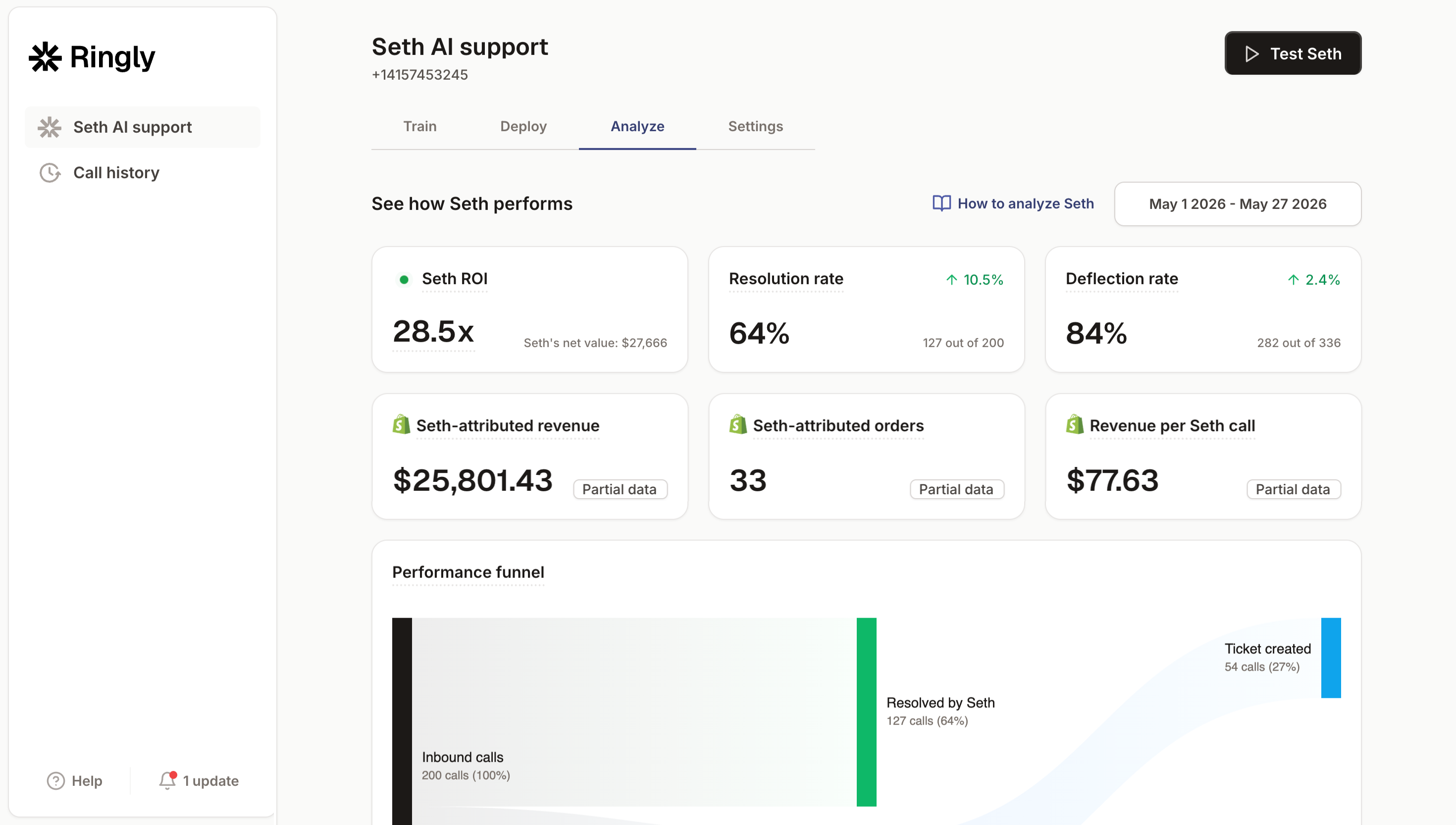
That's the gap an AI phone agent fills. Ringly.io is AI phone support for Shopify brands. It answers inbound calls 24/7, finds the order in your Shopify store, starts the return or exchange, answers the "where's my refund" question from the live order data via check order status, and collects the structured defect info before escalating the genuine cases. Calls that need a person escalate cleanly to Gorgias, Richpanel, Reamaze, or whatever helpdesk you already run. The AI phone support agent resolves up to 90% of calls autonomously.
"My customers also feel like it's a normal person. They feel like they can communicate if they have questions."
Claudia Droge, TechCraft Studio
So the routine return wave gets handled the moment it comes in, day or night, and your CS team works the small slice that needs judgment. If the return-call volume is the part of returns that's actually eating your hours, book a 30-min call and we'll map it against your reason codes.
What the return-call wave costs you
The logistics cost of returns gets all the attention. The labor cost of answering return calls gets none, and for a mid-size brand it's the bigger line.
Take a typical $50M Shopify brand running a 6-rep CS team:
| Line item | Today | With Ringly |
|---|---|---|
| 6 reps × $4K loaded per rep | $24,000/mo | n/a |
| Ringly Enterprise (~$5K/mo) | n/a | $5,000/mo |
| Net monthly CS spend | $24,000/mo | $5,000/mo |
| Monthly savings | n/a | $19,000/mo |
| Annual savings | n/a | $228,000/yr |
That's roughly 70% of repeatable calls (return status, refund timing, how-do-I-send-it-back, the same five things over and over) routed to the AI. The other 30%, the genuine defect disputes and the calls that need a human, still go to your CS team, who now have the hours to actually solve them. Exact Enterprise pricing is set on a call. These are the savings shapes we see across 200,000+ calls.
If you want the math on your own numbers, book a 30-min call and we'll do it live with your call volume.
Frequently asked questions
What is the most common reason for product returns? It depends on the category, but across ecommerce the biggest single bucket is selection (wrong size and changed mind), which drives roughly 65% of returns. Damage or defects is the most-cited single reason at 42% of shoppers, and size or fit dominates apparel at 40% to 50% of returns.
What's the difference between a defective return and a damaged-in-transit return? A defective return is a product failure: the item itself doesn't work or breaks under normal use, and it points at QA or your supplier. Damaged in transit means the product was fine but got broken on the way, which points at packaging and your carrier. Treating them as the same reason sends the wrong team chasing the fix.
Why are return reason codes unreliable? Because the customer picks the code in a hurry from a dropdown, and the easy choice ("changed my mind") gets over-selected. The real cause usually lives in the free-text comment or in the support call, not the code. Pull 50 to 100 returns where both a code and a comment exist and check how often they match.
What is a normal ecommerce return rate? The overall average sits around 19% to 20.5% in 2026. By category, apparel runs about 25%, electronics about 11%, and beauty about 12%, so judge your rate against your category, not the blended average.
How much does it cost to process a single return? Between $10 and $65 once you load return shipping, labor, inspection, and restocking, and only about 48% of returned items resell at full price. A wrong-item return costs roughly double because you pay to ship the replacement too.
What is bracketing and how do I reduce it? Bracketing is buying multiple sizes intending to return the ones that don't fit, now practiced by 63% of shoppers. You reduce it with real sizing data, fit-finder tools, and reviews that mention fit, and you blunt its margin hit by pushing exchanges over refunds.
Can AI phone support handle return calls? Yes, for the routine ones. An AI phone agent can find the order, start a return or exchange, answer refund-status questions from live Shopify data, and collect defect info, then escalate the genuine disputes to your team. Ringly resolves up to 90% of calls autonomously.
Talk to us

If you run a $10M-$100M Shopify brand and return calls are eating your CS hours, a 30-min call is the fastest way to see which of the three reason buckets is costing you the most, and how much of the return-call wave you can hand off.
Our 3 promises.
- Live in under 1 hour. Setup and test calls are free.
- 30-day money back on the $99 plan fee.
- 65% resolution guarantee: if Seth resolves under 65% of your support calls in a month, that month comes back as credit (after 90 days on Pay per call).
Ruben (Ringly co-founder) takes these calls personally.