

CallMiner has been a staple in conversation analytics for years. But at around $102,000 per year on average, it's not exactly accessible.
And if you're looking for real-time guidance rather than post-call analysis, CallMiner won't get you there.
The good news? The conversation intelligence market has evolved. Newer platforms offer real-time capabilities, faster deployment, and pricing that doesn't require board approval.
Let's break down seven alternatives worth considering.
Editor’s note: Want to hear some sample AI support calls made for your Shopify store?
- Just paste your store URL
- Hear sample calls for your store (no email required)
- Listen to demo calls for my store
What is CallMiner?
CallMiner is an AI-powered conversation analytics platform designed for contact centers. It analyzes voice and text interactions to extract insights around agent performance, customer sentiment, and compliance.
The platform excels at post-call analytics. It transcribes conversations, applies sentiment analysis, and generates reports that help managers understand what happened after the fact. Quality assurance teams use it to review calls, score agents, and identify coaching opportunities. It's a solid choice if you're mainly looking to analyze historical data rather than influence live conversations.
The limitation is timing. CallMiner primarily works with completed interactions. If you need to guide agents while they're on a live call, you'll need to look elsewhere.
How to Choose a CallMiner Alternative
Before diving into the options, here's a quick framework for deciding what you actually need.
Real-time vs post-call analytics. This is the biggest differentiator. Do you want to help agents during calls (real-time) or analyze what happened afterward (post-call)? Some tools do both. Others specialize in one.
Your budget. CallMiner's enterprise pricing leaves room for alternatives at virtually every price point. Most competitors use custom pricing, but positioning varies from mid-market accessible to premium enterprise.
Team size and technical resources. Some platforms require dedicated implementation teams and months of setup. Others promise value within weeks.
Integration requirements. Consider what systems need to connect. Your CCaaS, CRM, and workforce management tools should play nicely with whatever you choose.
Here's how the alternatives stack up at a glance:
| Alternative | Primary Focus | Real-Time | Pricing Model | Best For |
|---|---|---|---|---|
| Observe.AI | QA automation & coaching | Yes | Per-agent custom | Quality management |
| Talkdesk | Full CCaaS with analytics | Yes | Per-user tiers | All-in-one platform |
| NICE | Enterprise CX suite | Yes | Enterprise license | Large enterprises |
| Verint | WFO + compliance | Yes | Enterprise license | Regulated industries |
| Balto | Real-time guidance | Yes (only) | Per-agent custom | Live call improvement |
| Cresta | Hybrid real-time + analytics | Yes | Enterprise custom | Both capabilities |
| Loris | AI-native intelligence | Yes | Custom | Fast insights |
The 7 Best CallMiner Alternatives
1. Observe.AI
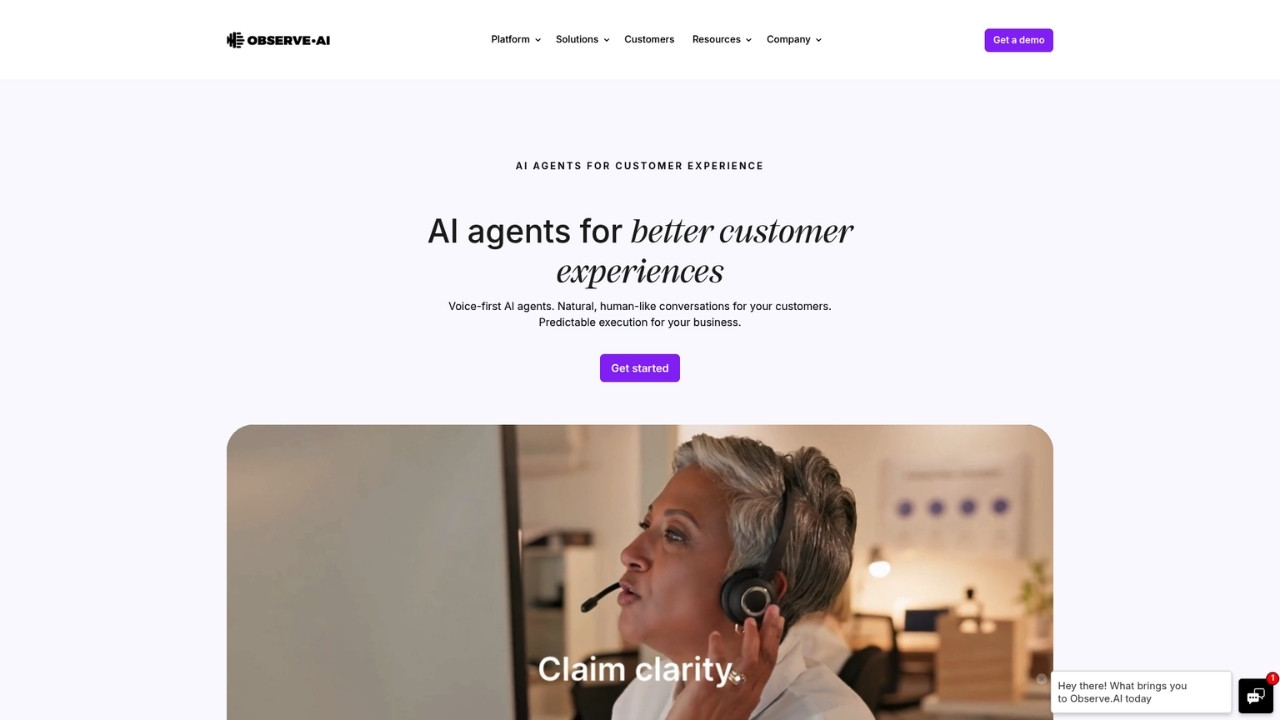
Observe.AI focuses on QA automation and agent coaching. The platform uses modern ML architecture to analyze 100% of customer interactions across voice and digital channels.
The automated scoring is where it stands out. Instead of managers manually reviewing a small sample of calls, Observe.AI scores every interaction against your criteria. It identifies coaching opportunities and creates structured workflows for agent development.
Key features:
- 100% interaction analysis
- Automated QA scoring
- Coaching workflows
- Real-time guidance capabilities
Pricing: Per-agent subscription with custom enterprise pricing.
Pros: Strong coaching tools, user-friendly interface, modern transcription accuracy.
Cons: Limited automation beyond agent assist features.
2. Talkdesk

Talkdesk takes a different approach. Rather than pure analytics, it's a full CCaaS platform with built-in conversation intelligence. You get the contact center infrastructure and analytics in one package.
The platform includes omnichannel support (voice, chat, SMS, email), AI-powered routing, and real-time dashboards. For teams wanting an integrated solution without stitching together multiple vendors, this simplifies the stack. Talkdesk also integrates with popular CRMs like Salesforce and Zendesk.
Key features:
- Complete cloud contact center
- Built-in AI analytics
- Omnichannel support
- Real-time monitoring dashboards
Pricing: Per-user subscription with multiple tiers from basic to enterprise.
Pros: All-in-one platform, modern cloud architecture, accessible pricing tiers.
Cons: Analytics less deep than dedicated analytics platforms like CallMiner.
3. NICE

NICE is the enterprise heavyweight. The company provides a comprehensive CX platform including Enlighten AI, workforce engagement management, and omnichannel analytics.
This is for large organizations that need scale. NICE handles massive contact centers with complex requirements. The workforce optimization capabilities go beyond what CallMiner offers, though you'll pay for the breadth. If you're already using NICE for workforce management, adding their analytics is a natural extension.
Key features:
- Enlighten AI engine
- Omnichannel analytics
- Workforce engagement management
- Robotic process automation
Pricing: Enterprise licensing at premium tiers.
Pros: Deep analytics, proven at Fortune 500 scale, comprehensive feature set.
Cons: Expensive, complex implementation, overkill for smaller teams.
4. Verint
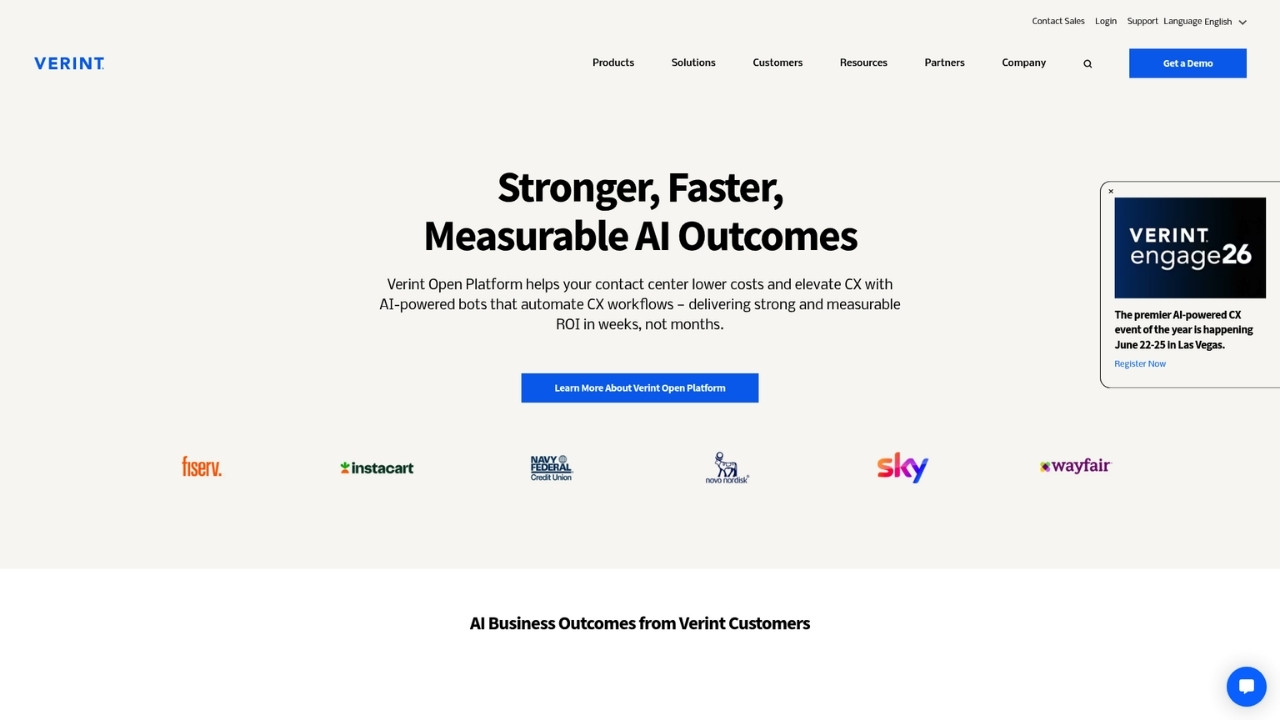
Verint positions around "AI Business Outcomes, Now." Their open CCaaS platform uses specialized AI bots for different CX workflows, from customer self-service to agent assistance.
The compliance features are particularly strong. Financial services and healthcare organizations often choose Verint for regulatory recording and monitoring capabilities. The platform has decades of experience in workforce optimization.
Key features:
- Open platform with specialized AI bots
- Compliance recording
- Speech and text analytics
- Customer journey mapping
Pricing: Enterprise licensing based on deployment size.
Pros: Strong compliance features, proven in regulated industries, comprehensive bot ecosystem.
Cons: Complex setup, interface can feel dated, requires significant implementation resources.
5. Balto
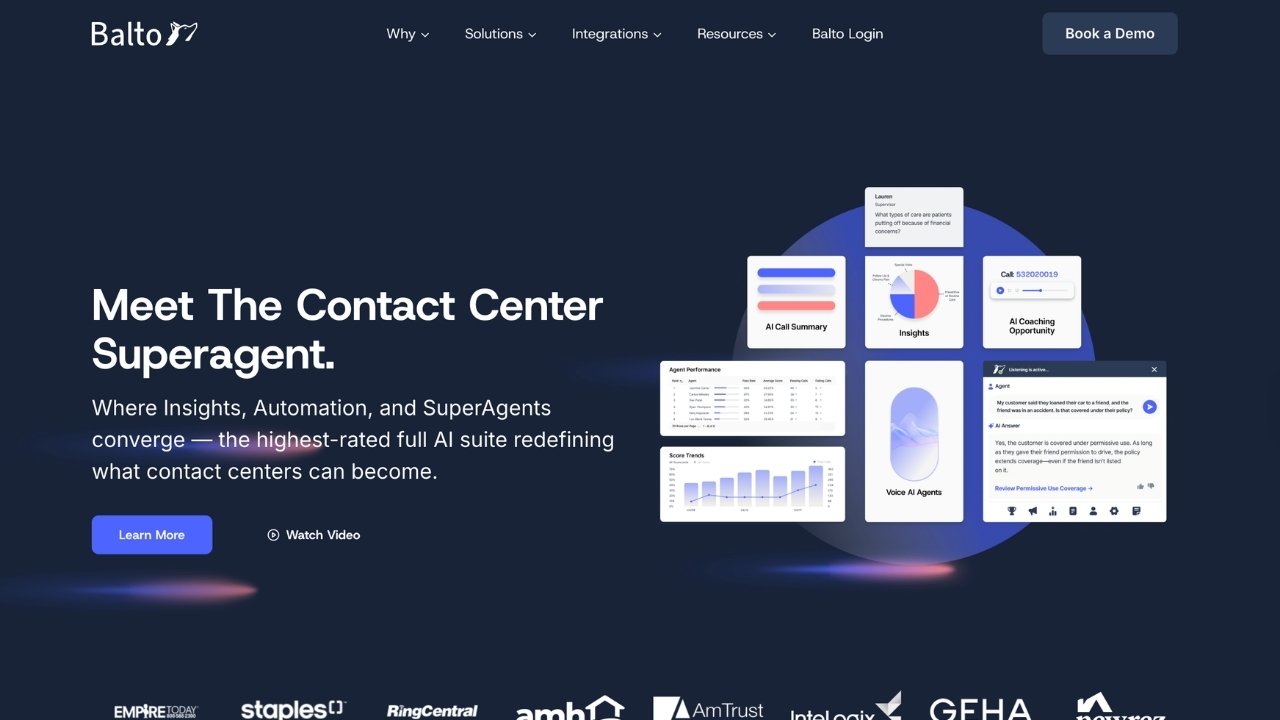
Balto is the purest real-time play on this list. While CallMiner analyzes what already happened, Balto helps agents during live calls.
The platform provides live prompts, dynamic checklists, and compliance alerts as conversations unfold. Agents see guidance on screen telling them what to say next, what questions to ask, and when required disclosures are needed.
Key features:
- Real-time guidance and prompts
- Dynamic checklists
- Compliance enforcement
- Conversation intelligence
Pricing: Per-agent custom pricing.
Pros: Immediate performance gains, reduces repeat calls, strong for compliance-heavy industries.
Cons: Not a full analytics replacement, voice-focused (less digital channel support).
6. Cresta
Cresta offers the hybrid model. You get real-time agent assistance plus post-call analytics in one platform. The AI learns from your top performers and uses those patterns to coach the rest of the team.
The platform includes Director (real-time coaching), Insights (post-call analytics), and Virtual Agent (AI self-service). This combination appeals to teams that want both capabilities without buying separate tools.
Key features:
- Real-time agent assist
- Post-call analytics
- Behavioral insights
- Knowledge suggestions
Pricing: Enterprise custom pricing at premium tiers.
Pros: Hybrid model covers both use cases, learns from top performers, AI-native architecture.
Cons: Premium pricing, narrower real-time scope than Balto.
7. Loris
Loris is the newest architecture on this list. Built as an AI-native platform from the ground up, it promises faster time-to-value than legacy tools like CallMiner.
The platform automatically detects conversation topics, tracks sentiment journeys, and predicts churn risk. One food delivery app customer reported predicting churn within four weeks of signing, after failing with two other providers and their own internal models.
Key features:
- Automated topic detection
- Sentiment journey analysis
- Churn prediction
- Quality management
Pricing: Custom pricing positioned as better value than CallMiner.
Pros: Fast deployment, intuitive interface, proactive AI insights.
Cons: Less established than legacy players, smaller customer base.
CallMiner Alternatives Comparison Table
| Feature | Observe.AI | Talkdesk | NICE | Verint | Balto | Cresta | Loris |
|---|---|---|---|---|---|---|---|
| Primary Focus | QA & coaching | CCaaS platform | Enterprise CX | WFO & compliance | Real-time guidance | Hybrid model | AI-native analytics |
| Real-Time | Yes | Yes | Yes | Yes | Yes (only) | Yes | Yes |
| Post-Call Analytics | Yes | Yes | Yes | Yes | Limited | Yes | Yes |
| Pricing | Custom | Tiered | Enterprise | Enterprise | Custom | Enterprise | Custom |
| Best For | Quality teams | All-in-one needs | Large enterprises | Regulated industries | Live coaching | Both capabilities | Fast insights |
| Setup Complexity | Moderate | Low | High | High | Moderate | Moderate | Low |
Which CallMiner Alternative Should You Choose?
The right choice depends on your priorities.
Choose Observe.AI if QA automation and structured coaching are your main goals. The automated scoring and coaching workflows are best-in-class for quality management.
Choose Talkdesk if you want an all-in-one contact center platform. You get infrastructure and analytics together without managing multiple vendors.
Choose NICE if you're a large enterprise needing the full CX suite. The depth and scale are unmatched, but you'll need resources to implement it.
Choose Verint if compliance is critical. Financial services and healthcare organizations trust Verint for regulatory requirements.
Choose Balto if real-time agent guidance matters most. It's the purest real-time play and delivers immediate call performance improvements.
Choose Cresta if you want both real-time and post-call capabilities in one platform. The hybrid approach eliminates buying separate tools.
Choose Loris if you need fast insights without technical complexity. The AI-native architecture promises faster time-to-value than legacy alternatives.
Getting Started with Conversation Intelligence
Most of these platforms offer trials or demos. We'd recommend narrowing down to 2-3 options based on the framework above, then testing them with your actual call data.
Pay attention to transcription accuracy with your specific industry terminology. Test the integration with your existing CCaaS and CRM. And verify the analytics actually surface insights you can act on. Many teams also evaluate conversation intelligence tools based on their ability to integrate with existing workflows.
For e-commerce stores specifically needing phone support automation, we offer a different approach. Our AI phone agent The AI handles inbound calls 24/7, answers questions, looks up orders, and processes returns automatically. It integrates directly with Shopify and escalates to your team only when necessary.
You can try Ringly.io for free and see how it works for your store.
Meta Description: Discover the top CallMiner alternatives for 2026. Compare pricing, features, and use cases for Observe.AI, Talkdesk, NICE, Verint, and more.
Frequently Asked Questions
What are the best CallMiner alternatives for small contact centers?
For smaller teams, Talkdesk offers accessible pricing tiers, and Loris promises faster deployment with less complexity. Both avoid the enterprise overhead of NICE or Verint.
Which CallMiner alternative offers the best real-time guidance?
Balto is the strongest pure real-time play, providing live prompts and checklists during calls. Cresta offers real-time plus post-call analytics if you need both.
Are there any free CallMiner alternatives?
None of the enterprise alternatives offer free tiers. Most use custom pricing based on agent count and usage. You'll need to contact vendors directly for quotes tailored to your situation.
How does CallMiner pricing compare to alternatives?
CallMiner averages around $102,000 annually. Most alternatives position themselves as more accessible, though enterprise platforms like NICE and Verint can be similarly priced. Mid-market options like Talkdesk and Loris typically cost less.
Can I replace CallMiner with a CCaaS platform instead?
Yes. Talkdesk, NICE, and Verint all offer full contact center platforms with built-in analytics. This consolidates your stack but may sacrifice some analytics depth compared to dedicated platforms.