
This post in 30 seconds.
- I set up six wholesale tools on a real Shopify store, built tiered price lists, and pushed wholesale orders through each one. This is what actually held up.
- In April 2026 Shopify put core B2B on every paid plan, so the real question is no longer "which app" but "do I need one at all, and for what."
- Written for the founder or ops lead at a $10M-$100M Shopify brand bolting a wholesale channel onto an existing DTC store.
Shopify quietly changed the wholesale math this spring. As of April 2026, company profiles, custom catalogs, volume discounts, and payment terms live on every paid plan, not just Plus. So before you go shopping for the best Shopify wholesale app, the honest first question is whether you even need one yet.
You usually do, but not for the reason most roundups give. I tested six tools on a live store, and the gap between "native B2B" and "real wholesale" turns out to be smaller than the app vendors want you to think, and bigger in a few specific places that will quietly cost you money. If you run a $10M-$100M Shopify brand adding a wholesale channel, the smart move is to figure out exactly where native runs out before you pay for an app that overlaps with what you already have. Want a second set of eyes on your setup? Book a 30-min call and we'll walk your wholesale flow with you.
Most "best wholesale app" lists you'll find are written by the people who make one of the apps. This one isn't. We build AI phone support for Shopify brands, not a pricing app, so I have no horse in the wholesale-tooling race and can tell you plainly where each tool is weak.
The 6 wholesale tools at a glance
| Tool | Starts at | Best for | Standout | Verdict |
|---|---|---|---|---|
| Shopify native B2B | Included on paid plans | Light wholesale, no extra app | Company profiles + catalogs built in | Try this first |
| Wholesale Gorilla | ~$39/mo | Adding wholesale to a DTC store | Wholesale portal on your theme | Simple and reliable |
| SparkLayer B2B | $49/mo (free tier) | A real B2B buying portal at scale | Sales-rep portal + ERP sync | Most powerful |
| BSS B2B Wholesale | $25/mo (free tier) | Comprehensive features on a budget | Net terms + registration forms | Best value |
| Wholesale Pricing Discount | $19.99/mo | Clean tiered pricing | Quantity breaks done simply | Easiest to run |
| Wholesale Club | Free tier | Testing wholesale cheaply | Tag-based discounts | Cheapest start |
How I tested these wholesale apps
I'm Ruben, co-founder of Ringly. Over two weeks I installed each tool on a test Shopify store and ran the same wholesale setup through every one, the way a brand actually onboards a wholesale channel rather than reading the marketing page.
Here's what I scored against:
- Price-list setup. I built a tiered price list for two customer groups and timed how long it took. The fast ones let you import a spreadsheet. The slow ones make you edit B2B prices product by product.
- The buyer flow. I placed a wholesale order end to end, as the buyer would, to see whether quantity breaks, minimums, and pack sizes actually applied at checkout.
- Net terms and registration. I set up a net-30 term and a wholesale signup form, since gating who gets wholesale pricing is half the job.
- Store impact. I checked whether the app injected theme code or slowed the storefront, because a wholesale tool that breaks your DTC store is a bad trade.
- Where it runs out. I pushed each tool past its comfort zone (lots of price tiers, customer-specific catalogs, a sales rep placing an order) to find the wall.
I don't take affiliate commissions on any tool below. One thing I noticed across all six that none of the review sites mention: wholesale buyers still phone you. They reorder by phone, they call to ask if their net-terms account got approved, they want account-specific pricing read back to them. Not one wholesale app answers a phone, and that gap is where the hidden cost of a wholesale channel actually lives. More on that below.
Do you still need a wholesale app in 2026?
This is the question worth answering before you spend a dollar. In April 2026 Shopify brought native B2B to every paid plan, which reset the whole category.
Native B2B now covers more than most merchants realize, so start there before you pay for overlap. On a standard plan you get company profiles for wholesale buyers, up to three custom catalogs with their own pricing, volume discounts and quantity rules, vaulted credit cards, and payment terms. For a brand with a handful of wholesale accounts on simple pricing, that's genuinely enough.
Where native still runs out:
- Order minimums, pack sizes, and case-quantity rules. Shopify's checkout won't enforce MOQs or "sell in cases of 12" without custom development. For most real wholesale operations, that's a daily requirement, not an edge case.
- Catalog limits. Three catalogs sounds fine until you run Gold, Silver, Bronze, Distributor, and Retail tiers and hit the cap. Every tier past that needs a workaround or an upgrade.
- Customer-specific pricing on non-Plus. Catalog assignment routes through Shopify Markets rather than directly to a company, which gets awkward the moment you need per-account pricing.
The decision rule I'd give a $10M-$100M brand: if wholesale is light and the pricing is simple, run native plus maybe one cheap app and move on. If wholesale is heading past 40% of revenue, or you've got 50-plus accounts each wanting different pricing, or you need net terms inside checkout, you've outgrown native and a dedicated app (or Shopify Plus) earns its keep. Digital channels already drive 56% of B2B revenue, up from 32% in 2020, so this channel is only going to demand more from your stack, not less. If you're weighing native against an app, our Shopify B2B ecommerce guide and the Shopify Plus feature breakdown lay out the trade-offs.
The 6 best Shopify wholesale apps
1. Shopify native B2B
Best for: brands with light wholesale who'd rather not add another app at all. It's the baseline every other tool on this list has to beat.
Native B2B is now part of Shopify itself, so there's nothing to install, no theme code, and nothing extra to break. You create company profiles, assign catalogs with their own pricing, and let approved buyers check out with payment terms. For a brand testing wholesale or running a short list of accounts, it removes a vendor from the equation entirely.
Pricing
Included on any paid Shopify plan as of April 2026. No separate fee. Some deeper B2B controls still live on Shopify Plus (from $2,300/mo), but the core is now everywhere.
What works
- Zero install footprint. Nothing injected into your theme, nothing to slow the storefront.
- Company profiles built in. Buyers, locations, and payment terms live natively in Shopify.
- No extra subscription. For light wholesale, your cost is zero beyond the plan you already pay for.
What doesn't
- No MOQ, pack sizes, or quantity-increment rules at checkout without dev work.
- Catalogs are capped, which breaks down once you have many pricing tiers.
- Customer-specific pricing is clunky on non-Plus plans.
Why it ranks first to try
Start here. If native covers you, you've saved a subscription and a vendor relationship. The moment you hit MOQs or a fourth pricing tier, move to one of the apps below.
2. Wholesale Gorilla
Best for: a DTC brand adding a straightforward wholesale channel to its existing store without rebuilding around B2B.
Wholesale Gorilla layers a wholesale portal, quick order forms, and custom pricing onto the store you already run. Buyers log in, see their pricing, and place orders inside your normal theme. It rates 4.6 to 4.8 across roughly 320 reviews on the App Store, and the praise is consistent: it's reliable and it doesn't mangle your theme code.
Pricing
| Plan | Price | Notes |
|---|---|---|
| Lower tiers | from ~$39/mo | Core wholesale pricing + portal |
| Top tier | ~$149.95/mo | Net terms + custom signup forms |
21-day free trial.
What works
- Keeps your existing store. No second storefront, no migration.
- Reliable and clean. Reviewers repeatedly note it runs without disrupting site code.
- Strong support. Fast, knowledgeable responses come up again and again.
What doesn't
- Per-product price editing. You set B2B prices product by product, with no spreadsheet import, which gets painful past a few hundred SKUs.
- Limited advanced price-list logic and customer-specific catalogs compared to a portal tool.
Why it ranks second
If your wholesale is simple and you want it bolted onto the store you have, Gorilla is the practical pick. The per-product pricing wall is the thing to test before you commit.
3. SparkLayer B2B
Best for: brands with enough B2B complexity to justify a real buying environment, sales reps, and ERP integration.
SparkLayer turns your Shopify store into a full B2B portal with trade pricing, custom logins, quoting, and a sales-rep portal, all inside your existing theme. It's the most capable tool here and reviewers consistently call it "the best range of features for the price." One merchant noted it's a real saving versus a marketplace like Faire that takes a percentage of every order.
Pricing
| Plan | Price | Order limit |
|---|---|---|
| Free | $0 | Limited |
| Starter | $49/mo | 50 B2B orders |
| Growth | $149/mo | 100 B2B orders |
| Pro | $299/mo | 150 B2B orders |
| Enterprise | from $499/mo | Custom |
14-day free trial.
What works
- Fast, flexible price lists. Upload a spreadsheet or use rules; assign pack sizes and quantity breaks per customer tag.
- Sales-rep portal. Reps get their own login to build and edit orders for any account.
- ERP and accounting sync. Connects to Cin7, Brightpearl, and Unleashed via API, plus Xero and QuickBooks Online.
What doesn't
- Order limits per tier. Lower plans cap B2B orders (50, 100, 150), so cost climbs with volume.
- More setup than a discount app. It's a portal, so plan for real configuration time.
Why it ranks third
Most powerful tool on the list, and overkill if your wholesale is light. If you have sales reps and customer-specific catalogs, this is the one. Watch the order-limit tiers as you scale.
4. BSS B2B Wholesale
Best for: cost-conscious brands that want a wide B2B feature set in one app.
BSS packs custom pricing, volume discounts, price lists by customer group, registration and multi-step forms, order limits, net terms, quantity rules, and tax display into a single solution, with VAT and multi-currency support. It's rated 4.8 across more than 1,000 reviews and runs on roughly 5,000 stores, which is real adoption.
Pricing
| Plan | Price |
|---|---|
| Free | $0 |
| Essential | $25/mo |
| Advanced | $50/mo |
| Platinum | $100/mo |
Annual plans save 10-20%.
What works
- Broad feature set for the price. You get net terms, registration forms, and quantity rules without stacking three apps.
- B2B pricing in POS. Useful if you also sell wholesale in person.
- Responsive support. Reviewers credit the team with fast fixes on custom requests.
What doesn't
- Occasional instability. A minority of merchants report inconsistencies, usually resolved by support.
- More config to manage. Breadth means more settings to keep straight.
Why it ranks fourth
The best value if you want comprehensive B2B without a portal-tier price. Test stability on your own theme during the trial.
5. Wholesale Pricing Discount B2B
Best for: brands that want clean tiered wholesale pricing without a heavy portal.
This tool from Wholesale Helper runs B2B and B2C on one store with custom pricing, quantity breaks, tiered pricing, wholesale shipping rates, and signup forms with a net-terms option. It rates 4.8 across 526 reviews, and the recurring word in those reviews is "not overcomplicated."
Pricing
From $19.99/mo with a free trial. Higher tiers add net terms and more pricing rules.
What works
- Simple and intuitive. Tiered and quantity-break pricing set up fast.
- B2B and B2C together. No separate wholesale storefront to maintain.
- Quick support. Issues often resolved within a day per reviewers.
What doesn't
- Lighter on portal features. No sales-rep portal or ERP sync at the depth SparkLayer offers.
- Built around discounts, so it's less of a full buying environment.
Why it ranks fifth
If your wholesale need is mostly "show approved buyers better prices," this is the cleanest way to do it. It's a pricing tool, not a portal, and that's the point.
6. Wholesale Club
Best for: small wholesale lists or brands testing the channel as cheaply as possible.
Wholesale Club is one of the longer-standing simple wholesale apps. You tag a customer as wholesale, apply percentage or tiered discounts, add quantity breaks, and optionally bolt on net terms. It's the lightest tool here, which is exactly why it works for a short account list.
Pricing
Free tier to start; paid plans roughly in the $19-$59/mo range depending on features like quantity breaks and net terms. Free trial available.
What works
- Cheap or free to start. The lowest-risk way to open a wholesale channel.
- Tag-based simplicity. Tag a customer, apply a discount, done.
- Fast setup. Live in an afternoon for a small list.
What doesn't
- Tag model gets unwieldy once you have many price tiers.
- Fewer portal and ERP features than the heavier tools.
Why it ranks sixth
The cheapest way to prove wholesale demand before you invest. Outgrow the tag model and you'll graduate to BSS or SparkLayer.
The cost nobody puts on the wholesale-app list
Every tool above handles pricing, catalogs, and order forms. Not one of them answers your phone. And wholesale buyers call.
A wholesale channel doesn't just add orders, it adds a specific kind of phone volume your DTC side never had. Buyers ring to reorder the same SKUs they order every month. They call to ask whether their net-terms application got approved. They want account-specific pricing read back to them before they commit a purchase order. A 50-something buyer at a distributor would rather call than dig through a portal, and they will. None of that shows up in an app's feature list, but it shows up on your ecommerce customer service team's day.
That's the gap we work in. Ringly is AI phone support for Shopify brands. The AI answers inbound calls 24/7, finds orders in your Shopify store via order tracking, answers account and product questions from your knowledge base, and escalates the genuinely complex calls to your team. Across 50-plus brands it resolves up to 90% of calls on its own. WashCo, a Shopify brand we launched, recovered $22,664 in its first 7 days on the phone. The wholesale apps make the channel possible; something has to handle the calls the channel creates.
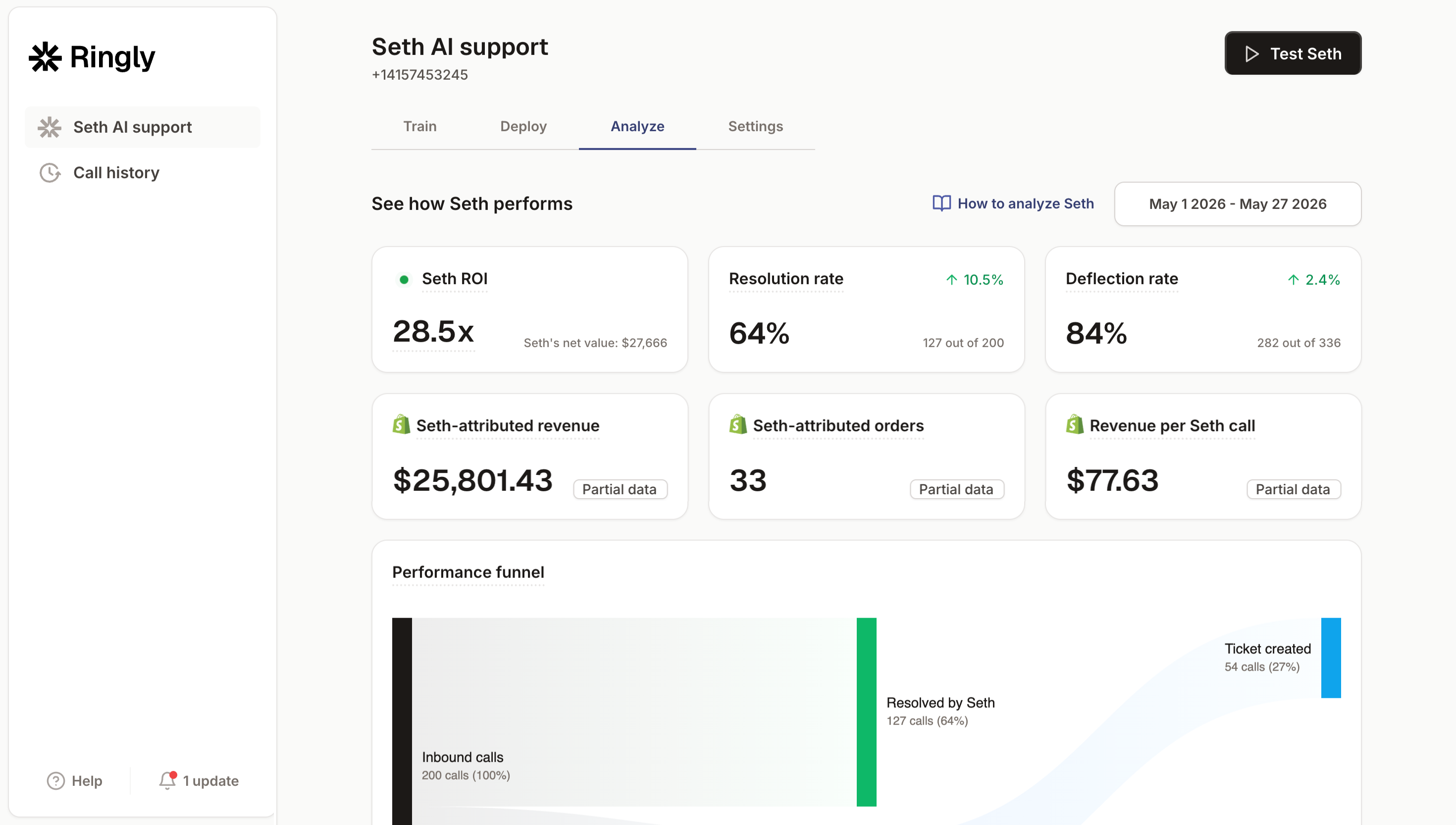
If your wholesale buyers reorder and check on accounts by phone, book a 30-min call and we'll show you what those calls look like once an AI agent picks them up. It's the same problem we cover in our guide to 24/7 ecommerce phone support, applied to wholesale.
How to choose the right wholesale app
The right tool depends on how complex your wholesale actually is, not on which app has the longest feature list.
- Choose Shopify native B2B if your wholesale is light, your pricing is simple, and you don't need MOQs or more than three catalogs. Don't pay for overlap.
- Choose Wholesale Gorilla if you want wholesale bolted onto your existing DTC store with minimal fuss and your SKU count is manageable.
- Choose SparkLayer if you have sales reps, customer-specific catalogs, or ERP systems and need a real buying portal.
- Choose BSS B2B if you want a broad feature set, net terms, and registration forms at the lowest price.
- Choose Wholesale Pricing Discount if you mostly need clean tiered pricing for approved buyers without a portal.
- Choose Wholesale Club if you're testing wholesale on a small list and want to start free.
Whatever you pick, plan for the part the app doesn't cover. The pricing tool sets up your channel; the phone calls your wholesale buyers make about orders and accounts still land on your team. Map both before you launch, the same way you'd map your Shopify customer service stack.
Frequently asked questions
Do I still need a wholesale app now that Shopify has native B2B?
Often, yes. As of April 2026 native B2B covers company profiles, up to three catalogs, volume discounts, and payment terms on every paid plan. But it can't enforce order minimums, pack sizes, or quantity-increment rules at checkout, and catalogs are capped, so most real wholesale operations still need an app for those.
What's the cheapest way to start selling wholesale on Shopify?
Shopify native B2B is free on a plan you already pay for, so try that first. If you need more, Wholesale Club has a free tier and Wholesale Pricing Discount starts at $19.99/mo, both cheap ways to test a wholesale channel before committing.
Wholesale Gorilla vs SparkLayer: which is better?
Gorilla is simpler and best for adding wholesale to an existing DTC store, but you edit B2B prices product by product. SparkLayer is a full B2B portal with spreadsheet price lists, a sales-rep login, and ERP sync, better for complex wholesale but with order limits on lower tiers. Pick Gorilla for simple, SparkLayer for scale.
Can a wholesale app handle net payment terms?
Yes. Wholesale Gorilla (top plan), SparkLayer, BSS B2B, and Wholesale Pricing Discount all support net terms, usually on their higher tiers. Confirm whether terms apply inside checkout or are handled as a manual invoice, since that differs by app.
Will a wholesale app slow down or break my store?
The well-built ones don't. Wholesale Gorilla in particular is repeatedly praised for not injecting disruptive theme code. Test any app on your own theme during its free trial and check storefront speed before you roll it out.
What about the phone calls wholesale buyers make?
No wholesale app answers a phone, even though wholesale buyers reorder, check account approvals, and ask pricing questions by phone constantly. That's a separate problem. Ringly is AI phone support that picks up those calls, finds orders in Shopify, and escalates the complex ones to your team.
Talk to us

A wholesale app sets up your pricing and order flow. It doesn't pick up the phone when a buyer calls to reorder or check on a net-terms account. If you run a $10M-$100M Shopify brand and wholesale is adding phone volume your team is absorbing, a 30-min call is the fastest way to see what that's costing you.
Our 3 promises.
- Live in under 1 hour. Setup and test calls are free.
- 30-day money back on the $99 plan fee.
- 65% resolution guarantee: if Seth resolves under 65% of your support calls in a month, that month comes back as credit (after 90 days on Pay per call).
Ruben (Ringly co-founder) takes these calls personally.