

Transparent Labs and Nootropics Depot publish lab results for named extracts. Thorne is the practitioner-trusted root-and-leaf capsule. Himalaya and Organic India cover Ayurvedic heritage. Match extract type to your goal, demand a labeled dose, and treat public lab data as a bonus, not a given.
The ashwagandha shelf splits into three honest tiers: lab-transparency bottles that name KSM-66 or Shoden and post paperwork, Ayurvedic-heritage lines built around whole root or a root-powder blend, and familiar budget capsules. Most roundups mix those tiers as if they were the same product. They are not, and the extract on the label changes what you are buying.
Patented extracts are the shortcut shoppers use when a generic "ashwagandha" panel feels like a gamble. Community consensus treats KSM-66 as more energy and focus oriented, and Sensoril as more relaxing. Shoden is the other named extract on this list. An honest milligram amount of ashwagandha itself, not a buried proprietary blend, is the other non-negotiable.
How we picked these brands
- Named extract or clearly labeled whole root. The milligram amount of ashwagandha had to be on the label. If a brand claims KSM-66 or Shoden, that name had to appear on its own product page, not only in a retailer blurb.
- An honest dose. We looked for a clearly stated extract amount in the range people actually shop (roughly 300 to 600 mg) or a plainly labeled whole-root gram weight. Smaller servings are listed as such, not dressed up.
- Testing you can check. Public Certificates of Analysis were the strongest signal. Brands without a downloadable CoA needed another verifiable proof point, such as an ISO-certified in-house lab, an independent accredited-lab claim, or a documented sourcing certification.
- Track record and sourcing. Decades in supplements, a practitioner channel, or a Fairtrade and organic chain from the herb's home region all counted. A new private-label Amazon bottle did not.
- A clean label when the page supports it. Vegan capsules, non-GMO marks, and hypoallergenic formulas were a plus where the brand actually states them. We did not invent those claims for bottles that omit them.
At a glance
| Brand | Best for | Price | Known for |
|---|---|---|---|
| Transparent Labs | Named extract + public lab data | Mid | KSM-66, 600mg, 5% withanolides |
| Thorne | Practitioner-trusted premium | Premium | 120mg root and leaf extract |
| Nootropics Depot | Reading the actual lab report | Mid | Shoden extract, published CoAs |
| Pure Encapsulations | Sensitive systems | Premium | 500mg root extract, 2.5% withanolides, hypoallergenic |
| Moon Juice | Powder over pills | Premium | 15:1 extract, 5% withanolides, powder |
| Gaia Herbs | Whole-herb liquid format | Varies | Root liquid Phyto-Cap |
| Himalaya | Ayurvedic heritage | Mid | 670mg root powder + extract blend |
| Organic India | Whole-root, ethical sourcing | Premium | 800mg whole-root, Fairtrade + B Corp |
| Nutricost | Budget with lab testing | Budget | 600mg, NSF-certified facility |
| Double Wood Supplements | Lab-report readers on a budget | Budget-mid | KSM-66, published per-lot CoAs |
| Swanson | Cheapest named KSM-66 | Budget | KSM-66, 250mg, Halal certified |
| NOW Foods | Familiar value pick | Budget | 450mg standardized extract |
1. Transparent Labs
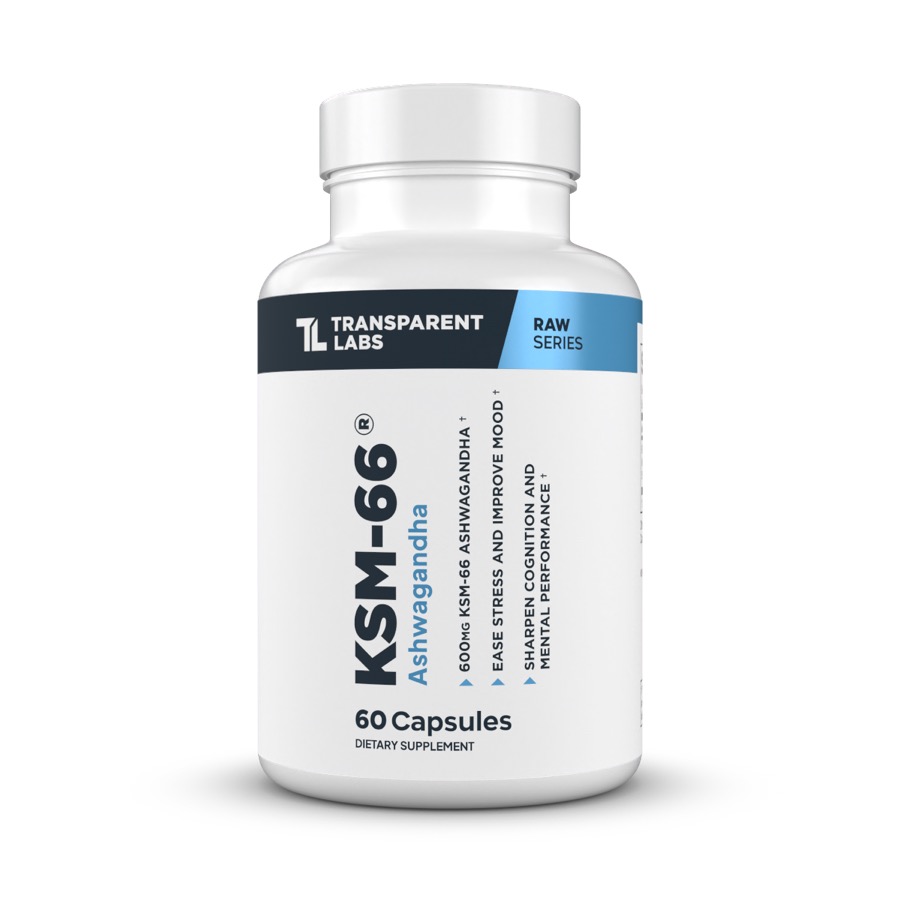
Transparent Labs puts 600 mg of KSM-66 on the label, standardized to 5% bioactive withanolides, and gives full public access to third-party Certificate of Analysis results. That is the same paperwork habit as Nootropics Depot and Double Wood, with the extract name most daytime-focus shoppers are hunting.
Transparent Labs is for people who want a named, studied extract at a full 600 mg serving and a CoA they can open. Mid-priced at about $18 to $20 per 60-serving bottle, roughly $0.33 per serving. Put it next to Double Wood if you want KSM-66 plus per-lot numbers for less, and next to Swanson if the only goal is the KSM-66 name at the lowest price (Swanson is 250 mg).
Whole-root shoppers will be happier with Organic India. Powder-only routines belong with Moon Juice.
2. Thorne
Thorne lists 120 mg of ashwagandha extract from root and leaf, at $22 for 30 capsules, or about $0.73 per serving. Its own product page does not name KSM-66, Shoden, or Sensoril, and it does not claim lab testing. File this with practitioner-channel capsules, not with the CoA brands above.
You are paying for a longtime practitioner-trusted bottle and a root-and-leaf extract, in a small serving, at a premium. Choose Thorne over Gaia Herbs if root plus leaf in one extract matters more than Gaia's liquid root Phyto-Cap. Choose Transparent Labs or Double Wood if you need KSM-66 in writing and a PDF behind it.
Premium pricing is a poor use of money if you will never pay practitioner-brand prices. The 120 mg serving will also feel thin if you were targeting a 500 to 600 mg extract.
3. Nootropics Depot
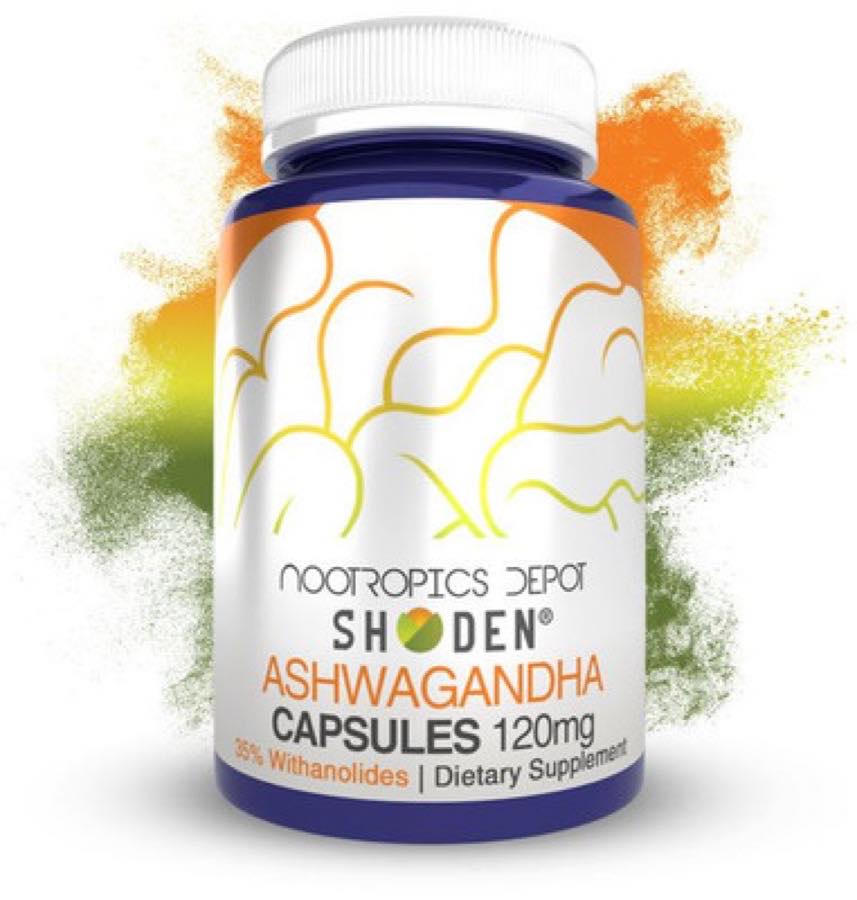
Nootropics Depot names Shoden on its ashwagandha page and states products are lab-tested for purity and identity, with Certificates of Analysis published. Compare that with Transparent Labs (KSM-66, public CoAs) and Double Wood (KSM-66, per-lot CoAs): same "open the PDF" standard, different branded extract.
Nootropics Depot is for shoppers who want to read the actual lab data before buying, not a badge with no document behind it. Capsules run about $20 to $40 a bottle, roughly $0.44 per serving.
If you specifically want KSM-66, Transparent Labs, Double Wood, and Swanson are the named-KSM-66 bottles here. If you want an Ayurvedic company story rather than a nootropic-shop format, Himalaya and Organic India are the better lane.
4. Pure Encapsulations
Pure Encapsulations uses 500 mg of ashwagandha root extract, standardized to 2.5% withanolides, in a hypoallergenic capsule with minimal excipients. That is a shorter allergen story than most sports-nutrition bottles, at a premium of about $29 per 60-serving bottle.
Choose Pure Encapsulations over Nutricost if a sensitive system and a sparse ingredient list matter more than price. Choose Nutricost if you want 600 mg of extract and an independent-lab testing claim for less. Choose Transparent Labs if you want KSM-66 and a public CoA at a similar serving size.
Look elsewhere when you are optimizing cost per milligram, or when you wanted a powder you can stir into a drink.
5. Moon Juice
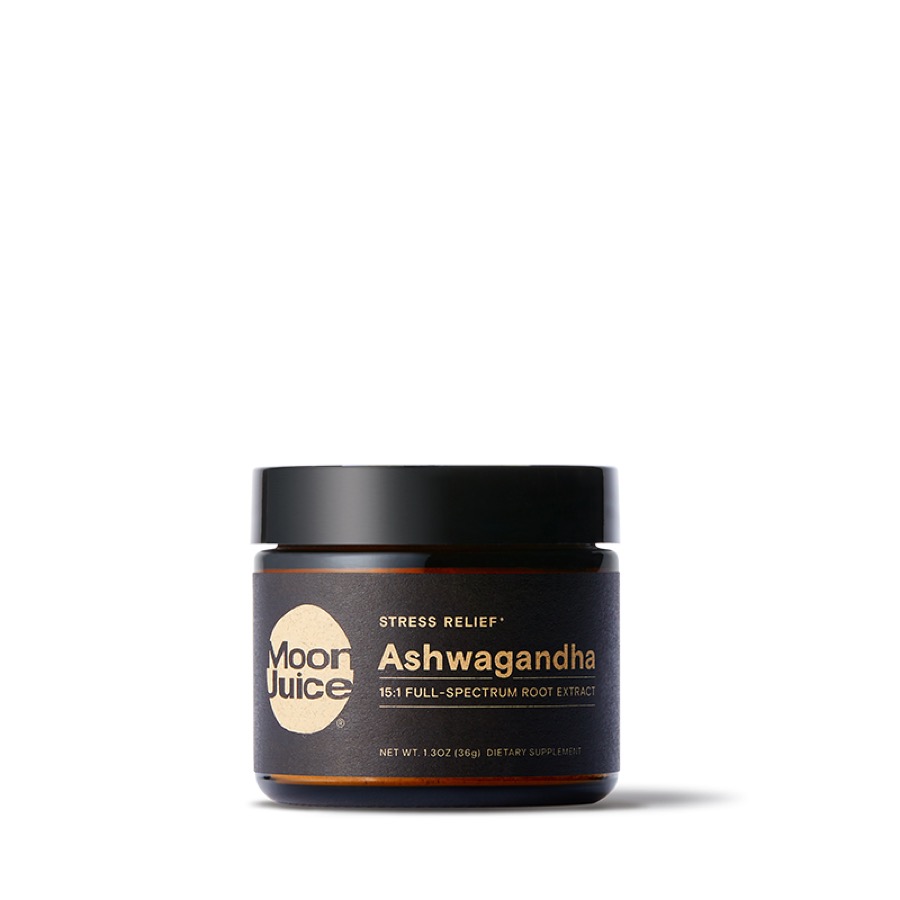
Moon Juice sells a 15:1 concentrated root extract powder, standardized to 5% withanolides, at 273 mg per dose. It is organic and vegan, and you mix it rather than swallow a pill. Bottles start around $26.60.
Moon Juice is the format pick for coffee, smoothies, or baking. Capsule-first shoppers should compare Transparent Labs (600 mg KSM-66) or Himalaya (670 mg powder-plus-extract caplet) instead of forcing a scoop into a travel bag.
A hassle if you wanted a closed capsule, and a light serving if you were aiming at a 600 mg extract.
6. Gaia Herbs
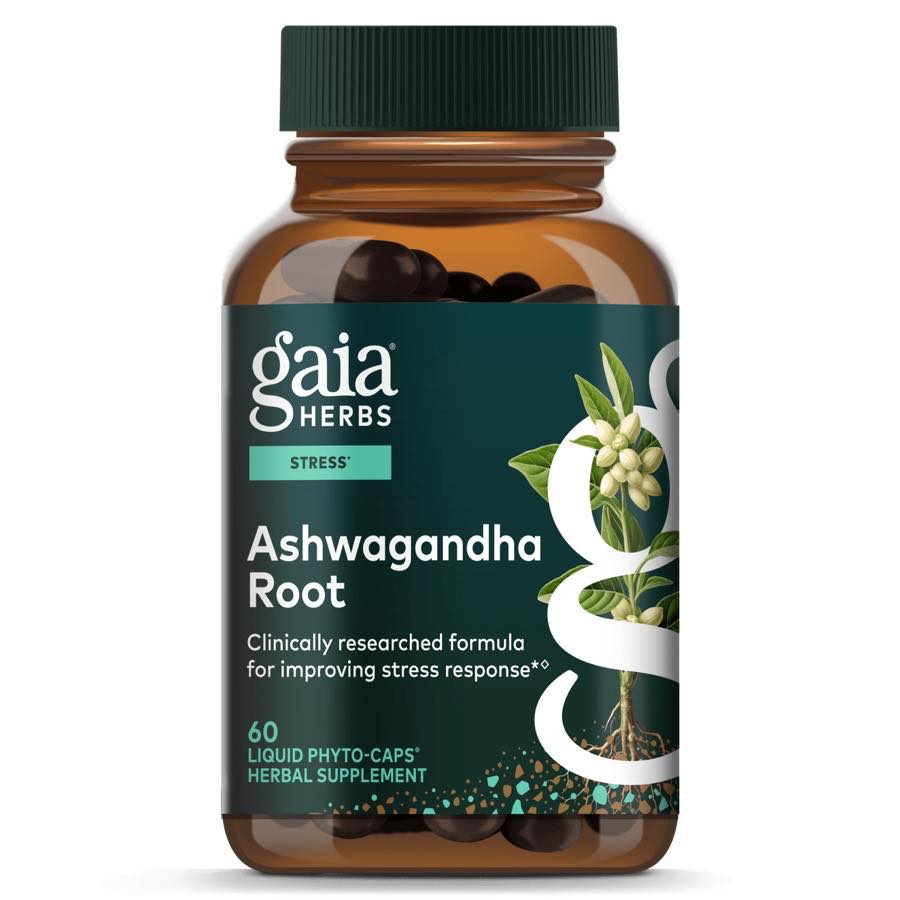
Gaia Herbs makes a root-only liquid Phyto-Cap: organic ashwagandha root and root extract in a vegan capsule, taken as 1 capsule twice daily. Gaia tests for microbes and heavy metals in its own ISO-certified lab. The product page does not display a price.
Gaia Herbs is for whole-herb shoppers who want a liquid-extraction format instead of a standardized-percentage sports capsule. Hold it next to Organic India if you want whole-root powder with no extract at all, and next to Himalaya if you want a 670 mg powder-plus-extract blend from an Ayurvedic brand.
A weak match if you need a patented extract name or a published per-lot CoA. It is also the wrong comparison if you were shopping a root-and-leaf extract; that format, on this list, is Thorne.
7. Himalaya
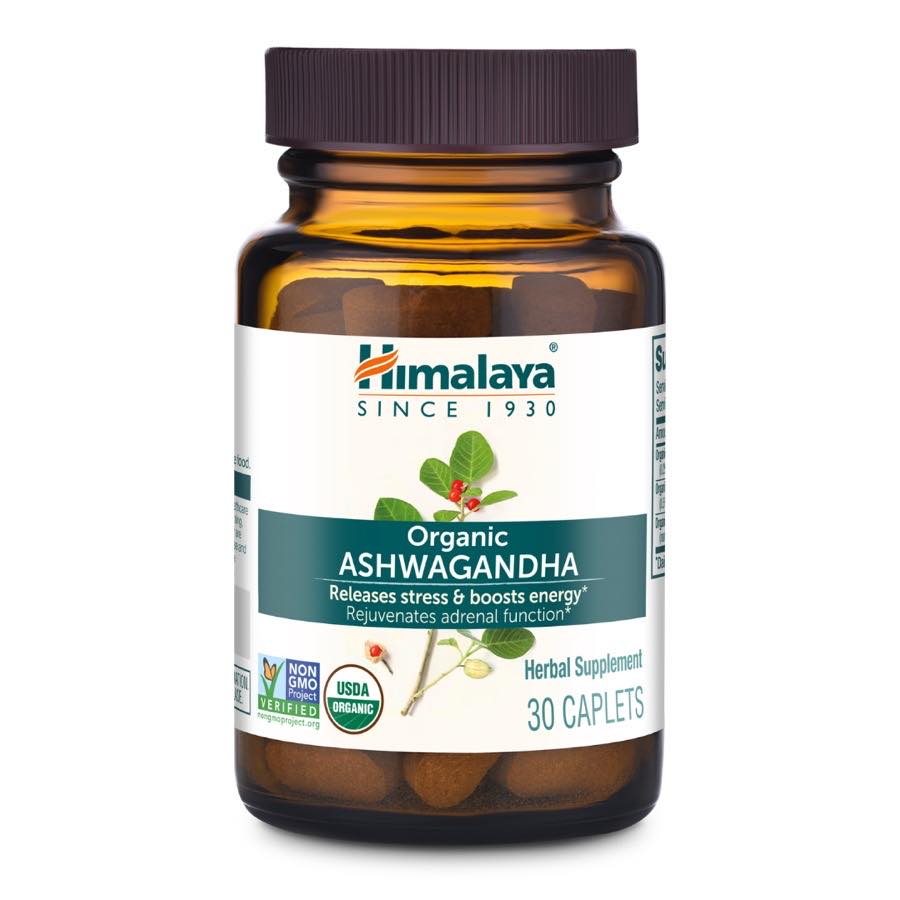
Himalaya uses a blend of ashwagandha root powder and root extract at 670 mg per caplet, backed by four clinical studies, with USDA Organic and Non-GMO Project Verified marks. Bottles run about $17.99 to $37.99 depending on size.
Himalaya is for shoppers who want an Ayurvedic-heritage brand with decades in this herb, not a newer sports-nutrition label. Stack it against Organic India (800 mg whole-root, no extracts, Fairtrade and B Corp) and against Transparent Labs (named KSM-66, public CoA). Gaia is the other whole-herb format, in a liquid Phyto-Cap rather than a powder-plus-extract caplet.
The wrong bottle if you insist on seeing KSM-66, Shoden, or Sensoril on the panel.
8. Organic India
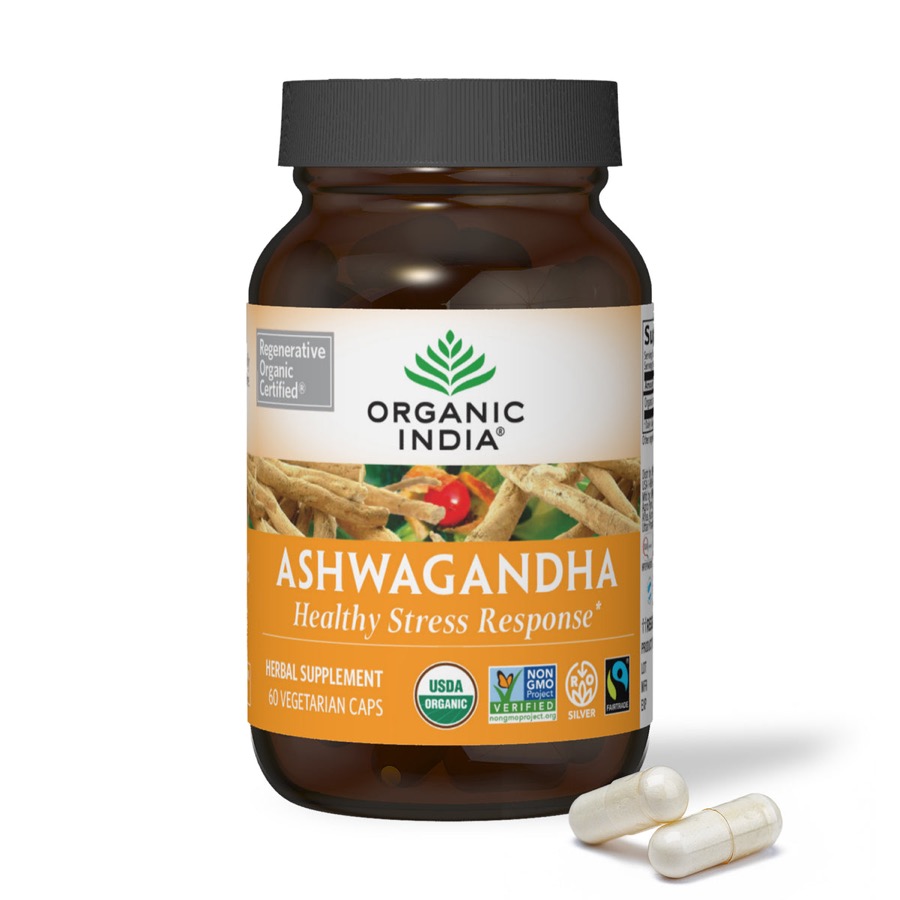
Organic India is a pure whole-root, vegan capsule with no extracts or fillers, at 800 mg per serving. The product page calls it the first Fairtrade Certified ashwagandha in the world, and lists Regenerative Organic Certified and B Corp certified. The listed price is $32.99, from $43.99.
Organic India is the ethical whole-root pick. Gaia still uses a root extract inside a liquid Phyto-Cap; this one stays powder-only. Himalaya blends powder with extract and cites four clinical studies. Pay the premium here for the sourcing story, not for a withanolide percentage.
A miss if you specifically want a concentrated, percentage-standardized extract.
9. Nutricost
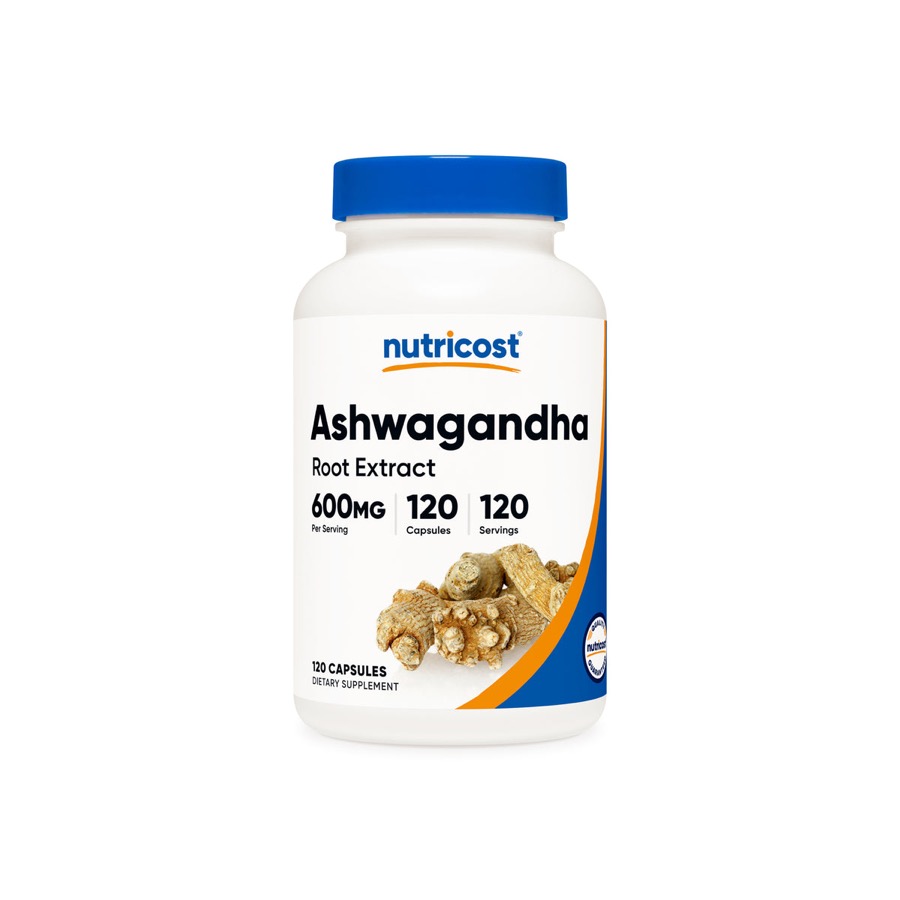
Nutricost lists 600 mg of ashwagandha extract per serving, third-party tested by an independent, accredited lab, and made in an NSF-certified, GMP-compliant facility. Price sits at $9.97 to $14.95 depending on bottle size.
Nutricost is the budget bottle that still states independent-lab testing. Compare with Swanson for named KSM-66 at 250 mg, with NOW Foods for a familiar 450 mg standardized extract, and with Double Wood if you want KSM-66 plus a per-lot CoA you can open.
Unhelpful if you need a branded extract name (the page says extract, not KSM-66) or a published lot PDF. The NSF language here is a certified facility, not NSF Certified for Sport.
10. Double Wood Supplements
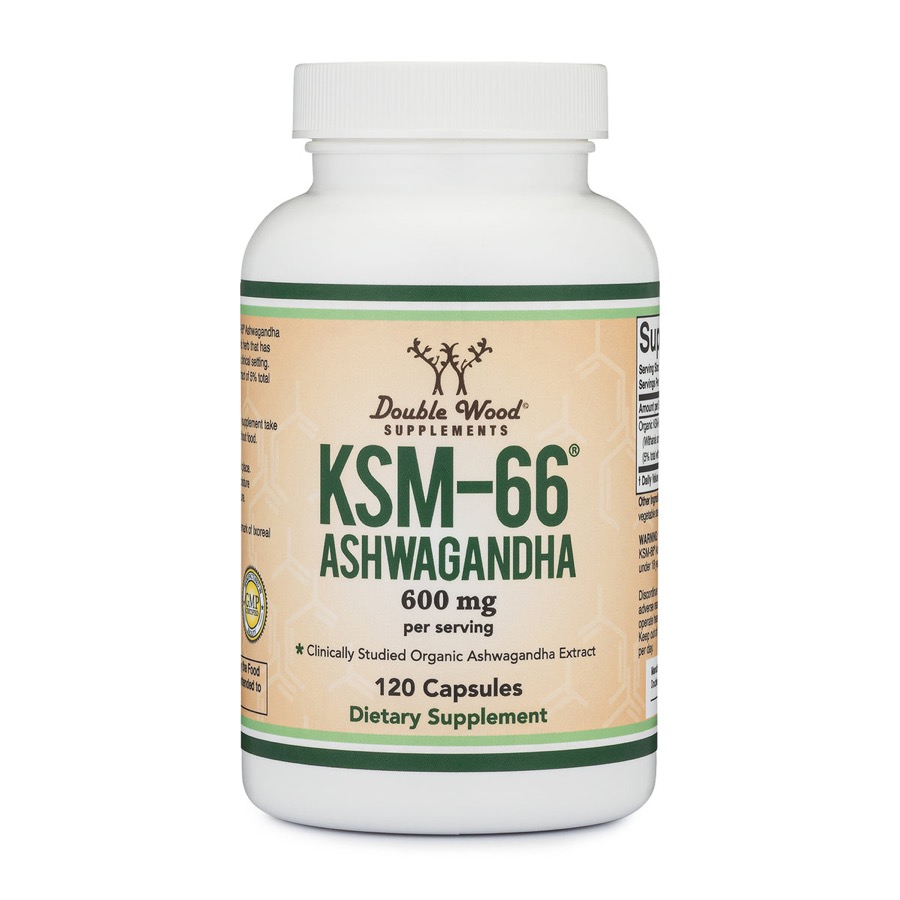
Double Wood Supplements uses an organic, root-only KSM-66 extract standardized to 5% withanolides, tested in an ISO/IEC 17025 accredited lab, and publishes per-lot Certificates of Analysis. One published lot lists 672.4 mg of KSM-66 extract and 33.62 mg of withanolides. A 120-capsule bottle is $19.95.
Double Wood Supplements is for lab-report readers who will match a CoA to the bottle they received. Transparent Labs also posts CoAs on 600 mg KSM-66 at a higher typical price. Nootropics Depot does the CoA thing with Shoden instead of KSM-66. Swanson keeps the KSM-66 name and drops the paperwork and the serving size.
Overkill if you will never open a lab PDF, and the wrong format if you wanted whole-root powder.
11. Swanson
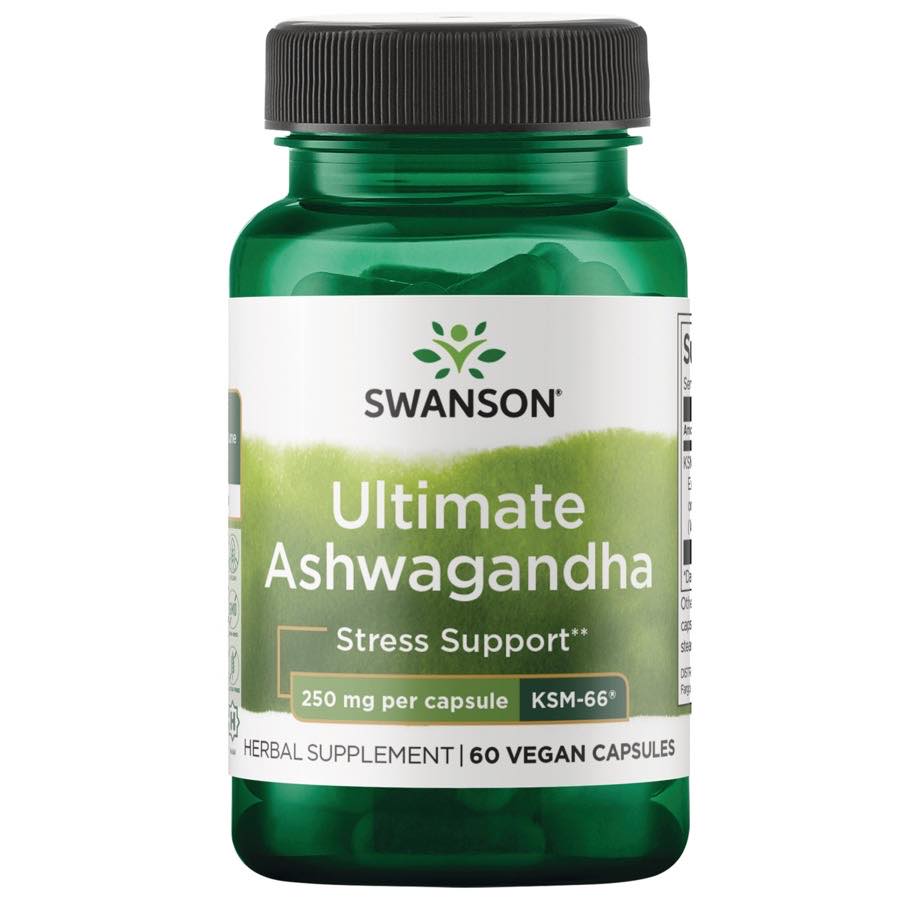
Swanson sells KSM-66 ashwagandha extract made with certified organic ashwagandha, at 250 mg per capsule. The bottle is non-GMO, gluten-free, vegan, and Halal certified, at $14.29.
Swanson is the cheapest named-KSM-66 option on this list. Transparent Labs and Double Wood cost more and give you a larger extract amount plus lab paperwork. Nutricost can undercut on price with 600 mg, but it does not name KSM-66 on the product page we used.
Too light if you wanted a 600 mg serving in one capsule, and a dead end if you wanted heritage whole-root.
12. NOW Foods
NOW Foods makes a 450 mg standardized root extract capsule. The company has been family-owned since 1968, and the product is non-GMO, vegan, kosher, and made in a GMP facility. Bottles typically land around $11 to $17.
NOW Foods is the familiar value name for newcomers. Nutricost is the closer budget analog with an independent-lab testing claim and 600 mg. Swanson is the budget analog with KSM-66 printed on the label. Transparent Labs is the jump if you want that named extract plus a public CoA.
The weaker pick if you need a branded extract or a downloadable CoA. The story here is a long-running GMP brand and a 450 mg standardized extract, not a patented name.
How to choose an ashwagandha brand
Start with extract type, then dose, then paperwork. Ignore the word "adaptogen" on the front of the bottle until those three are clear.
If you want a daytime, clearer-headed extract, start with KSM-66. Transparent Labs is the 600 mg public-CoA version. Double Wood is the same extract with per-lot numbers at a lower price. Swanson is the KSM-66 name at 250 mg and the lowest price. Nootropics Depot is the other named extract on this list (Shoden) with published CoAs; use it when you care about the lab PDF and that extract name, not when you were specifically shopping KSM-66.
If you want the extract communities describe as more relaxing, that extract is Sensoril. None of these twelve name Sensoril on the product pages used for this roundup. The other format shoppers use for that goal is a root-and-leaf extract; Thorne is the one in this list, at 120 mg and a premium. If you would rather skip ashwagandha and shop a calmer amino acid instead, see the best L-theanine supplement brands. For an evening mineral people often compare in the same routine, see the best magnesium glycinate supplement brands.
If you distrust standardized-percentage language and want the herb closer to how it is traditionally used, compare Organic India (800 mg whole-root, no extracts, Fairtrade and B Corp) with Gaia Herbs (root-only liquid Phyto-Cap, ISO-certified in-house testing for microbes and heavy metals). Himalaya sits between those two: a 670 mg root-powder-plus-extract blend from an Ayurvedic-heritage brand, USDA Organic, with four clinical studies cited on the page.
If you are a drug-tested athlete, look for NSF Certified for Sport or an equivalent banned-substance batch program. None of these twelve carry NSF Certified for Sport. Nutricost states an NSF-certified, GMP-compliant facility, which is not the same certification. Transparent Labs, Nootropics Depot, and Double Wood at least let you open a CoA.
If budget is the filter, Nutricost (600 mg extract, independent accredited lab, about $9.97 to $14.95), Swanson (named KSM-66, $14.29), and NOW Foods (450 mg standardized extract, about $11 to $17) are the value tier. Spend up only if you need a named extract, a CoA, a hypoallergenic capsule, or a Fairtrade whole-root story.
If fillers and allergens are the issue, Pure Encapsulations is the hypoallergenic 500 mg root-extract capsule. If you will not swallow pills, Moon Juice is the 15:1 powder at 273 mg per dose.
Skip ashwagandha entirely if you are pregnant, if you have hyperthyroidism or Graves' disease, or if you take thyroid or sedative medications, unless a clinician who knows your chart says otherwise. Cleveland Clinic's ashwagandha overview and Healthline's thyroid coverage are the safety sources behind that list. A daily probiotic or a multivitamin is a different job than this herb; do not treat them as stand-ins.
Frequently asked questions
What's the difference between KSM-66, Sensoril, and Shoden ashwagandha?
They are branded, standardized extracts, not generic synonyms for "ashwagandha." Shoppers treat KSM-66 as more energy and focus oriented, and Sensoril as more relaxing. Shoden is the named extract Nootropics Depot puts on its label, with published CoAs. KSM-66 is the named extract on Transparent Labs, Double Wood, and Swanson. None of the twelve brands in this roundup list Sensoril on the product pages we used.
Is it safe to take ashwagandha every day?
Plenty of the bottles above are sold as daily capsules, but daily use is still a clinician question, not a label slogan. If you are pregnant, have hyperthyroidism or Graves' disease, or take thyroid or sedative medications, do not self-start a daily serving. For everyone else, match the serving on the bottle you bought and give a new extract a consistent window before you judge it.
Who should not take ashwagandha?
Pregnancy, hyperthyroidism or Graves' disease, and thyroid or sedative medications are the cautions this roundup will not sand down. Talk to a doctor who knows your medications before you add a bottle. Heritage branding and a clean CoA do not override those limits.
What's a good daily dose of ashwagandha?
There is no single number that fits every extract. On this list, labeled extract amounts run from 120 mg (Thorne) to 600 mg (Transparent Labs, Nutricost), with Moon Juice at 273 mg of a 15:1 powder, Swanson at 250 mg of KSM-66, and NOW Foods at 450 mg of standardized extract. Whole-root products are a different math: Organic India is 800 mg of powder with no extract, Himalaya is 670 mg of powder plus extract. Buy a bottle whose milligram amount is printed, then follow that serving.
Is it better to take ashwagandha in the morning or at night?
KSM-66 is the extract people often take earlier in the day because it is described as more energy and focus oriented. Sensoril is the one described as more relaxing, so people often take it later; it is not on these twelve labels. A root-and-leaf extract (Thorne) is the format match if you were specifically shopping that blend. Time of day is still personal. Start with the label and your clinician's advice.
What's the difference between ashwagandha root extract and root powder?
Extract is a concentrated pull from the root (and sometimes the leaf), often standardized to a withanolide percentage. Powder is ground root, usually at a higher milligram amount because it is not concentrated the same way. Transparent Labs and Double Wood are root-extract, KSM-66 examples. Thorne is a root-and-leaf extract. Organic India is whole-root powder with no extract. Himalaya blends root powder with root extract. Gaia Herbs uses organic root and a liquid root extract in a Phyto-Cap. Pick the format you actually want, then compare brands inside that format.