
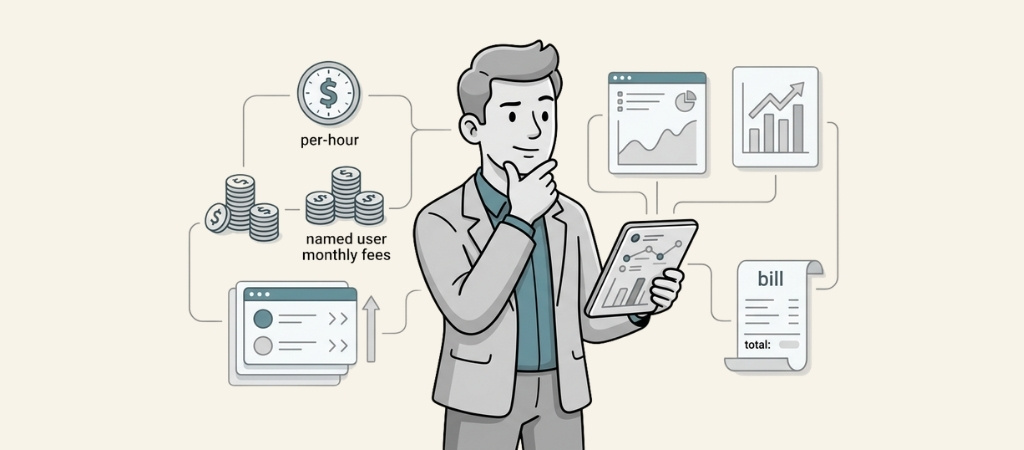
Twilio Flex pricing looks straightforward at first glance. The website shows two simple options: $1 per active user hour, or $150 per named user per month. But if you are researching contact center solutions, you have probably noticed a pattern in the reviews and Reddit threads. The actual bill rarely matches the advertised price.
Here is what Twilio Flex really costs, including the fees that do not show up on the pricing page until you are deep into implementation.
Editor's note: Want to hear some sample AI support calls made for your Shopify store?
- Just paste your store URL
- Get sample calls in under 20 seconds (no email required)
- Listen to demo calls for my store
What is Twilio Flex?
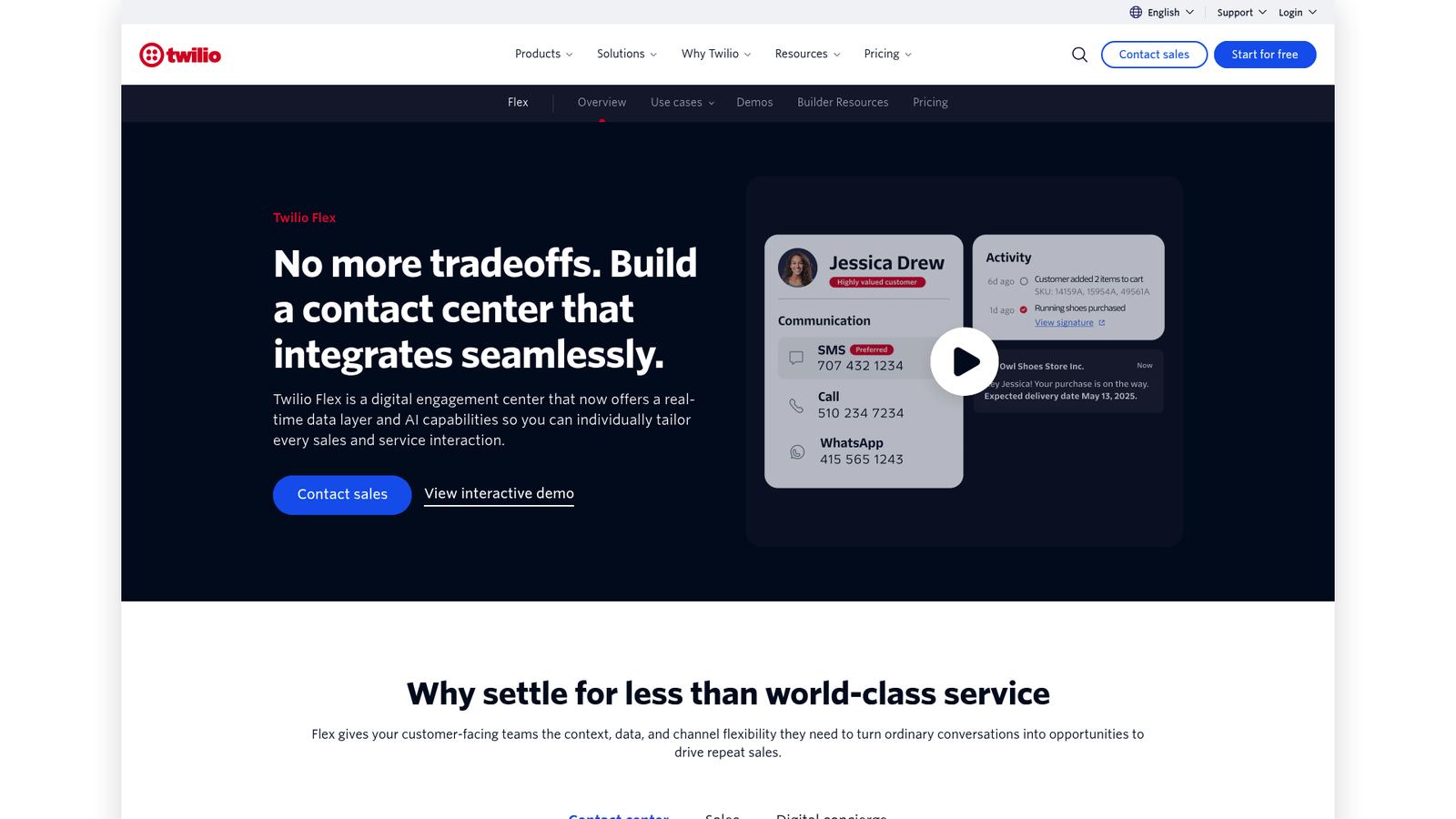
Twilio Flex is a programmable cloud contact center platform. Unlike out-of-the-box solutions like Five9 or CloudTalk, Flex gives you a foundation to build on. Think of it as a set of high-end Lego bricks for developers. You get the pieces: voice, SMS, WhatsApp, webchat, and email channels, plus routing, analytics, and a React-based UI framework. But your engineering team has to assemble everything.
This approach has advantages. You can customize virtually every aspect of the agent experience, integrate with any CRM or database, and build workflows that match your exact business logic. Companies like Uber, Lyft, and DoorDash use Flex to handle massive scale with custom requirements.
The trade-off? You need developers. Not just for setup, but for ongoing maintenance, new features, and even small changes like adjusting an IVR menu.
Twilio Flex pricing plans breakdown
Twilio offers three ways to access Flex, each suited to different stages and use cases.
Free trial
New Flex projects start with 5,000 free active user hours. These hours do not expire until you select a paid billing model, which gives you time to build and test without pressure. The trial includes core platform access but excludes premium features like Flex Insights (the analytics dashboard) and requires you to add funds to your account to unlock the free hours.
Source: Twilio Flex pricing
Per-hour pricing ($1/active user hour)
This model charges you only when users are actively logged into Flex. An "active user hour" counts any time spent in Flex except for the designated logout activity. If you have 500 users provisioned but only 20 log in during a month, you pay for those 20.
This works well for:
- Seasonal businesses with fluctuating call volumes
- Part-time agents who do not work full schedules
- Teams testing the waters before committing to contracts
The downside is unpredictable billing. Your costs swing based on actual usage, which makes budgeting challenging.
Per-user pricing ($150/named user/month)
The named user model offers predictable monthly costs at $150 per user. This covers agents, supervisors, and administrators regardless of how much they use the platform. Twilio bills for the maximum number of named users in a given month, with no proration for mid-month additions or removals (except when transitioning from the starter project).
This model requires a contract commitment and works best for:
- Full-time support teams with consistent schedules
- Organizations that need predictable budgeting
- Companies with steady contact center volume
Pricing comparison at a glance
| Feature | Per-Hour | Per-User | Base cost | $1/hour | $150/month | Best for |
|---|---|---|---|---|---|---|
| Seasonal/part-time | Full-time teams | Budgeting | Variable | Predictable | Contract | No |
Source: Twilio Flex pricing
Hidden costs that inflate your bill
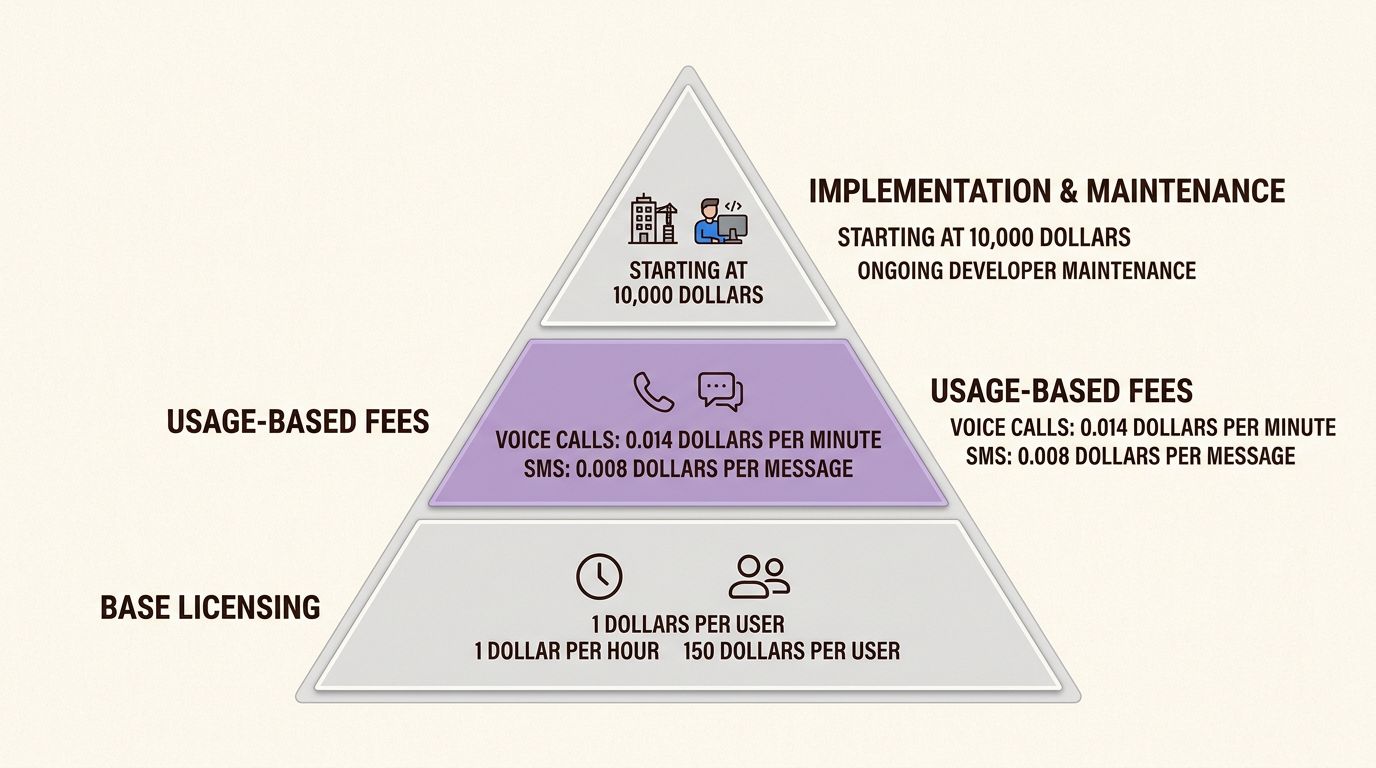
Here's where Twilio Flex pricing gets complicated. The base license is just the entry fee. Your actual costs include several additional layers.
Implementation and setup fees
You don't just turn on Twilio Flex and start taking calls. Getting it running is a development project that typically requires professional services. Most businesses spend at least $10,000 on outside help for initial setup, and complex deployments can run into the tens of thousands.
This covers:
- Custom IVR design and build
- Routing strategy configuration
- UI customization
- CRM and system integrations
- Testing and deployment
Source: Zing.dev deep dive analysis
Usage-based charges
The Flex license does not include the actual communications. Every call, message, and phone number adds to your bill:
| Service | Cost |
|---|---|
| Voice calls (US/Canada) | ~$0.014/minute |
| Local phone numbers | $1.15/month |
| Toll-free numbers | $2.15/month |
| SMS messages | ~$0.008/message |
| WhatsApp template messages | Charged separately |
| Call recording | $0.0025/minute + storage |
WhatsApp session messages and Facebook Messenger are included in the Flex license, but WhatsApp template messages (used for outbound notifications) cost extra.
Source: Twilio Flex pricing, GetVoIP pricing analysis
Add-on features
Twilio offers several premium add-ons with their own pricing:
- Agent Copilot (AI assistant): $0.035 per minute for voice, $0.005 per message for digital channels. Note: still in public beta, prices subject to change.
- Flex Mobile (standalone): $50 per user/month if purchased separately (included at no extra cost for existing Flex users)
Source: Twilio Flex pricing
Ongoing developer dependency
This is the hidden cost that catches most teams off guard. Twilio Flex is not owned by your support team. It is owned by your engineering team. Every change, from adding a new queue to fixing a bug, requires developer time.
You are not just paying for the platform. You are paying for:
- Initial development and customization
- Ongoing maintenance and updates
- Feature additions and modifications
- Bug fixes and troubleshooting
For many organizations, this ongoing engineering allocation exceeds the actual Twilio licensing costs.
Real-world cost examples
Let's look at what Twilio Flex actually costs for different team sizes.
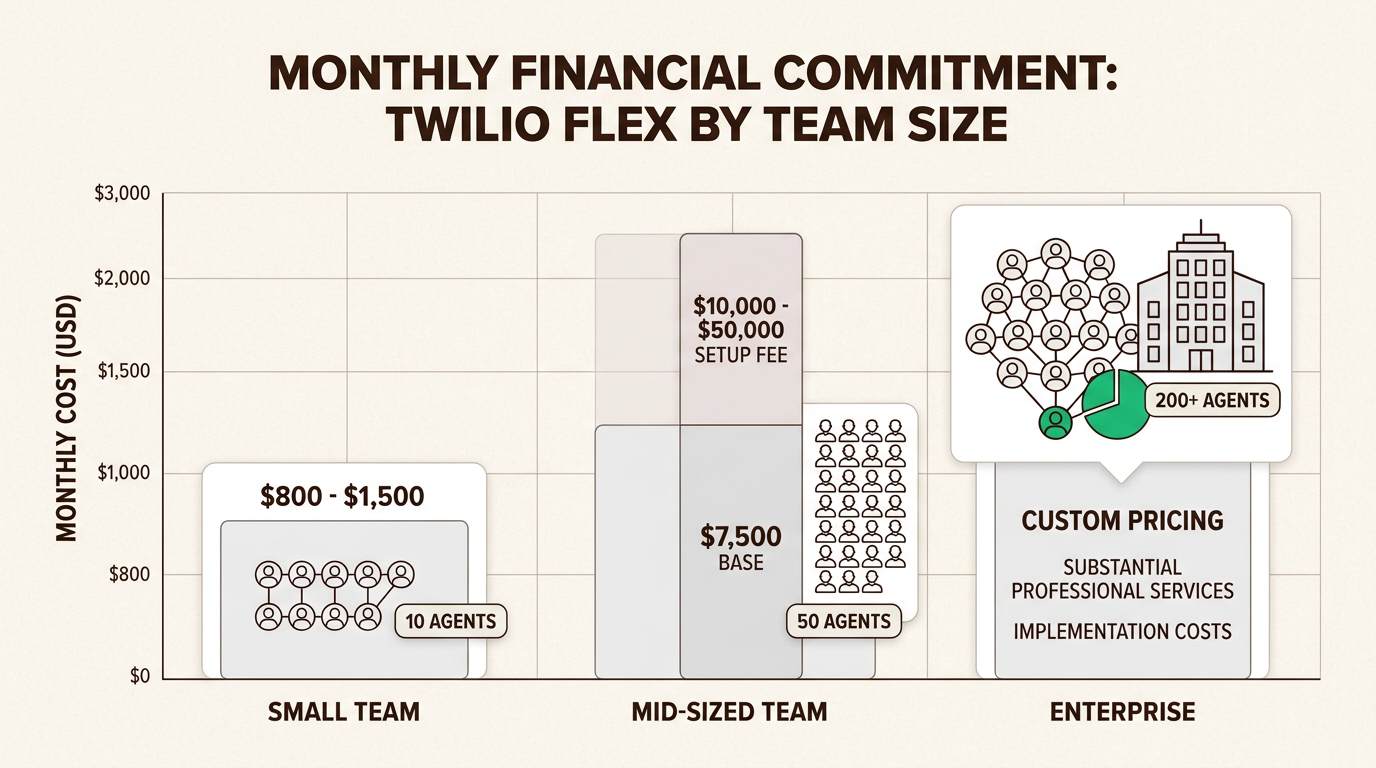
Small team (10 agents)
Per-hour model:
- 20 hours/week per agent × 10 agents × $1/hour = ~$800/month
- Plus voice calls, SMS, phone numbers
- Plus implementation (amortized)
Per-user model:
- 10 users × $150 = $1,500/month
- Plus usage fees
- Plus implementation
Mid-sized team (50 agents)
Per-user model:
- 50 users × $150 = $7,500/month base
- Implementation: $10,000-$50,000 one-time
- Usage fees vary significantly by volume
Enterprise (200+ agents)
Large deployments typically negotiate custom pricing with Twilio. However, the implementation investment scales with complexity. Enterprise Flex deployments often require dedicated professional services engagements and ongoing technical account management.
Who is Twilio Flex actually for?
Twilio Flex makes sense for specific types of organizations:
- Large enterprises with dedicated engineering teams: If you have developers who can own the platform, Flex offers unmatched flexibility.
- Companies with highly customized workflows: When your routing logic, IVR, or integrations are too complex for standard contact center software.
- Organizations with omnichannel requirements: If you need voice, SMS, WhatsApp, and chat unified in one customizable platform.
- Businesses that want to own their infrastructure: Flex lets you self-host or run in your own cloud environment.
It is not the right fit for:
- Small teams without developer resources
- Companies needing quick deployment (2+ weeks minimum, often months)
- Organizations seeking predictable, all-inclusive pricing
- Teams wanting out-of-box functionality without coding
A simpler alternative for e-commerce and SMBs
If Twilio Flex sounds like overkill for your needs, you are probably right. Most businesses do not need a fully programmable contact center. They need reliable phone support that works without an engineering team.
At Ringly.io, we built Seth, an AI phone support agent specifically for e-commerce businesses. Instead of spending weeks and tens of thousands of dollars building a contact center from scratch, you can deploy AI-powered phone support in minutes.
| Here's how we compare: | Factor |
|---|---|
| Twilio Flex | Ringly.io |
| Setup time | Weeks to months |
| Minutes | Developer required |
| Yes | No |
| Setup fees | $10,000+ |
| None | Base pricing |
| $150/user/month or $1/hour | $349-$799/monthnth |
| AI agent included | No ($0.035/minute extra) |
| Yes (Seth) | Call resolution rate |
| Depends on configuration | ~73% autonomous |
Seth handles the routine calls: order tracking, returns, FAQs, and common questions. He escalates to your team only when necessary. For e-commerce stores getting 50-500 calls per month, this typically means handling 70-80% of inquiries autonomously.
Our pricing is straightforward: Start ($99/month for 250 minutes), Grow ($349/month for 1,000 minutes), or Enterprise: custom pricing for 5,000+ minutes). No implementation fees. No developer requirements. No surprise usage charges.
If you're a Shopify store or e-commerce business looking for phone support automation without the complexity, start your free trial and see how Seth handles your calls.
Making the right choice for your business
Choosing a contact center platform comes down to three factors: your technical resources, your timeline, and your budget.
Choose Twilio Flex if:
- You have a dedicated development team
- You need highly customized workflows
- You have 6+ months for implementation
- Your contact center is a core competitive differentiator
Consider alternatives like Ringly.io if:
- You need to launch quickly
- You do not have engineering resources to spare
- You want predictable pricing
- You're an e-commerce business focused on order support and FAQs
Twilio Flex is powerful but complex. For many businesses, especially growing e-commerce stores, a purpose-built AI phone support solution delivers faster results with less overhead.
Frequently Asked Questions
Is Twilio Flex free to try?
Yes, Twilio Flex offers 5,000 free active user hours when you upgrade from a trial project. These hours don't expire until you select a paid billing model.
What is the difference between Twilio Flex per-hour and per-user pricing?
Per-hour pricing ($1/active hour) works best for part-time or seasonal teams with variable usage. Per-user pricing ($150/month) offers predictable costs for full-time agents but requires a contract.
Does Twilio Flex pricing include phone calls and messages?
No, the base Flex license only covers the platform. Voice calls (~$0.014/minute), SMS (~$0.008/message), and phone numbers ($1.15+/month) are billed separately.
How much does Twilio Flex implementation cost?
Most businesses spend $10,000 or more on professional services for initial setup. Complex deployments can cost significantly more.
Do I need developers to use Twilio Flex?
Yes. While basic setup is possible without coding, any customization, integration, or workflow changes requires development work. This is an ongoing requirement, not just for initial setup.
What is a good alternative to Twilio Flex for small businesses?
For e-commerce businesses and SMBs needing phone support without complexity, AI phone agents like Ringly.io's Seth offer faster deployment, no developer requirements, and predictable pricing starting at $349/month.