

Return rates in fashion can hit 60%, and when they do, your support costs don't just grow, they explode.
You have built a great brand and a solid team, but every seasonal rush or viral trend feels like a breaking point for your staff.
You want to offer a premium experience without your payroll and overhead eating every cent of your profit.
This guide will go over the best call center for fashion & apparel in 2026
First, we will look at why fashion support is different.
Then, we will compare human teams with AI agents to find your best fit.
Editor’s note: Want to hear some sample support calls made for your Shopify store?
- Just paste your store URL
- Get sample calls in under 20 seconds (no email required)
- Listen to demo calls for my store
What is a fashion and apparel call center?
A fashion and apparel call center is a customer support hub designed specifically for clothing, shoe, or accessory brands.
It’s the voice of your brand, helping customers with whatever they need.
These centers aren't just about phones anymore. They handle everything from emails and live chats to social media DMs and even calls with AI voice agents.
What makes them different is that they understand the fashion industry.
The agents know how to answer questions about sizing, fabrics, and tricky return policies.
A generic call center might not have that specific knowledge, which can leave your customers feeling frustrated.
Core functions of a modern fashion and apparel call center
A great call center does more than just take calls. It helps manage the entire customer journey, from a pre-purchase question to post-purchase support, which directly impacts how people see your brand.

Omnichannel customer support
Shoppers today jump between different channels. They might see a product on Instagram, ask a question on your website's live chat, and then call to get an update on their order.
A modern call center makes sure the experience is smooth and connected across all these points, whether it's by phone, email, or social media.
Order and returns management
This is where a lot of the action is in fashion support.
Agents spend their days tracking orders ("Where's my package?"), processing exchanges for a new size or color, and handling returns.
Since this is such a common reason for customers to get in touch, making it a simple process is key to keeping costs down and customers happy.
Product inquiry and sales assistance
Before someone buys, they usually have questions. Agents can help with things like sizing, fit, fabric details, and whether an item is in stock.
Giving clear, helpful advice here not only helps make a sale but also gives the customer confidence and makes a return less likely.
Handling seasonal peaks and promotions
The fashion calendar has its busy seasons. Holidays, new collection drops, and big sales can bring a flood of customer inquiries. A flexible call center setup allows you to handle these busy times without having too many staff during the slower periods.
Types of fashion and apparel call center solutions
When it comes to setting up your customer support, you have a few paths you can take.
Each has its own pros and cons regarding cost, control, and how easily it can grow with your brand.
Traditional BPO (business process outsourcing)
This is when you hire another company with live agents to handle your customer service. It's a popular option for brands that get a lot of calls or need support in multiple languages.
Some considerations exist. The costs can be high and variable, with hourly rates anywhere from $8 for offshore agents to over $60 for onshore ones.
The quality of service can also vary, which may impact your brand's personality.
BPO agents often work for several companies at once and might not have the in-depth product knowledge to answer detailed questions.
In-house support teams
Building your own team means you hire, train, and manage your customer service agents yourself.
This gives you total control over your brand's voice and a direct connection to customer feedback, which is very valuable.
The primary consideration here is the cost. Staffing alone can make up 60-70% of a call center's budget, and that's not even counting benefits, training, software, and office space.
Offering 24/7 support is also challenging and expensive, and trying to quickly add more people for a holiday rush is a real challenge.
The modern alternative: AI-powered phone support
A third option combines elements from both approaches: AI.
An AI-powered phone agent can work as a hybrid solution, automating the simple, repetitive tasks while your human team handles the more complicated conversations.
AI voice agents can instantly answer most common questions about order status, returns, and FAQs, any time of day.
For instance, an AI agent like Ringly.io's the AI connects directly with Shopify to give real-time, accurate answers about orders and products.
It can provide a level of detail connected to real-time store data and achieves an average resolution rate of 73% without any human help.
This frees up your human agents to focus on the conversations that really matter, the ones that build relationships and solve unique customer problems.
| Feature | Traditional BPO | In-House Team | AI-Powered Agents (like Ringly.io) |
|---|---|---|---|
| Cost Structure | High variable cost (per hour/agent) | High fixed cost (salaries, overhead) | Predictable, low monthly fee |
| 24/7 Availability | Very expensive | Difficult and costly to staff | Standard, at no extra cost |
| Scalability | Slow, requires hiring more agents | Very difficult, slow to hire/train | Instant, handles any call volume |
| Brand Knowledge | Generic, often diluted | Deep and consistent | Deep, trained on your specific data |
A modern look at fashion and apparel call center costs
Figuring out the real cost of customer support is important for making a good decision for your brand. Prices can be very different depending on the model you go with.
The cost of live agent solutions
With traditional BPOs, you're usually paying by the agent, hour, or minute.
These costs can be variable and hard to predict, especially if you need 24/7 coverage or during seasonal sales when call volumes are high.
In-house teams often represent the largest investment.
On top of salaries, you have overhead costs for recruiting, training, benefits, software, and office space.
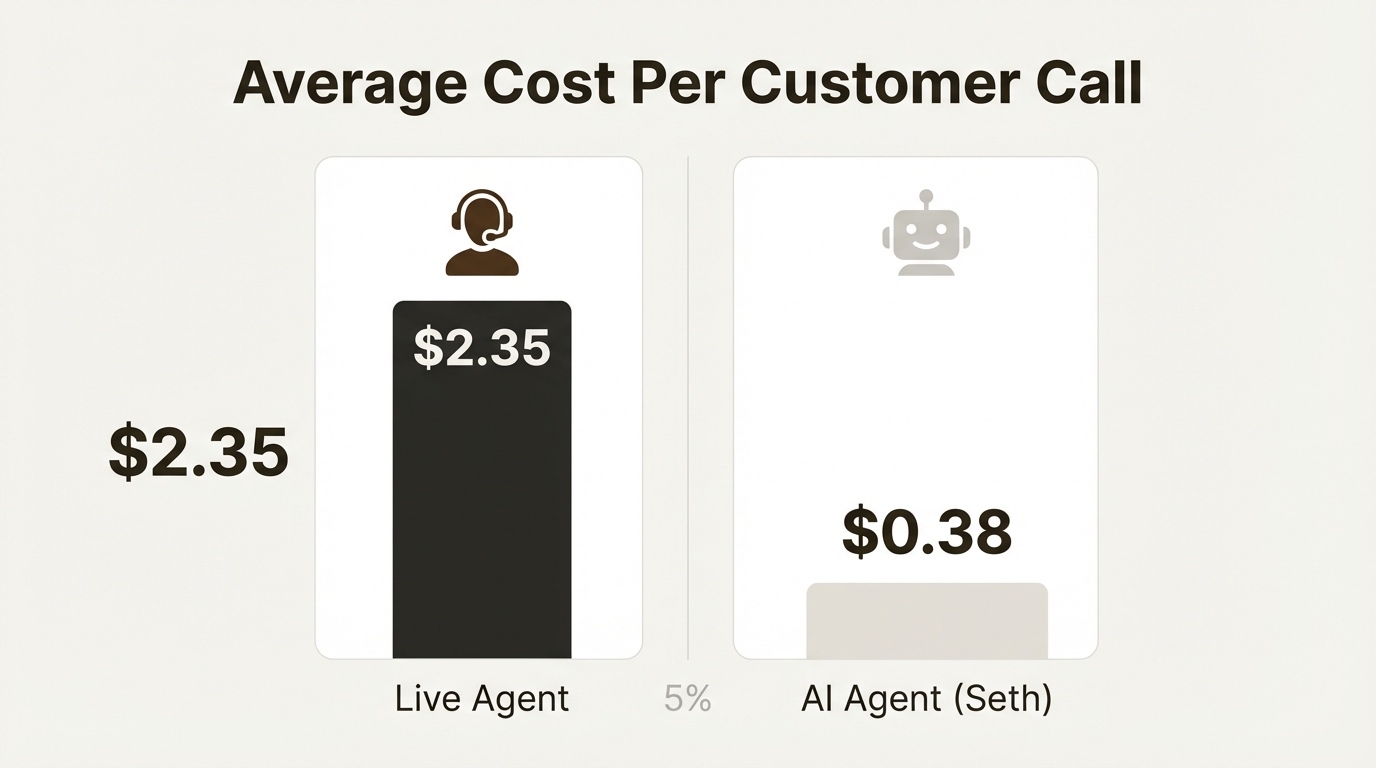
The average cost for a call handled by a human agent is around $2.35.
The transparent cost of AI: A Ringly.io example
AI can provide a more predictable and cost-effective option. The average cost for a call handled by an AI agent like the AI is just $0.38, which is much lower than the cost of a live agent.
Modern AI tools also have clearer pricing. For example, Ringly.io has a guarantee that you don't pay anything until the AI agent demonstrates its effectiveness.
You only start paying once the AI successfully handles at least 60% of over 100 eligible calls.
After that, the Grow Plan is $349 per month and comes with 1,000 call minutes.
For brands with higher call volumes, the Enterprise: custom pricing for 5,000+ minutes and includes extra features like a private Slack channel and custom integrations.
This way, you know you're only paying for something that's delivering results.
Understanding the nuances of customer experience in the fashion industry is key.
For a deeper look at how leading brands approach this, the video below explores modern customer experience strategies specifically for fashion and apparel.
This video explores modern customer experience strategies for fashion and apparel brands, from product discovery to post-purchase support.
Improving your customer experience for the future
The unique pace of the fashion industry needs a modern support solution.
While traditional BPOs and in-house teams have their place, they each come with considerations around cost, scalability, and brand consistency.
The future of support is a smart mix of technology and people.
By letting an AI agent like the AI take care of the high volume of simple questions quickly and accurately, you give your human team the freedom to do what they do best: build real connections with customers and create lasting loyalty.
Get started with an AI-powered fashion and apparel call center today
For fashion brands that want to update their phone support, Ringly.io offers a perfect, risk-free way to begin.
The setup takes just three minutes, it integrates deeply with Shopify for accurate answers, and it offers the 24/7 availability that customers now expect.
Ready to see how an AI phone agent can change your customer support?
Start your free trial of Ringly.io today and pay nothing until it works.
Frequently asked questions
What are the main challenges a fashion and apparel call center helps solve?
A specialized fashion and apparel call center is designed to handle industry-specific issues like high return volumes due to sizing problems, managing sudden demand during seasonal sales, and answering detailed product questions about materials and fit.
How can an AI-powered fashion and apparel call center handle returns more efficiently?
AI agents can automate the entire return process 24/7. They can look up order details, initiate a return or exchange based on your store's policy, and answer common questions, which frees up your human team and makes the process faster for customers.
Is it expensive to set up a fashion and apparel call center?
It can be, especially with an in-house team or a traditional BPO. However, modern AI solutions like Ringly.io offer a much more affordable option with predictable monthly pricing, eliminating the high overhead costs of hiring and training live agents.
How does a specialized fashion and apparel call center improve brand loyalty?
By providing knowledgeable and consistent support, a good fashion and apparel call center ensures customers have a positive experience. When agents understand the products and can resolve issues quickly, it builds trust and encourages customers to shop with you again.
What's the biggest benefit of using AI in a fashion and apparel call center?
The biggest benefit is scalability. An AI agent can handle an unlimited number of calls simultaneously, so you're always prepared for major sales events or holiday rushes without needing to hire temporary staff. It ensures every customer gets an instant response, day or night.