
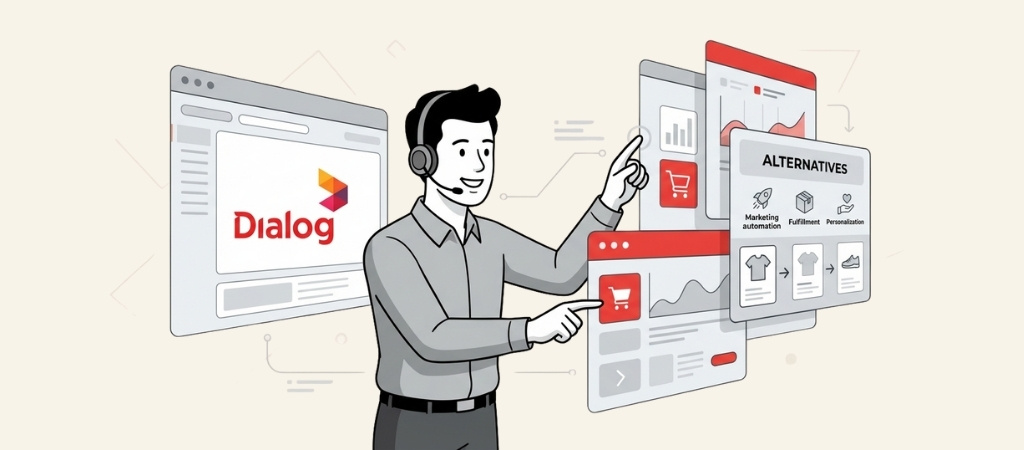
Searching for "Dialog eCommerce alternatives" returns confusing results because Dialog isn't just one product.
It's three different tools with similar names serving completely different purposes.
Dialog Insight handles marketing automation. Dialog Direct runs fulfillment warehouses.
Dialogue for Shopify does AI personalization. If you're looking to switch away from any of these, you need alternatives that actually match what you're replacing.
This guide breaks down 7 alternatives across all three categories.
You'll find marketing automation platforms, 3PL fulfillment providers, and Shopify personalization apps, each with specific pricing, features, and use cases.
Editor’s note: Want to hear some sample AI support calls made for your Shopify store?
- Just paste your store URL
- Get sample calls in under 20 seconds (no email required)
- Listen to demo calls for my store
Which Dialog product are you replacing?
Before diving into alternatives, figure out which Dialog product you're actually using.
Each serves a distinct function in eCommerce operations.
Dialog Insight (marketing automation)
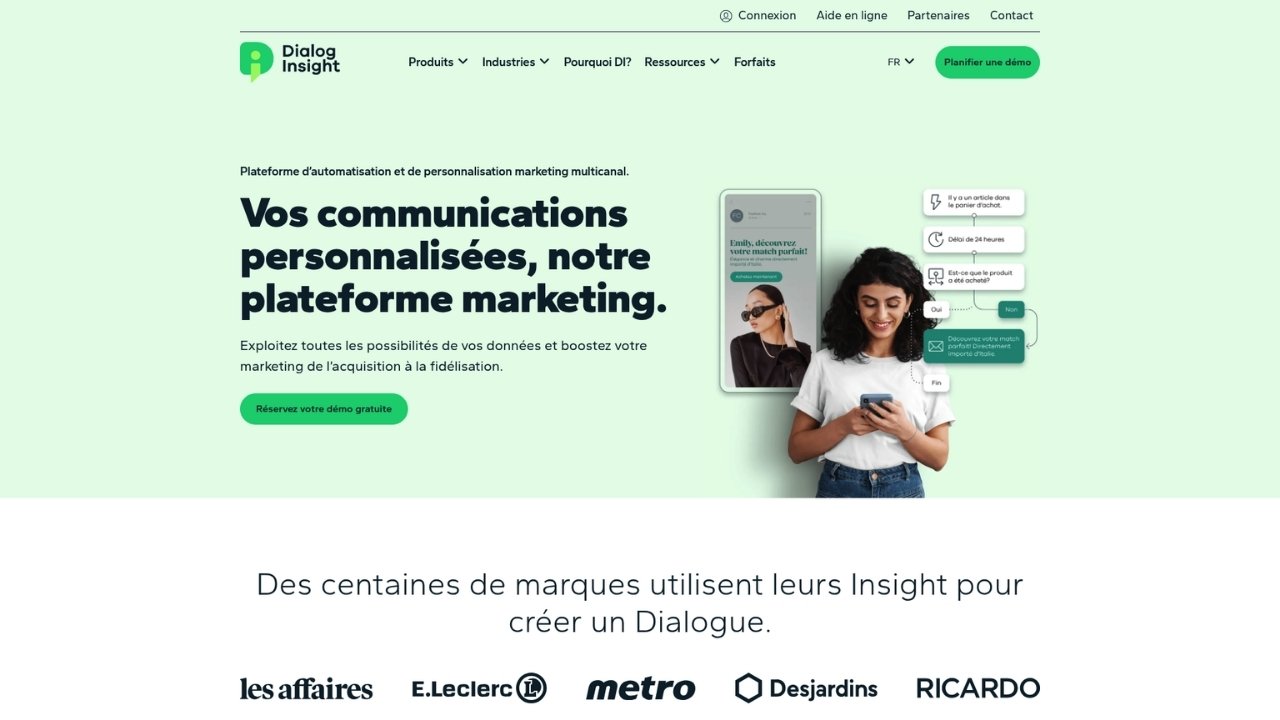
Dialog Insight is a cloud-based platform for email, SMS, and multi-channel marketing campaigns.
It offers audience segmentation, personalization, and campaign analytics for marketing teams.
Best for teams needing behavioral targeting and multi-channel communication.
Common reasons for switching include complex pricing structures and a steep learning curve for non-technical users.
Dialog Direct (3PL fulfillment)
Dialog Direct is a fulfillment and customer engagement service operating 4 warehouse locations with 945,000 unit capacity.
They handle order picking, packing, shipping, and returns processing.
Best for eCommerce brands outsourcing order fulfillment.
Common complaints center on hidden fees, variable pricing, and limited geographic coverage compared to competitors with distributed networks.
Dialogue for Shopify (personalization)
Dialogue is an AI-powered no-code personalization tool built specifically for Shopify stores.
It adds product recommendations, A/B testing, and conversion optimization without requiring developers.
Best for store owners wanting personalized shopping experiences.
Merchants typically switch when seeking more features or tighter integration with their existing tech stack.
7 best Dialog alternatives for eCommerce
These alternatives were selected based on ease of use, pricing transparency, integration capabilities, and user reviews from G2 and Capterra. Each tool maps directly to one of the three Dialog products.
1. Klaviyo
Best for: Dialog Insight users focused on eCommerce email and SMS

Klaviyo is an AI-first B2C CRM platform built specifically for eCommerce.
It combines email marketing, SMS, WhatsApp, mobile push notifications, and customer service tools in a single platform.
The platform serves 183,000+ brands including Mattel, Glossier, and Vans. Its strength lies in deep Shopify integration that automatically pulls order data, product information, and customer behavior without manual setup.
Key features include:
- Behavioral segmentation based on purchase history and engagement
- Pre-built automation flows for abandoned cart, post-purchase, and win-back campaigns
- K:AI Marketing Agent that generates campaign content using AI
- 350+ integrations at no extra cost (including free tier)
- SMS credits that roll over month-to-month with no expiration
| Plan | Price | Key Limits |
|---|---|---|
| Free | $0/mo | 250 contacts, 500 emails/month, 150 SMS credits |
| Marketing | Scales with contacts | Unlimited email sends, advanced segmentation |
| Enterprise | Custom | SSO, dedicated support, custom integrations |
Pros:
- Deep Shopify integration pulls order and product data automatically
- Email + SMS in one platform with unified customer profiles
- Free tier includes all integrations (no feature gating)
Cons:
- Pricing scales quickly as your list grows beyond 250 contacts
- Advanced features require learning; free tier loses email support after 60 days
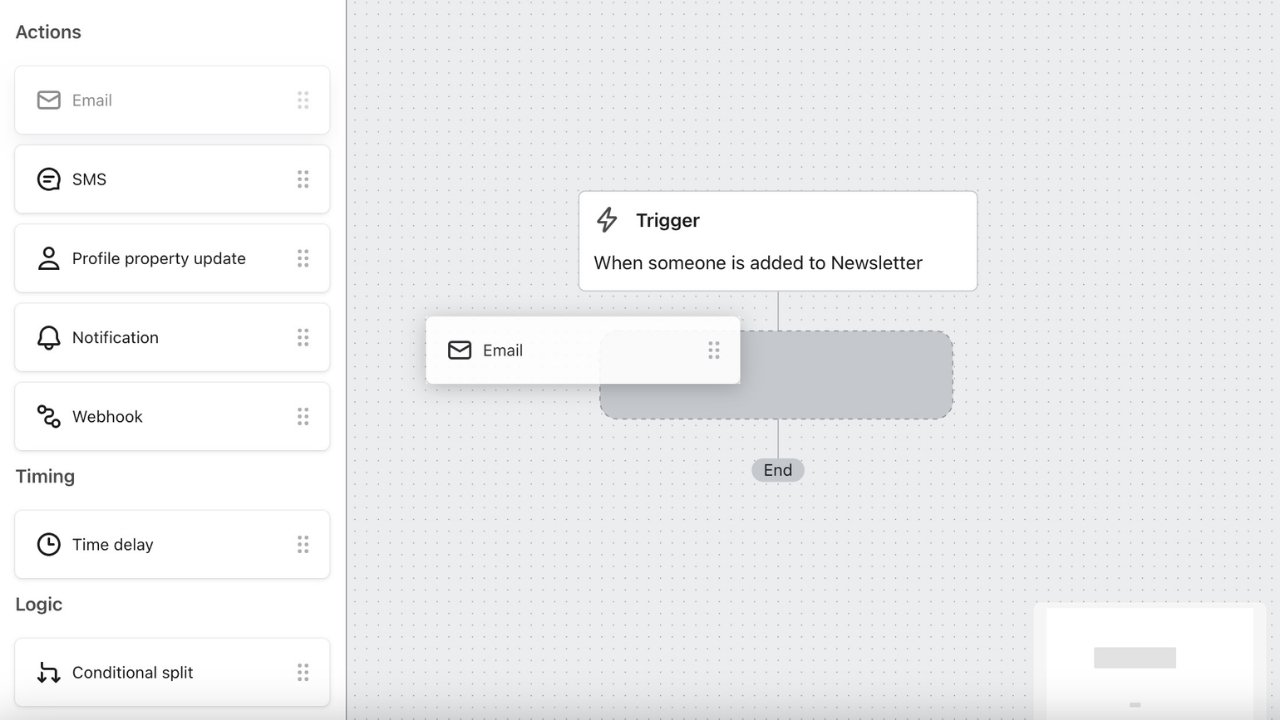
Klaviyo's flow builder interface demonstrating the creation of an automated email sequence, starting with a trigger for new newsletter subscribers and allowing for drag-and-drop actions like email, SMS, and time delays.
2. HubSpot Marketing Hub
Best for: Dialog Insight users wanting an all-in-one CRM + marketing platform

HubSpot Marketing Hub combines marketing automation with a built-in CRM, landing pages, and analytics.
It's designed for businesses wanting to consolidate tools rather than juggling multiple platforms.
The platform has 6,205+ reviews on Capterra with a 4.5/5 rating.
HubSpot's strength is transparent pricing and an extensive integration library of 1,500+ apps.
Core features include:
- Email marketing with drag-and-drop editor and A/B testing
- Lead scoring (5 scores on Professional, 50 with AI on Enterprise)
- Social media scheduling up to 3 years in advance
- Omni-channel automation combining email, SMS, and chat
- Multi-touch revenue attribution tracking up to 10,000 interactions per contact
| Plan | Monthly Price | Marketing Contacts | Core Seats |
|---|---|---|---|
| Free | $0 | Unlimited* | 2 users |
| Starter | $20 | 1,000 | 1 |
| Professional | $890 | 2,000 | 3 (+$45/mo each add'l) |
| Enterprise | $3,600 | 10,000 | 5 (+$75/mo each add'l) |
Note: Professional requires $3,000 onboarding fee. Enterprise requires $7,000 onboarding fee.
Pros:
- 14-day free trial lets you test before committing with no contact limits
- All-in-one reduces tool sprawl (CRM + marketing + sales)
- Strong customer support and extensive documentation
Cons:
- Professional tier required for advanced automation (jump from $20 to $890)
- Marketing contacts pricing model adds cost as you scale
3. ShipBob
Best for: Dialog Direct users needing distributed fulfillment with 2-day shipping
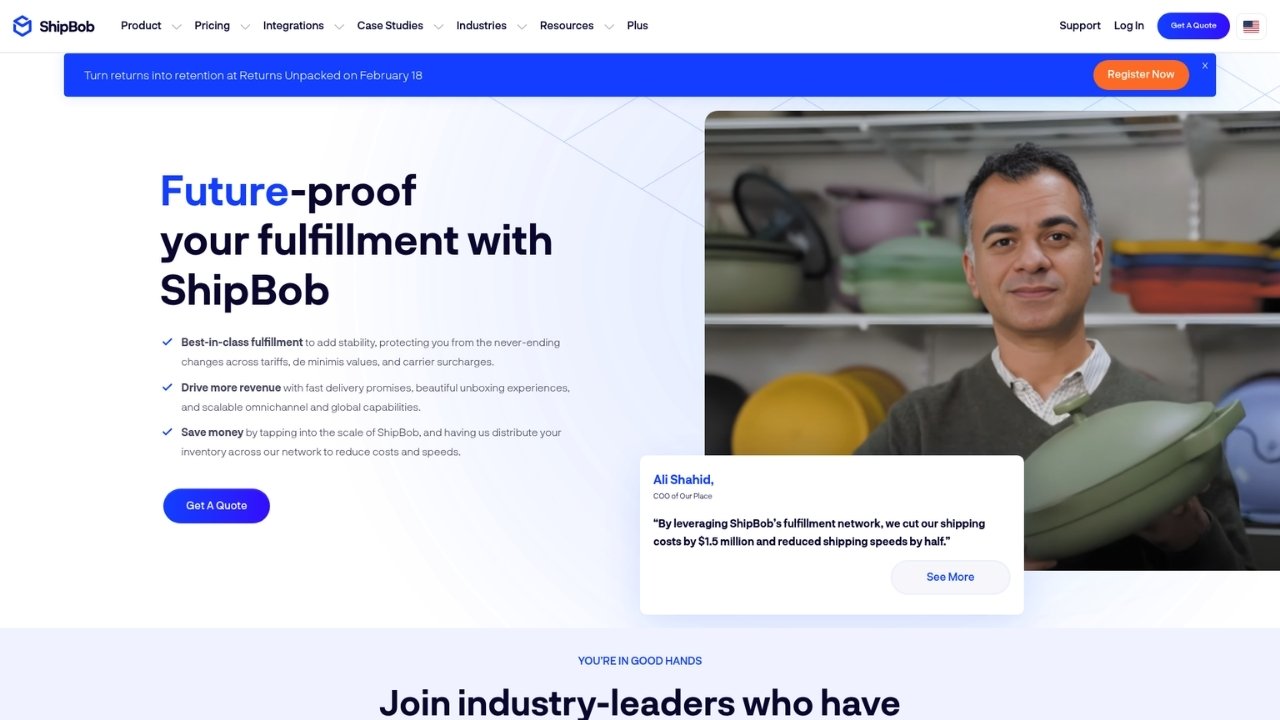
ShipBob is a tech-enabled 3PL with a nationwide warehouse network optimized for fast fulfillment.
Their distributed inventory model enables 2-day shipping coverage across the continental US.
The platform includes free dashboard software, real-time inventory tracking, and multi-channel order management.
ShipBob integrates with Shopify, BigCommerce, Magento, WooCommerce, Amazon, eBay, and Etsy.
Services include:
- Order picking, packing, and shipping from distributed centers
- Real-time inventory syncing preventing overselling across channels
- Returns processing with flat-fee pricing
- FBA prep services for Amazon sellers
- Custom and branded packaging options
Pricing structure:
ShipBob uses custom quote-based pricing rather than public tiers. Costs include:
- Implementation and setup fees
- Storage fees (per-pallet or cubic-foot)
- Per-order fulfillment fee
- Carrier rates (UPS, FedEx, USPS, DHL) at negotiated bulk discounts
- Special services (kitting, FBA prep, returns) charged separately
The dashboard and all integrations come at no additional software cost.
Pros:
- Multiple fulfillment centers enable faster 2-day delivery
- Carrier discounts passed through to customers
- Real-time inventory syncing prevents overselling
Cons:
- Pricing requires custom quote (not transparent upfront)
- Minimum order volumes may not suit very small sellers
4. Brevo
Best for: Budget-conscious teams replacing Dialog Insight
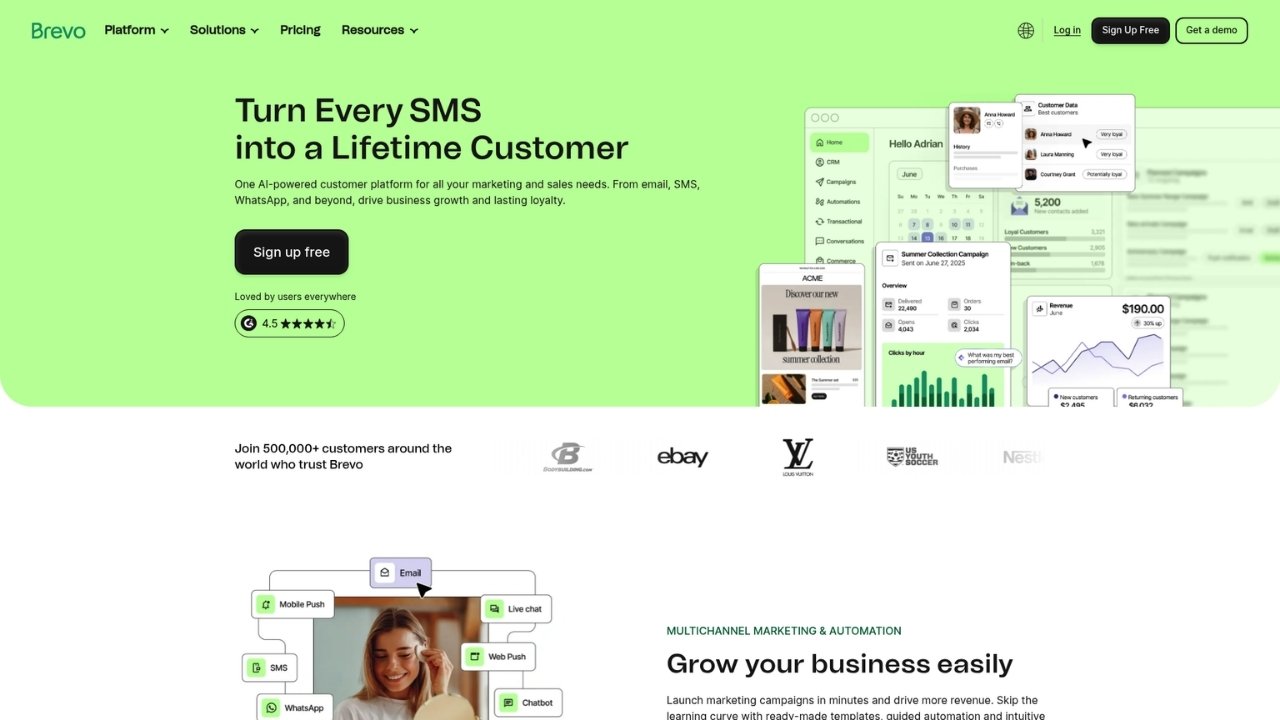
Brevo (formerly Sendinblue) offers email marketing, SMS, CRM, and transactional emails starting at $8/month.
It serves 500,000+ customers and holds a 4.6/5 rating from 2,900+ Capterra reviews.
The platform's strength is value. You get email + SMS + CRM in one tool at a fraction of what competitors charge.
Their free plan allows 300 emails/day indefinitely.
Features include:
- Drag-and-drop email editor with AI content generator
- Marketing automation and behavioral workflows
- A/B testing and send time optimization
- Web and event tracking for segmentation
- Unlimited transactional emails via API/SMTP on all tiers
| Plan | Monthly Price | Email Volume | Contacts |
|---|---|---|---|
| Free | $0 | 300/day or 5,000/month | 500 |
| Starter | $8 | 5,000/month | 500 base |
| Standard | $16 | 10,000+/month | 10,000+ |
| Professional | $449 | 150,000+/month | Varies |
| Enterprise | Custom | 1M+/month | 1M+ |
Pros:
- Most affordable option ($8/month starting price)
- Generous free plan (300 emails/day forever)
- Includes CRM and transactional emails at no extra cost
Cons:
- Less eCommerce-specialized than Klaviyo
- Big pricing jump from Standard ($16) to Professional ($449)
5. Speed Commerce
Best for: Dialog Direct users prioritizing transparent pricing and accuracy
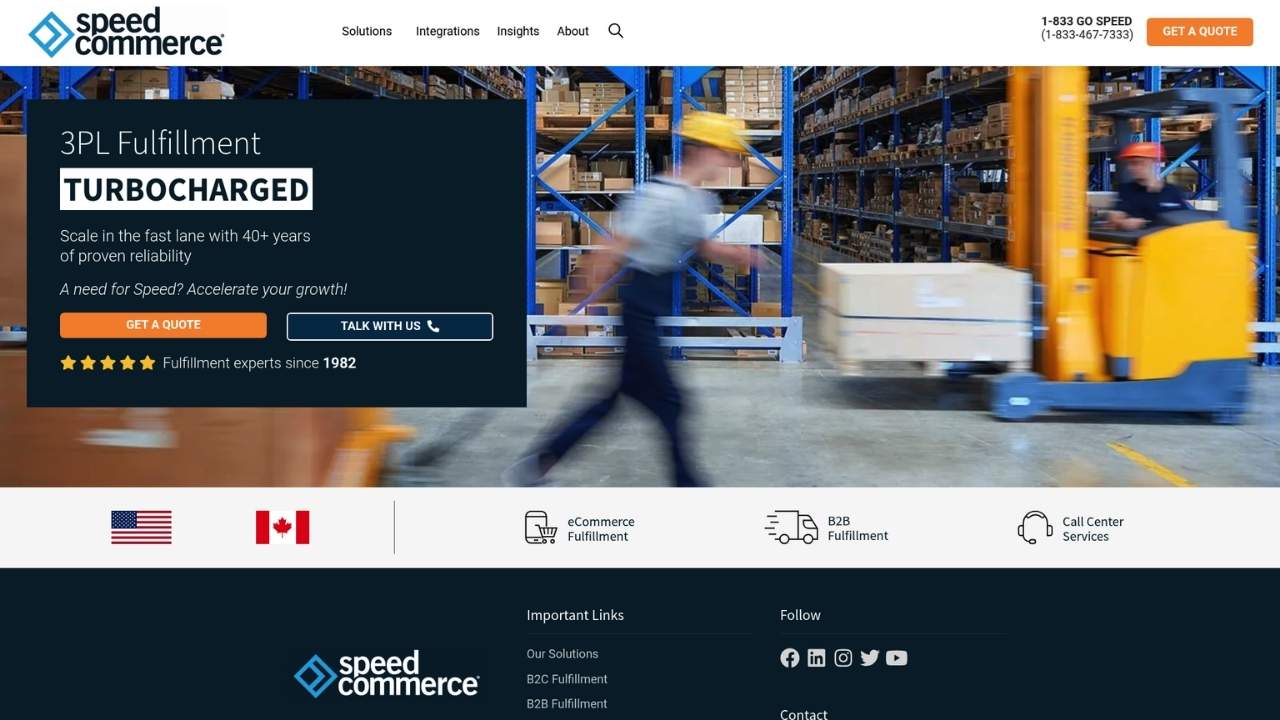
Speed Commerce is a full-service 3PL with 40+ years in fulfillment, operating since 1982.
They own 100% of their fulfillment centers (no franchises) and explicitly market themselves as the transparent alternative to Dialog Direct.
The company offers 2-day continental US shipping, dedicated account managers, and FBA prep services.
Their technology stack includes proprietary WMS, OMS, IMS, and TMS systems.
Services include:
- eCommerce and B2B fulfillment
- White-label call center services
- Returns processing and quality control
- Kitting and custom packaging
- International fulfillment (US, Canada, UK, Australia, Europe)
Pricing approach:
Speed Commerce uses custom quotes but emphasizes transparent, itemized billing. Key differences from Dialog Direct:
- No hidden fees or surprise charges
- No minimum order volumes or annual contracts
- Dedicated support included (no per-contact fees)
- Fulfillment accuracy guarantees with SLAs
Pros:
- 40-year track record demonstrates stability
- Transparent pricing with no hidden fees
- Dedicated account managers at each warehouse
Cons:
- Fewer warehouse locations than ShipBob
- Requires sales conversation to get pricing
6. Mason
Best for: Dialogue for Shopify users wanting no-code store customization
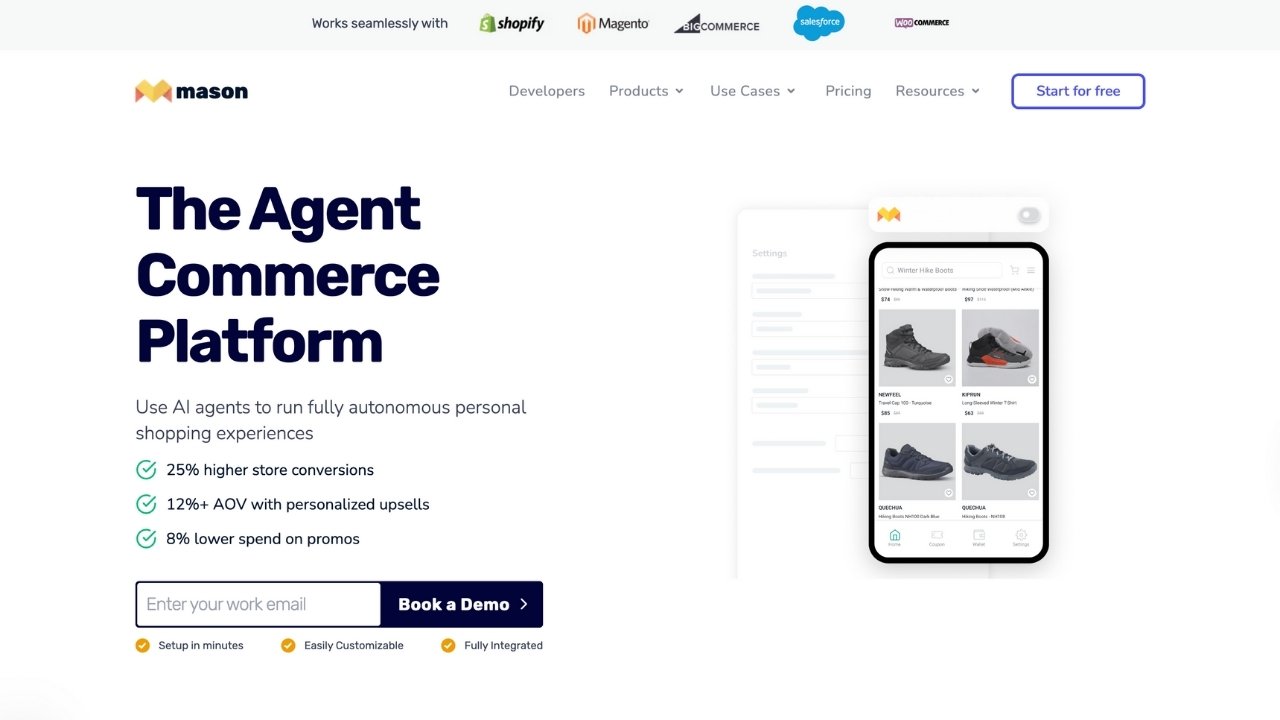
Mason is a no-code platform for building custom Shopify store experiences without developers.
It offers drag-and-drop personalization blocks, product recommendations, and A/B testing.
The tool installs directly from the Shopify App Store and works within the Shopify theme system.
Non-technical store owners can create and deploy personalization experiences in minutes.
Core features:
- Visual drag-and-drop builder (no coding required)
- Product recommendation blocks based on customer behavior
- A/B testing for conversion optimization
- Reusable personalization components
- Native Shopify theme compatibility
Pricing:
Mason offers a free tier for basic use. Premium plans available for advanced features, though specific pricing requires checking their pricing page or the Shopify App Store listing.
Pros:
- Native Shopify integration with quick deployment
- No developer needed for implementation
- Built-in A/B testing for optimization
Cons:
- Shopify-only (not available for other platforms)
- Smaller user base and documentation than established tools
7. Ringly.io
Best for: eCommerce teams wanting AI-powered phone support alongside their Dialog alternative

Ringly.io isn't a direct Dialog replacement, but it fills a gap most alternatives ignore: phone support.
Their AI agent The AI handles inbound customer calls 24/7, answering questions, tracking orders, and processing returns automatically.
the AI is Shopify stores with a 73% call resolution rate without human intervention.
The platform integrates directly with Shopify to pull order data, product information, and customer details in real-time.
What The AI handles:
- Order tracking and "where's my order" queries
- Returns and exchanges processing
- FAQ and product questions
- Escalation to human agents when needed
- Call recordings, transcripts, and analytics
| Plan | Monthly Price | Minutes Included | Key Features |
|---|---|---|---|
| Grow | $349 | 1,000 | Self-learning AI, recordings, insights |
| Enterprise | Custom | 5,000+ | Private Slack, custom integrations |
Overage: $0.19/minute beyond plan allowance.
Pros:
- Deep Shopify integration pulls order data automatically
- Most stores go live within an hour, not days
- 14-day free trial with all features
Cons:
- Phone-focused (not email/chat automation)
- Best suited for stores with significant call volume
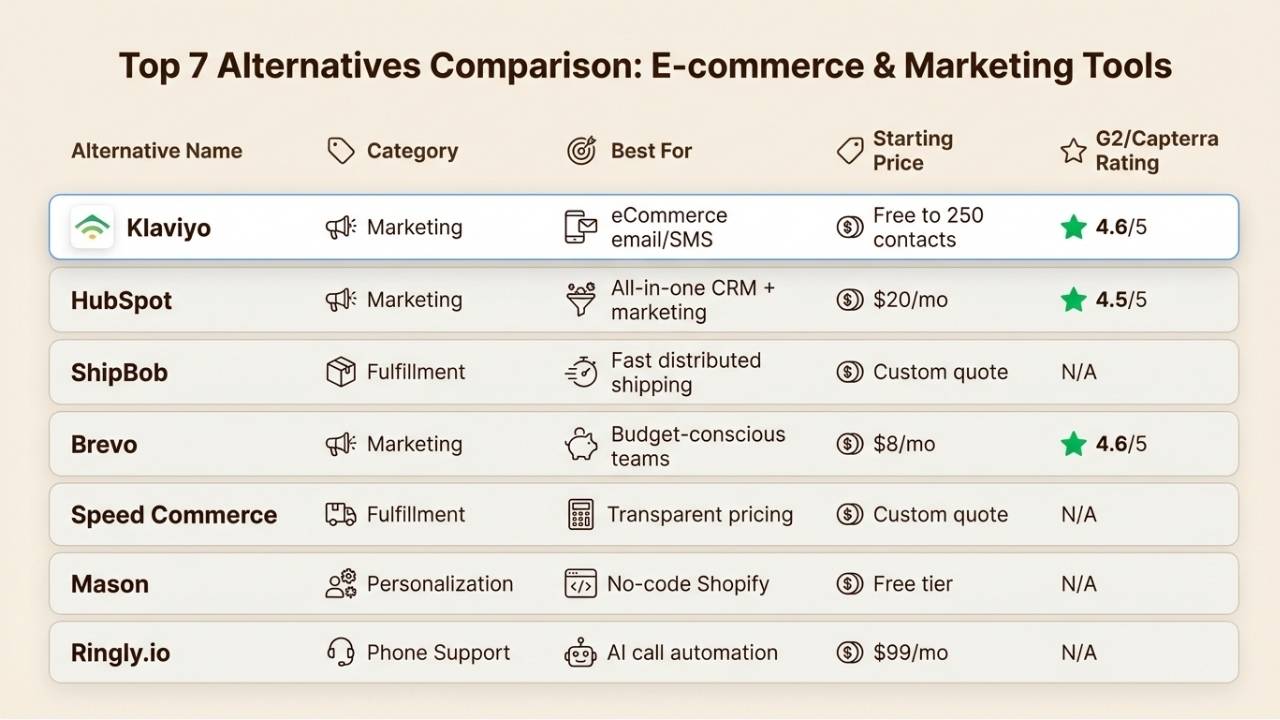
Dialog alternatives comparison at a glance
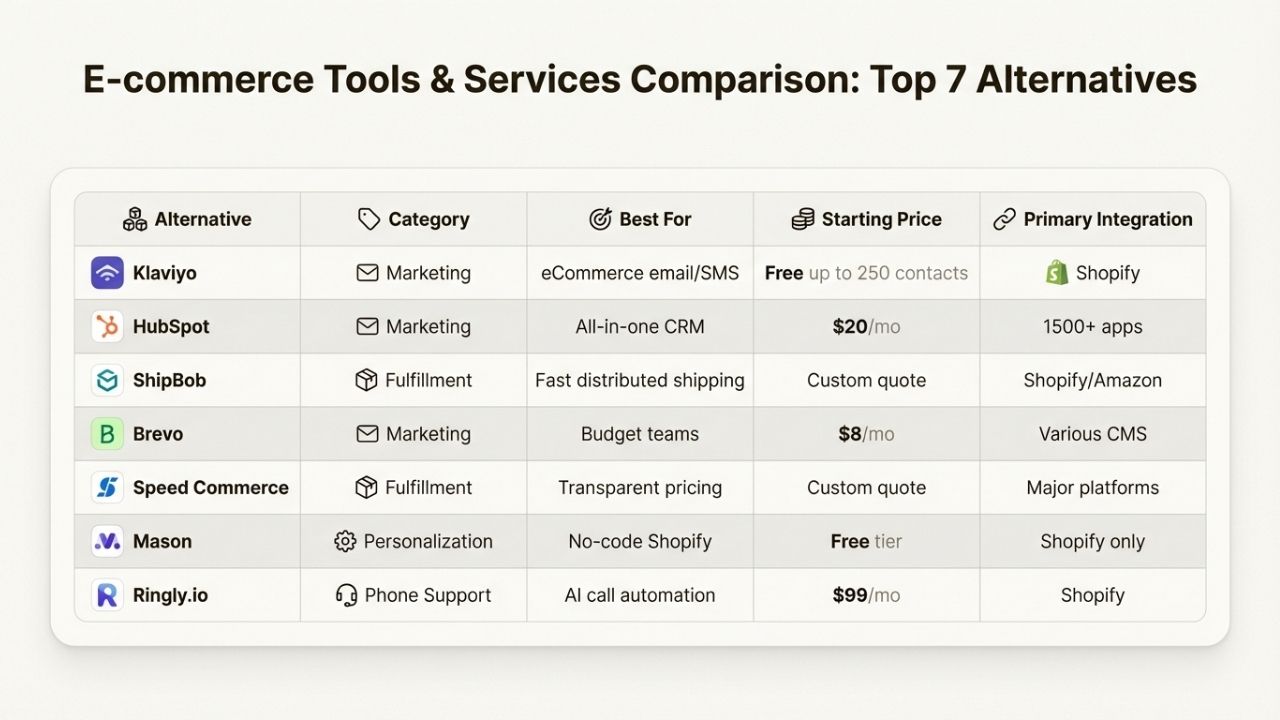
Pricing varies 10x across tools but the most expensive options aren't always the best fit
| Alternative | Category | Best For | Starting Price | Rating |
|---|---|---|---|---|
| Klaviyo | Marketing | eCommerce email/SMS | Free (250 contacts) | 4.6/5 |
| HubSpot | Marketing | All-in-one CRM + marketing | $20/mo | 4.5/5 |
| ShipBob | Fulfillment | Fast distributed shipping | Custom | - |
| Brevo | Marketing | Budget-conscious teams | $8/mo | 4.6/5 |
| Speed Commerce | Fulfillment | Transparent pricing | Custom | - |
| Mason | Personalization | No-code Shopify | 14-day free trial | - |
| Ringly.io | Phone Support | AI call automation | $349/month | - |
Marketing tools cluster around $8-20/month for entry tiers, with enterprise options climbing to $800+.
Fulfillment providers require custom quotes based on volume. Shopify apps typically offer free tiers to test before upgrading.
How to choose the right Dialog alternative
Which alternative fits depends entirely on which Dialog product you're replacing and what drove you to switch.
If you're replacing Dialog Insight (marketing)
Choose Klaviyo if you're eCommerce-focused and want email + SMS with deep Shopify integration. It's purpose-built for DTC brands with behavioral automation.
Choose HubSpot if you need CRM integration and want marketing, sales, and service in one system. Best for teams tired of juggling multiple tools.
Choose Brevo if budget is your primary concern. At $8/month with a generous free tier, it's the most affordable path to email + SMS automation.
If you're replacing Dialog Direct (fulfillment)
Choose ShipBob if you need distributed inventory across multiple warehouses and 2-day shipping nationwide. Best for brands prioritizing delivery speed.
Choose Speed Commerce if transparent pricing and dedicated support matter most. Their explicit positioning against Dialog Direct's opaque fees addresses a common complaint.
If you're replacing Dialogue for Shopify (personalization)
Choose Mason if you want no-code customization with drag-and-drop simplicity. It deploys directly to Shopify without developer involvement.
Evaluation checklist before switching
Before committing to any alternative, work through these questions:
- Integration compatibility: Does it connect with your existing tools (Shopify, CRM, analytics)?
- Total cost of ownership: Factor in setup fees, training time, and scaling costs beyond the base price
- Migration complexity: How long to move existing campaigns, data, or inventory?
- Support quality: Check recent reviews for support responsiveness, not just feature lists
Automate more than email with AI phone support
Most Dialog alternatives handle email, SMS, or fulfillment. Phone support often gets overlooked because it's harder to automate.
That's where Ringly.io fits in. the AI, their AI phone agent, handles the repetitive calls that eat up support hours: order tracking, returns processing, FAQ answers, and routing complex issues to your team.
The math is straightforward. The AI resolves about 73% of calls without human intervention in the Shopify stores where it's deployed.
That frees support staff for conversations that actually need human judgment.
It works alongside any combination of the alternatives above. Running Klaviyo for email, ShipBob for fulfillment, and the AI for phone calls covers most of an eCommerce store's customer communication channels.
Most stores go live within an hour (not a sales pitch, it genuinely does).
Shopify integration pulls order data automatically, so the AI can answer "where's my order" without manual configuration.
Try the AI free for 14 days to see how it handles your call volume.
Frequently Asked Questions
What are the best Dialog eCommerce alternatives for marketing automation?
The top Dialog eCommerce alternatives for marketing automation are Klaviyo, HubSpot Marketing Hub, and Brevo. Klaviyo excels for eCommerce email and SMS with deep Shopify integration. HubSpot offers all-in-one CRM plus marketing starting at $20/month. Brevo provides the most budget-friendly option at $8/month.
Which Dialog eCommerce alternatives offer transparent pricing for fulfillment?
Speed Commerce explicitly positions itself as the transparent pricing alternative to Dialog Direct, with no hidden fees or minimum order volumes. ShipBob also provides custom quotes with clear pricing components, though both require sales conversations for exact figures.
Are there free Dialog eCommerce alternatives for Shopify stores?
Yes. Klaviyo offers a free tier up to 250 contacts with email and SMS. Brevo provides 300 free emails per day indefinitely. Mason has a free tier for basic Shopify personalization. HubSpot also offers free marketing tools with limited features.
How do Dialog eCommerce alternatives compare for eCommerce email marketing?
Klaviyo is the strongest Dialog eCommerce alternative for pure eCommerce email marketing, with 183,000+ brands using it. It pulls Shopify data automatically and includes pre-built flows for abandoned cart, post-purchase, and win-back campaigns. Brevo offers similar features at lower cost but with less eCommerce specialization.
What Dialog eCommerce alternatives work with Shopify?
Most Dialog eCommerce alternatives integrate with Shopify. Klaviyo has native deep integration. Mason is Shopify-only. ShipBob, Brevo, and HubSpot all connect via apps or APIs. Ringly.io's AI phone agent the AI also integrates natively with Shopify for order lookups.
Which Dialog eCommerce alternatives offer 2-day shipping?
ShipBob and Speed Commerce both offer 2-day shipping across the continental US. ShipBob achieves this through distributed fulfillment centers, while Speed Commerce uses owned warehouses. Both are Dialog Direct alternatives for 3PL fulfillment.
Can I use multiple Dialog eCommerce alternatives together?
Yes. Many eCommerce stores combine alternatives across categories. For example, you might use Klaviyo for email marketing, ShipBob for fulfillment, Mason for personalization, and Ringly.io for AI phone support. Each serves a different function and integrates with Shopify independently.
Also read: