


Capgemini is a global consulting and technology services leader with approximately 360,000 employees across 50+ countries.
The company offers comprehensive services including cloud solutions, data and AI, ERP systems, and digital transformation.
But with annual revenues exceeding €22 billion, Capgemini isn't always the right fit for every organization.
Businesses seek Capgemini alternatives for several reasons. Some need more specialized expertise in specific industries.
Others want better pricing or a more agile partner. Geographic presence matters too, and some organizations simply want to diversify their vendor portfolio.
This guide compares the 7 best Capgemini alternatives for 2026.
Each competitor is evaluated on services, pricing positioning, strengths, and ideal use cases to help you make an informed decision.
Editor’s note: Want to hear some sample AI support calls made for your Shopify store?
- Just paste your store URL
- Hear sample calls for your store (no email required)
- Listen to demo calls for my store
What to look for in a Capgemini alternative
Before diving into specific competitors, let's establish what separates good alternatives from mediocre ones.
Key evaluation criteria
- Industry expertise: Does the firm understand your specific vertical? Generic IT knowledge isn't enough for complex transformations.
- Delivery model: What's the onshore/offshore split? How does that affect communication and collaboration?
- Technology capabilities: Do they have partnerships and certifications with the platforms you use?
- Cultural fit: Will their working style mesh with your organization?
- Scalability: Can they handle your current needs and future growth?
Pricing model differences
IT consulting firms typically use one of three pricing approaches:
- Time-and-materials: You pay for hours worked. Flexible but unpredictable.
- Fixed-price: Agreed scope at agreed price. Predictable but rigid.
- Outcome-based: Payment tied to results achieved. Risk-sharing but requires clear metrics.
Red flags to watch for
- Vague pricing that shifts during the engagement
- Over-reliance on junior staff disguised as "cost optimization"
- Poor references or case studies that don't match your situation
- Inability to articulate their differentiation from competitors
Quick comparison of Capgemini alternatives
| Provider | Headquarters | Employees | Revenue | Pricing Tier | Best For |
|---|---|---|---|---|---|
| Accenture | Dublin, Ireland | 738,000+ | $64.9B | Premium | Fortune 500 transformation |
| TCS | Mumbai, India | 616,000+ | $29B | Cost-optimized | Scale and long-term partnerships |
| IBM | Armonk, USA | 260,000+ | $61.9B | Premium | Hybrid cloud, mainframe |
| Deloitte | London, UK | 457,000+ | $64.9B | Premium | Regulated industries |
| Cognizant | Teaneck, USA | 347,000+ | $19.4B | Mid-range | Balanced cost and quality |
| HCL Technologies | Noida, India | 226,000+ | $12.9B | Cost-optimized | Engineering and R&D |
| Wipro | Bengaluru, India | 240,000+ | $11.5B | Cost-optimized | Cost-conscious enterprises |
1. Accenture
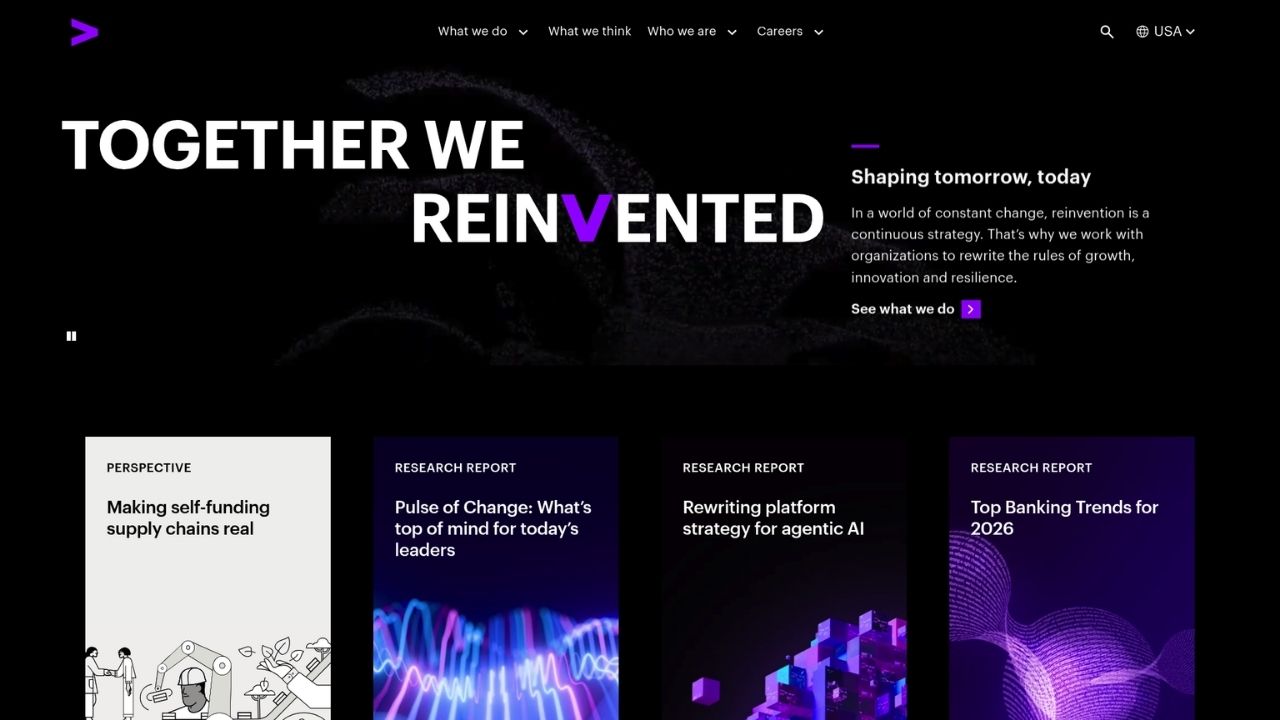
Accenture is the world's most valuable IT services brand and Capgemini's most direct competitor at the enterprise level. With 738,000 employees and $64.9 billion in annual revenue, Accenture operates at a scale that few can match.
Key services
- Strategy and Consulting for business transformation
- Technology services including cloud, security, and AI
- Operations with AI-powered delivery through their SynOps platform
- Accenture Song for digital marketing and customer experience
- Industry X for connected products and smart manufacturing
Strengths
- Massive innovation investment: 100+ innovation hubs globally and partnerships with leading technology vendors
- Elite cloud partnerships: Top-tier status with AWS, Microsoft Azure, and Google Cloud
- End-to-end capabilities: From strategy through implementation and ongoing operations
- Proven scale: Handles the largest, most complex transformation programs in the world
Limitations
- Premium pricing: Typically the most expensive option in the market
- Large teams: Coordination challenges with massive project teams
- Corporate feel: May feel process-heavy and less agile than smaller firms
- Mid-market gap: Smaller organizations may feel overlooked
Best for
Fortune 500 enterprises requiring comprehensive transformation programs, organizations prioritizing innovation investment alongside scale, and companies willing to pay premium prices for market-leading expertise.
2. Tata Consultancy Services (TCS)
TCS is India's largest IT services company and a consistent top-three global provider. Part of the Tata Group, TCS has built a reputation for reliability and scale that rivals any Western competitor.
Key services
- AI and Data Analytics through their AI WisdomNext platform
- Cloud transformation services
- Cognitive Business Operations
- Enterprise consulting
- Cybersecurity services
- Industry-specific platforms including TCS BaNCS for financial services
Strengths
- Unmatched scale: 616,000 professionals with the capacity to handle massive programs
- Industry-leading retention: Attrition rates of 11-13% versus industry averages of 20%+
- Deep IP: Proprietary platforms like TCS BaNCS used by 150+ banks globally
- Long-term partnerships: Many client relationships span 10-20+ years
Limitations
- Offshore-heavy model: Typically 80-85% offshore delivery creates communication challenges
- Bureaucratic feel: Very large organization can feel impersonal
- Minimum engagement size: Typically targets deals over £1 million
- Innovation pace: Sometimes slower than boutique specialists
Best for
Large enterprises requiring massive scale and proven delivery, organizations seeking long-term strategic partnerships with financial stability, and companies in banking, retail, or manufacturing seeking industry-specific solutions.
3. IBM

IBM has been a technology innovator for over a century. While many know IBM for its hardware heritage, the company has transformed into a hybrid cloud and AI powerhouse with consulting capabilities to match.
Key services
- Hybrid cloud solutions and migration
- AI and automation through Watson and watsonx platforms
- Mainframe modernization and support
- Cybersecurity and data protection
- Blockchain solutions for enterprise
- Quantum computing research access
Strengths
- Red Hat integration: The $34 billion acquisition strengthened hybrid cloud capabilities with OpenShift
- Quantum computing access: Only provider offering enterprise access to quantum systems
- Mainframe expertise: Unmatched capabilities for organizations with legacy systems
- Deep R&D: IBM Research continues to drive innovation across AI, quantum, and materials science
Limitations
- Premium pricing: Complex licensing and contract structures can be expensive
- Legacy focus: May push proprietary solutions when open alternatives exist
- Slower decision-making: Large organization means longer procurement cycles
- Niche fit: Best for specific use cases rather than general consulting
Best for
Fortune 500 enterprises requiring hybrid cloud solutions, organizations with significant mainframe investments seeking modernization, businesses investing heavily in AI research and quantum computing exploration.
4. Deloitte
Deloitte is one of the Big Four professional services networks, distinguished by its ability to combine consulting credibility with creative capabilities through Deloitte Digital.
Key services
- Digital transformation strategy and execution
- SAP, Oracle, and Salesforce implementation
- Cloud migration and management
- Data analytics, AI, and machine learning
- Cybersecurity and privacy consulting
- Risk management and compliance technology
Strengths
- Integrated services: Access to tax, audit, and regulatory experts alongside technologists
- Deep industry knowledge: Decades of relationships across every major sector
- Regulatory expertise: Strong capabilities for heavily regulated industries
- Global consistency: Standardized methodologies with local market expertise
Limitations
- Premium pricing: Often 20-40% more expensive than pure-play technology firms
- Process-heavy: Can be documentation-focused and slower than agile specialists
- Enterprise focus: Prioritizes large clients over mid-market
- Potential conflicts: May have independence restrictions if also your auditor
Best for
Large enterprises undergoing major digital transformations, organizations in heavily regulated industries requiring compliance expertise, businesses seeking strategic consulting combined with technical delivery.
5. Cognizant
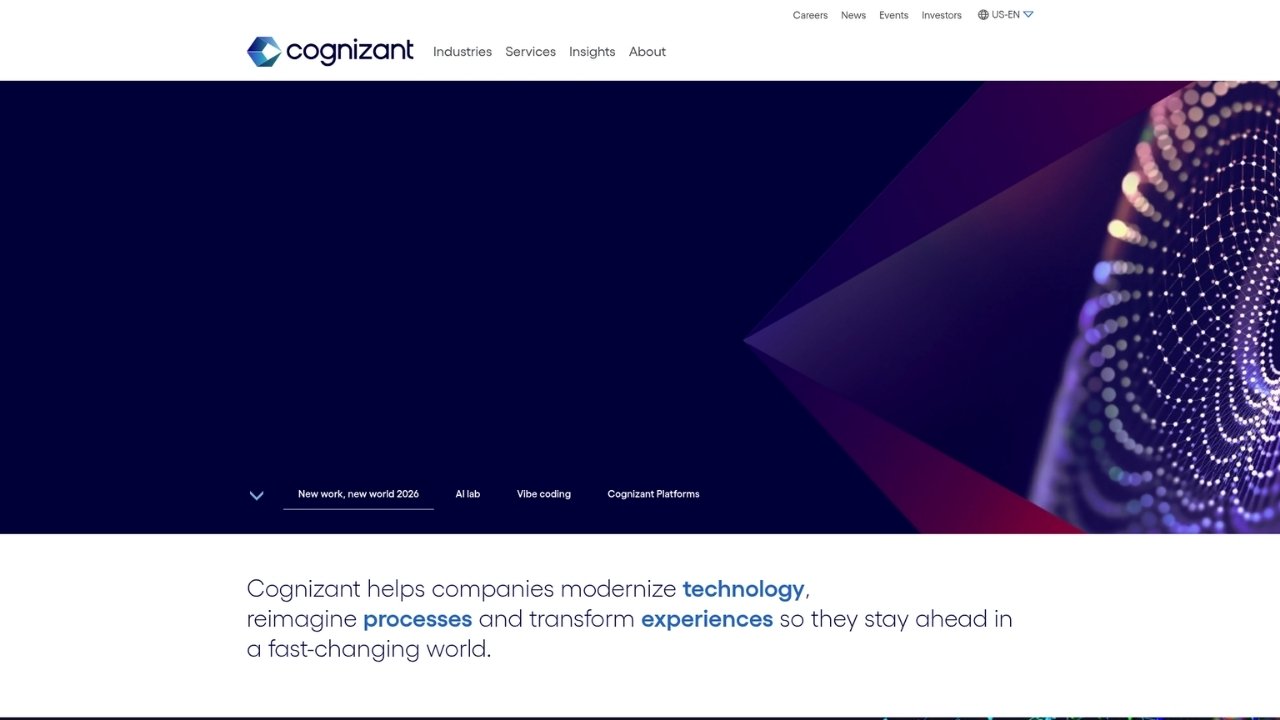
Cognizant offers a compelling middle ground between premium Western firms and offshore-heavy Indian competitors. Based in the US with strong global delivery capabilities, Cognizant has carved out a niche serving mid-to-large enterprises.
Key services
- Digital business and technology consulting
- Cloud enablement and migration
- Data and artificial intelligence
- IoT and digital engineering
- Digital operations and customer experience
- Healthcare and financial services specialization
Strengths
- Balanced delivery model: 60-70% offshore versus 80-85% for competitors
- Healthcare expertise: Deep capabilities in payer, provider, and life sciences
- Better communication: US-based leadership with global delivery
- Digital focus: Strong emphasis on customer experience transformation
Limitations
- Organizational changes: Recent restructuring created some instability
- Quality variance: Service quality varies across geographies and practice areas
- Brand recognition: Less established than Accenture or Big 4
- Innovation gaps: Capabilities lag behind top-tier competitors in some areas
Best for
Mid to large enterprises seeking balanced cost and quality, organizations prioritizing digital customer experience transformation, businesses in financial services and healthcare seeking industry expertise.
6. HCL Technologies
HCLTech has evolved from an Indian IT services provider into a global technology powerhouse with particular strength in engineering and R&D services.
Key services
- AI and GenAI solutions through AI Force platform
- Cloud services with CloudSMART offerings
- Engineering and R&D services
- Digital operations
- Enterprise applications transformation
- Cybersecurity
Key metrics
- 45% reduction in app development effort through AI Force.Software
- 20% IT operations MTTR reduction through AI Force.Ops
- 220+ delivery centers and 70+ labs globally
- 2,200+ patents driving innovation
Strengths
- Engineering excellence: Strong R&D and product engineering capabilities
- Customer satisfaction: Only provider recognized as Customers' Choice in all 6 IT Services categories of Gartner Peer Insights
- Software portfolio: Acquired IBM products including AppScan and BigFix
- Cost-effectiveness: Competitive pricing with quality delivery
Limitations
- Brand building: Still establishing perception in some Western markets
- Offshore model: Global delivery may not suit all organizations
- Consulting gaps: Less established in strategic consulting versus Big 4
Best for
Mid to large enterprises seeking cost-effective digital transformation, organizations requiring product engineering and R&D expertise, businesses comfortable with global delivery models.
7. Wipro
Wipro rounds out our list as a cost-effective alternative with strong AI capabilities and a consulting-led approach that differentiates it from pure outsourcing competitors.
Key services
- Wipro Intelligence AI-powered platform
- Cloud infrastructure and migration
- Cybersecurity services
- Data analytics and engineering
- Digital operations
- Engineering and R&D
Strengths
- Competitive pricing: Among the most cost-effective options for large-scale engagements
- AI capabilities: Wipro Intelligence platform and HOLMES AI for automation
- Consulting-led: Strategic approach versus pure outsourcing
- Topcoder community: Crowdsourced innovation for complex challenges
Limitations
- Communication challenges: Offshore-heavy model creates collaboration friction
- Quality variance: Service levels vary across practice areas
- Time zone issues: Global delivery creates coordination challenges
- Innovation focus: Less cutting-edge than boutique specialists
Best for
Cost-conscious organizations with mature IT requirements, businesses requiring large-scale application maintenance and support, companies comfortable with offshore delivery models.
How to choose the right Capgemini alternative
Selecting the right consulting partner depends entirely on your specific context. Here's a decision framework to help narrow your options.
By use case
Enterprise transformation: Accenture, Deloitte, or IBM offer the scale and capabilities for the largest programs. Expect to pay premium rates but get comprehensive support.
Cost optimization: TCS, Wipro, or HCL Technologies provide competitive offshore pricing while maintaining quality. Best for organizations with established processes that need execution at scale.
Balanced approach: Cognizant offers a middle ground with better communication than pure offshore competitors and lower prices than premium firms.
Engineering and R&D: HCL Technologies stands out for product engineering, manufacturing, and R&D-intensive industries.
Regulatory and compliance: Deloitte or IBM offer the governance expertise needed for heavily regulated sectors like healthcare and financial services.
Key questions to ask potential partners
- What percentage of your delivery team will be offshore versus onshore?
- Can you provide references from companies similar to ours in size and industry?
- How do you handle knowledge transfer and project continuity?
- What is your approach to innovation and staying current with technology trends?
- How do you structure pricing and what are the typical cost drivers?
Red flags during evaluation
- Inability to articulate specific differentiators from competitors
- Reluctance to provide client references
- Vague pricing that shifts during discussions
- Over-promising on timelines or capabilities
- Heavy reliance on junior staff for critical roles
Making your final decision
There's no single "best" Capgemini alternative. The right choice depends on your organization's size, industry, budget, and specific transformation goals.
Accenture and Deloitte lead for Fortune 500 enterprises requiring comprehensive transformation. IBM excels for hybrid cloud and organizations with mainframe investments. TCS, Wipro, and HCL Technologies offer cost-effective scale for large programs. Cognizant provides a balanced middle ground.
The key is matching your specific needs to each provider's strengths. Request proposals from 3-5 shortlisted providers, check references thoroughly, and pay attention to cultural fit. The best technical capabilities mean little if the teams can't collaborate effectively.
Frequently Asked Questions
Which Capgemini alternative offers the best value for mid-sized companies?
Cognizant typically offers the best balance of cost and quality for mid-sized organizations. Their pricing is more competitive than Accenture or Deloitte, while their delivery model provides better communication than pure offshore competitors.
Are Indian IT services firms like TCS and Wipro reliable for critical projects?
Yes. TCS, Wipro, and HCL Technologies have proven track records handling mission-critical systems for Fortune 500 companies. TCS in particular has industry-leading employee retention rates that ensure project continuity.
How do Capgemini alternatives compare on pricing?
Pricing varies significantly. Accenture and Deloitte command premium rates (often 20-40% above market). IBM is also premium. TCS, Wipro, and HCL Technologies offer cost-optimized pricing. Cognizant sits in the middle. Most firms don't publish standard rates, so you'll need to request proposals.
What should I look for when evaluating Capgemini alternatives for cloud migration?
Look for cloud-native expertise, partnerships with your preferred cloud providers (AWS, Azure, Google Cloud), and proven migration methodologies. Accenture, IBM, and TCS all have strong cloud practices with elite partner status across major platforms.
Which Capgemini alternative is best for financial services?
Deloitte and IBM have deep financial services expertise and regulatory knowledge. TCS offers TCS BaNCS, a banking platform used by 150+ institutions globally. Accenture also has extensive financial services experience but at premium pricing.
How long should I expect an IT transformation project to take with these providers?
Timelines vary dramatically based on scope. Small engagements might take 3-6 months. Enterprise-wide transformations typically span 2-5 years. Be wary of providers promising unrealistic timelines.
Can I work with multiple Capgemini alternatives simultaneously?
Yes, many organizations use a multi-vendor strategy. You might use Accenture for strategy, TCS for application development, and a boutique firm for specialized work. Just ensure clear scope boundaries to avoid conflicts.