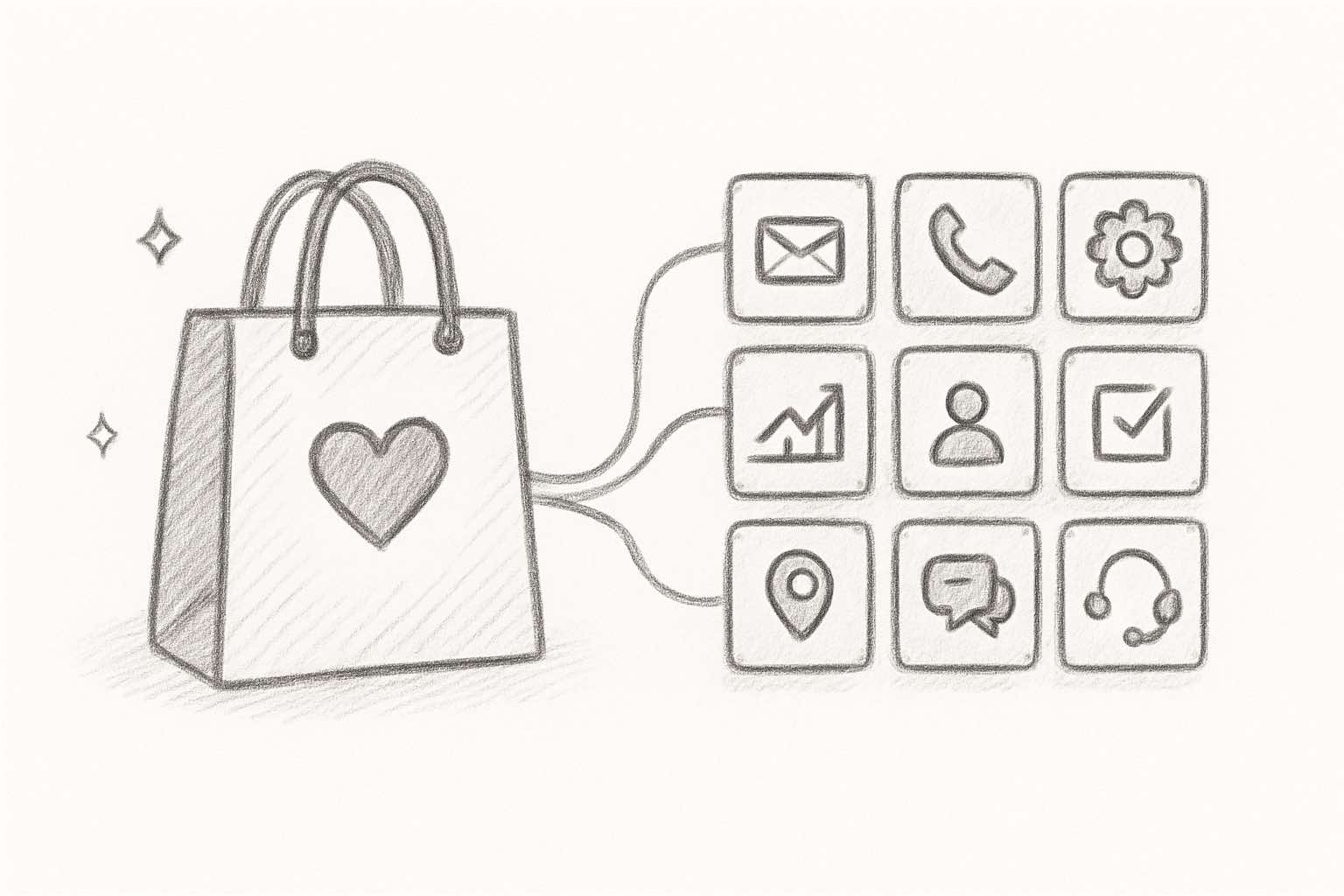
The best CRM for Shopify depends on your need: HubSpot for all-in-one sales and marketing, Klaviyo for email and SMS automation tied to store data, and Salesforce for enterprise reporting. Once your records are set, Ringly.io answers the support calls those customers make.
Shopify doesn't come with a built-in CRM. That's the first thing most store owners discover when they try to segment customers, automate follow-ups, or figure out who their best buyers actually are.
Your order data sits in Shopify. Your email campaigns live in one tool. Your support tickets sit in another. And there's no single place that ties everything together. With the CRM market now projected to hit $126.17 billion in 2026 (according to Fortune Business Insights), there's no shortage of options. The problem is finding one that actually fits a Shopify store.
We tested and reviewed 9 CRMs that integrate with Shopify, covering everything from free tools to enterprise platforms. Here's what's actually worth your time.
Hear what AI support calls sound like for your store. Just paste your Shopify URL and get sample calls in under 20 seconds, no email required. Listen to demo calls for my store.
How do you pick the best CRM for Shopify in 2026?
Not all CRMs work the same way with Shopify. Here's what we looked at:
- Shopify integration quality: does it sync natively through the Shopify App Store, or do you need Zapier and duct tape?
- Pricing transparency: is the cost predictable, or does it spiral as your store grows?
- Ecommerce fit: was this built for online stores, or is it a B2B tool with a Shopify plugin bolted on?
- Ease of setup: can a non-technical store owner get running in a day?
- Automation depth: abandoned cart flows, post-purchase sequences, customer segmentation
- Support quality: when the integration breaks (and it will), how fast do you get help?
Quick comparison: best CRM for Shopify at a glance
| CRM | Best for | Starting price | Shopify integration | G2 rating |
|---|---|---|---|---|
| Klaviyo | Email/SMS + CRM in one | Free (250 contacts) | Native (official partner) | 4.6/5 |
| HubSpot | Free CRM with room to scale | Free (1M contacts) | Native app | 4.4/5 |
| ActiveCampaign | Retention-focused automation | $15/mo | Native app | 4.5/5 |
| Zoho CRM | Full CRM on a budget | Free (3 users) | Via Zapier/middleware | 4.1/5 |
| Pipedrive | Sales pipeline management | $14/seat/mo | Third-party apps | 4.3/5 |
| Freshsales | Affordable CRM with built-in phone | Free (3 users) | Native integration | 4.5/5 |
| Drip | Ecommerce marketing automation | $39/mo | Native app | 4.4/5 |
| Salesforce | Enterprise Shopify Plus stores | $25/user/mo | Via AppExchange | 4.4/5 |
| Gorgias | Support-first CRM strategy | $10/mo | Native (built for Shopify) | 4.6/5 |
The 9 best CRMs for Shopify stores
1. Klaviyo
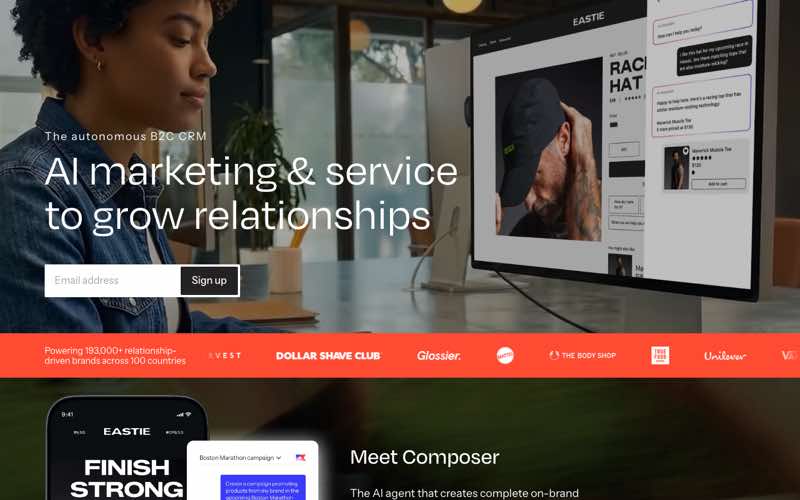
Best for: Shopify stores that want email, SMS, and customer data management in one platform
Klaviyo is Shopify's official CRM partner, and it shows. Over 117,000 brands use the two platforms together, and Shopify data syncs into Klaviyo in under 200 milliseconds. It's not a traditional pipeline CRM, but for most ecommerce stores, it's the closest thing to a purpose-built Shopify CRM that exists.
Shopify brands using Klaviyo report a 22% increase in GMV growth rate. That's not a marketing claim from Klaviyo. That's from Shopify's own partner blog.
Pricing
| Plan | Price | What you get |
|---|---|---|
| Free | $0/mo | 250 contacts, 500 emails/mo, 150 SMS credits |
| From ~$20/mo | Scales with contacts, unlimited emails up to 32.5K contacts | |
| Email + SMS | From ~$35/mo | Everything above + SMS credits |
Pricing scales based on your total active profiles. Note: since February 2025, you're billed on all active profiles, not just the ones you email.
What works
- Deepest Shopify sync available: order data, browsing behavior, and product interactions flow in real time. No other CRM matches this.
- Predictive analytics: identifies customers likely to churn, estimates lifetime value, and predicts next order dates. Useful for retention-focused stores.
- Pre-built ecommerce flows: abandoned cart, browse abandonment, post-purchase, and winback flows are ready to go out of the box.
- Advanced segmentation: segment by purchase frequency, average order value, product category, and dozens of behavioral signals.
What doesn't
- Pricing escalates fast: once you pass 10,000 contacts, costs climb quickly. A 50K-contact list can run $350+/mo.
- Not a sales pipeline CRM: if you need deal tracking or sales team management, Klaviyo won't do it.
- Analytics add-on is pricey: the Marketing Analytics add-on starts at $100/mo, separate from your email plan.
Why it ranks first
If you run a Shopify store, Klaviyo was literally built for you. It's rated 4.6/5 on G2 across 1,178 reviews. For most ecommerce stores focused on customer retention, it's the only CRM you need. Looking for alternatives? Check our Klaviyo alternatives guide.
2. HubSpot CRM
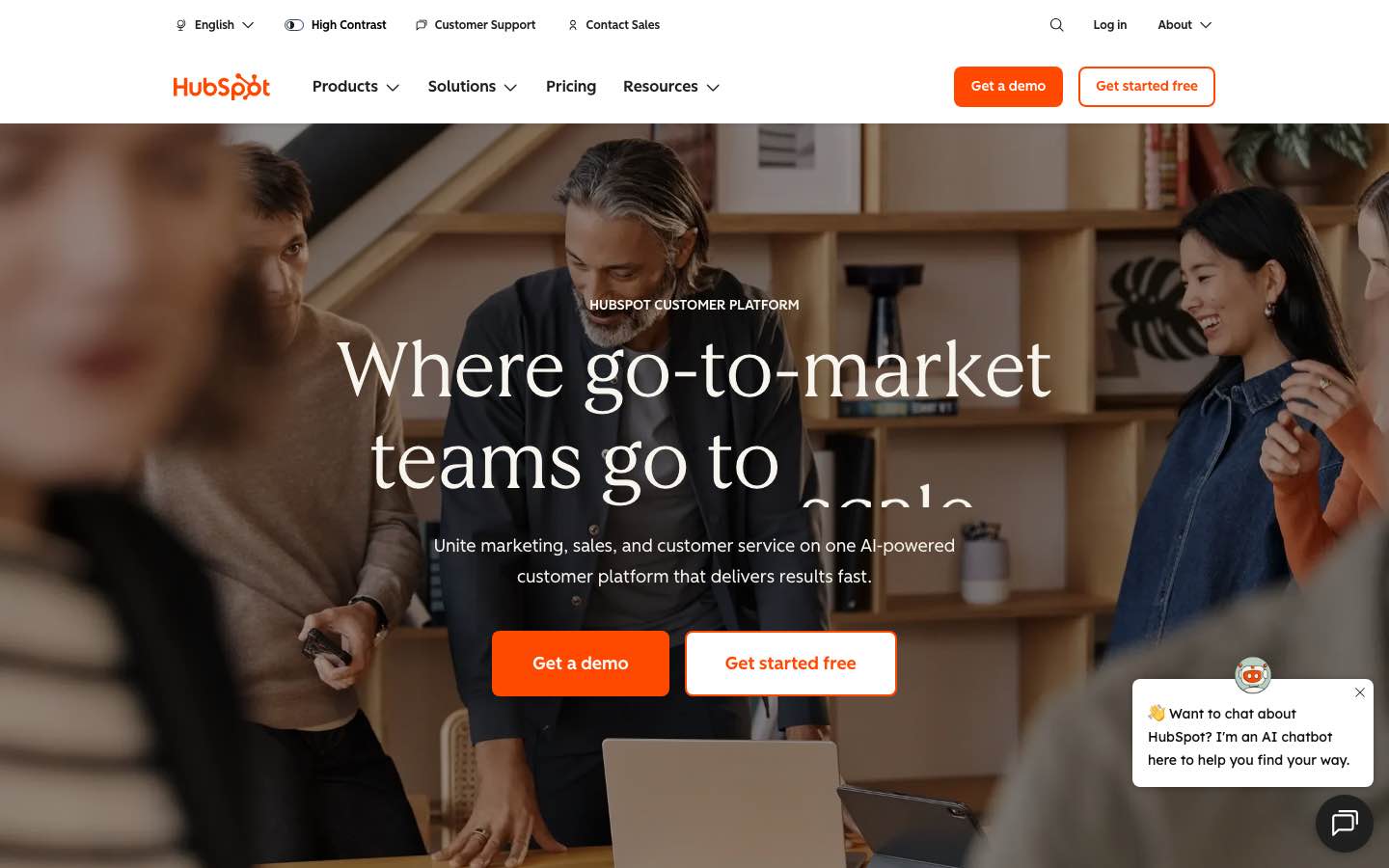
Best for: growing Shopify stores that need a full marketing, sales, and service platform
HubSpot is the Swiss Army knife of CRMs. The free plan supports up to 1 million contacts with basic CRM features, and the Shopify integration syncs customers, orders, and products automatically. G2 reviewers give it 4.4/5 across nearly 35,000 reviews.
Pricing
| Plan | Price | What you get |
|---|---|---|
| Free | $0/mo | 1M contacts, 2 seats, basic CRM |
| Starter | $20/seat/mo | Remove branding, more automation |
| Professional | $100/seat/mo | Advanced automation, custom reporting |
| Enterprise | $150/seat/mo | Custom objects, predictive scoring |
Professional and Enterprise plans may require one-time onboarding fees.
What works
- Most generous free tier: 1 million contacts for free is hard to beat. You can run a basic CRM for months without paying.
- Two-way Shopify sync: customers, orders, products, and abandoned carts all flow between platforms.
- All-in-one platform: marketing, sales, service, and content hubs under one roof. Good if you want one vendor for everything.
- Massive ecosystem: thousands of integrations, certified partners, and a huge knowledge base.
What doesn't
- Gets expensive fast: the jump from Starter ($20/seat) to Professional ($100/seat) is steep. Add Marketing Hub and costs multiply.
- Recent integration issues: some users report orders becoming unsearchable after Shopify sync changes, and workflows breaking unexpectedly.
- Complex for small teams: the feature set is overwhelming when you just want to send emails and track orders.
Why it ranks second
Best free CRM for Shopify. Period. But understand that HubSpot wants you on paid plans eventually, and those costs add up. If you need a full platform and have the budget, it's excellent. For a simpler Shopify customer service app setup, it might be overkill.
3. ActiveCampaign
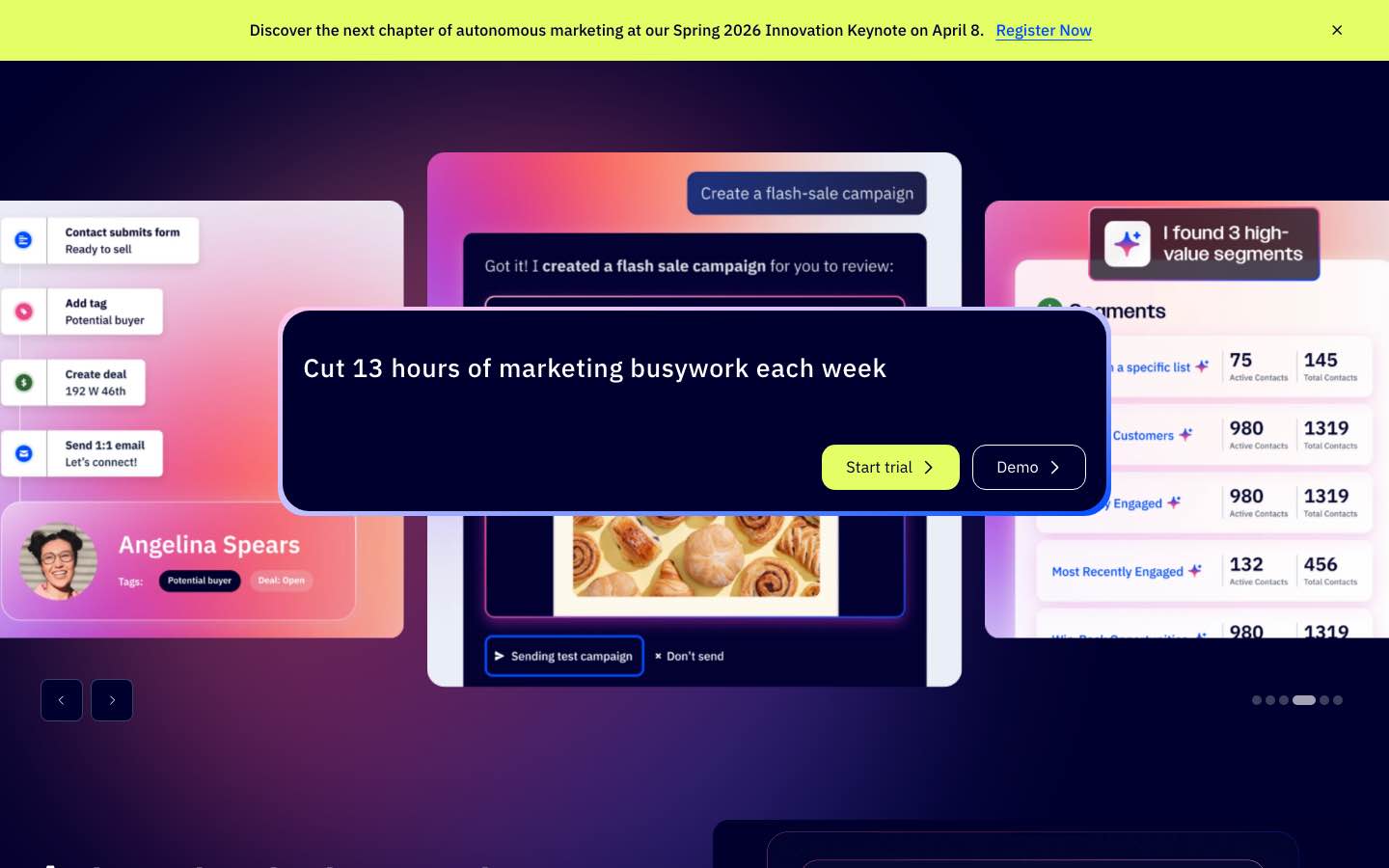
Best for: stores focused on retention and behavior-based email automation
ActiveCampaign has the best automation builder in the business. If you want to trigger emails based on what customers browse, what they buy, and how they interact with your store, this is your tool. It's rated 4.5/5 on G2 across 13,000+ reviews.
Pricing
| Plan | Price (1K contacts) | What you get |
|---|---|---|
| Starter | $15/mo | Email marketing, basic automation |
| Plus | $49/mo | CRM + sales features, landing pages, lead scoring |
| Pro | $79/mo | Predictive sending, split automations, attribution |
| Enterprise | Custom | Custom reporting, dedicated support |
Pricing scales with contacts. At 10,000 contacts, expect $149-$589/mo depending on your plan.
What works
- Automation builder is unmatched: visual workflow builder that handles complex, multi-branch automations better than any competitor.
- Deep Shopify integration: syncs customers, orders, products, and abandoned carts for behavior-based campaigns.
- Strong A/B testing: test subject lines, content, send times, and entire automation paths.
What doesn't
- CRM feels bolted on: the sales pipeline and deal management exist, but they're clearly secondary to the marketing automation.
- Steep learning curve: non-technical store owners will need time to learn the automation builder. It's powerful but not intuitive.
- Pricing jumps with contacts: a 5,000-contact list on the Plus plan runs $79/mo. At 25,000 contacts, you're looking at $189+/mo.
Why it ranks third
The automation engine is genuinely best-in-class. If ecommerce personalization and retention are your priorities, ActiveCampaign delivers. Just make sure you'll actually use the advanced features you're paying for.
4. Zoho CRM
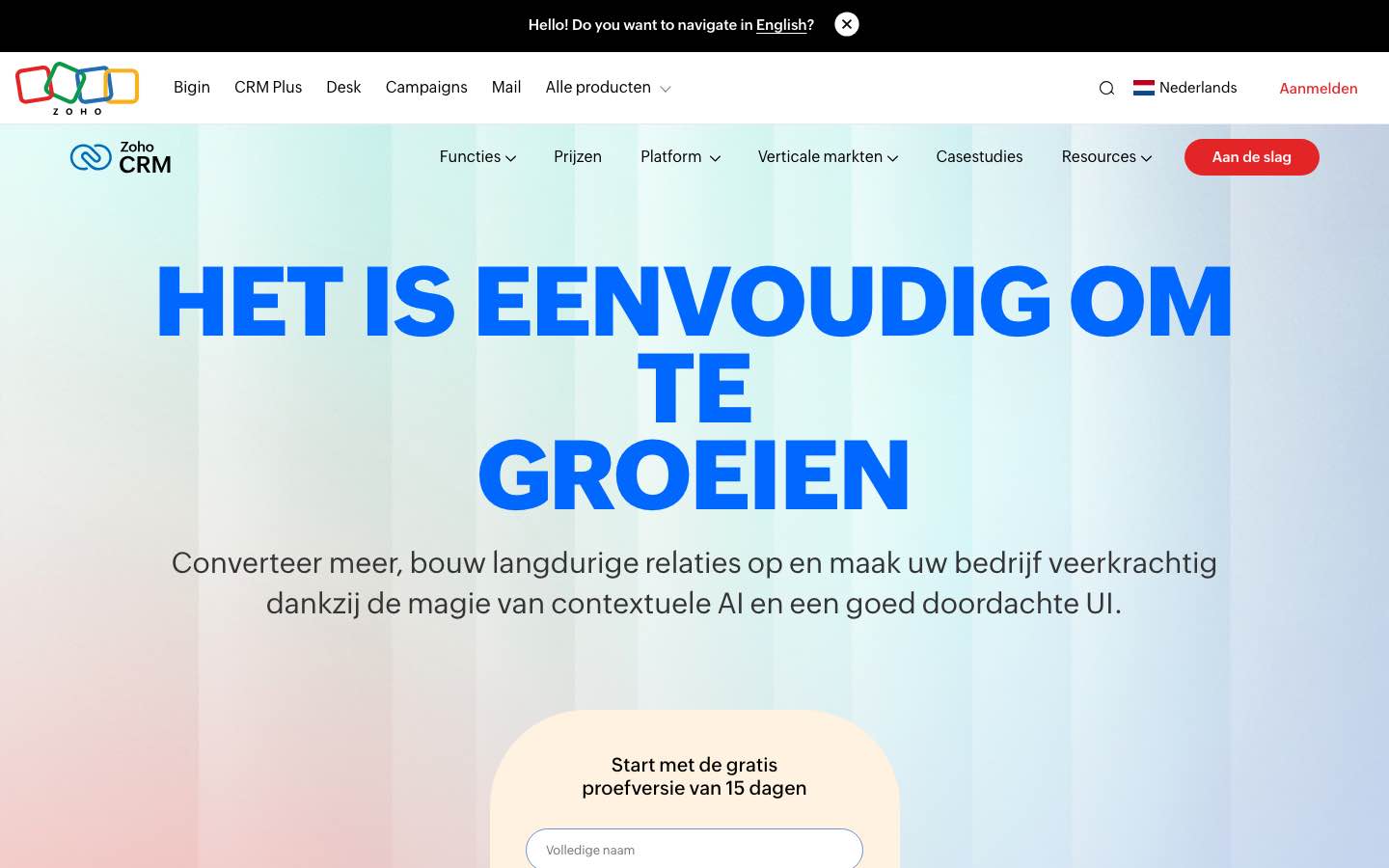
Best for: budget-conscious stores that want a full-featured CRM without enterprise pricing
Zoho CRM offers more features per dollar than any other CRM on this list. The free plan supports 3 users, and even the most expensive tier is just $52/user/mo. For Shopify stores watching every dollar, that matters.
Pricing
| Plan | Price | What you get |
|---|---|---|
| Free | $0/mo | 3 users, basic CRM |
| Standard | $14/user/mo | Scoring rules, workflows, dashboards |
| Professional | $23/user/mo | SalesSignals, Blueprint, inventory |
| Enterprise | $40/user/mo | Zia AI, portals, custom modules |
| Ultimate | $52/user/mo | Advanced BI, enhanced AI, premium support |
All prices billed annually. Monthly billing is 20-30% higher. 30-day free trial on all plans.
What works
- Unbeatable pricing: a full CRM with AI features for $40/user/mo. Nothing else comes close at this price.
- Zia AI assistant: sales predictions, anomaly detection, and workflow suggestions. Available from the Enterprise tier.
- Zoho ecosystem: connects with 40+ Zoho apps (Books, Desk, Campaigns, Analytics). One vendor for your entire stack.
- Multi-store support: manage multiple Shopify stores from a single Zoho CRM account.
What doesn't
- UI feels dated: the interface is functional but doesn't feel as modern as HubSpot or Pipedrive.
- Shopify integration isn't native: you'll often need Zapier or a third-party connector app. The direct integration has limitations.
- Feature overload: there are so many options that new users often feel overwhelmed.
Why it ranks fourth
The best value CRM on this list. If you need features like ecommerce analytics and workflow automation without breaking the bank, Zoho delivers. But the Shopify integration isn't as smooth as Klaviyo or HubSpot.
Try Ringly.io free for 14 days and let AI handle your phone support while your CRM handles the data.
5. Pipedrive
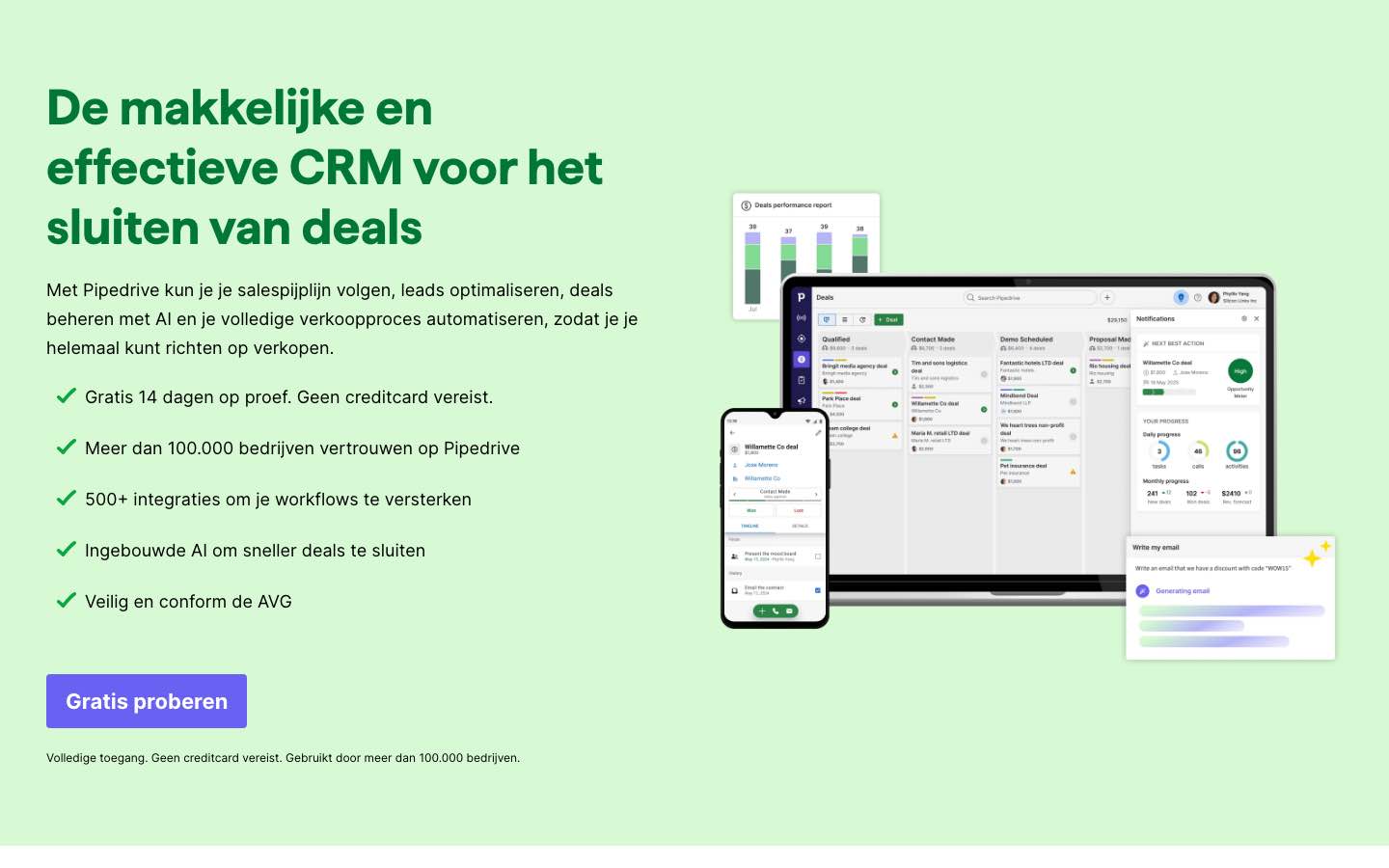
Best for: Shopify stores with a sales team that needs visual pipeline management
Pipedrive is a sales CRM, not a marketing CRM. If your Shopify store also does B2B wholesale, runs an outbound sales team, or manages high-touch DTC relationships, Pipedrive keeps your deals organized. It scores 8.9/10 for ease of use on G2.
Pricing
| Plan | Price | What you get |
|---|---|---|
| Lite | $14/seat/mo | Basic pipeline, deal management |
| Growth | $39/seat/mo | Email sync, templates, automation |
| Premium | $49/seat/mo | Revenue forecasts, project management |
Email campaigns add-on starts at $16/mo. LeadBooster add-on is $32.50/mo.
What works
- Dead-simple pipeline: drag-and-drop deal management that your sales team will actually use. No training needed.
- Great mobile app: manage deals from anywhere with offline access. Solid for field sales.
- Activity-based selling: focuses on actions (calls, meetings, emails) rather than just deal value.
What doesn't
- No native Shopify integration: you'll need third-party apps or Zapier to connect Shopify data.
- Weak marketing automation: email campaigns are a paid add-on, and they're basic compared to Klaviyo or ActiveCampaign.
- Not built for ecommerce: no abandoned cart tracking, no purchase-based segmentation, no ecommerce workflows.
Why it ranks fifth
Pipedrive is the best pipeline CRM on this list. But it's not really an ecommerce tool. Choose it if you have a sales team managing wholesale accounts or enterprise deals alongside your Shopify store.
6. Freshsales
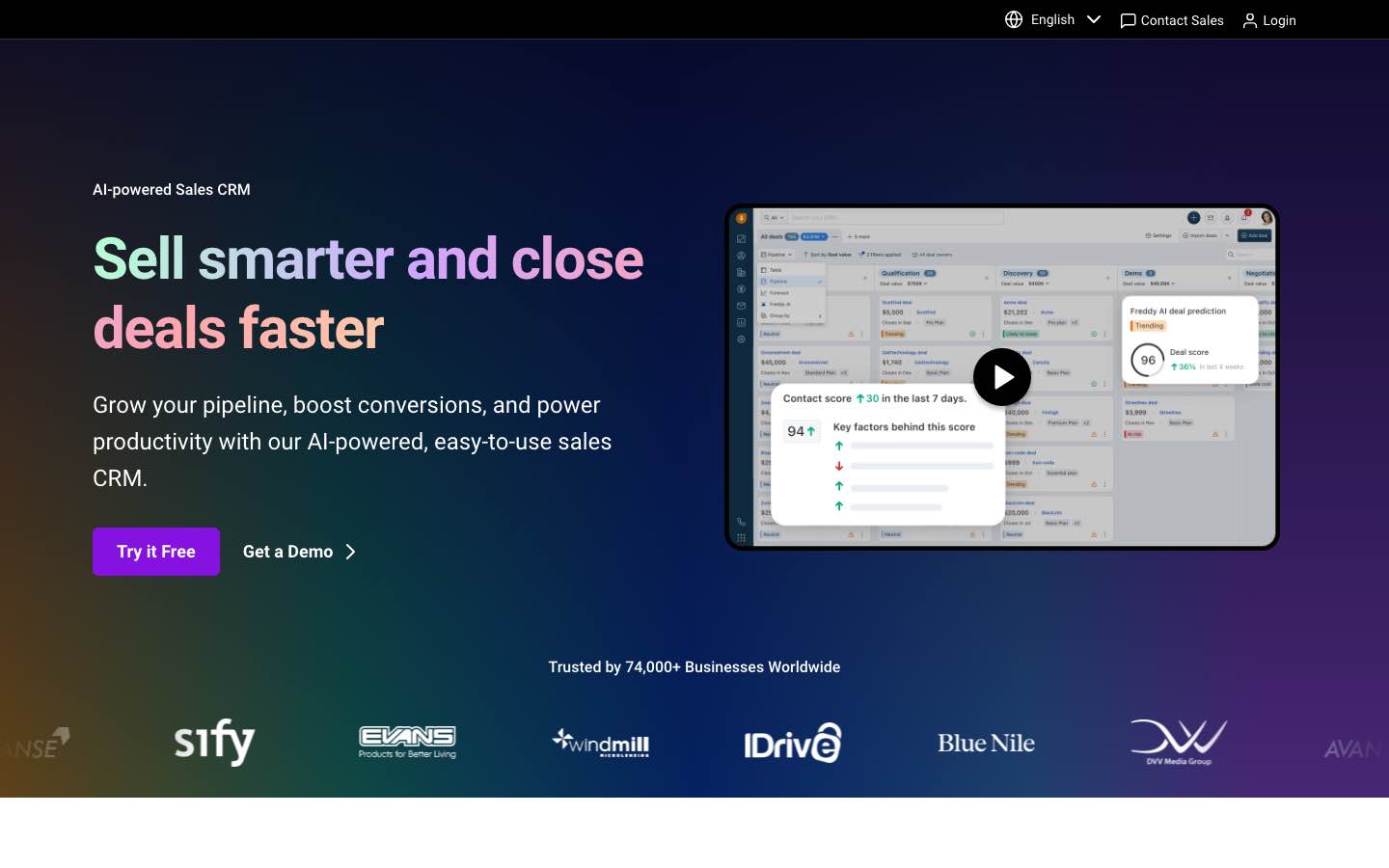
Best for: small Shopify stores that want affordable CRM with built-in phone and chat
Freshsales packs a built-in phone dialer, chat, and email into an affordable CRM. If you want to call customers, manage deals, and track contacts without juggling five different tools, it's a smart pick. Part of the Freshworks ecosystem, so it plays nicely with Freshdesk for support.
Pricing
| Plan | Price | What you get |
|---|---|---|
| Free | $0/mo | 3 users, basic contact management |
| Growth | $11/user/mo | Built-in phone, AI scoring, workflows |
| Pro | $47/user/mo | Multiple pipelines, AI insights, sequences |
| Enterprise | $71/user/mo | Custom modules, audit logs |
21-day free trial on paid plans.
What works
- Built-in phone dialer: call customers directly from the CRM. No separate phone tool needed.
- AI lead scoring: Freddy AI scores leads automatically, even on the Growth plan.
- Affordable for small teams: $11/user/mo gets you more than most CRMs offer at triple the price.
What doesn't
- Shopify integration is limited: it syncs data, but the integration isn't as deep as Klaviyo or HubSpot.
- Advanced features locked behind Pro: the features most teams actually need (sales sequences, AI insights) start at $47/user/mo.
- Small ecosystem: fewer integrations and community resources than HubSpot or Salesforce.
Why it ranks sixth
A solid, affordable option with unique built-in communication features. If you want phone calls inside your CRM and customer service for Shopify matters to you, Freshsales is worth considering.
7. Drip
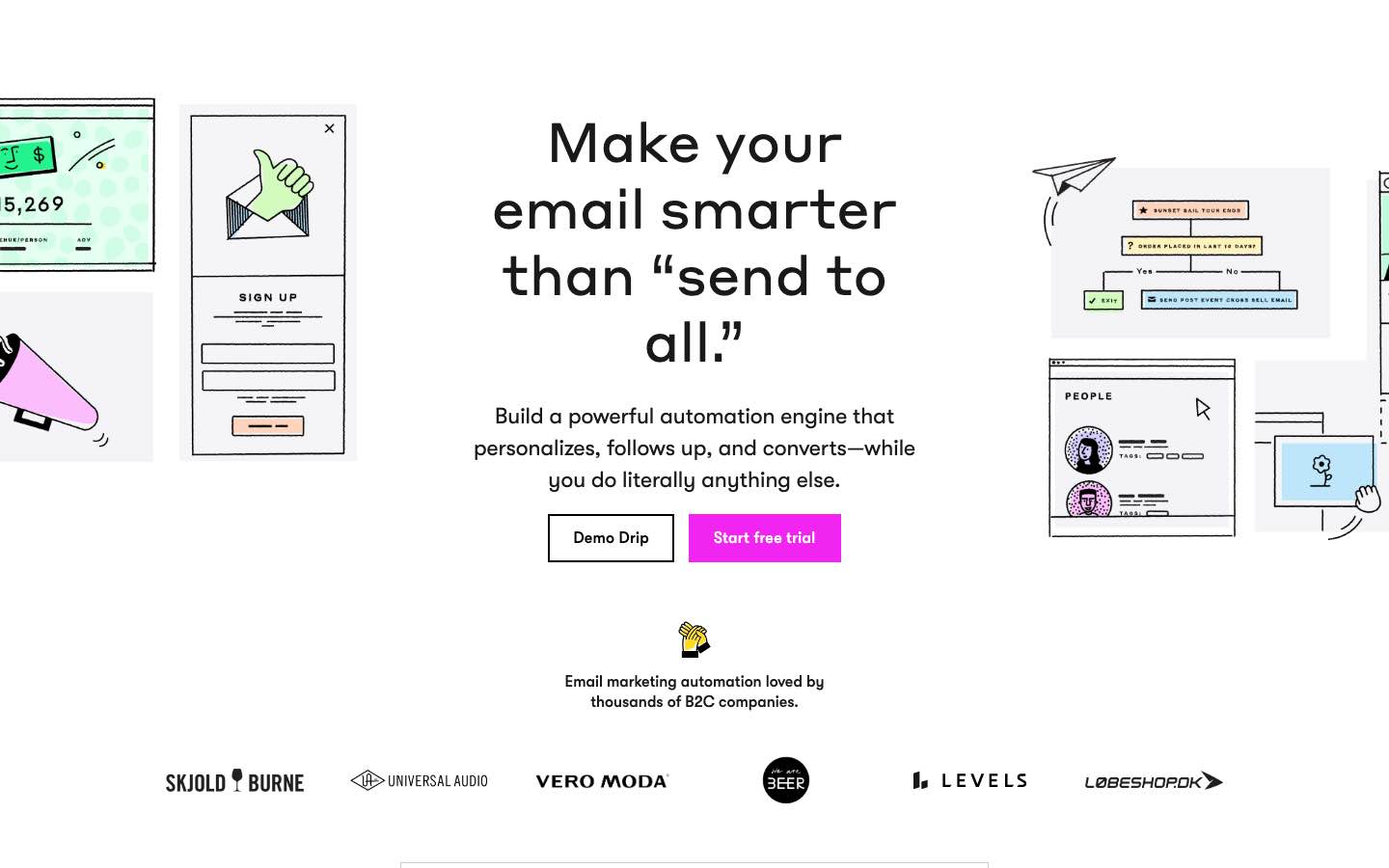
Best for: ecommerce brands doing $1M-$50M in revenue that want focused marketing automation
Drip was one of the first marketing platforms built specifically for ecommerce. It doesn't try to be a sales CRM or a helpdesk. It does email marketing, segmentation, and revenue attribution for online stores. That's it.
Pricing
| Plan | Price | What you get |
|---|---|---|
| 2,500 contacts | $39/mo | All features, unlimited emails |
| 5,000 contacts | $89/mo | All features, unlimited emails |
| 10,000 contacts | $154/mo | All features, unlimited emails |
Single plan with pricing based on contacts only. 14-day free trial. 25% discount for annual billing.
What works
- Ecommerce-native: built for Shopify, WooCommerce, and BigCommerce from day one. Not retrofitted.
- Revenue attribution: ties every email and automation to actual revenue. You know exactly what's working.
- No feature gating: one plan means every feature is available from day one. No surprises.
What doesn't
- No free plan: $39/mo minimum is a barrier for stores just getting started.
- Pricing gets steep: past 10,000 contacts, costs climb quickly. A 50K list runs $699/mo.
- No sales CRM features: no pipeline, no deal tracking, no sales team management.
Why it ranks seventh
Drip is a solid ecommerce marketing tool, but Klaviyo has overtaken it in the Shopify ecosystem. Choose Drip if you specifically prefer its interface and workflow style, or if you're also running WooCommerce stores. For Shopify marketing apps, Klaviyo is the more popular choice.
8. Salesforce

Best for: enterprise Shopify Plus stores with dedicated CRM admins
Salesforce is the most powerful CRM in the world. It's also the most complex, most expensive, and most time-consuming to implement. If you're a Shopify Plus store doing $10M+ in revenue with a dedicated ops team, Salesforce gives you capabilities nothing else can match.
Pricing
| Plan | Price | What you get |
|---|---|---|
| Starter Suite | $25/user/mo | Basic CRM, email, lead management |
| Professional | $80/user/mo | Pipeline, forecasting, custom dashboards |
| Enterprise | $165/user/mo | Advanced customization, workflow automation |
| Unlimited | $330/user/mo | Everything + premium support + AI |
Annual contracts required. Implementation costs typically run $5,000-$50,000+.
What works
- Infinite customization: if you can imagine it, Salesforce can build it. Custom objects, fields, workflows, and integrations.
- Einstein AI: predictions, recommendations, and automation that actually improve with your data.
- Enterprise reporting: dashboards and reports that handle complex, multi-channel data.
What doesn't
- Overkill for most Shopify stores: if you're doing under $5M/year, you probably don't need Salesforce.
- Expensive in total: $165/user/mo plus $20K+ implementation plus ongoing admin costs. Budget $50K+/year realistically.
- Slow to implement: expect weeks to months before you're fully operational. Not a weekend project.
Why it ranks eighth
The best CRM in the world, but probably not the best CRM for YOUR Shopify store. Unless you're a Shopify Plus merchant with a team to manage it, consider the options above first. You can also check our Salesforce Service Cloud alternatives guide for other options.
9. Gorgias
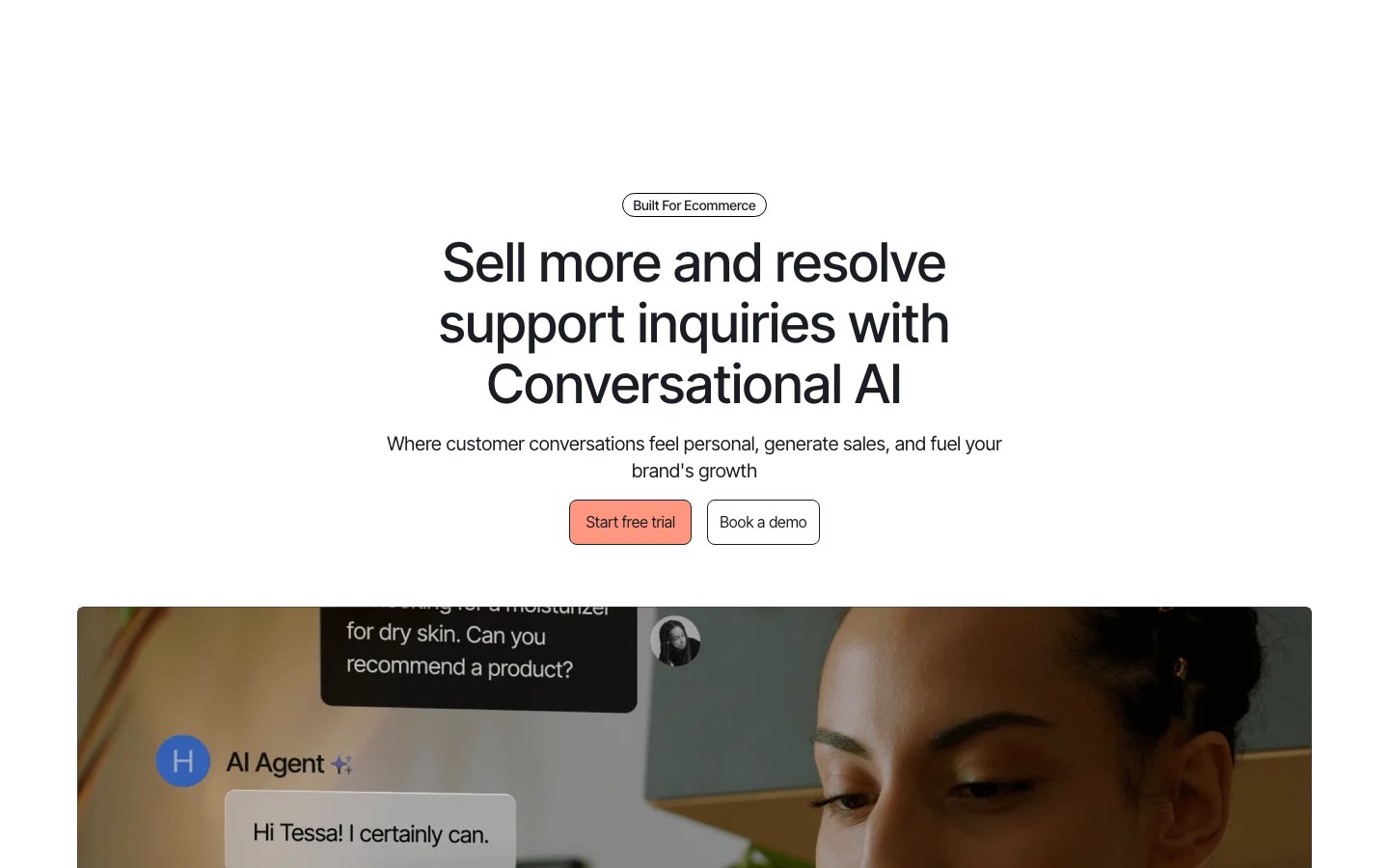
Best for: Shopify stores that treat customer support as their CRM strategy
Gorgias isn't a traditional CRM. It's a helpdesk built specifically for Shopify. But here's why it's on this list: for many ecommerce stores, the most important customer data isn't in a sales pipeline. It's in support conversations. Gorgias gives you full purchase history, order management, and customer profiles inside every support ticket.
Pricing
| Plan | Price | What you get |
|---|---|---|
| Starter | $10/mo | 50 tickets, 3 seats |
| Basic | $60/mo | 300 tickets, unlimited seats |
| Pro | $360/mo | 2,000 tickets, custom roles, CSAT |
| Enterprise | Custom | Dedicated manager, custom integrations |
Overage charges apply on Starter and Basic plans ($0.40/ticket). See our Gorgias pricing breakdown for full details.
What works
- Deepest Shopify integration: view orders, process refunds, and edit customer details without leaving the ticket. No other support tool matches this.
- Unified inbox: email, chat, social, SMS, and phone in one place. Your team sees everything.
- Revenue tracking: ties support interactions to revenue. Proves that great ecommerce customer service actually drives sales.
What doesn't
- Not a traditional CRM: no sales pipeline, no marketing automation, no email campaigns.
- Ticket-based pricing adds up: 2,000 tickets/mo on Pro costs $360. High-volume stores pay a premium.
- Limited to support: you still need a marketing tool (like Klaviyo) alongside it.
Why it ranks ninth
If your CRM strategy is "give amazing support and let that drive repeat purchases," Gorgias is your answer. Pair it with Ringly.io for AI-powered phone support and you've got every customer channel covered. See how AI phone support works for your store.
How to choose the right CRM for your Shopify store
Don't overthink this. Match your primary need to the right tool:
- Choose Klaviyo if you want one platform for email, SMS, and customer data. It's Shopify's official partner for a reason.
- Choose HubSpot if you need a free CRM now and plan to scale into marketing and sales features later.
- Choose ActiveCampaign if retention and complex automations are your top priority. The automation builder is unmatched.
- Choose Zoho CRM if you want a full-featured CRM on a tight budget. Best value per dollar.
- Choose Pipedrive if you have a sales team doing outbound, wholesale, or high-touch B2B deals.
- Choose Freshsales if you want phone, chat, and CRM in one affordable package.
- Choose Drip if you're a mid-market ecommerce brand focused on email-driven revenue.
- Choose Salesforce if you're on Shopify Plus with a dedicated ops team and budget to match.
- Choose Gorgias if customer support IS your growth strategy and you want data from every conversation.
And whichever CRM you pick, pair it with the right customer service tools. Your CRM tracks the data. Your support tools handle the conversations. Together, they create the kind of customer experience worth coming back for.
Do you even need a CRM for Shopify?
Honest take: if your store does under $500K/year and you have a small team, you might not need a standalone CRM at all.
Here's what most successful Shopify stores actually run:
- Klaviyo for email and SMS marketing (doubles as your customer database)
- Gorgias or Zendesk for customer support
- Ringly.io for AI phone support (handles 73% of calls automatically)
That three-tool stack covers 90% of what a CRM does for ecommerce: customer data, marketing automation, and multi-channel support. You only need a dedicated CRM like HubSpot or Salesforce when you're managing multiple sales channels, running a wholesale operation, or have 10+ people on your team who need shared customer data.
The 91% of companies using CRM tools (DemandSage) includes a lot of B2B businesses. Ecommerce is different. Start simple. Add complexity only when you outgrow your current setup.
Ready to complete your Shopify customer experience? Try Ringly.io free for 14 days. AI phone support that works alongside any CRM. Setup takes three minutes.
Frequently asked questions
Does Shopify have a built-in CRM?
No. Shopify stores customer and order data, but it doesn't offer CRM features like segmentation, pipeline management, or automated follow-ups. You need a third-party CRM integration. Klaviyo is Shopify's official partner for this.
Is Klaviyo considered a CRM?
Yes, for ecommerce. Klaviyo calls itself a "B2C CRM" and functions as one for Shopify stores. It manages customer profiles, purchase history, segmentation, and automated communications. It's not a sales pipeline CRM like HubSpot or Pipedrive, but for most online stores, it covers what you need.
What's the best free CRM for Shopify?
HubSpot offers the most generous free CRM (1 million contacts, basic features). Klaviyo's free plan is limited to 250 contacts but gives you deeper Shopify integration. Zoho CRM's free plan supports 3 users. Your best pick depends on whether you need marketing features (Klaviyo), a full CRM (HubSpot), or budget flexibility (Zoho).
Can I use multiple CRMs with Shopify?
Technically yes, but you shouldn't. Running two CRMs creates data silos and sync conflicts. Instead, pick one CRM and supplement with specialized tools, like Klaviyo for email plus Gorgias for support plus Ringly.io for AI phone support.
How do I connect a CRM to my Shopify store?
Most CRMs offer a native app on the Shopify App Store. Install it, authenticate your account, and map your data fields. Klaviyo and HubSpot have one-click installations. For CRMs without native apps (like Salesforce), you'll need a connector app from the AppExchange or a tool like Zapier.
What's the difference between a CRM and a helpdesk for Shopify?
A CRM manages customer data, segments audiences, and automates marketing or sales workflows. A helpdesk (like Gorgias or Zendesk) manages support tickets across channels. Many Shopify stores use both: a CRM for marketing and a helpdesk for customer service. Some tools like HubSpot combine both in one platform.
Is Salesforce worth it for a small Shopify store?
Probably not. Salesforce starts at $25/user/mo but realistically costs $165+/user/mo for useful features, plus implementation fees. If you're a small store, HubSpot's free plan or Klaviyo will give you 90% of what you need at a fraction of the cost. Salesforce makes sense for Shopify Plus stores doing $10M+ in annual revenue with a team to manage the platform.
Your CRM is only half the equation
The best CRM in the world won't help if nobody answers the phone when customers call. That's the gap most Shopify stores don't think about until it costs them sales.
Pick the CRM that fits your store from this list. Then make sure the rest of your customer experience stack can keep up. Your customers deserve it.